The latest geomagnetic storm delivered more than dazzling auroras—it revealed how active, unpredictable, and influential the Sun has become during the current solar cycle. From glowing skies across the U.S. to renewed concerns about satellites and power grids, this in-depth guide explains what caused the storm, what scientists learned, and what may happen next as solar activity intensifies.
Introduction: When the Sun Reasserts Its Power
For most of modern history, the Sun has been treated as a constant background presence—rising and setting with comforting reliability. We plan our days, our power systems, our communications, and even our financial networks assuming the Sun will behave.
Then came the latest geomagnetic storm.
In a single night, skies across large portions of the United States lit up with unfamiliar colors. People who had never given space weather a second thought suddenly found themselves staring at red and green glows from their driveways. Airlines adjusted flight paths. Satellite operators took precautionary steps. Scientists held press briefings.
This was not just a beautiful astronomical event. It was a reminder that Earth exists within a dynamic solar environment—and that the Sun is entering a particularly volatile phase.
The storm served as a real-world lesson in how solar activity works, how prepared we truly are, and what the near future may hold as the Sun approaches its most active period in over a decade.
What Exactly Was the Latest Geomagnetic Storm?
A geomagnetic storm occurs when a surge of energy from the Sun disturbs Earth’s magnetic field. In this case, the trigger was a coronal mass ejection (CME)—a massive cloud of magnetized plasma expelled from the Sun’s outer atmosphere.
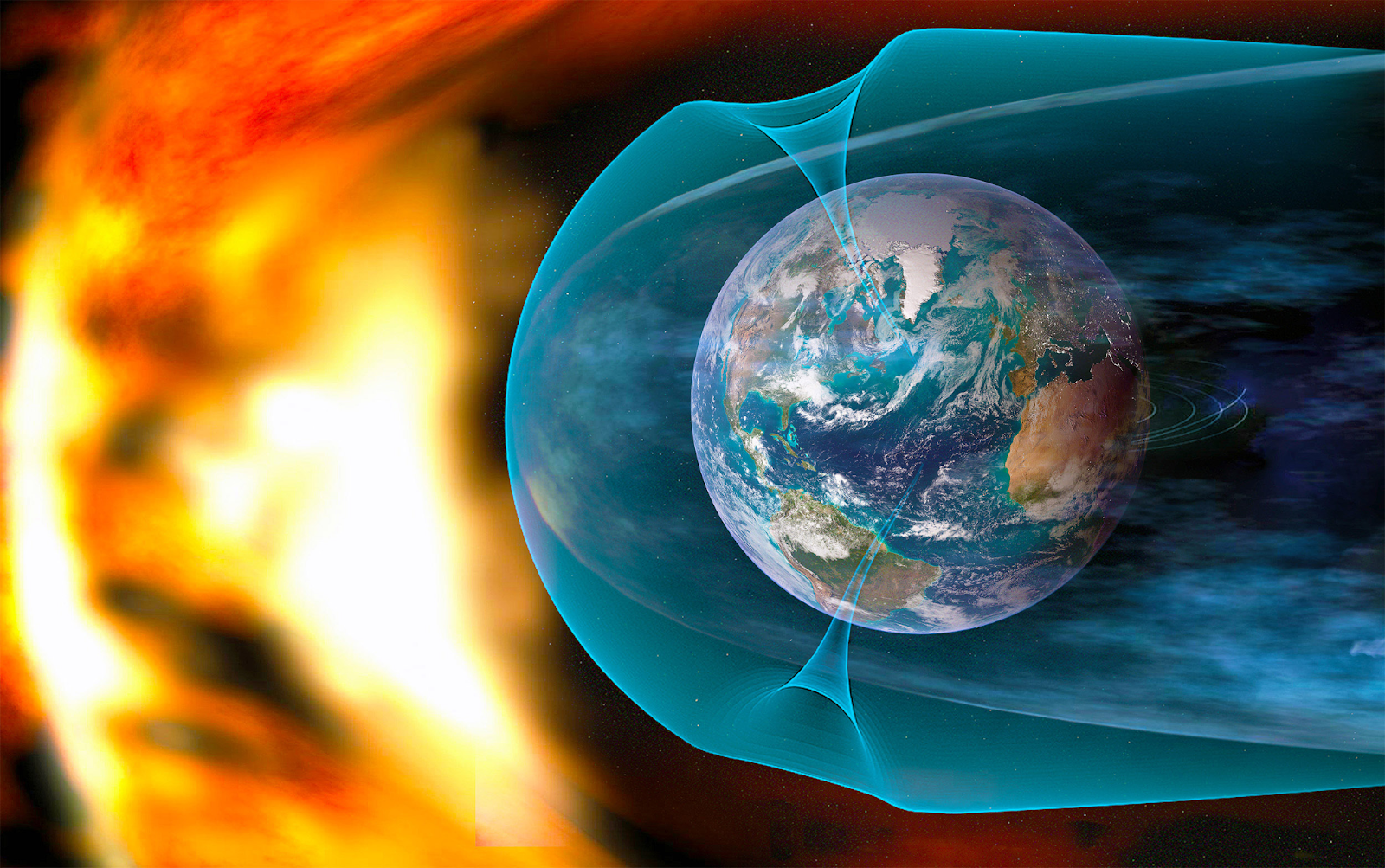
When that CME reached Earth, it collided with the planet’s magnetosphere, compressing it and injecting enormous amounts of energy into the upper atmosphere.
Scientists measure the severity of these storms using the Kp Index, which ranges from 0 (very quiet) to 9 (extreme).
The latest storm reached Kp levels of 8 to 9, placing it among the strongest geomagnetic storms of the past several years.
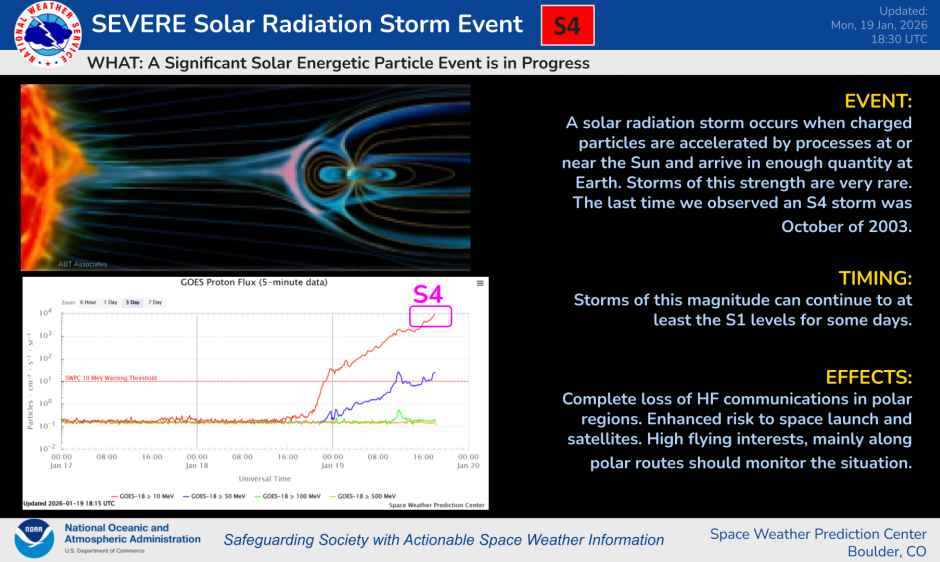
According to the NOAA Space Weather Prediction Center, storms of this magnitude are uncommon—but they are not unexpected during periods of heightened solar activity.
Why This Geomagnetic Storm Was Especially Important
Not every geomagnetic storm becomes a global talking point. This one did because it exposed several realities that are becoming harder to ignore.
First, the Sun is proving more active than scientists initially predicted for this solar cycle. Second, modern society’s dependence on space-based and electrical infrastructure makes us more sensitive to solar disturbances than ever before. Third, this storm may represent an early chapter—not the climax—of the current solar maximum.
Together, these factors make the storm more than a spectacle. They make it a warning and a learning opportunity.
What This Storm Revealed About the Sun’s Behavior
The Sun Is Dynamic, Not Predictable
The Sun is not a steady furnace. It is a turbulent sphere of plasma threaded with magnetic fields that twist, tangle, and snap.
During the buildup to this storm, scientists observed:
- Rapid growth in sunspot regions
- Strong magnetic field complexity
- Multiple solar flares in quick succession
These conditions are ideal for producing powerful CMEs.
What surprised researchers was not that a storm occurred, but how efficiently the Sun released energy—and how directly it was aimed at Earth.
Understanding Solar Cycle 25: Why Now?
The Sun follows an approximately 11-year solar cycle, alternating between periods of low activity (solar minimum) and high activity (solar maximum).
We are currently in Solar Cycle 25, which began in late 2019. Early forecasts suggested it would be relatively mild. Instead, sunspot counts and flare activity have consistently exceeded expectations.
NASA and NOAA data show that solar activity levels are tracking well above original projections, increasing the likelihood of strong geomagnetic storms.
In simple terms, the Sun is waking up faster—and more aggressively—than anticipated.
How the Storm Changed Earth’s Magnetic Environment
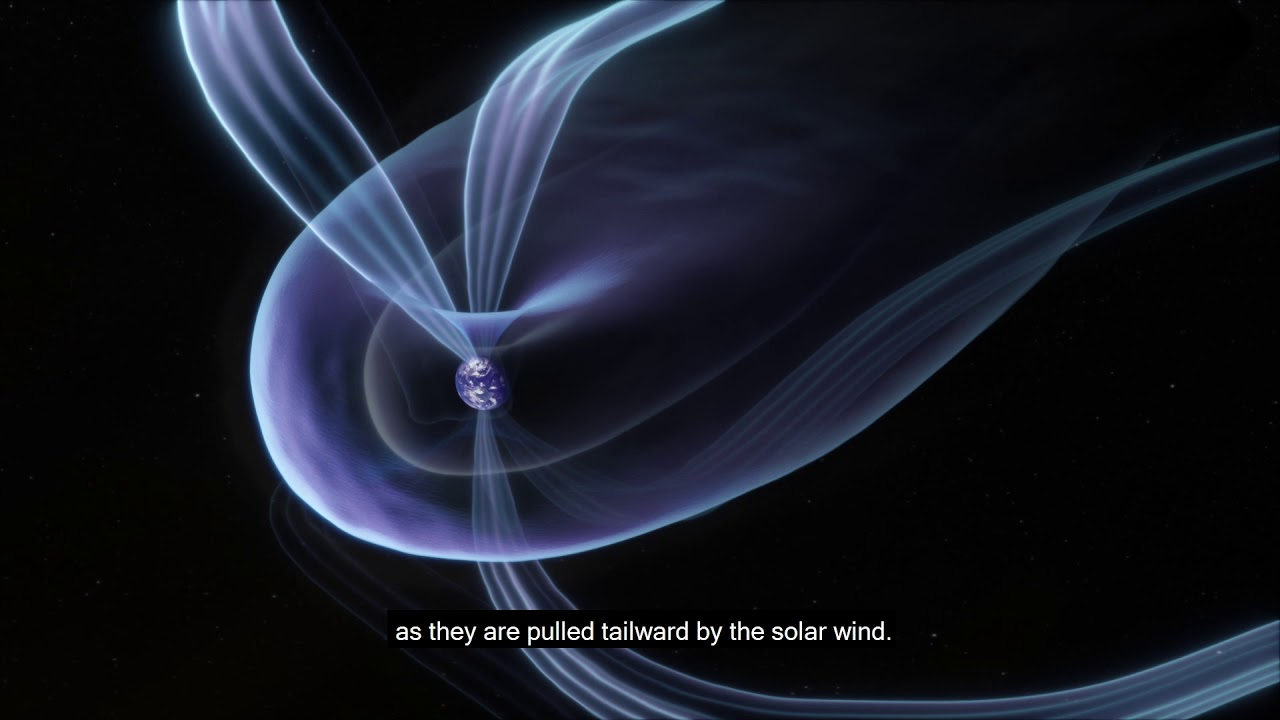
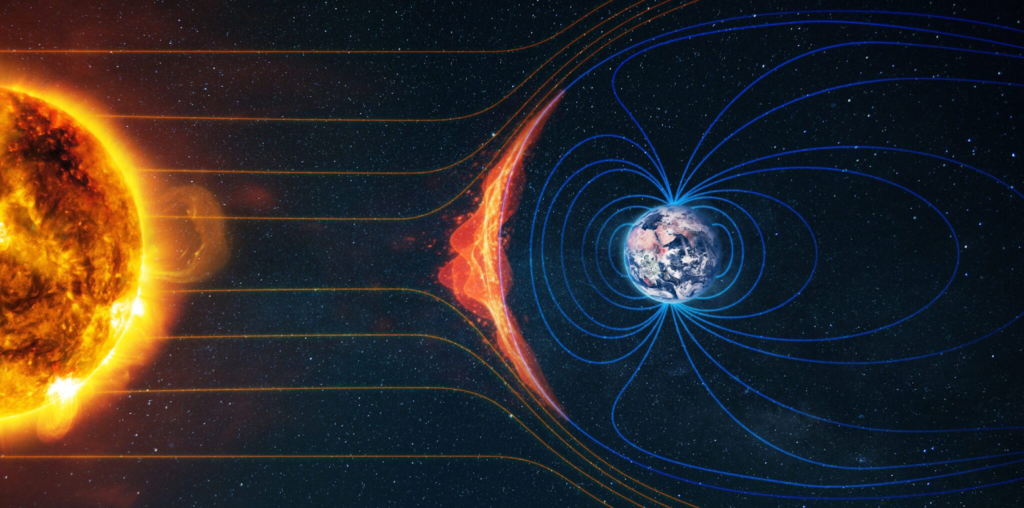
When the CME struck Earth, it dramatically compressed the magnetosphere—the invisible magnetic bubble that shields the planet from solar radiation.
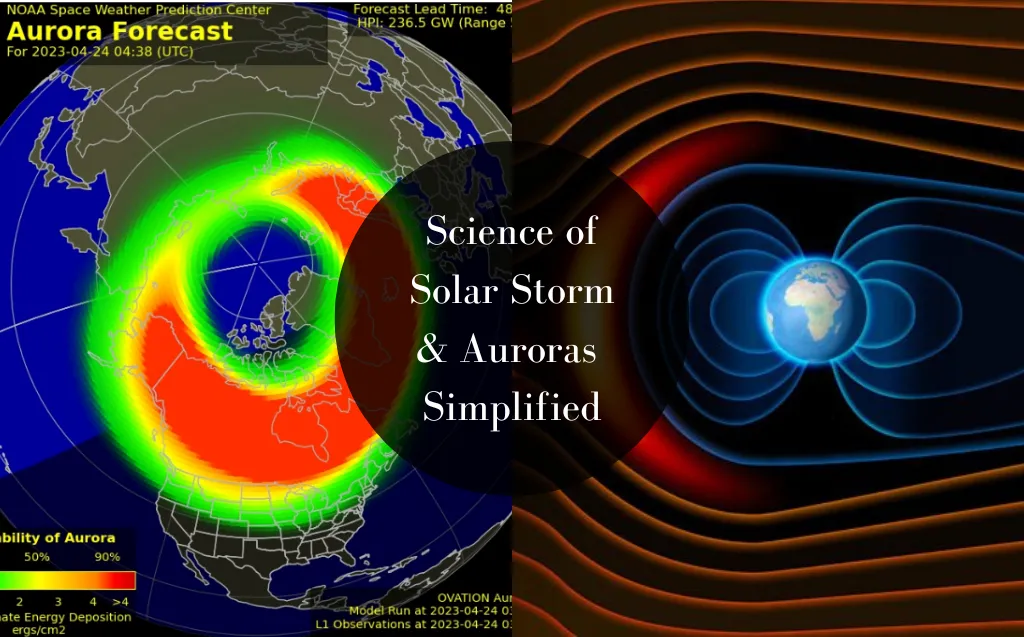
This compression allowed charged particles to penetrate deeper into Earth’s magnetic field lines, funneling energy toward the poles and beyond.
As a result:
- Auroras expanded far south
- Upper atmospheric currents intensified
- Electrical systems experienced increased geomagnetic stress
The storm temporarily reshaped the magnetic environment surrounding Earth, illustrating just how flexible—and vulnerable—that system can be.
What People Experienced on the Ground
Widespread Aurora Sightings Across the U.S.
One of the most visible effects of the storm was the dramatic expansion of auroras.
Residents reported auroras in states where such sightings are extremely rare. In parts of Texas and Alabama, observers described deep red glows stretching across the horizon. In the Midwest and Northeast, green and pink curtains shimmered overhead.
For many Americans, it was their first encounter with an aurora.
A teacher in Indiana described stepping outside after a late grading session and thinking a distant fire was reflecting off the clouds—until the “clouds” began to move.
These real-life experiences transformed an abstract scientific event into something personal and unforgettable.
Why Auroras Matter Scientifically
Auroras are more than visual wonders. They are physical evidence of solar-terrestrial interaction.
The color, intensity, and geographic spread of auroras provide scientists with valuable information about:
- Storm strength
- Energy distribution
- Magnetic field response
During this storm, the prevalence of red auroras was particularly significant. Red auroras occur at higher altitudes and are associated with strong geomagnetic disturbances—especially those capable of reaching lower latitudes.
In other words, the sky itself confirmed what instruments were measuring.
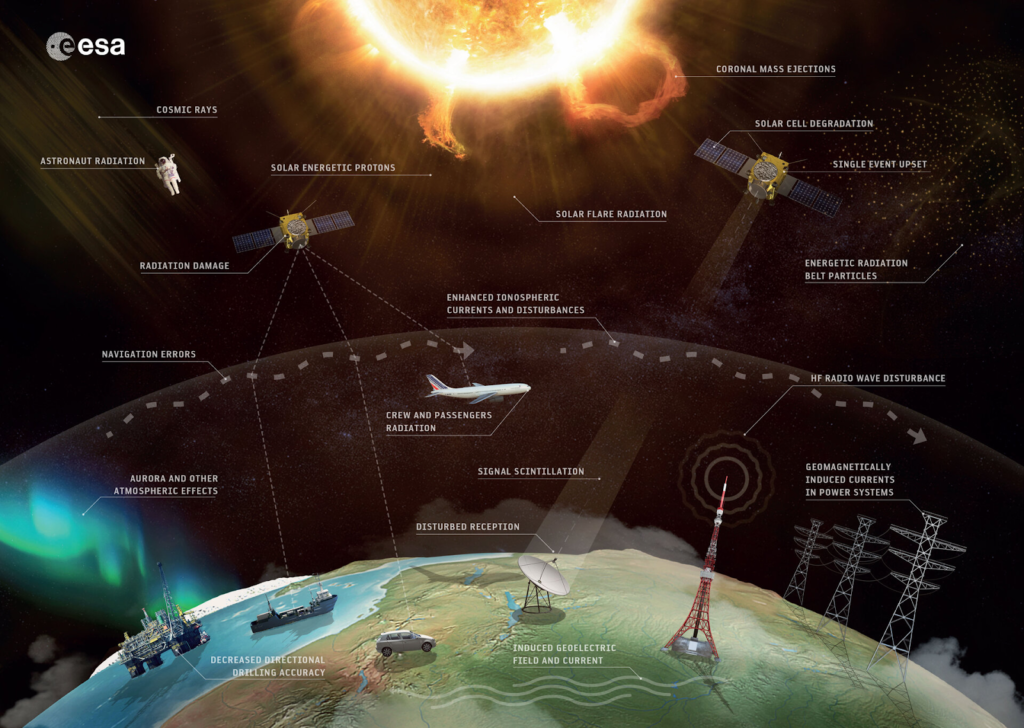
How the Storm Affected Modern Technology
While no catastrophic failures occurred, the storm tested multiple systems simultaneously.
Reported and Preventive Impacts
- Satellites entered protective “safe modes”
- Airlines adjusted polar flight routes
- GPS accuracy experienced minor degradation
- High-frequency radio signals were disrupted
Power grid operators monitored systems closely, aware of historical precedents such as the 1989 Quebec blackout, which was caused by a geomagnetic storm far weaker than a Carrington-level event.
The absence of major damage does not mean there was no risk—it means safeguards worked.
Why Scientists Are Paying Close Attention Now
This storm validated long-standing concerns within the space weather community.
Modern civilization relies heavily on technologies that did not exist during previous solar maxima. Satellites guide navigation, financial transactions, weather forecasting, and emergency response. Power grids are vast and interconnected.
A stronger or more precisely aligned storm could have cascading effects.
The lesson was clear: resilience matters.
The Carrington Event: Why It Keeps Coming Up
The Carrington Event of 1859 remains the most powerful geomagnetic storm on record.
Telegraph systems sparked and failed. Auroras were seen near the equator. If a similar storm occurred today, scientists estimate potential damages in the trillions of dollars.
The latest storm was nowhere near Carrington-level—but it demonstrated that the Sun is capable of producing disruptive events, and that Earth remains in the firing line.
What the Storm Taught Us About Prediction Limits
Space weather forecasting has improved dramatically. Satellites positioned between Earth and the Sun provide advance warnings of incoming CMEs.
However, this storm highlighted key challenges:
- CME magnetic orientation is hard to predict
- Storm intensity can change en route
- Arrival timing can vary by hours
Scientists can often say a storm is coming, but not always how severe it will be.
That uncertainty is one of the biggest challenges moving forward.
What Comes Next as Solar Activity Increases?
With solar maximum expected between 2024 and 2026, scientists anticipate:
- More frequent geomagnetic storms
- Increased aurora visibility
- Greater operational strain on satellites
- Heightened public awareness of space weather
The latest storm may be remembered as the moment when space weather became mainstream news again.
How Should the Public Think About Future Storms?
For most people, geomagnetic storms are not something to fear.
They are natural events—part of the Sun-Earth relationship that has existed for billions of years.
The key is understanding:
- Auroras are harmless
- Technology disruptions are usually temporary
- Utilities and agencies actively monitor risks
For individuals, the biggest impact may simply be a reason to step outside and look up.
Why This Storm Marks a Turning Point
This geomagnetic storm arrived at a time when scientific monitoring, public communication, and digital sharing intersected perfectly.
People didn’t just hear about the storm—they experienced it, photographed it, and talked about it together.
It reminded humanity that despite our technology, we remain connected to cosmic forces beyond our control.
And it reminded scientists that the Sun still has lessons to teach.
Frequently Asked Questions (Trending Searches)
1. What caused the latest geomagnetic storm?
A coronal mass ejection from the Sun collided with Earth’s magnetic field.
2. How strong was this geomagnetic storm?
It reached Kp levels of 8–9, classified as severe to extreme.
3. Why were auroras visible so far south?
The storm compressed Earth’s magnetosphere, expanding auroral zones.
4. Are geomagnetic storms becoming more frequent?
Yes, due to increased solar activity during Solar Cycle 25.
5. Can geomagnetic storms damage power grids?
Strong storms can, though safeguards greatly reduce the risk.
6. Did this storm affect satellites?
Yes, some satellites entered precautionary safe modes.
7. Is this related to climate change?
No. Geomagnetic storms are driven by solar activity, not Earth’s climate.
8. Will storms get worse in the next few years?
Possibly, as solar activity peaks between 2024 and 2026.
9. Should people prepare for blackouts?
Large-scale blackouts are unlikely but possible during extreme events.
10. Are auroras a sign of danger?
Auroras themselves are harmless indicators of solar interaction.
Final Takeaway: A Message Written in Light
The latest geomagnetic storm was more than a headline or a photo opportunity.
It was a message—written across the sky—about the power of the Sun, the vulnerability of modern systems, and the beauty of our planet’s defenses in action.
As solar activity continues to rise, storms like this will keep teaching us who we are, where we live, and how closely connected we remain to the star at the center of our solar system.
Sometimes, the universe reminds us gently.
Sometimes, it lights up the sky to make sure we’re paying attention.