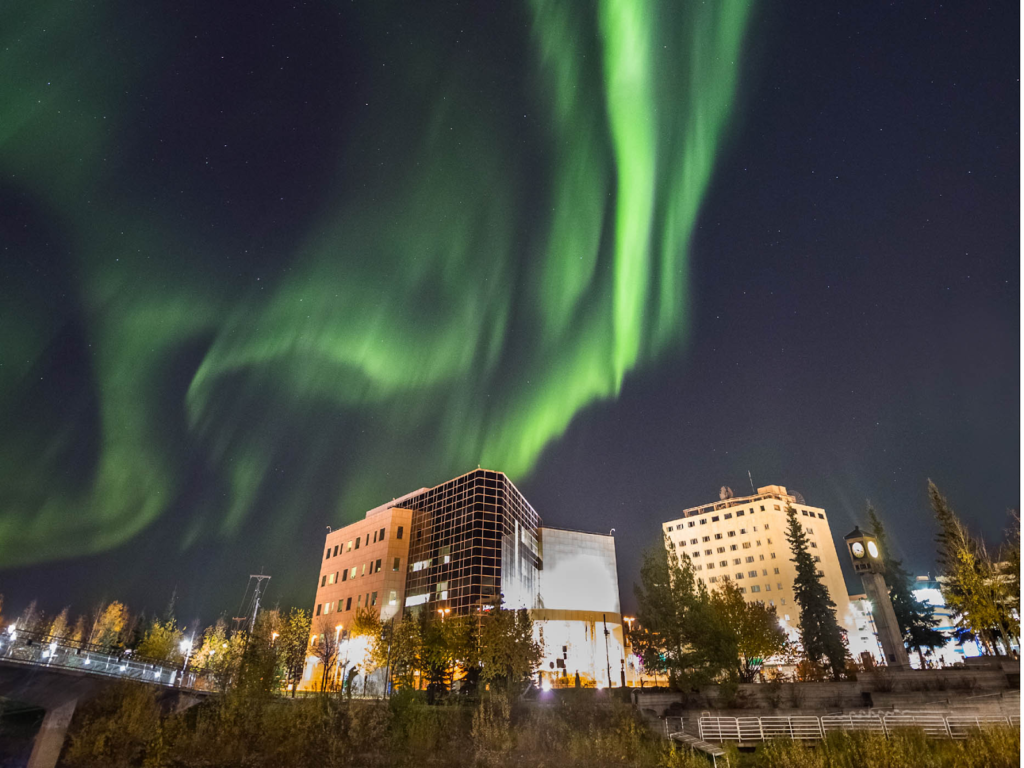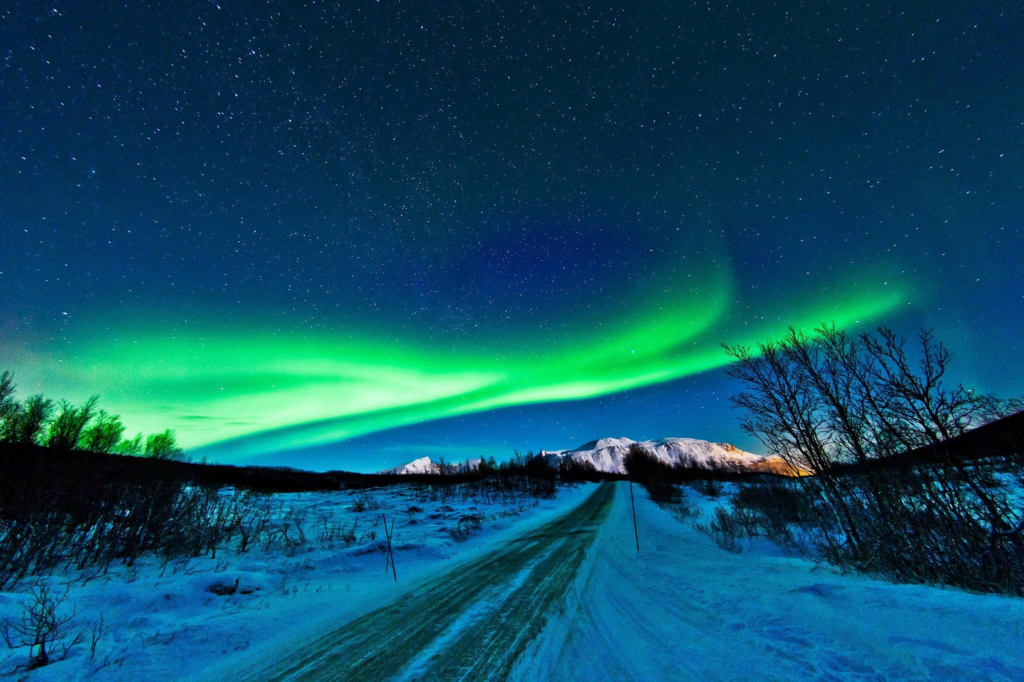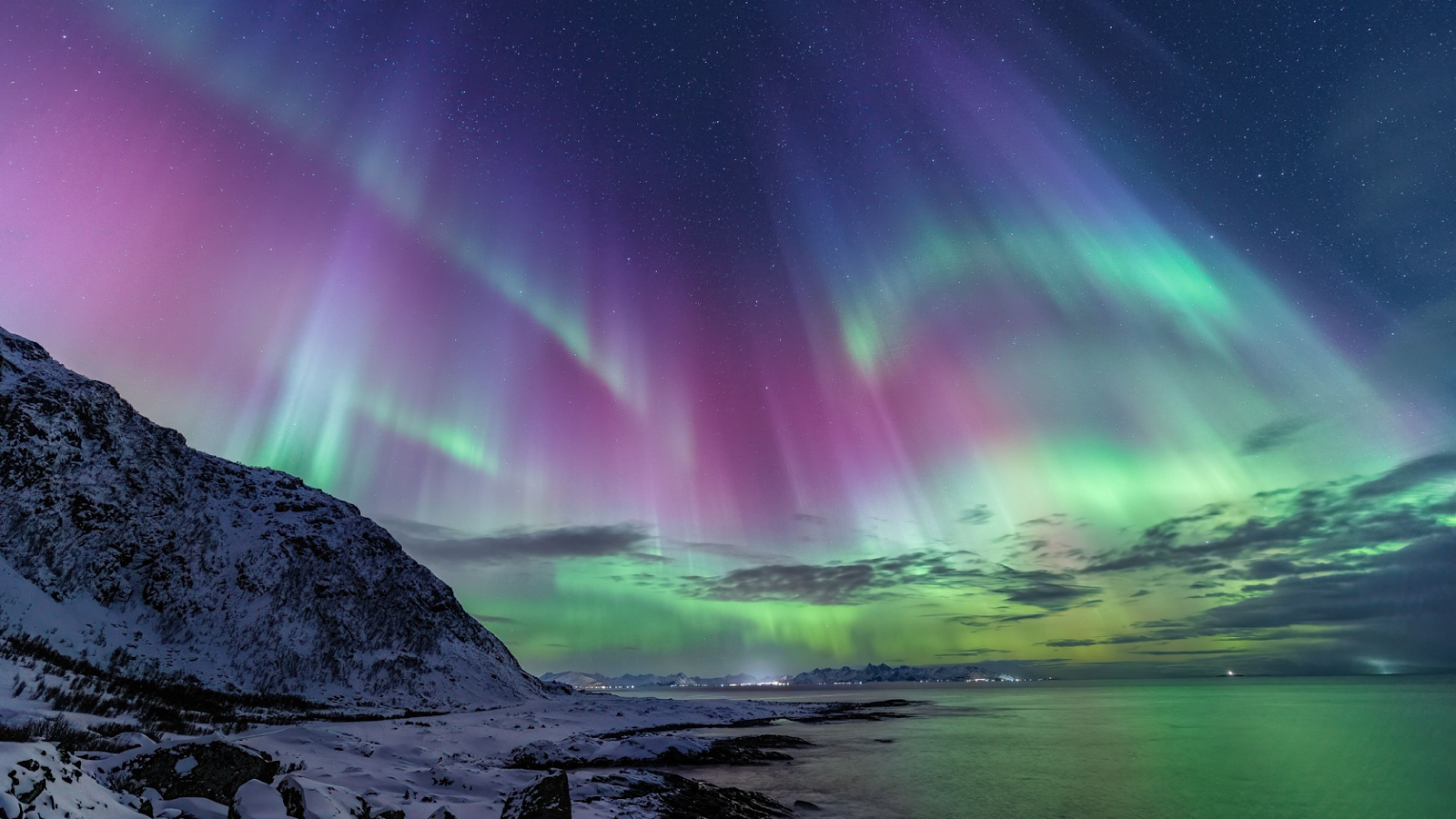
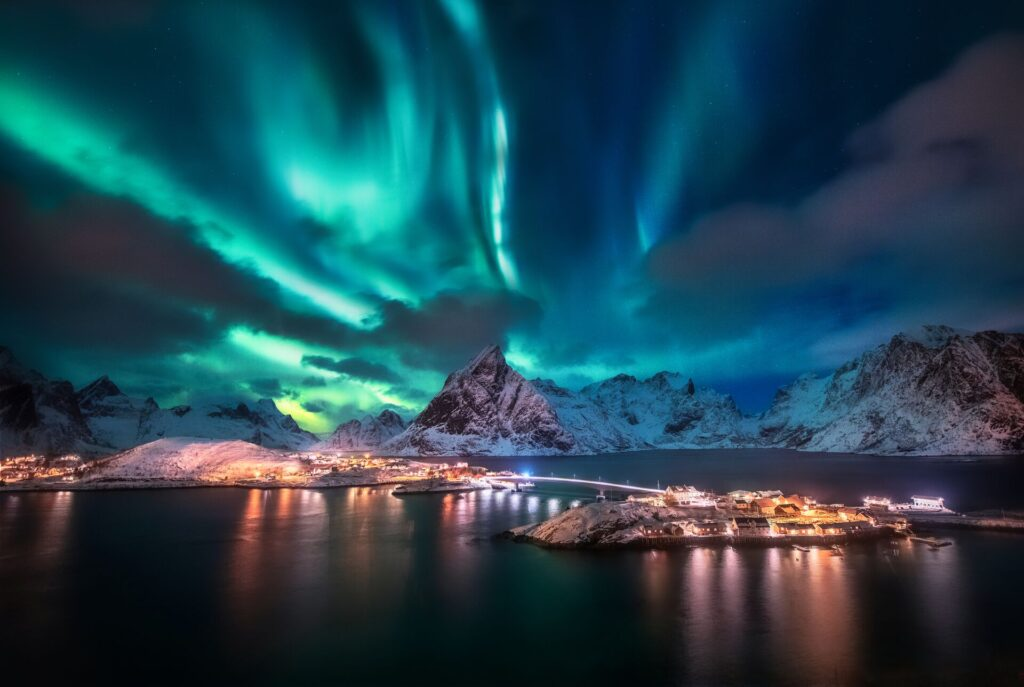
The Northern Lights are no longer just an Alaskan phenomenon. As solar activity intensifies, Americans are discovering stunning aurora displays in unexpected parts of the U.S. From remote national parks to quiet lakeside towns, these underrated aurora viewing locations are drawing photographers, travelers, and first-time skywatchers. This guide reveals where to go, why it works, and how to maximize your chances.
America’s Quiet Aurora Revolution
For decades, the idea of seeing the Northern Lights in the United States felt unrealistic unless you lived in Alaska. For most Americans, auroras were something you admired in photos from Iceland or Norway, not something you expected to witness from a snowy roadside or frozen lake back home.
That perception has changed—dramatically.
Over the past few years, and especially during the current surge in solar activity, auroras have been appearing farther south, more often, and with greater intensity. What’s surprising isn’t just that people are seeing them—it’s where they’re seeing them.
Small towns. National parks. Quiet shorelines. Remote plains.
Places that were never marketed as aurora destinations are suddenly becoming magnets for travelers, photographers, and curious locals stepping outside at midnight and realizing the sky is alive.
This article focuses on the most underrated aurora viewing locations in the U.S.—places that don’t dominate travel brochures but are quickly gaining attention because the science, geography, and timing are aligning perfectly.
Why Are Auroras Becoming More Visible Across the U.S.?
To understand why Americans are flocking to these places, it helps to understand what’s happening above Earth.
We are approaching the peak of Solar Cycle 25, part of the Sun’s natural 11-year cycle. During solar maximum, the Sun produces:
- More sunspots
- More solar flares
- More coronal mass ejections (CMEs)
When these solar eruptions interact with Earth’s magnetic field, they create geomagnetic storms. Strong storms expand the auroral oval—the ring around the poles where auroras occur—pushing it farther south than usual.
According to NOAA’s Space Weather Prediction Center, severe geomagnetic storms (classified as G4 or G5) can make auroras visible across:
- The Upper Midwest
- Northern Plains
- Northern New England
- Parts of the central U.S. during extreme events
In short, the Sun is more active—and the U.S. is directly benefiting.
What Makes a Location Ideal for Aurora Viewing?
Not every northern location suddenly becomes an aurora hotspot. The places that consistently deliver strong views tend to share common traits:
- Low light pollution
- Open northern horizons
- Higher latitude within the U.S.
- Cold, clear winter nights
- Proximity to water or open plains
The locations below quietly check these boxes—and that’s why people are flocking there.
1. Duluth, Minnesota — The Midwest’s Unexpected Aurora Capital
Duluth has become one of the most talked-about aurora locations in the continental U.S., and for good reason.
Situated on the western edge of Lake Superior, Duluth benefits from a vast, dark northern horizon. During recent geomagnetic storms, residents reported auroras not just near the horizon, but directly overhead—bright green curtains, purple streaks, and rippling waves visible to the naked eye.
What makes Duluth underrated is perception. Many Americans still associate auroras exclusively with Alaska, not Minnesota.
Why it works
- Lake Superior reduces light pollution
- Cold winter air increases clarity
- Easy access to shoreline viewpoints
Real-life example: During a recent G4 storm, first-time viewers described standing silently in parking lots, watching the sky “move like water.”
2. Marquette, Michigan — Upper Peninsula Brilliance
Michigan’s Upper Peninsula is one of the darkest regions east of the Mississippi River, and Marquette sits perfectly positioned along Lake Superior’s southern shore.
Auroras here have long been a quiet secret among locals, but recent solar storms have turned subtle glows into vivid, structured displays. Photographers regularly capture auroras reflecting off frozen lake surfaces and snow-covered forests.
Why people are discovering Marquette
- Extremely low light pollution
- Northern latitude advantage
- Clear skies following winter cold fronts
For many visitors, Marquette offers their first ever naked-eye aurora sighting—without leaving the lower 48 states.
3. International Falls, Minnesota — America’s Aurora Gateway
International Falls is one of the northernmost cities in the contiguous U.S., giving it a natural advantage.
Often nicknamed “The Icebox of the Nation,” this small town experiences long, dark winter nights—ideal for aurora viewing. During strong geomagnetic storms, auroras here often appear earlier in the evening than in more southern locations.
Why it’s underrated
- Small population keeps skies dark
- High aurora probability during storms
- Minimal tourism compared to Alaska
For travelers seeking authenticity and fewer crowds, International Falls delivers.
4. Ashland, Wisconsin — Lake Superior’s Quiet Star
Ashland rarely appears on aurora travel lists, but that’s changing fast.
Located along Lake Superior’s southern shore, Ashland benefits from water-enhanced darkness and fewer artificial lights. During recent aurora events, residents reported vibrant displays stretching across the lake and into the sky above town.
Key advantages
- Lower crowd density than nearby hotspots
- Easy lake access for viewing
- Strong visibility during moderate to severe storms
Ashland proves that you don’t need fame to have phenomenal skies.
5. Fargo, North Dakota — Plains That Come Alive at Night
Auroras over farmland may not sound dramatic—until you see them.
Fargo’s surrounding plains provide expansive, unobstructed views of the northern sky. With minimal terrain blocking the horizon, auroras here appear larger, more fluid, and more immersive.
Why Fargo surprises first-timers
- Wide-open skies enhance aurora movement
- Rural areas nearby offer extreme darkness
- Easy access without remote travel
Many viewers describe the experience as surreal—cosmic light above familiar, everyday landscapes.
6. Theodore Roosevelt National Park, North Dakota — Dark Sky Excellence
This national park is one of the most underrated dark-sky locations in the country.
Far from major cities, the park offers pristine night skies. During strong geomagnetic storms, auroras appear crisp, layered, and intensely colored—often accompanied by stars rarely visible elsewhere.
Why photographers love it
- National park-level darkness
- Dramatic badlands foregrounds
- Minimal human interference
It’s one of the best places to combine aurora viewing with landscape photography.
7. Isle Royale National Park, Michigan — Remote and Unforgettable
Isle Royale is difficult to reach—and that’s what makes it magical.
Located in Lake Superior, this isolated national park has virtually zero light pollution. When auroras appear, they dominate the sky and reflect endlessly across the water.
Why it remains underrated
- Limited access keeps crowds away
- One of the darkest skies in the Midwest
- Immersive, once-in-a-lifetime experiences
Visitors who witness auroras here often describe it as profoundly emotional.
8. Boundary Waters Canoe Area, Minnesota — Wilderness Auroras
The Boundary Waters offer some of the darkest skies in the continental U.S.
Miles from roads and cities, this wilderness area provides complete immersion in nature. During recent solar storms, winter campers and adventurers reported auroras stretching from horizon to horizon.
Why people are flocking here
- Total absence of light pollution
- Expansive lake reflections
- Growing reputation among serious skywatchers
This is aurora viewing at its most raw and authentic.
9. Aroostook County, Maine — The East Coast Secret
Auroras aren’t limited to the Midwest.
Northern Maine sits at a latitude comparable to parts of Minnesota and Michigan, yet it remains overlooked. Aroostook County’s rural landscape and long winter nights create excellent aurora conditions during strong storms.
Why it’s gaining attention
- Rare dark skies on the East Coast
- Increasing aurora reach during solar maximum
- Quiet, uncrowded viewing spots
Residents have reported auroras visible from backyards and open fields.
10. Voyageurs National Park, Minnesota — Water, Sky, and Light
Voyageurs National Park is uniquely designed for aurora viewing.
Located near the Canadian border and filled with interconnected lakes, the park offers stunning reflections that double the visual impact of auroras.
Why it stands out
- Northernmost positioning in Minnesota
- Protected darkness
- Incredible water-based reflections
Rangers and visitors alike have described some of the brightest auroras seen in the lower 48 here.
When Is the Best Time to See Auroras in These Locations?
Auroras are unpredictable, but trends exist.
Best Conditions
- Geomagnetic storms (Kp index 6+)
- Clear skies
- Minimal moonlight
- Time window: 10 PM to 2 AM
Common Mistake
Leaving too early. Auroras often appear suddenly after long quiet periods.
Practical Tips for First-Time Aurora Viewers
- Dress warmer than you think necessary
- Be patient—auroras arrive in waves
- Avoid city lights
- Check space-weather forecasts before traveling
- Don’t rely solely on phone cameras
Why Americans Prefer These Underrated Locations
More travelers are choosing these places because they offer:
- Fewer crowds
- Lower costs
- Authentic experiences
- Strong aurora visibility
Instead of chasing hype, people are chasing darkness—and finding magic.
Frequently Asked Questions (Trending in the U.S.)
1. Can you really see the Northern Lights in the U.S.?
Yes. During strong solar storms, auroras are visible across northern U.S. states.
2. Do you need special equipment to see auroras?
No. Strong auroras are visible with the naked eye.
3. Why do auroras look better in photos?
Cameras capture long exposures that intensify color.
4. Are auroras dangerous?
No. They are completely safe to observe.
5. How often do auroras appear in the U.S.?
More frequently during solar maximum (2024–2026).
6. Can auroras appear suddenly?
Yes. They can emerge within minutes.
7. Do lakes improve aurora viewing?
Yes. Water provides dark horizons and reflections.
8. Which direction should I look?
North, or toward open water or plains.
9. Do clouds ruin aurora viewing?
Yes. Clear skies are essential.
10. Is this the best aurora period in decades?
For the continental U.S., activity is among the strongest in over 20 years.
Final Takeaway
The Northern Lights are no longer an unreachable dream for Americans.
From quiet Midwest towns to remote national parks, underrated U.S. aurora viewing locations are delivering unforgettable night-sky experiences—often without the crowds or cost of international travel.
As solar activity continues to rise, these places won’t stay secret for long.
The only question is: which one will you choose?