Scientists warn that an exceptionally powerful solar storm expected around 2026 could produce the most widespread aurora displays in decades. Driven by the Sun’s peak activity phase, this event may push the Northern Lights deep into the United States. From what causes the storm to where auroras may appear, here’s what Americans should expect—and how to prepare.
Why Scientists Are Paying Unprecedented Attention to the Sun
The Sun has always been active, but what scientists are observing now is different.
Across research centers at NASA, NOAA, and international space agencies, solar physicists are reporting a steady rise in solar eruptions that exceed earlier forecasts. While solar storms occur every year, experts say the activity building toward 2026 has the potential to produce one of the most powerful aurora-triggering events in modern history.
For everyday Americans, this isn’t abstract science. It could mean something astonishingly simple yet profound: seeing the Northern Lights without leaving the country—or even their own state.
Understanding Solar Storms Without the Jargon
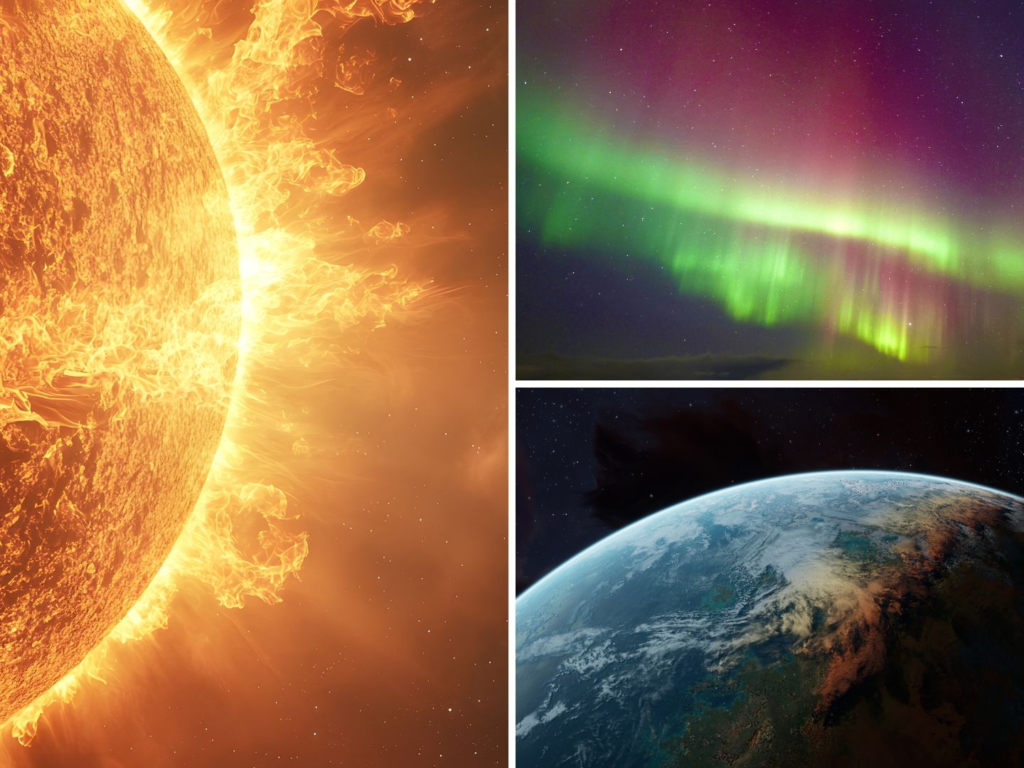
A solar storm begins with an explosion on the Sun. These explosions happen when tangled magnetic fields suddenly snap and release energy.
The two main solar events involved are:
- Solar flares, which release bursts of radiation
- Coronal mass ejections (CMEs), which hurl massive clouds of charged particles into space
When a CME is aimed at Earth, those particles can collide with our planet’s magnetic field, triggering a geomagnetic storm.
Auroras are the visible result of that collision.
Charged particles travel along Earth’s magnetic field lines and strike gases high above the planet, releasing energy in the form of light.
Why 2026 Is a Pivotal Year for Auroras
The Sun follows an 11-year solar cycle, swinging between quiet and highly active periods. Scientists call the most intense phase solar maximum.
All current indicators show that the Sun will be near peak activity in 2026—and possibly stronger than originally predicted.
During solar maximum:
- Sunspots multiply across the Sun’s surface
- Solar flares occur more often
- Coronal mass ejections grow more powerful
- Geomagnetic storms become more frequent
Data from NASA and NOAA suggest this cycle may rival some of the strongest in the past 50 years.
Could This Be the Strongest Aurora Trigger in Decades?
Scientists avoid definitive language, but many agree the conditions are unusually favorable.
The last time auroras spread deep into the United States was during extreme storms in:
- 1989, when auroras reached Texas and a power grid collapsed in Canada
- 2003, during the “Halloween Storms”
- 2024, when auroras were photographed across southern states
Modeling suggests a similar—or stronger—event could occur in 2026 if a large CME strikes Earth directly.
How Far South Could the Northern Lights Reach?
This is one of the most searched questions in the U.S.
Under normal conditions, auroras remain near the Arctic. But during G4 or G5-level geomagnetic storms, the auroral oval expands dramatically.
Scientists say auroras could potentially be visible in:
- The Midwest
- The Northeast
- The Pacific Northwest
- Texas and the Deep South
- Possibly parts of Florida during extreme storms
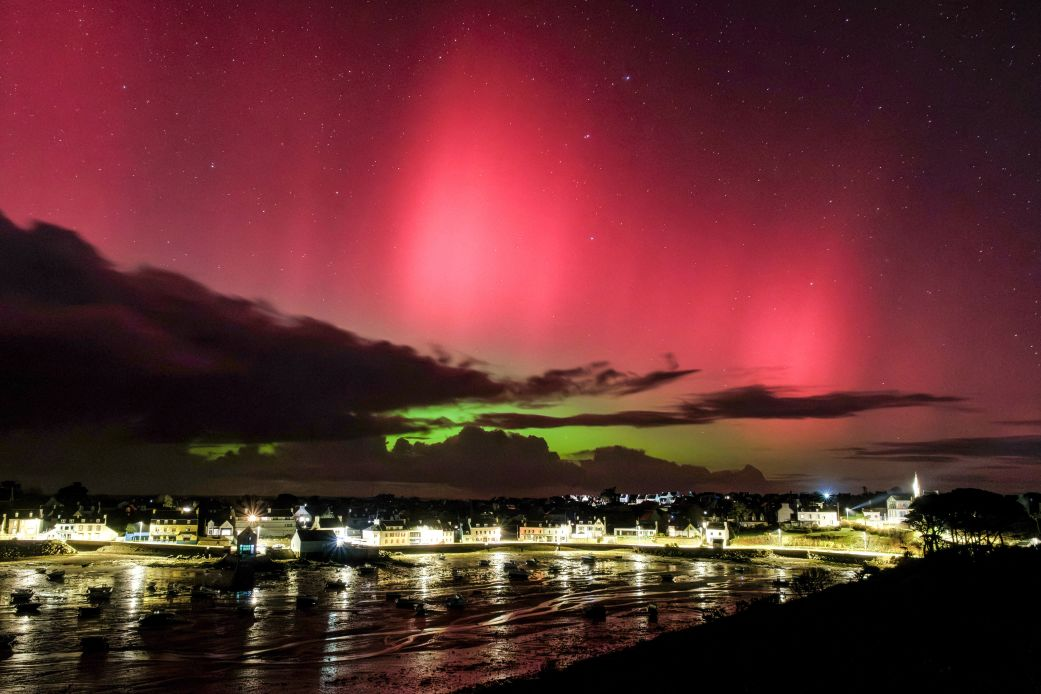
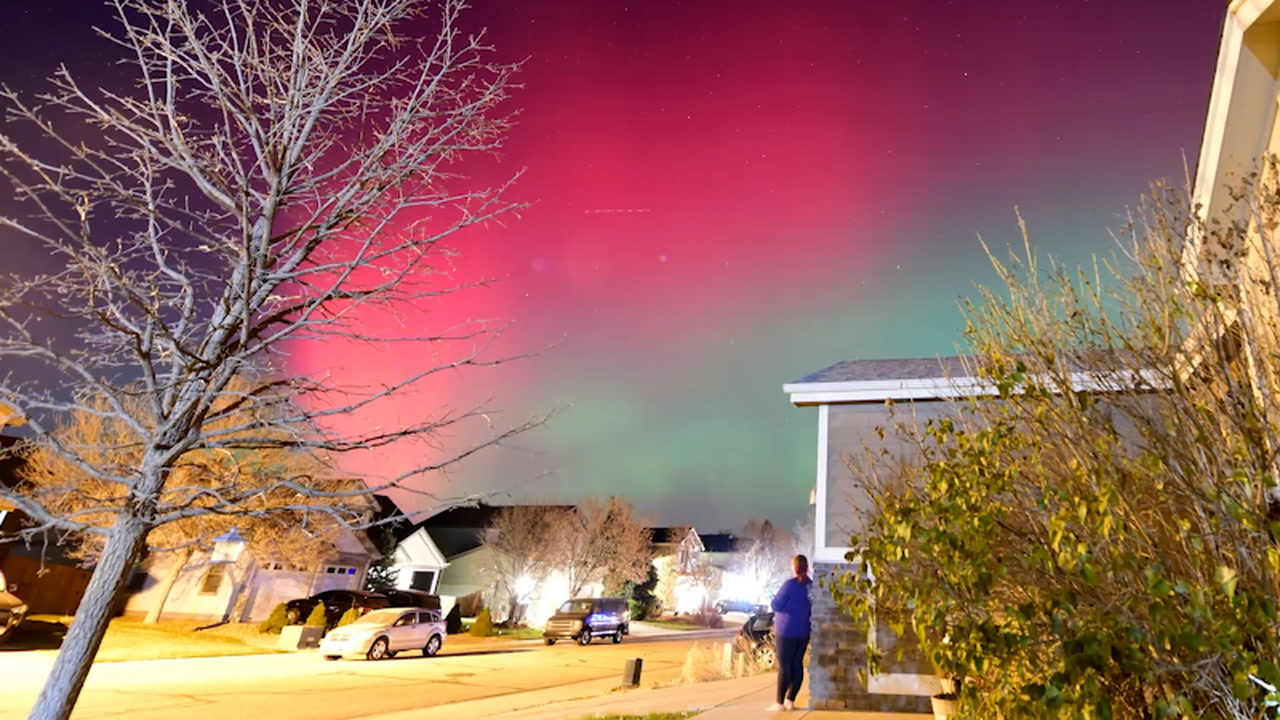
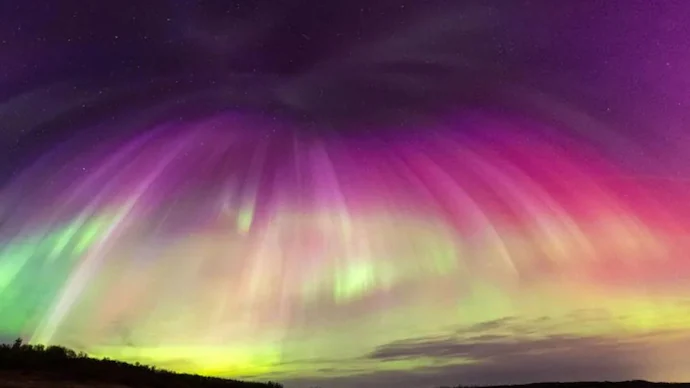
In southern regions, auroras usually appear as red or pink glows rather than bright green curtains.
Real-Life Moments That Hint at What 2026 Could Bring
In May 2024, residents in Texas, Alabama, and Georgia shared images of strange red skies. Many thought it was city light reflection—until experts confirmed auroras.
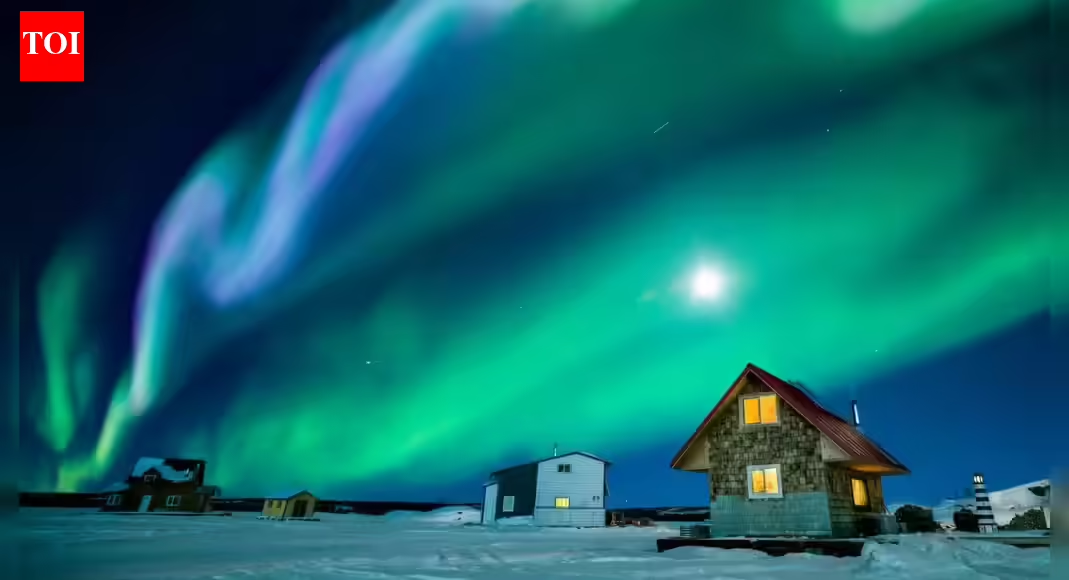
In northern states like Minnesota and Wisconsin, families watched green lights ripple overhead, reflecting off lakes and snow.
Those moments served as a preview of what a larger storm in 2026 could deliver.
Why Auroras Change Color as They Move South
Auroral colors depend on altitude and atmospheric gases.
- Green auroras form when oxygen is struck at lower altitudes
- Red auroras appear higher up and dominate southern sightings
- Purple and blue hues come from nitrogen interactions
Southern auroras tend to be red because solar particles interact higher in the atmosphere.
Are Solar Storms Dangerous?
For people on the ground, the answer is reassuring.
Auroras themselves are completely harmless.
However, strong solar storms can affect technology.
Possible Impacts Scientists Monitor
- GPS signal disruptions
- Radio communication interference
- Satellite malfunctions
- Aviation navigation issues
- Rare power grid stress
Modern systems are far more resilient than in the past, but precautions are still taken during major storms.
How Scientists Predict Solar Storms
Space-weather forecasting has advanced dramatically.
Today’s predictions rely on:
- Solar observation satellites
- Real-time magnetic field measurements
- Artificial intelligence models
- Historical storm comparisons
Scientists can usually provide 1–3 days’ notice before a major storm reaches Earth.
How Americans Can Prepare for the 2026 Aurora Event
You don’t need specialized gear—just the right conditions and timing.
Practical Aurora-Viewing Tips
- Monitor NOAA space-weather alerts
- Avoid city lights
- Look north after sunset
- Use smartphone night mode
- Be patient and check repeatedly
Even faint auroras often appear brighter on camera than to the naked eye.
Is Climate Change Making Solar Storms Worse?
This is a common misconception.
Solar storms are driven by solar activity, not Earth’s climate. Climate change does not influence the Sun’s magnetic cycle.
However:
- Light pollution reduces visibility
- Clear skies improve viewing conditions
- Rural areas offer the best experience
The storm itself is purely solar in origin.
Why Scientists Are Excited About 2026
Beyond public fascination, 2026 represents a rare research opportunity.
Today’s scientists have tools earlier generations lacked:
- High-resolution solar imaging
- Global satellite networks
- Citizen scientists sharing real-time data
- Advanced computer modeling
Each major storm improves predictions that protect satellites, power grids, and astronauts.
Why This Solar Storm Matters to Everyday Americans
This isn’t just a scientific event—it’s a human one.
For families who have never traveled north, seeing auroras from home could become a once-in-a-lifetime memory. It’s a reminder that Earth exists within a dynamic solar system—and that the universe still has the power to surprise us.
Key Takeaways
- The Sun is approaching peak activity in 2026
- A major solar storm could trigger widespread auroras
- Northern Lights may be visible far into the U.S.
- Auroras are safe but technologically significant
- Preparation increases viewing chances
Frequently Asked Questions (10 Trending FAQs)
1. Will 2026 really bring stronger auroras?
Scientists say the odds are high due to solar maximum.
2. How far south could auroras appear?
Possibly as far as Texas or the Deep South during extreme storms.
3. Are solar storms dangerous to people?
No, auroras are harmless to humans.
4. Can solar storms disrupt power grids?
Rarely, but extreme storms can stress systems.
5. What colors will southern auroras show?
Mostly red and pink hues.
6. How long do solar storms last?
From several hours to multiple days.
7. Can I photograph auroras with my phone?
Yes, night mode works very effective.
8. Is climate change responsible for stronger auroras?
No, solar activity is independent of Earth’s climate.
9. How will I know when to look?
NOAA space-weather alerts provide warnings.
10. Will auroras continue after 2026?
Yes, solar activity remains elevated for years.