A rare and powerful solar storm is increasing the chances that auroras could be visible far beyond their usual Arctic range—potentially reaching the Deep South. Scientists say intense solar eruptions, combined with favorable magnetic conditions, may allow Northern Lights to appear in states like Texas, Alabama, Georgia, and Mississippi. Here’s what’s happening, why it matters, and how to watch.
A Once-in-a-Generation Sky Event May Be Unfolding
For most Americans, the Northern Lights feel like something that belongs to another world. You see them in photos from Alaska or Iceland, glowing in impossibly green skies above snowy landscapes. The Deep South, by contrast, is associated with warm evenings, cicadas, and star-filled summer nights—not auroras.
But right now, scientists are warning that this expectation may be outdated.
A rare and unusually strong solar storm is interacting with Earth’s magnetic field in a way that could push auroral activity far south of its normal boundaries. If conditions align, people living in the southern United States—areas traditionally considered far outside the auroral zone—may witness a faint but unmistakable glow in the night sky.
For many, this could be a once-in-a-lifetime event.
What Is a Solar Storm, and Why Does It Matter So Much Right Now?
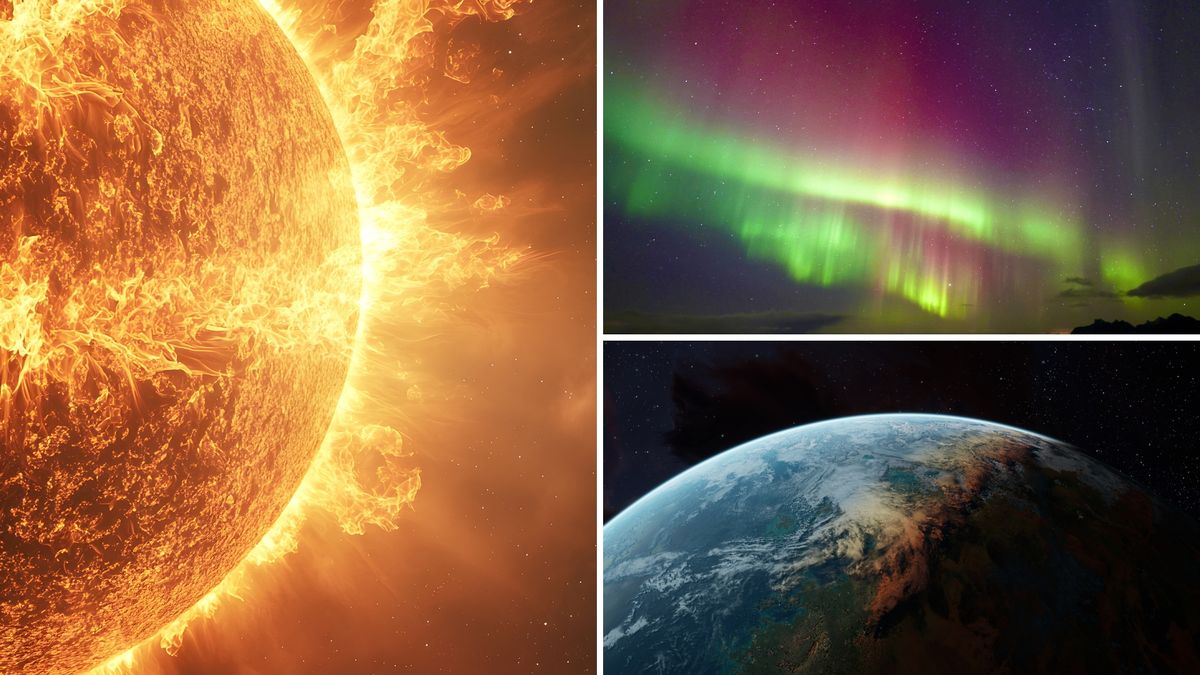
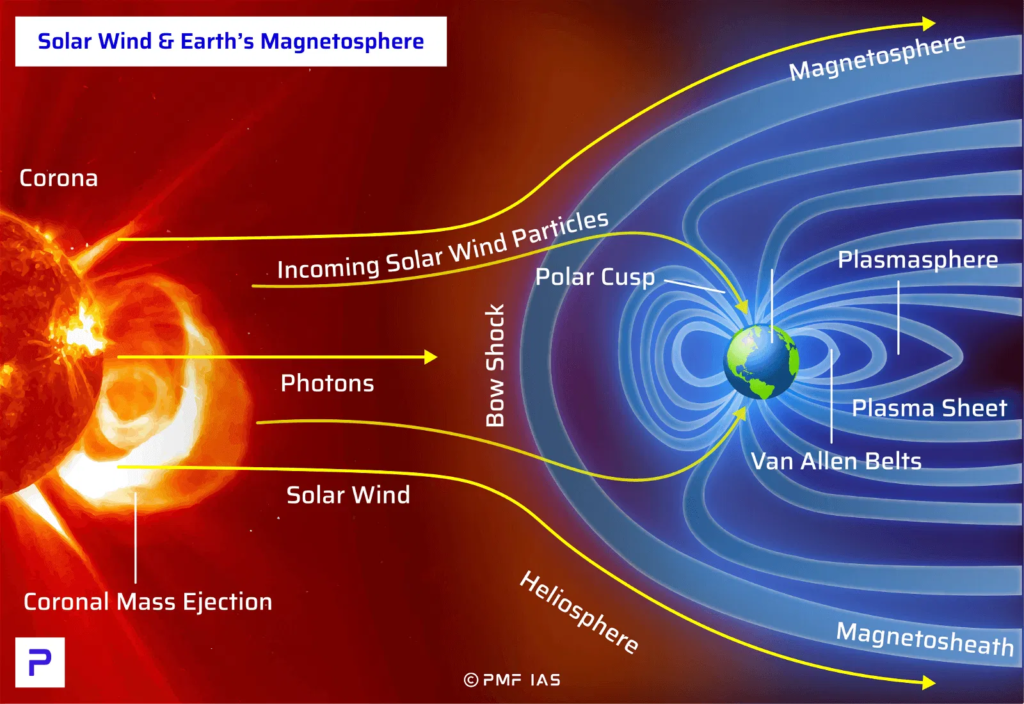
A solar storm begins on the Sun. When intense magnetic energy builds up on the solar surface, it can be released suddenly in the form of solar flares or coronal mass ejections (CMEs). These events hurl enormous amounts of charged particles into space.
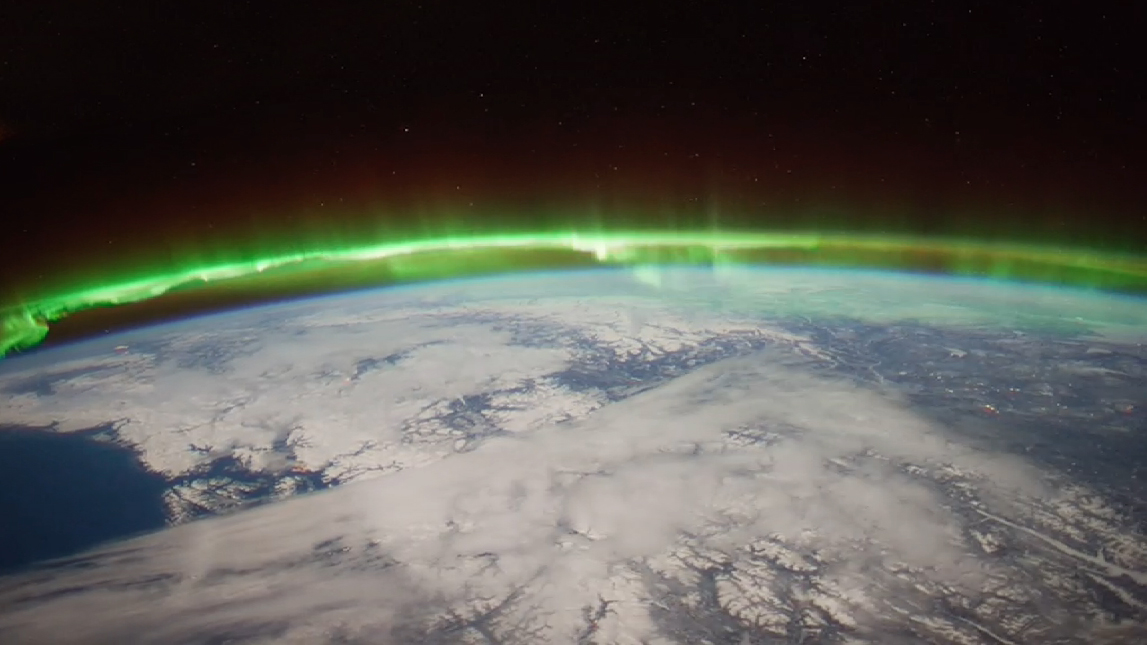
When those particles reach Earth, they interact with our planet’s magnetic field. Most of the time, Earth’s magnetosphere deflects the energy toward the poles, where it creates auroras over polar regions.
This storm is different because of its strength, speed, and direction.
Instead of grazing Earth’s magnetic field, the solar material is expected to hit it head-on, compressing the magnetosphere and allowing auroral activity to spread much farther south than usual.
Why Scientists Are Calling This Solar Storm “Rare”
Solar storms are not uncommon. But storms capable of producing auroras in the Deep South are exceptionally rare.
Scientists are closely watching this event because it combines several unusual characteristics:
- Multiple powerful solar eruptions occurring close together
- High-speed coronal mass ejections traveling directly toward Earth
- Timing that aligns with heightened solar activity in the current solar cycle
- Magnetic orientation that favors strong Earth-Sun interaction
When all of these factors occur simultaneously, the result can be a severe geomagnetic storm—the kind that expands the auroral oval far beyond its normal range.
Why the Deep South Could See Auroras This Time
The Deep South lies thousands of miles south of where auroras are usually visible. Under normal conditions, Earth’s magnetic field simply does not allow auroras to reach that far.
During extreme solar storms, however, the situation changes.
Here’s what happens during powerful storms:
- Earth’s magnetic field temporarily weakens under intense pressure
- Charged particles penetrate deeper into the magnetosphere
- The auroral oval expands southward by hundreds or even thousands of miles
- High-altitude auroras become visible from lower latitudes
This is why scientists say southern auroras, while rare, are scientifically plausible during events like this.
Which Southern States Have the Best Chance of Seeing the Aurora?
Not every location in the South has the same odds. Latitude, light pollution, and weather all matter.
Based on current forecasts, the best chances are in:
- Texas
- Oklahoma
- Arkansas
- Louisiana
- Mississippi
- Alabama
- Georgia
- Tennessee
- South Carolina
- Northern Florida
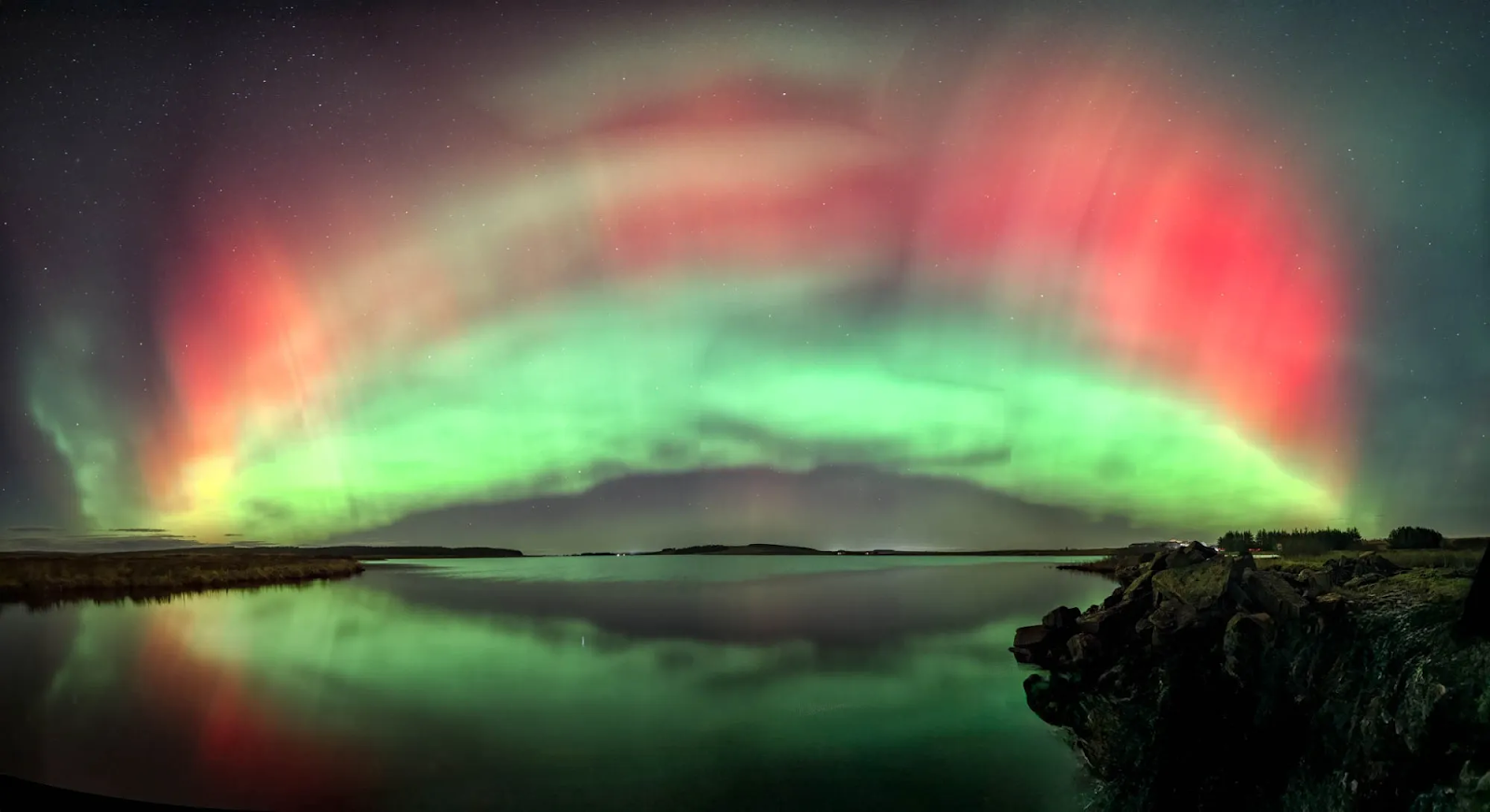
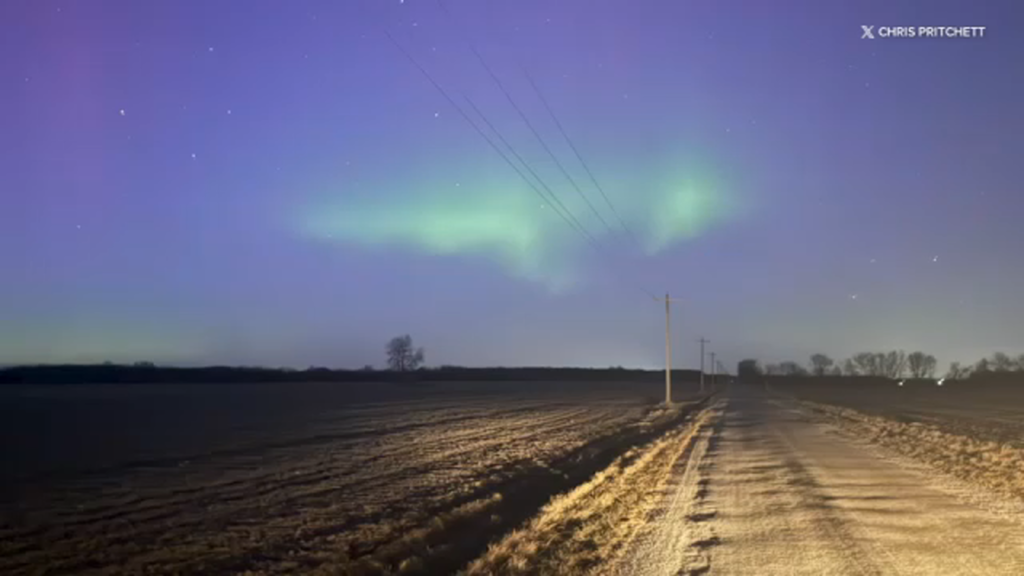
In these areas, auroras are most likely to appear as faint red or pink glows low on the northern horizon rather than bright overhead displays.
What Will the Aurora Look Like in the Deep South?
Many people expect the Northern Lights to look exactly like the vivid green curtains seen in photos from Alaska. In the South, the experience is often more subtle.
Southern auroras typically appear as:
- Dim red or crimson arcs near the horizon
- Soft pink or purple glows during peak activity
- Occasional pale green streaks under exceptional conditions
These colors form at much higher altitudes in Earth’s atmosphere, which is why they can be seen from farther away—even when the aurora itself is happening hundreds of miles north.
Real-Life Examples: When the South Has Seen Auroras Before
Although rare, auroras in the Deep South are not unprecedented.
During the 1859 Carrington Event, one of the strongest solar storms in recorded history, newspapers in the southern United States described skies glowing red all night. People reportedly woke up thinking dawn had arrived early.
More recently, during the 2003 Halloween Solar Storms, residents in Texas, the Carolinas, and parts of the Southeast reported unusual red glows and shimmering skies.
In each case, the sightings were brief—but unforgettable.
Why Phone Cameras Often Detect Auroras Before Human Eyes
One reason people miss southern auroras is that they’re often faint. Human eyes struggle to detect color in low light, especially reds.
Smartphone cameras, however, are surprisingly effective.
Using night mode or long exposure:
- Cameras can capture colors invisible to the naked eye
- Faint auroral arcs appear more defined
- Movement becomes easier to spot
Many people only realize they witnessed an aurora after reviewing photos they took “just in case.”
Is This Solar Storm Dangerous for People?
This is one of the most searched questions whenever solar storms make headlines.
The answer is clear: auroras are not dangerous to humans.
Earth’s atmosphere blocks harmful radiation long before it reaches the ground. Watching an aurora is completely safe.
However, solar storms can affect technology:
- Minor satellite disruptions
- Temporary GPS inaccuracies
- Airline route adjustments near the poles
- Power grid monitoring alerts
Modern infrastructure is built with space weather in mind, and no major disruptions are expected from this event.
Why Solar Cycle 25 Increases the Chances of Southern Auroras
The Sun follows an approximately 11-year activity cycle. We are currently approaching the most active phase of Solar Cycle 25.
During this period:
- Sunspots increase in number
- Solar flares become more frequent
- Strong geomagnetic storms become more likely
Scientists predicted that this cycle would be moderately strong. Recent activity suggests it may be more intense than expected, increasing the odds of rare events like southern auroras.
How to Know If the Aurora Might Be Visible Where You Live
Auroral visibility depends on real-time conditions that can change quickly.
Key indicators to monitor:
- NOAA auroral forecast maps
- Kp Index values of 7 or higher
- Clear skies after sunset
- Low light pollution
If forecasts show the auroral oval extending south of your latitude, it’s worth stepping outside and looking north.
Best Places in the Deep South to Watch for Auroras
Location matters more than most people realize.
Ideal viewing locations include:
- Rural areas far from city lights
- Open fields or elevated terrain
- Clear northern horizons
- Coastal areas with unobstructed skies
Many southern aurora sightings happen accidentally—noticed while driving or walking outside rather than during planned skywatching sessions.
How Long Could This Aurora Event Last?
Solar storms evolve over days, not minutes.
This event may:
- Peak over one or two nights
- Fade temporarily
- Intensify again as additional solar material arrives
That’s why scientists encourage people to stay alert even if nothing appears at first.
Why This Event Matters Beyond the Visual Beauty
Auroras are not just beautiful—they’re scientifically valuable.
This storm allows researchers to:
- Test space-weather forecasting models
- Study Earth’s magnetic response
- Improve early warning systems
- Better understand risks to satellites and power grids
Each rare southern aurora adds to our understanding of how Earth and the Sun interact.
Common Misconceptions That Cause People to Miss Auroras
Many people assume they didn’t see an aurora when, in fact, they did.
Common misconceptions include:
- Thinking auroras must be bright to count
- Assuming clouds don’t matter
- Underestimating light pollution
- Believing auroras only appear overhead
In reality, patience and awareness are key.
What to Do If You Think You’re Seeing an Aurora
If the sky looks unusual:
- Take a photo using night mode
- Look for slow movement or shimmering
- Check real-time aurora alerts
- Compare observations with others nearby
Even faint glows can be auroras during strong storms.
10 Relevant FAQs (Search-Optimized)
1. Can the Northern Lights really be seen in the Deep South?
Yes, during rare and powerful solar storms, auroras can extend into southern states.
2. Which southern states are most likely to see auroras?
Texas, Alabama, Georgia, Mississippi, Louisiana, and nearby states have the best chance.
3. What causes auroras to move south?
Extreme solar storms temporarily weaken Earth’s magnetic defenses.
4. What time is best to watch for auroras?
After sunset through early morning, especially near midnight.
5. Do I need special equipment to see an aurora?
No, but a smartphone camera can help detect faint colors.
6. Are auroras brighter in rural areas?
Yes, low light pollution significantly improves visibility.
7. Can clouds block auroras?
Yes, completely. Clear skies are essential.
8. Is this solar storm related to climate change?
No, auroras are driven by solar activity, not Earth’s climate.
9. How rare are auroras in the Deep South?
Extremely rare—often once per decade or less.
10. Where can I track aurora forecasts reliably?
NOAA’s Space Weather Prediction Center is the most trusted source.
Final Takeaway: A Rare Chance to Witness Cosmic History
Auroras in the Deep South are not impossible—but they are extraordinary.
This rare solar storm offers a fleeting opportunity for millions of Americans to witness a phenomenon usually reserved for the far north. Even a faint glow on the horizon is a reminder that our planet is connected to powerful forces far beyond Earth.
If the skies cooperate, this may be one of those nights people talk about for decades.