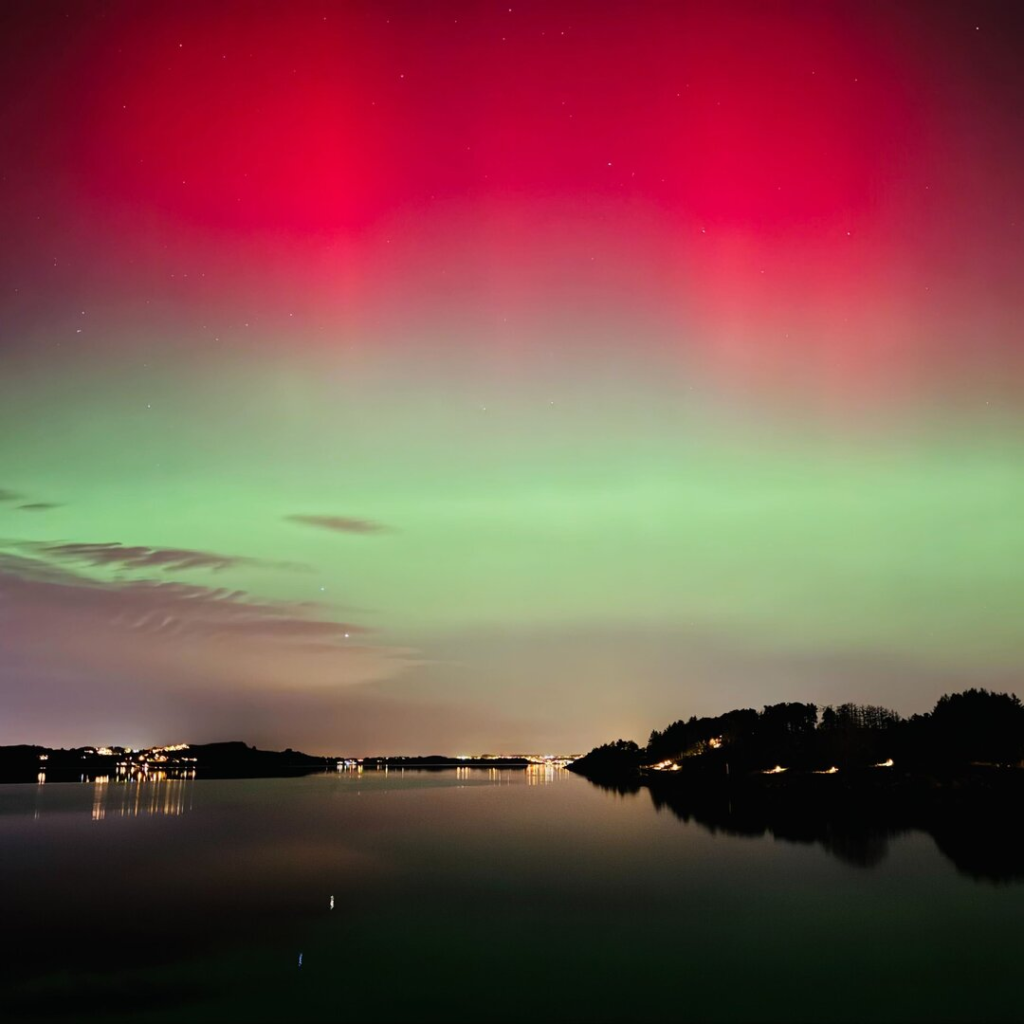
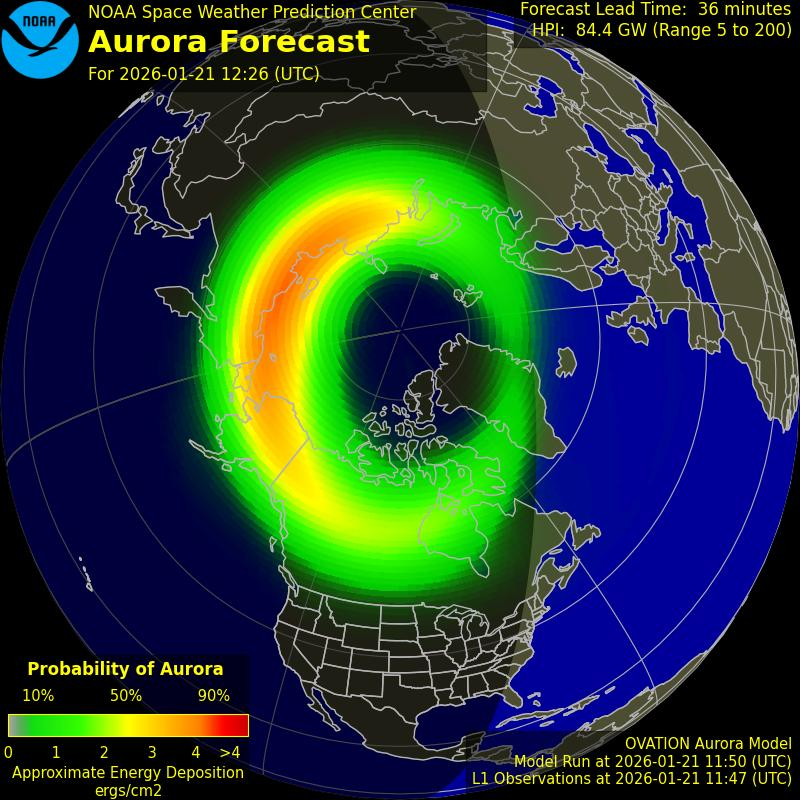
A real-time aurora forecast map is revealing where the Northern Lights could be visible across the United States tonight. Powered by live space-weather data, the map shows probability zones, timing windows, and storm strength—helping Americans decide whether it’s worth stepping outside. Here’s how the map works, how to read it correctly, and how not to miss a rare sky show.
Why a Single Map Has Millions of Americans Looking Up Tonight
On some nights, the internet feels unusually synchronized. Weather apps buzz with alerts. Social media fills with glowing ovals. News stations tease a cosmic event. And one question dominates search engines:
“Will I be able to see the Northern Lights tonight?”
The reason is simple: a surge of solar energy is interacting with Earth’s magnetic field, and one widely trusted aurora map is showing that the Northern Lights may stretch far beyond their usual Arctic home.
In recent years, Americans in states like Texas, Alabama, Georgia, California, and Arizona have witnessed auroras they never expected to see in their lifetime. Tonight’s conditions suggest it could happen again—or at least come close enough to try.
But seeing auroras isn’t about luck. It’s about understanding the map.
What Is “The One Map” Everyone Is Sharing?
The map going viral isn’t a random graphic or social media guess. It’s an aurora visibility forecast map, most commonly based on data from NOAA’s Space Weather Prediction Center and real-time satellite measurements.
This map:
- Updates using live solar-wind data
- Shows where auroras may be visible
- Reflects probability, not certainty
- Is used by scientists and infrastructure operators
Unlike hype-driven posts, this map is rooted in physics.
How This Aurora Map Actually Works (Without the Jargon)
At the heart of the map is something called geomagnetic activity—how strongly Earth’s magnetic field is being disturbed by the Sun.
In simple terms:
- The Sun releases charged particles
- Those particles reach Earth
- Earth’s magnetic field reacts
- The stronger the reaction, the farther south auroras can appear
The map combines:
- Solar wind speed
- Particle density
- Magnetic field orientation
- Historical aurora behavior
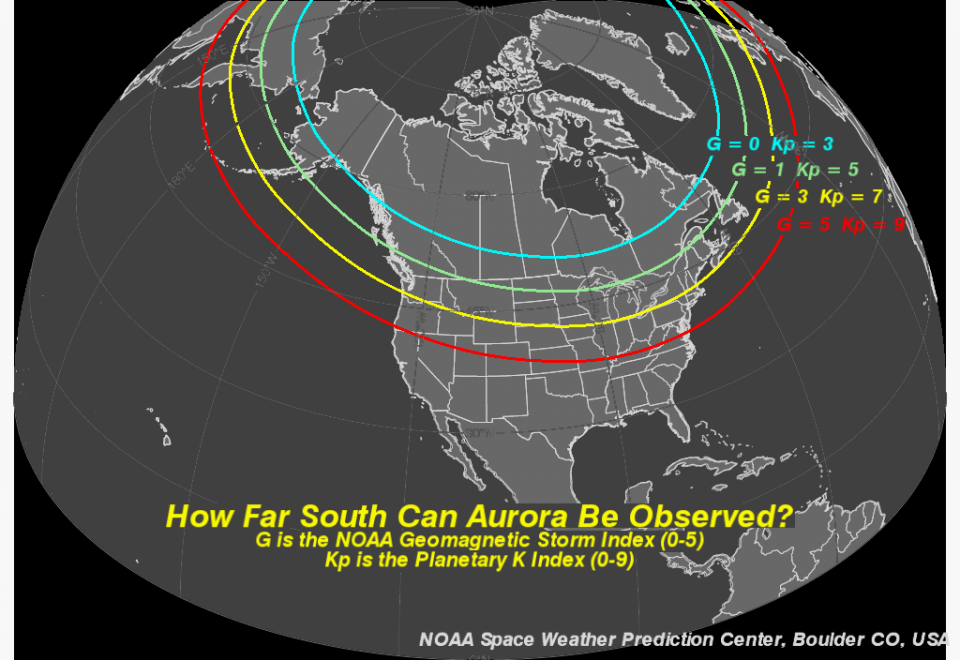
The output is a visual “oval” showing possible aurora reach.
Why This Map Is More Trustworthy Than Viral Claims
Every aurora season brings exaggerated posts claiming the Northern Lights will be visible “everywhere tonight.”
Most are wrong.
This map is different because it:
- Uses real satellite data
- Updates as conditions change
- Shows uncertainty honestly
- Is used operationally, not for clicks
It doesn’t guarantee beauty—it shows opportunity.
How to Read the Aurora Map Correctly (And Avoid Disappointment)
Many people misunderstand the map and walk away disappointed.
Here’s how to read it properly:
- The colored oval means possible visibility
- Being inside the oval ≠ guaranteed aurora
- Being outside ≠ impossible
- Brightness varies dramatically by latitude
- Cloud cover matters just as much
Auroras are not stadium lights. They are subtle, shifting, and unpredictable.
Which US States Have the Best Chances Tonight?
Based on typical forecast patterns during similar conditions, the highest chances usually fall across:
- Northern Plains (North Dakota, Montana)
- Upper Midwest (Minnesota, Wisconsin, Michigan)
- Pacific Northwest (Washington, Oregon)
- Northern New England (Maine, Vermont, New Hampshire)
During stronger geomagnetic storms, auroras have been confirmed as far south as:
- Texas
- Alabama
- Georgia
- Northern California
That’s why tonight’s map is generating so much attention.
Why Americans Are Seeing Auroras More Often Than Ever
This isn’t coincidence.
We are currently in Solar Cycle 25, a period of heightened solar activity that peaks roughly every 11 years.
During this phase:
- Solar flares increase
- Geomagnetic storms intensify
- Auroras travel farther from the poles
NASA and NOAA scientists have noted that Solar Cycle 25 is more active than originally forecast, meaning more aurora opportunities across the US.
Real-Life Example: When the Map Was Right—but People Still Missed It
During a major storm last year, thousands of people posted comments like:
- “The map said yes, but I saw nothing”
- “My friend saw it, I didn’t”
- “I gave up after 10 minutes”
What happened?
Common issues included:
- Looking too early
- Giving up too fast
- Staying near city lights
- Expecting bright green waves
Auroras often arrive quietly—and briefly.
What the Northern Lights Might Actually Look Like Tonight
For many Americans, especially south of Canada, auroras appear subtle.
Instead of dramatic green curtains, you may see:
- A pale white or gray glow
- A faint red or pink band near the horizon
- A milky brightness that moves slightly
- Colors that show up better in photos than by eye
This is normal—and still counts.
The Best Time to Check the Map and Look Outside
Timing matters more than location.
General guidance:
- Best viewing: 10 PM to 2 AM local time
- Activity often spikes around midnight
- Short bursts can last 10–30 minutes
- Clear skies are critical
Many people miss auroras by checking only once.
How to Combine the Map With Real-World Conditions
The map alone isn’t enough.
To maximize your chances:
- Check local cloud forecasts
- Get away from city lights
- Face north or northeast
- Let your eyes adjust for 15–20 minutes
- Use your phone’s night mode
The map tells you where. Preparation determines success.
Why Scientists and Utilities Rely on the Same Data
Aurora maps aren’t made for tourism.
Similar forecasts are used to:
- Protect power grids
- Monitor transformer risk
- Manage satellite operations
- Reroute polar flights
If scientists trust the data, it’s worth respecting.
Is the Aurora Map Ever Wrong? Yes—and Here’s Why
Space weather is chaotic.
The Sun can:
- Change speed unexpectedly
- Shift magnetic direction suddenly
- Strengthen or weaken with little warning
That’s why aurora forecasts improve closer to real time. A map from noon can look very different by midnight.
How Rare Are Nights Like This?
Strong auroras visible across large parts of the US:
- Happen a few times per solar cycle
- Are more common near solar maximum
- Rarely last more than one or two nights
If the map shows your area tonight, it’s worth the effort.
Common Reasons People Miss the Northern Lights
Most missed auroras aren’t because the map was wrong.
They happen because people:
- Expect instant results
- Don’t wait long enough
- Stay in bright areas
- Don’t use their camera
- Assume “faint” means “nothing”
Aurora watching rewards patience.
Why Your Phone Camera Might See the Aurora First
Many people discover auroras through photos.
That’s because:
- Cameras collect light over time
- Human eyes lose color sensitivity in darkness
- Red auroras are especially hard to see
If your photo shows color, the aurora is there—even if it looks faint to you.
10 Trending FAQs Americans Are Asking Tonight
1. What is the best aurora map to use tonight?
NOAA-based aurora forecast maps are the most reliable.
2. Does being inside the map zone guarantee auroras?
No. It indicates possibility, not certainty.
3. Can I see auroras from my city?
Yes, but light pollution reduces visibility.
4. What time should I look for the Northern Lights?
Between 10 PM and 2 AM local time.
5. Do auroras always look green?
No. Many appear white, gray, red, or pink.
6. Can my phone help me see auroras?
Yes. Night mode often reveals them first.
7. Why does the aurora map keep changing?
Because solar conditions change rapidly.
8. How far south can auroras reach?
During strong storms, as far south as Texas or Alabama.
9. Are auroras dangerous to watch?
No. They are completely safe.
10. Will there be more chances like this soon?
Possibly. Solar Cycle 25 is increasing aurora frequency.
Why This One Map Matters More Than the Headlines
Headlines create excitement.
This map creates opportunity.
It replaces guessing with data, hype with probability, and disappointment with preparation.
For thousands of Americans, it has already led to their first aurora sighting—from places they never imagined possible.
Final Takeaway: Look Up Tonight—but Look Smart
The Northern Lights don’t follow schedules. They follow physics.
This one map gives you the best possible chance to be in the right place at the right time—but only if you use it wisely.
If the map shows your area, step outside.
If the sky is clear, stay patient.
If nothing happens at first, don’t give up.
Because when the universe decides to paint the sky, it rarely offers second chances.