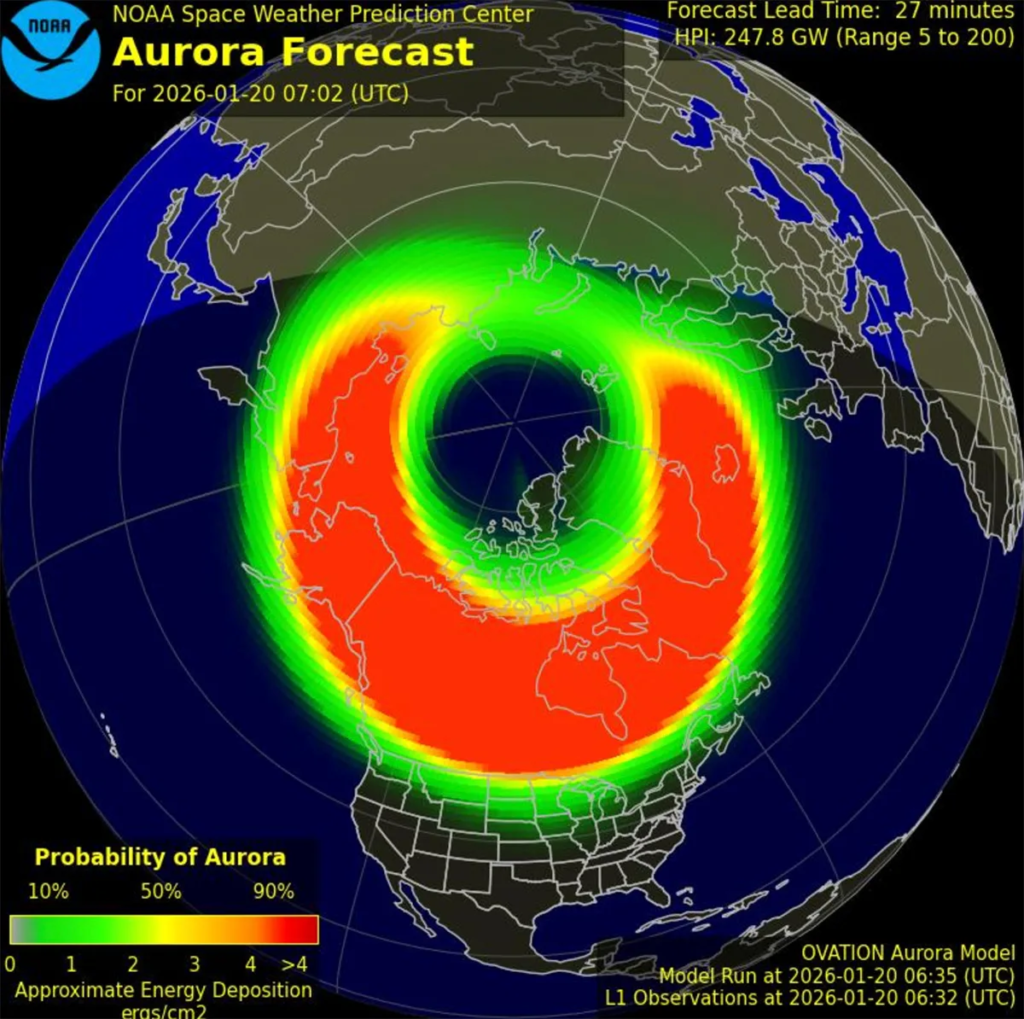
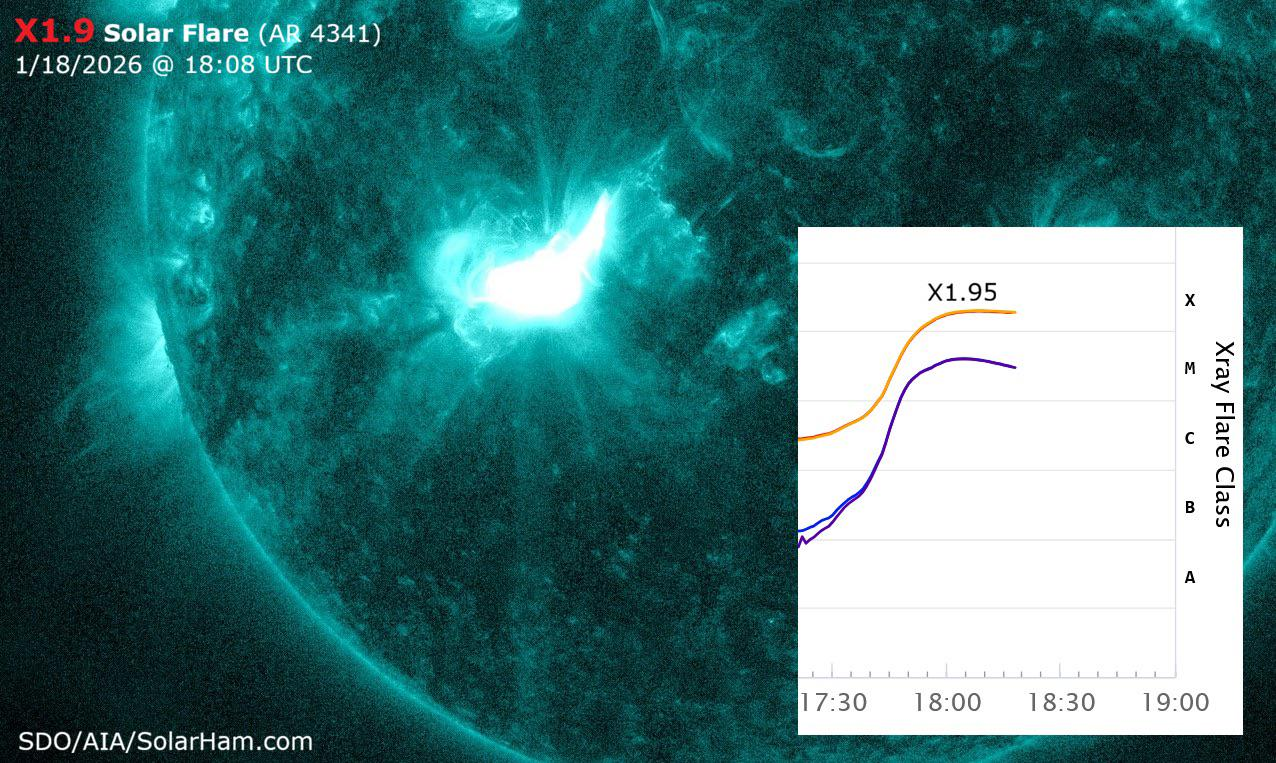
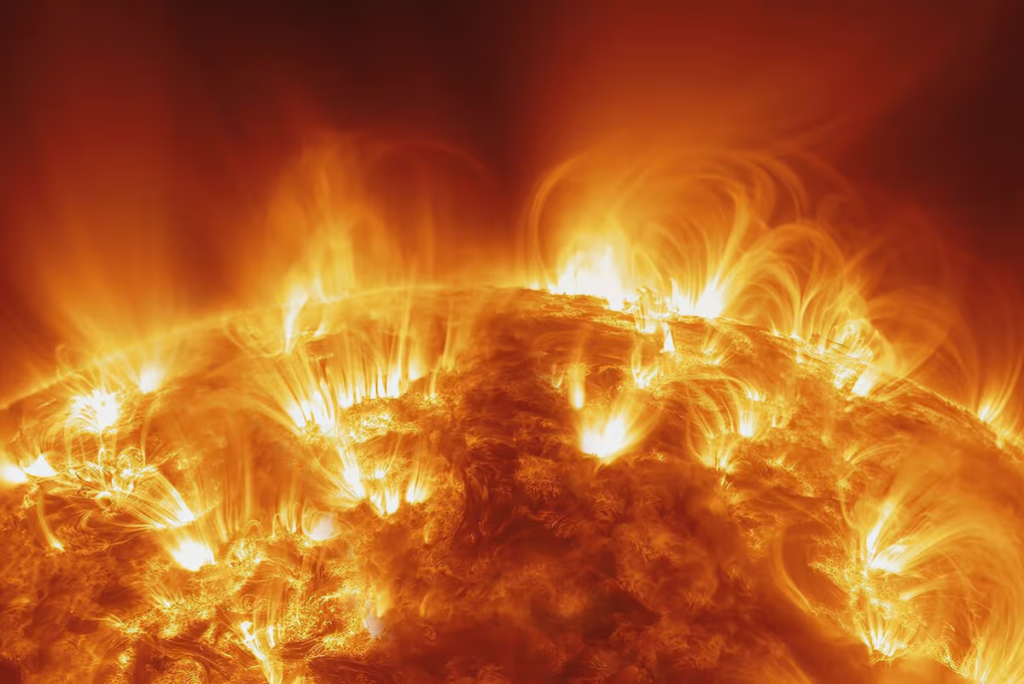
The Sun has unleashed a powerful solar flare that scientists say could trigger one of the most dramatic aurora displays across the United States in years. NOAA and NASA space-weather experts are tracking this “monster flare” for its potential to spark severe geomagnetic storms, pushing vivid Northern Lights far beyond their usual Arctic boundaries and into unexpected parts of the U.S.
Introduction: When the Sun Makes Headlines, Earth Pays Attention
When scientists announce that the Sun has fired a “monster flare,” it’s not clickbait—it’s a serious space-weather event with real consequences for Earth. These powerful solar eruptions are capable of traveling millions of miles through space, slamming into our planet’s magnetic field, and triggering effects that range from breathtaking auroras to subtle disruptions in technology.
In recent days, space-weather experts at NASA and the National Oceanic and Atmospheric Administration (NOAA) have been closely monitoring a particularly intense solar flare. Early data suggests that this eruption could be powerful enough to unleash geomagnetic storms strong enough to paint the U.S. sky with auroras rarely seen outside the Arctic.
For many Americans, this could mean witnessing a phenomenon they never expected to see from their own backyard.
What Is a Solar Flare, and Why Is This One Being Called a “Monster”?
A solar flare is a sudden, explosive release of energy from the Sun’s surface, usually occurring near sunspots—regions where magnetic fields twist, tangle, and store enormous energy.
When that energy is released, it produces a burst of radiation across the electromagnetic spectrum. Scientists classify solar flares into categories based on their strength:
- A, B, and C-class flares are relatively weak
- M-class flares are moderate and can cause minor effects
- X-class flares are the most powerful and potentially disruptive
A “monster flare” typically refers to a strong X-class flare, capable of triggering chain reactions throughout the solar system.
What makes this flare especially significant is not just its strength, but what followed it.
Why Scientists Are Especially Concerned About This Solar Event
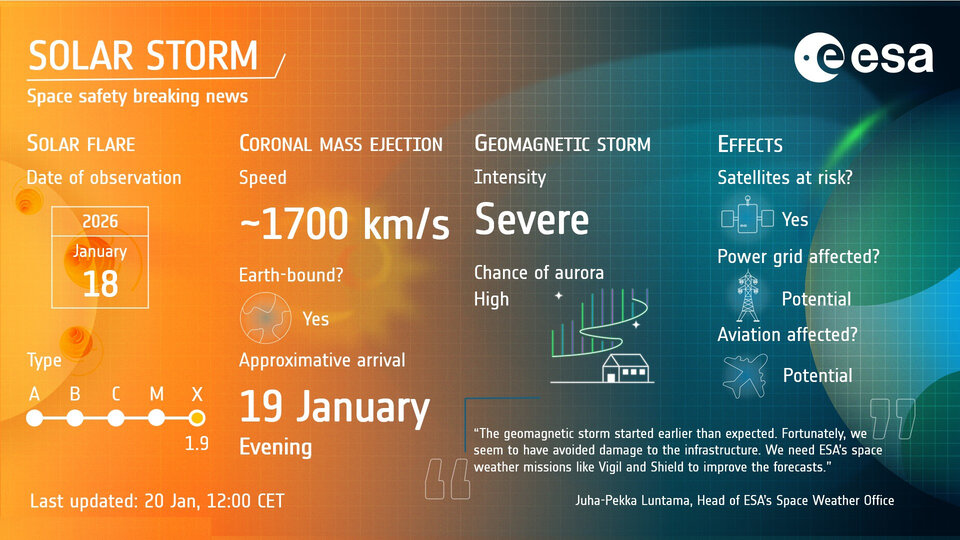
Solar flares alone are impressive, but the most dramatic Earth-based effects happen when flares are accompanied by coronal mass ejections (CMEs).
A CME is a massive cloud of charged solar plasma hurled into space. If Earth lies in its path, the consequences can be spectacular.
According to preliminary NOAA analysis:
- The flare originated from a magnetically complex sunspot
- A fast-moving CME appears to be associated with the eruption
- The CME may be Earth-directed
This combination raises the possibility of strong geomagnetic storms, the key ingredient for widespread auroras.
How a Solar Flare Can Turn Into a Sky-Wide Light Show
The process that turns a solar eruption into glowing skies is complex, but the basics are surprisingly elegant.
Step-by-step, simplified:
- The Sun releases a powerful flare and CME
- Charged particles race through space toward Earth
- Earth’s magnetic field absorbs and redirects this energy
- Particles collide with oxygen and nitrogen in the atmosphere
- The sky lights up with auroras
CMEs usually take one to three days to reach Earth, depending on their speed. That delay is why aurora forecasts often change rapidly.
Real-life example
In May 2024, a similar sequence of solar eruptions resulted in auroras visible across much of the continental U.S., stunning millions of people who had never seen Northern Lights before.
What Is a Geomagnetic Storm—and Why Does It Matter?
When solar particles interact strongly with Earth’s magnetic field, they can trigger a geomagnetic storm. NOAA measures these storms using the G-scale, which ranges from G1 (minor) to G5 (extreme).
Why geomagnetic storms are important
- Stronger storms push auroras farther south
- They increase brightness and color intensity
- They lengthen the duration of aurora displays
NOAA forecasters suggest this event could reach severe or even extreme levels, depending on how the CME’s magnetic field aligns with Earth’s.
How This Monster Flare Could Paint the U.S. Sky
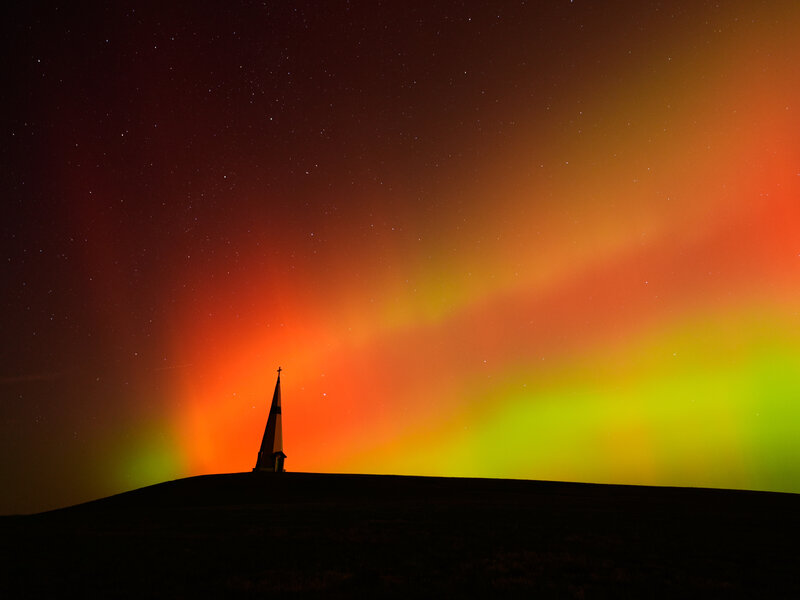
Auroras aren’t always the soft green waves people imagine. During strong storms, the sky can transform dramatically.
Possible visual effects include:
- Bright green arcs stretching across the sky
- Deep red auroras visible at lower latitudes
- Purple and pink hues blending into the display
- Rapid motion, pulsing light, and vertical rays
In extreme cases, auroras can appear directly overhead in states that rarely see them.
Where in the U.S. Could Auroras Be Visible?
Aurora visibility depends heavily on storm strength.
Potential reach of this event
- Northern states: Bright, dynamic auroras overhead
- Mid-latitude states: Strong glows and moving arcs
- Southern states: Faint green or red auroras near the horizon
Real-world reference
During past severe storms, people in Texas, Georgia, and even Florida reported seeing red auroras—a phenomenon usually limited to polar regions.
Why This Is Happening Now: Solar Maximum Explained
The timing of this flare is not random.
The Sun follows an approximately 11-year solar cycle, shifting between quiet and active phases. We are currently approaching the solar maximum of Solar Cycle 25.
During solar maximum:
- Sunspots become more numerous
- Solar flares occur more often
- CMEs are stronger and more frequent
NASA and NOAA both report that Solar Cycle 25 is stronger than originally predicted, increasing the odds of events like this one.
How Rare Are Solar Events Like This?
Solar flares happen frequently, but flares capable of triggering widespread U.S. auroras are rare.
Scientists estimate:
- Moderate storms occur several times a year
- Severe storms happen only a few times per solar cycle
- Extreme storms may occur once or twice per decade
That rarity is why scientists and skywatchers are watching this event so closely.
Could This Solar Event Affect More Than Just the Sky?
While auroras are the most visible effect, geomagnetic storms can have other impacts.
Possible side effects include:
- Temporary GPS inaccuracies
- Minor radio communication disruptions
- Increased satellite drag
- Power grid strain (rare and carefully monitored)
NOAA works with utilities and satellite operators to manage these risks. For everyday Americans, the event remains safe to observe.
When and How Americans Should Watch the Sky
Auroras don’t follow a strict schedule, but patterns exist.
Best general viewing window
- 10 PM to 2 AM local time
During strong storms:
- Auroras may appear shortly after sunset
- Displays can return multiple times overnight
- Patience is key—auroras can fade and reappear
Where to look
- Face north
- Move away from city lights
- Find open, dark areas
Many people miss auroras simply because they give up too soon.
Why Cameras Often See What Eyes Miss
One of the most surprising things about auroras is how differently they can appear on camera.
Modern smartphones:
- Detect low-light color better than the human eye
- Reveal greens, reds, and purples not easily visible
- Confirm auroras people didn’t realize they were seeing
During recent storms, thousands of Americans discovered auroras only after checking their photos.
Could This Be One of the Best Aurora Events of the Decade?
While scientists avoid guarantees, many space-weather experts say this setup is among the most promising in years.
Key factors include:
- Solar maximum timing
- High flare intensity
- Potential Earth-directed CME
- Favorable magnetic alignment
For many Americans, this could be the best chance of a lifetime to see auroras without traveling north.
Final Thoughts: When the Sun Flexes, the Sky Responds
A monster solar flare is more than a scientific curiosity—it’s a reminder that Earth is deeply connected to the Sun. When that connection intensifies, the results can be awe-inspiring.
If this event unfolds as scientists anticipate, millions of Americans could witness a sky transformed by shimmering light—an ancient natural phenomenon written across the modern night.
Moments like this are rare. And when they happen, they invite us all to look up.
Frequently Asked Questions (FAQ)
1. What is a monster solar flare?
A very powerful solar flare, usually X-class, releasing enormous energy.
2. Can a solar flare cause auroras in the U.S.?
Yes, especially if it produces an Earth-directed coronal mass ejection.
3. How long after a flare do auroras appear?
Typically one to three days, depending on CME speed.
4. Will auroras be visible everywhere?
No, visibility depends on storm strength and location.
5. Are solar flares dangerous to people?
No, they pose no direct risk to people on the ground.
6. Can clouds block auroras?
Yes, clear skies are essential.
7. Do auroras always look green?
No, strong storms can produce red, purple, and pink auroras.
8. Is this related to solar maximum?
Yes, we are currently near peak solar activity.
9. Can auroras damage electronics?
Rarely, and mostly affecting satellites and power systems.
10. Will more events like this happen soon?
Possibly, as solar maximum continues through 2025–2026.