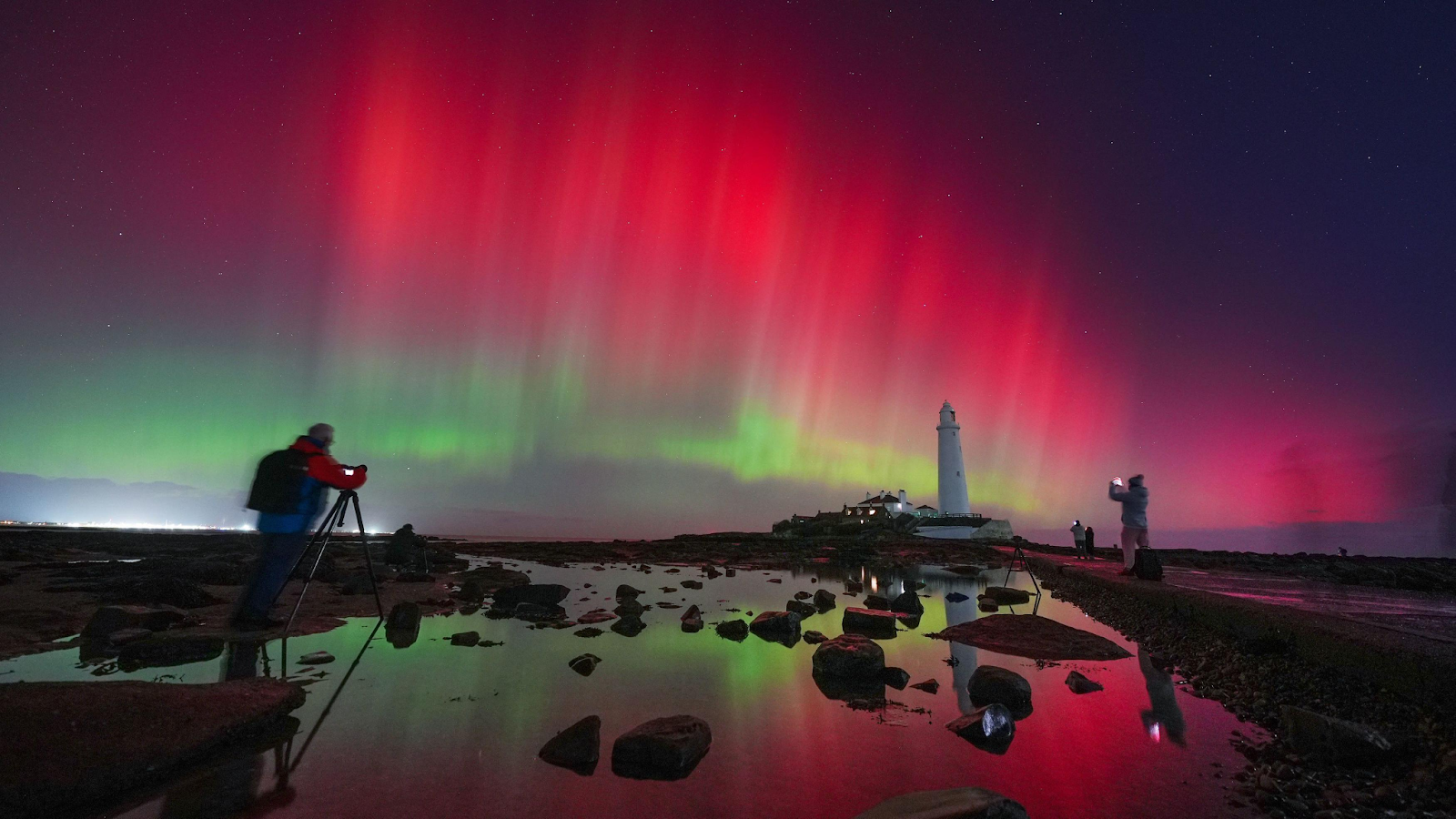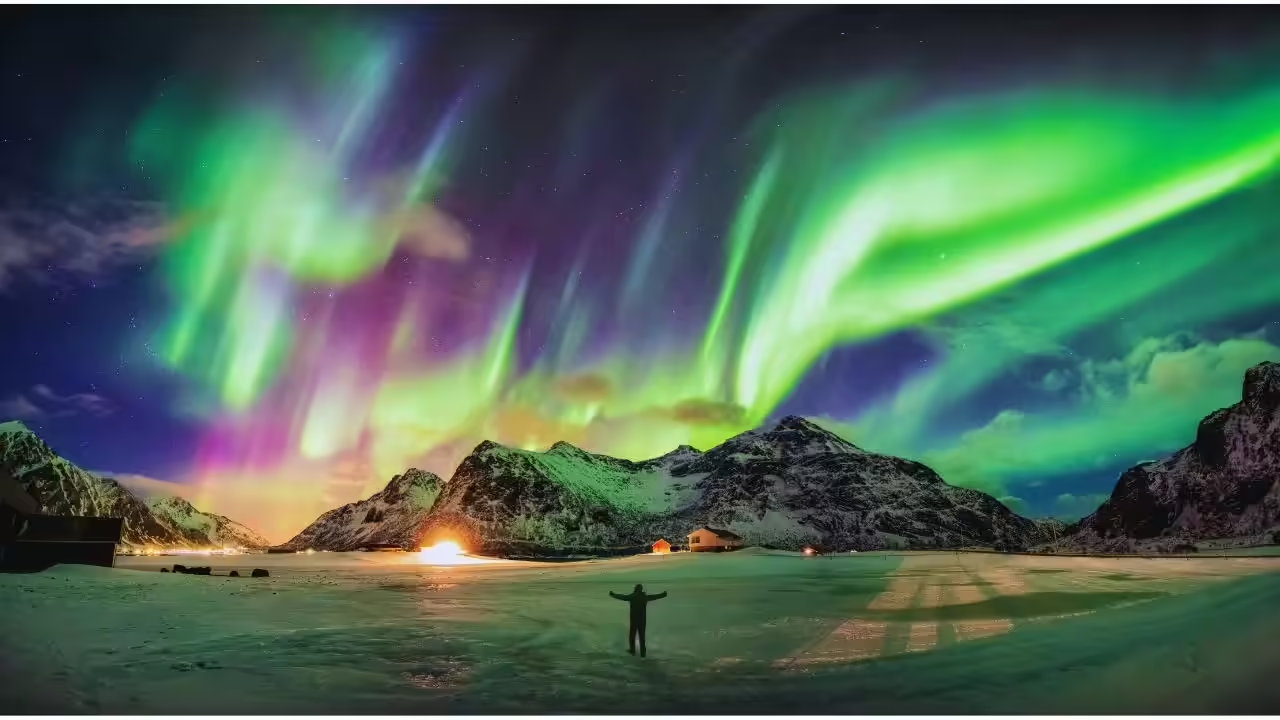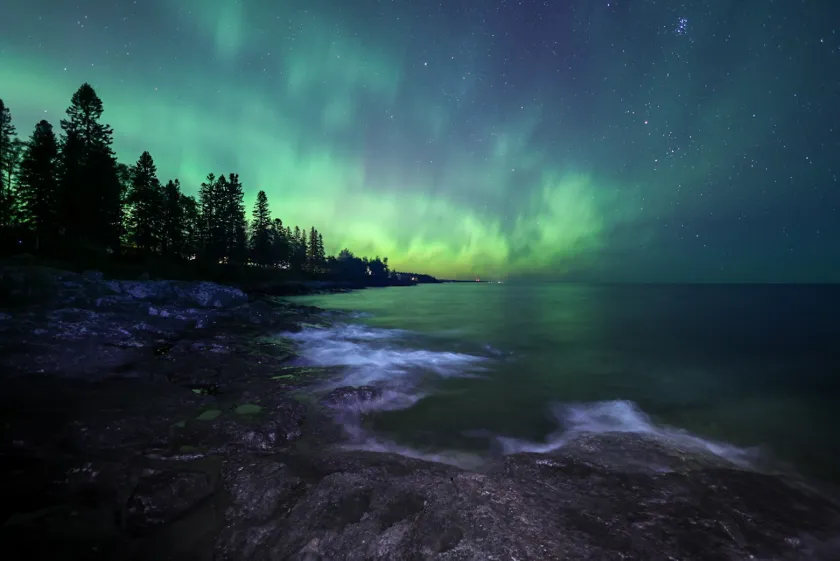
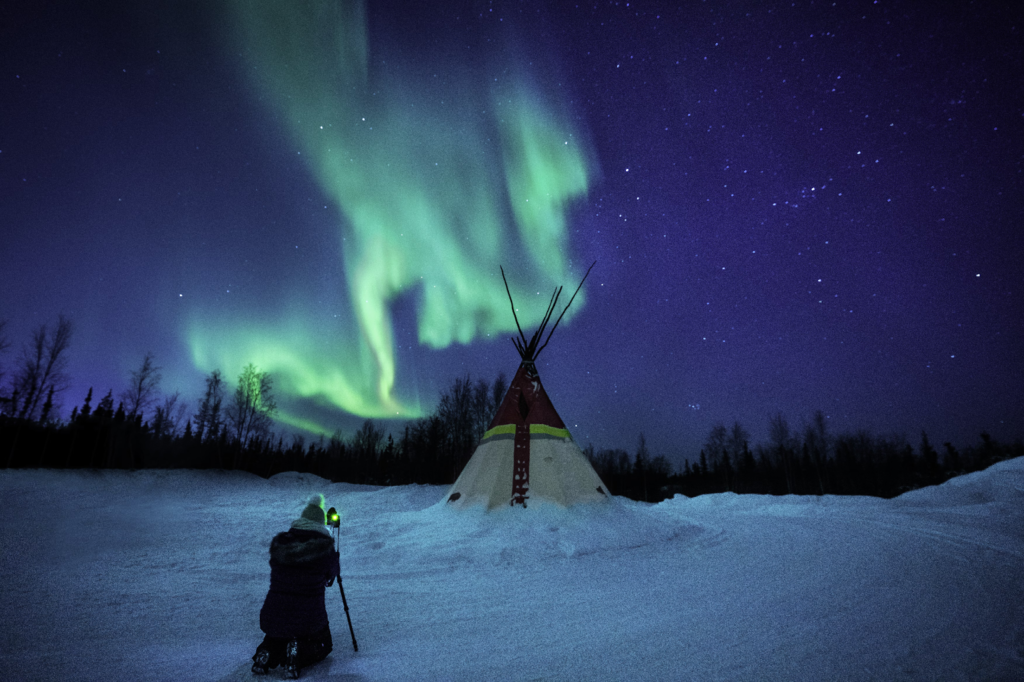
The Northern Lights are no longer exclusive to Alaska or overseas travel. Due to heightened solar activity, hidden locations across the United States now offer stunning aurora views—often with fewer crowds and darker skies. This in-depth guide reveals America’s best-kept aurora-viewing secrets, explains why they work, and shows exactly how, when, and where to witness the lights yourself.
Why Americans Are Suddenly Searching for Hidden Aurora Locations
For decades, the Northern Lights felt unreachable to most Americans. They were something you saw in postcards from Iceland or documentaries filmed in Norway. In the U.S., Alaska was considered the only realistic option.
That assumption is now outdated.
Over the past two years, Google search interest for phrases like “Northern Lights in the U.S.”, “aurora borealis near me,” and “can you see the Northern Lights tonight” has surged dramatically. Social media has been flooded with unexpected aurora sightings from places like Missouri, Montana, Maine, and even parts of the Deep South during extreme solar storms.
This isn’t coincidence or hype. According to NASA and NOAA’s Space Weather Prediction Center, the Sun has entered a highly active phase known as Solar Cycle 25, producing stronger and more frequent geomagnetic storms than initially forecast.
But here’s what most articles fail to explain:
The best aurora-viewing places in America are often not the most famous ones.
They’re quieter. Darker. Less advertised. And significantly more reliable.
Why Most “Best Aurora Places” Lists Miss the Truth
If you search online for aurora destinations in the U.S., you’ll usually see the same answers:
- Alaska
- Yellowstone
- Acadia National Park
- Popular northern cities
While these places can work, they also come with problems most people don’t anticipate:
- Light pollution from tourism infrastructure
- Crowds that ruin night vision
- Limited viewing angles
- Weather patterns that frequently block the sky
Auroras don’t reward popularity. They reward conditions.
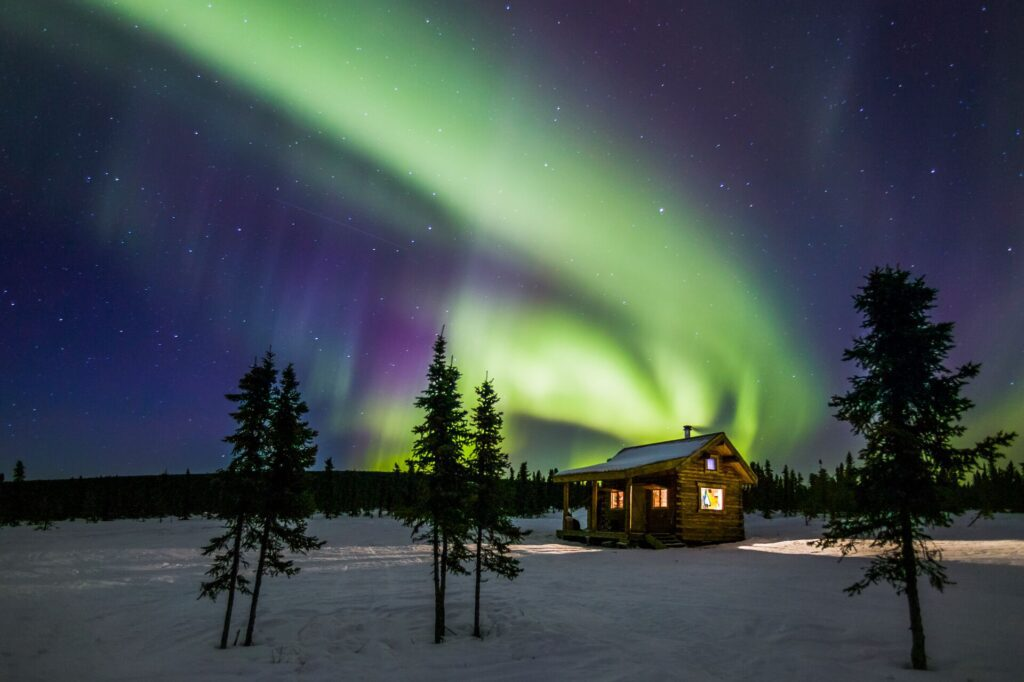
The truth is that many of the most consistent aurora sightings in the U.S. happen in places that:
- Aren’t labeled as tourist destinations
- Have extremely low population density
- Sit at favorable geomagnetic latitudes
- Offer unobstructed horizons and deep darkness
These are the locations locals talk about—but rarely publish.
What Actually Makes a “Secret” Aurora Spot Work?
Before naming locations, it’s important to understand why some places outperform others—even when they’re farther south.
Auroras depend on several key factors working together:
Essential Conditions for Hidden Aurora Hotspots
- Dark skies (Bortle Class 1–3 preferred)
- Open northern horizons with minimal terrain obstruction
- Low humidity and clean air
- Geomagnetic latitude alignment
- Minimal artificial light from towns, highways, or airports
Geographic latitude matters—but geomagnetic latitude matters more. This explains why some areas farther south outperform locations that appear “more northern” on a map.
Secret Spot #1: The Boundary Waters of Northern Minnesota (Beyond the Obvious)
Most people know Minnesota is aurora-friendly. Few realize just how powerful the Boundary Waters Canoe Area Wilderness (BWCAW) truly is for aurora viewing.
This federally protected wilderness spans over a million acres of lakes and forest with virtually zero light pollution. Once you move away from Duluth and tourist corridors, the night sky becomes shockingly dark.
Why this area works so well:
- No artificial lighting for miles
- Thousands of reflective lakes amplify aurora visibility
- Protected dark-sky environment
- Frequent clear winter nights
A local wilderness guide once described watching green aurora curtains ripple across a frozen lake so brightly that shadows were visible on the snow—something typically associated with Alaska-level storms.
Secret Spot #2: Michigan’s Upper Peninsula (Far From Tourist Towns)
Michigan’s Upper Peninsula is often mentioned casually—but rarely explained correctly.
The real secret lies away from the towns.
Inland areas near:
- Hiawatha National Forest
- Remote Lake Superior shorelines
- Unincorporated forest land
offer dramatically better aurora visibility than popular scenic overlooks.
Lake Superior plays a critical role here. Its cold surface stabilizes air masses, reducing atmospheric distortion and haze. Combined with the U.P.’s latitude, this creates conditions where auroras can appear during moderate storms that wouldn’t be visible elsewhere.
Local residents report seeing auroras multiple times per month during solar maximum years.
Secret Spot #3: North Dakota’s Prairie Backroads
North Dakota may be the most overlooked aurora state in the entire country.
Despite sitting under the auroral oval during many geomagnetic storms, it rarely appears in mainstream travel articles.
Why North Dakota excels:
- Extremely low population density
- Flat terrain offering unobstructed horizons
- Cold, dry air improves sky clarity
Areas north of Devils Lake and along remote county roads often experience aurora visibility even when nearby states are clouded out.
One longtime resident near Minot described auroras as “more common than meteor showers” during strong solar cycles.
Secret Spot #4: Northern Montana’s Hi-Line (Not Glacier National Park)
Glacier National Park gets attention—but also crowds, lighting restrictions, and unpredictable weather.
The real secret lies along Montana’s Hi-Line region, including:
- Fort Peck Lake
- Charles M. Russell National Wildlife Refuge
- Rural communities far from highways
These areas benefit from:
- Vast open skies
- Minimal artificial lighting
- Near-perfect geomagnetic alignment
During recent G4 and G5 geomagnetic storms, auroras were visible here for hours—sometimes directly overhead.
Secret Spot #5: Central Idaho’s Wilderness Core
Idaho is almost never mentioned in aurora guides, which makes it one of the best-kept secrets.
The Frank Church–River of No Return Wilderness offers:
- Millions of acres without permanent lighting
- High elevations that reduce atmospheric interference
- Exceptionally dark skies
During recent solar storms, residents reported seeing auroras in Idaho while nearby states experienced cloud cover or light pollution interference.
This region proves that darkness and elevation can sometimes outperform latitude.
Secret Spot #6: Northern Wyoming Beyond Yellowstone
Yellowstone National Park attracts massive crowds and vehicle traffic that severely impact night viewing.
However, northern Wyoming’s:
- Bighorn Mountains
- Absaroka Range outskirts
- Remote ranchland plains
offer far better aurora conditions.
A rancher near Sheridan once described watching auroras roll across the sky “like ocean waves,” visible for nearly three hours during a major geomagnetic storm.
Secret Spot #7: Maine’s Far North (Not Acadia)
Acadia National Park is beautiful—but popular.
Northern Maine, particularly:
- Aroostook County
- Allagash Wilderness Waterway
- Border regions near Quebec
offers some of the darkest skies east of the Mississippi River.
Because Maine sits at a favorable geomagnetic latitude, auroras often appear here during storms that fail to reach farther south.
Residents regularly observe faint green arcs that go unnoticed in brighter regions.
Can You See the Aurora in Unexpected States Like Texas or Alabama?
Yes—but with important limitations.
During extreme geomagnetic storms (Kp 8–9):
- Auroras can extend deep into the southern U.S.
- Red auroras become more visible
- Cameras often capture what eyes barely detect
Confirmed sightings have occurred in:
- Texas
- Alabama
- Georgia
- Arizona
However, these are rare events tied to powerful solar eruptions—not consistent viewing opportunities.
How to Maximize Your Chances at These Secret Locations
Timing Is Critical
- Best window: 10 PM to 3 AM
- Strongest activity often after midnight
- Storms fluctuate unpredictably
Darkness Matters More Than Forecasts
- Avoid cities entirely
- Use light-pollution maps
- Turn off vehicle lights once parked
Weather Beats Solar Strength
- Clear skies are essential
- Cold, dry nights outperform humid ones
Let Your Eyes Adjust
- 20–30 minutes minimum
- Avoid phone screens and headlights
Why Social Media Misleads Aurora Viewers
Platforms like Instagram and TikTok often exaggerate expectations.
Important reality checks:
- Cameras enhance color and brightness
- Auroras often appear subtle at first
- Motion is more noticeable than color
Many people believe they “missed” the aurora when they actually witnessed a real but gentle display.
Is This the Best Time in Decades to See the Aurora in America?
According to NASA and NOAA, yes.
Solar Cycle 25 is:
- Stronger than early predictions
- Producing frequent solar flares and CMEs
- Expected to peak between 2024 and 2026
This creates a rare window where auroras regularly reach the continental U.S.
Frequently Asked Questions (Trending Searches)
1. What are the best hidden places to see the Northern Lights in the U.S.?
Remote areas in Minnesota, North Dakota, Montana, Maine, and Idaho.
2. Can you really see auroras outside Alaska?
Yes, during moderate to strong geomagnetic storms.
3. Do auroras appear every night?
No. Visibility depends on solar activity and weather.
4. What’s the best aurora forecast source?
NOAA’s Space Weather Prediction Center is the most reliable.
5. Why do some people see auroras while others don’t?
Light pollution, cloud cover, and timing differences.
6. Are auroras dangerous?
No. They occur far above Earth’s surface.
7. Can children safely watch auroras?
Yes. No protective equipment is required.
8. Why do auroras sometimes look gray?
Human eyes struggle to perceive color in low light.
9. Do auroras make sound?
Scientifically unconfirmed, though rare anecdotal reports exist.
10. Will auroras become more frequent?
During solar maximum, yes.
Final Thoughts: Why These Aurora Spots Stay Secret
These locations remain unknown because:
- They’re remote
- They require patience
- They don’t cater to mass tourism
- They reward preparation, not convenience
Auroras don’t follow popularity—they follow physics.
If you’re willing to travel off the beaten path, wait through the cold, and trust the science, you’ll experience something unforgettable.