The Northern Lights are appearing far beyond their traditional Arctic range due to an unusually strong solar cycle, intensified geomagnetic storms, and subtle changes in Earth’s magnetic field. These forces are allowing auroras to reach southern U.S. states like Texas, Alabama, and Georgia. Scientists say this rare phenomenon may continue through 2026.
A Sky Once Reserved for the Arctic Is Now Lighting Up America
For most of modern history, the Northern Lights—scientifically known as the aurora borealis—were considered an exclusive reward for travelers willing to brave extreme cold. Alaska, northern Canada, Iceland, and Scandinavia were the only reliable places to witness this celestial phenomenon. Seeing shimmering green ribbons dance across the sky was something Americans associated with postcards, documentaries, or bucket-list travel plans.
That perception has changed dramatically.
Over the past few years, and especially recently, people across the United States have stepped outside their homes and seen something they never expected: auroras glowing above suburban neighborhoods, farmlands, highways, and city skylines—hundreds or even thousands of miles south of the Arctic Circle.
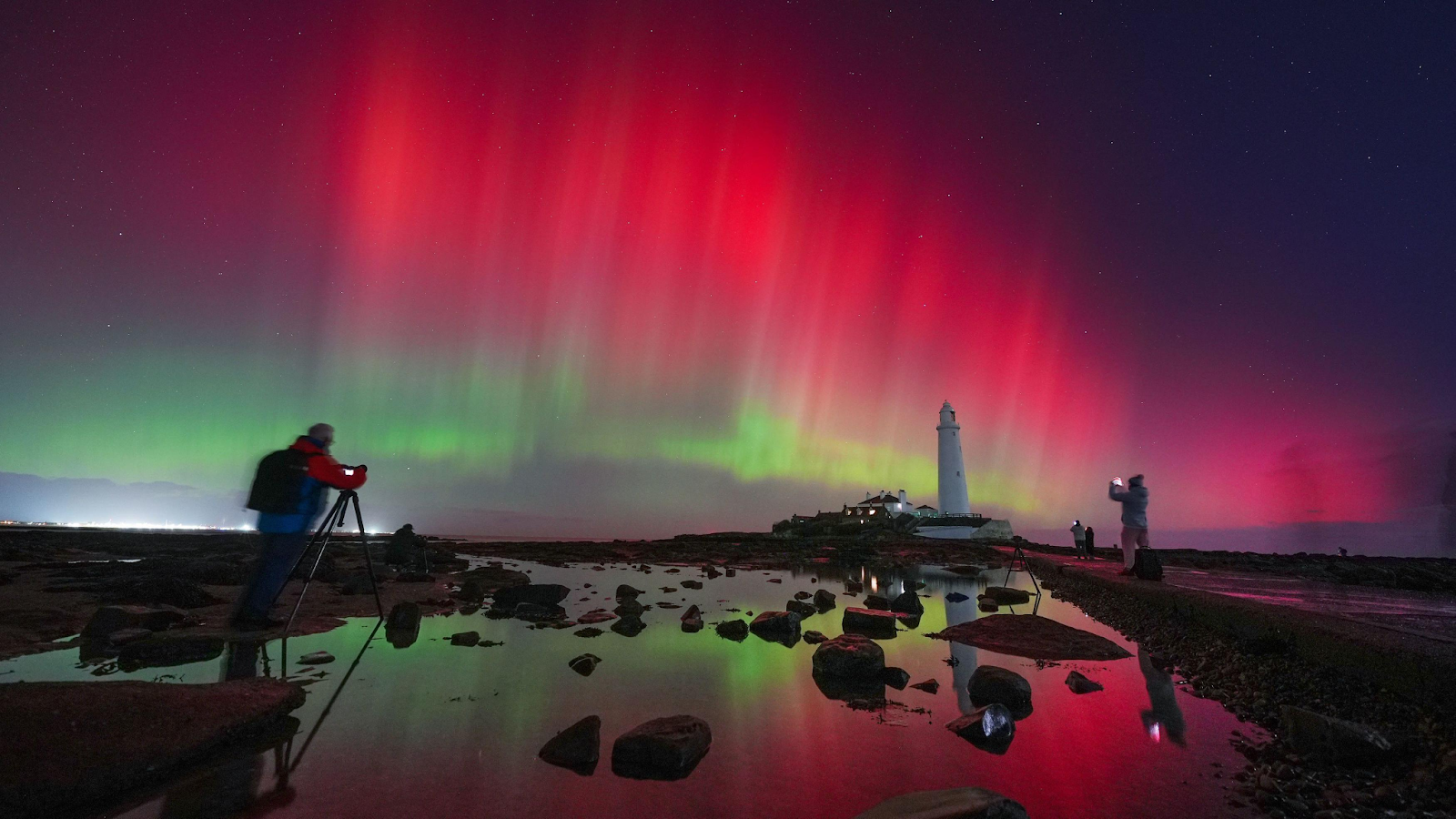
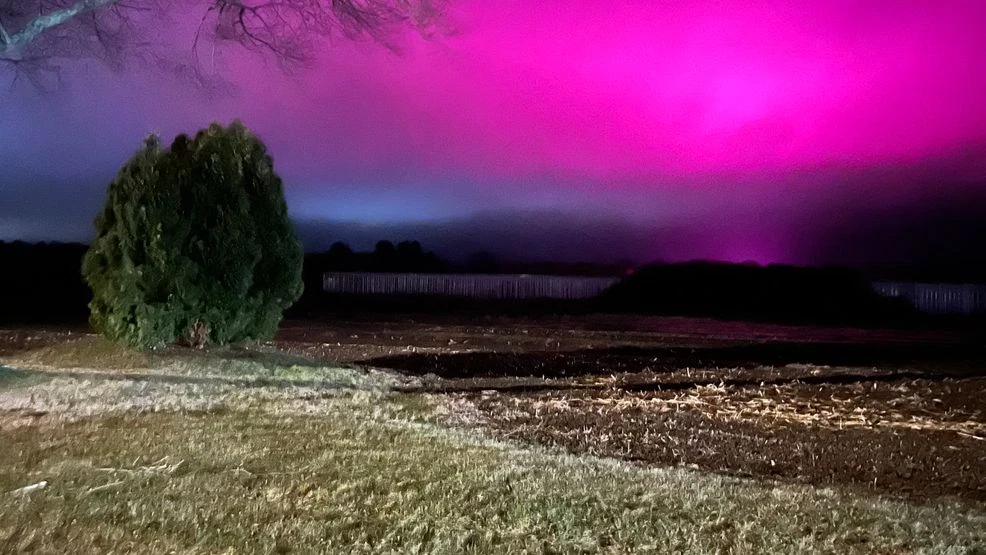
Residents of Texas, Tennessee, Missouri, Arkansas, Alabama, and even parts of Florida have reported red, pink, and purple lights rippling across the night sky. These are not camera glitches, lens flares, or viral exaggerations. According to NASA, NOAA, and independent astronomers, the Northern Lights really are moving southward more frequently than ever before.
So what’s actually happening? Why now? And does this signal something larger about our planet or the Sun?
The answers lie in a powerful combination of solar activity, Earth’s magnetic behavior, and a rare cosmic alignment that scientists say we may not see again for decades.
What Exactly Are the Northern Lights?
Before understanding why auroras are appearing farther south, it’s important to understand what causes them at all.
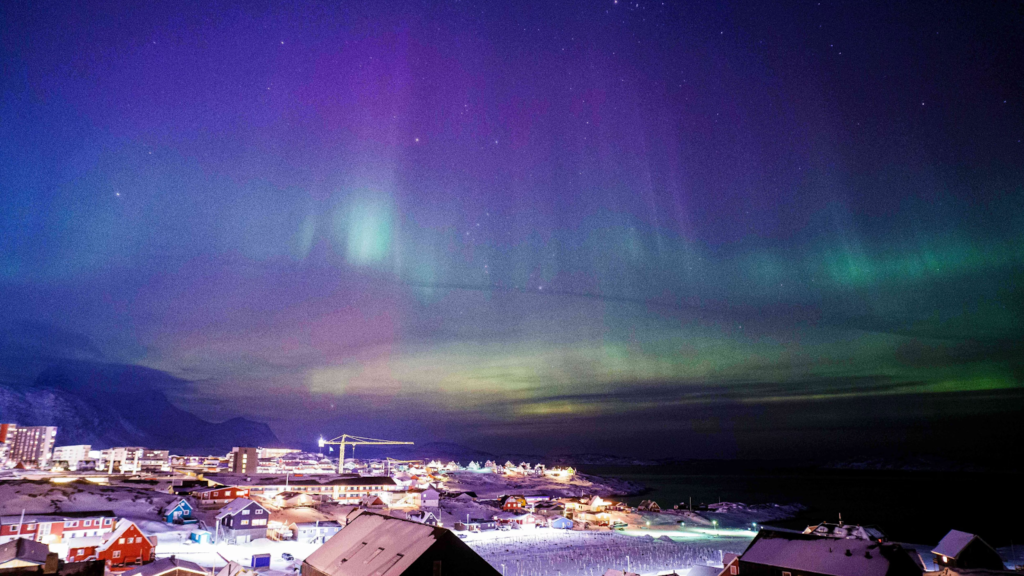
The Northern Lights are the result of charged particles released by the Sun interacting with Earth’s magnetic field and atmosphere.
Here’s how the process works in simple terms:
- The Sun constantly emits a stream of charged particles known as the solar wind
- During solar flares or coronal mass ejections (CMEs), this stream intensifies dramatically
- These particles travel millions of miles toward Earth
- Earth’s magnetic field funnels them toward the polar regions
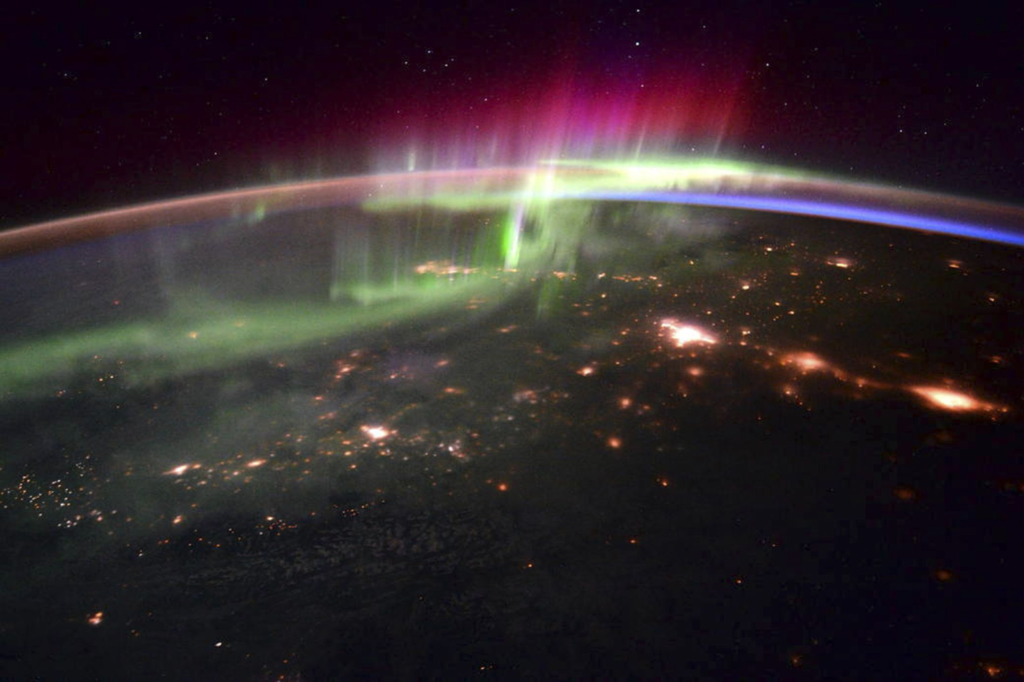
- When the particles collide with gases in the upper atmosphere, energy is released as light
Different gases produce different colors:
- Green: Oxygen at lower altitudes (most common)
- Red: Oxygen at higher altitudes (more visible during strong storms)
- Blue and purple: Nitrogen interactions
Under normal conditions, this light show stays close to the poles. But under extreme conditions, the auroral oval expands—and that’s when the magic reaches farther south.
The Primary Reason: An Exceptionally Strong Solar Cycle
What Is a Solar Cycle?
The Sun operates on an approximately 11-year activity cycle, alternating between solar minimum (low activity) and solar maximum (high activity). These cycles influence sunspots, solar flares, and coronal mass ejections.
We are currently in Solar Cycle 25, which officially began in late 2019.
What makes this cycle unique is that it is far more intense than scientists initially predicted.
NASA and NOAA space weather data show that:
- Sunspot numbers are significantly exceeding forecasts
- Powerful solar flares are occurring more frequently
- Earth-directed CMEs are increasing in both strength and frequency
In short, the Sun is releasing far more energy toward Earth than expected, overwhelming the planet’s magnetic defenses.
Real-Life Example: Texas and the Great Aurora Surprise
In May 2024, a massive solar storm struck Earth, triggering one of the strongest geomagnetic storms in decades. The result was historic.
People across Texas—some as far south as San Antonio—reported seeing red and pink auroras with the naked eye. Photographs flooded social media, showing skies that looked more like northern Scandinavia than the American South.
NOAA later confirmed the storm reached G5 level, the highest classification possible.
For many Texans, this was the first and possibly only time in their lives they witnessed the Northern Lights without traveling north.
Earth’s Magnetic Field Is Changing—and That Matters
Is Earth’s Magnetic Shield Weakening?
Yes, but not in a catastrophic way.
Earth’s magnetic field naturally fluctuates over time. However, scientists have observed that over the last two centuries:
- The magnetic field has weakened by roughly 9–10%
- The magnetic poles have shifted noticeably
- Certain regions, such as the South Atlantic Anomaly, have become more pronounced
A slightly weaker or more dynamic magnetic field allows solar particles to penetrate farther toward the equator, expanding the auroral oval.
This does not mean Earth is losing its magnetic protection entirely. But it does mean auroras can appear in places that were once considered impossible.
Why Americans Are Seeing Auroras More Often Than Ever
Several factors are converging at the same time:
- Peak solar activity
- Stronger geomagnetic storms
- Shifting magnetic field dynamics
- Better public awareness and reporting
This convergence explains why aurora sightings are no longer limited to Alaska or Canada.
States that have recently reported confirmed auroras include:
- Texas
- Alabama
- Tennessee
- Missouri
- Arkansas
- Kentucky
- Ohio
- North Carolina
- Virginia
- Georgia
For millions of Americans, this is not just a scientific curiosity—it’s a deeply emotional, awe-inspiring experience.
Why Are Southern Auroras Often Red Instead of Green?
This is one of the most common questions people ask after seeing photos online.
The answer lies in altitude.
- Green auroras typically occur at lower altitudes (60–150 miles)
- Red auroras occur at higher altitudes (150–300 miles)
During intense geomagnetic storms, auroras are pushed to higher altitudes, where red oxygen emissions dominate. These red auroras are also more visible at lower latitudes, which is why southern auroras often look different from Arctic ones.
Are Climate Change or Pollution Causing This?
This question frequently appears in Google searches—and the answer is important.
The Short Answer: No
Auroras are not caused by climate change, air pollution, or greenhouse gases.
They are driven almost entirely by:
- Solar activity
- Magnetic field interactions
- Atmospheric physics at very high altitudes
That said, modern technology does play a role in awareness. Smartphone cameras, long-exposure photography, and social media have made auroras easier to capture and share, even when they are faint.
Are These Solar Storms Dangerous?
For People on the Ground
Auroras themselves are completely harmless to humans. You can safely watch them with the naked eye.
For Technology
Strong geomagnetic storms can affect:
- GPS systems
- Satellite communications
- Aviation navigation
- Power grids
- Radio transmissions
The famous 1989 Quebec blackout was caused by a geomagnetic storm similar to those now occurring more frequently.
Modern infrastructure is better protected, but space weather monitoring remains critical.
Will the Northern Lights Continue Moving South?
According to scientists, yes—but temporarily.
Solar Cycle 25 is expected to peak around 2025–2026. During this period:
- Strong solar storms are likely to continue
- Southern auroras may remain relatively frequent
- Rare events could push auroras even farther south
After the solar maximum, activity will gradually decline, and auroras will retreat northward again.
How to Maximize Your Chances of Seeing the Northern Lights in the U.S.
Practical Tips That Actually Work
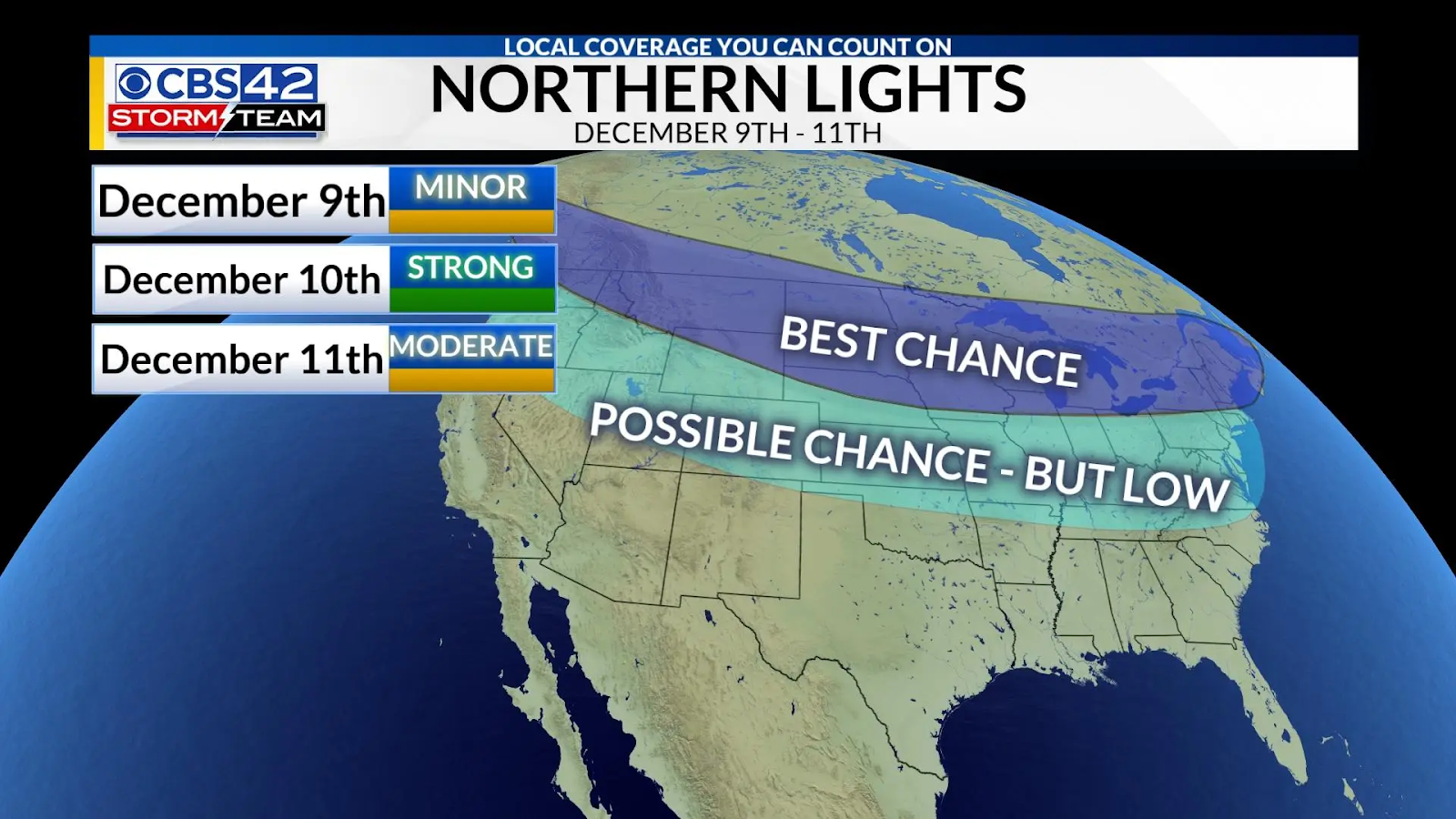
- Monitor NOAA’s Aurora Forecast
- Watch for a Kp index of 7 or higher
- Look north between 10 PM and 2 AM
- Get away from city light pollution
- Use your phone’s night mode or long exposure
Even if your eyes don’t detect strong colors, your camera often will.
Why This Moment Is Historically Significant
Scientists believe we are witnessing a rare alignment of solar and magnetic conditions that may not occur again for decades.
For everyday Americans, this means something extraordinary: the chance to experience one of nature’s most beautiful phenomena without traveling thousands of miles.
For researchers, it offers invaluable real-world data on how Earth interacts with solar energy in extreme conditions.
10 Frequently Asked Questions (Trending Search Queries)
1. Why are the Northern Lights visible farther south now?
Because stronger solar storms are overwhelming Earth’s magnetic field, allowing auroras to expand toward lower latitudes.
2. Can you really see the Northern Lights in Texas?
Yes. During major geomagnetic storms, auroras have been officially confirmed in Texas.
3. Are red auroras normal?
Yes. Red auroras occur at higher altitudes during intense solar activity.
4. Is this a sign that Earth’s magnetic field is failing?
No. The field is changing slowly, not collapsing.
5. Do auroras pose any health risks?
No. They are completely safe to observe.
6. Can solar storms damage electronics?
They can disrupt satellites and power grids, but modern systems are designed to minimize risk.
7. Is climate change responsible for this phenomenon?
No. Solar activity and magnetism are the primary causes.
8. How long will this southern aurora trend last?
Likely through 2026, as Solar Cycle 25 reaches its peak.
9. What states can see auroras during strong storms?
More than 30 U.S. states, including many in the South and Midwest.
10. Will this happen again in our lifetime?
Possibly, but not frequently. Events like this are rare and cycle-dependent.
Final Takeaway
The Northern Lights appearing farther south than ever is not a mystery—it’s the result of a powerful Sun, a responsive magnetic field, and a rare cosmic window. For Americans, it’s a reminder that space is not distant or abstract. Sometimes, it lights up the sky right above our homes.