Auroras are not just colorful lights in the sky—they are the visible result of powerful, hidden physics connecting the Sun and Earth. This in-depth guide explains the rarely discussed forces behind auroras, including magnetic reconnection, atmospheric chemistry, and human vision. Using real-world examples and clear language, it reveals how space weather turns invisible energy into breathtaking light.
Why the Aurora Still Feels Like Magic—Even in the Age of Science
Few natural phenomena inspire the same reaction as the aurora. People who see it for the first time often fall silent. Some cry. Others describe a strange sense of calm or connection, as if the sky itself were alive.
What’s remarkable is that this reaction persists even though scientists have been studying auroras for centuries. We know they involve the Sun. We know Earth’s magnetic field plays a role. And yet, most explanations stop short of telling the full story.
That’s because the aurora isn’t a single event—it’s the final visible chapter in a long and complex chain of hidden physics that begins deep inside the Sun and ends inside your own eyes.
This article explains that chain in a way most explanations never do.
What an Aurora Really Is (Beyond the Simplified Definition)
You’ve probably heard the standard explanation: charged particles from the Sun hit Earth’s atmosphere and create light. While true, that description skips the most important part—how those particles get there and why they behave the way they do.
An aurora is not simply “solar wind hitting air.” It is the result of:
- Magnetic energy stored and released in space
- Invisible electric currents flowing along Earth’s magnetic field
- Atomic collisions occurring hundreds of miles above Earth
- Human eyes and brains interpreting faint light in darkness
In other words, an aurora is space physics translated into color.
Where the Aurora Actually Begins: Inside Solar Magnetism
Auroras don’t begin with light. They begin with magnetic stress.
The Sun is not just a glowing ball of gas—it’s a churning ocean of electrically charged plasma. That plasma constantly twists the Sun’s magnetic field, winding it tighter and tighter over time.
Eventually, the magnetic field can no longer hold. When it snaps or rearranges, enormous amounts of energy are released in the form of:
- Solar flares
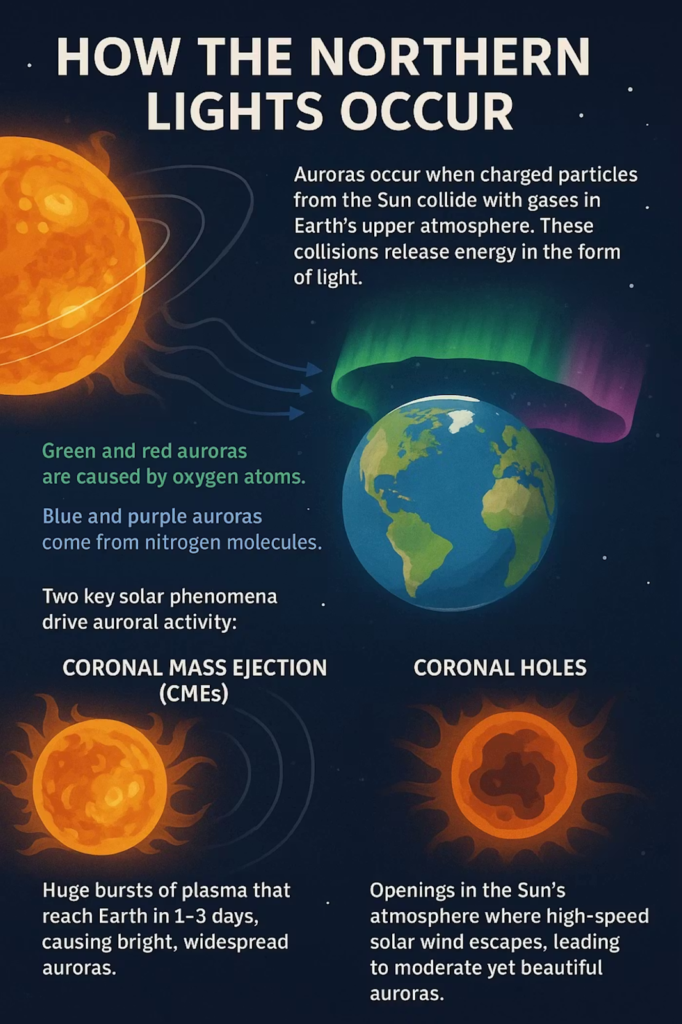
- Coronal mass ejections (CMEs)
- High-speed solar wind streams
These events are not explosions in the usual sense. They are magnetic failures—and they send energy racing toward Earth.
The Solar Wind: The Invisible River Crossing Space
Between the Sun and Earth flows a continuous stream of charged particles called the solar wind. You never feel it, but it is always there.
Under calm conditions, the solar wind is gentle. During solar storms, it becomes turbulent and dense, carrying enormous energy.
Think of it like a river:
- Most days, it flows steadily
- During storms, it floods its banks
Auroras only happen when that river surges.
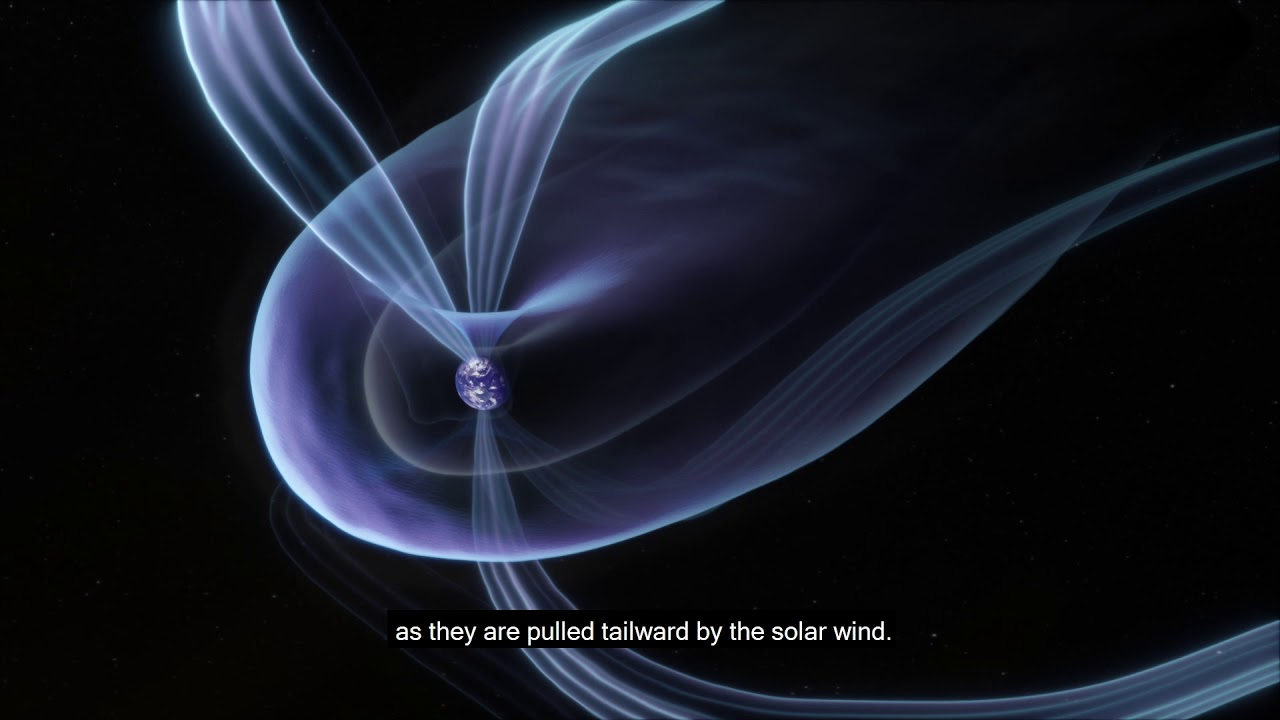
Earth’s Magnetic Field: Shield, Gatekeeper, and Sculptor
Earth’s magnetic field is often described as a protective shield, and that’s accurate—but incomplete.
Yes, it protects us from harmful radiation. But it also guides and concentrates solar energy, shaping it into auroras.
Instead of blocking solar particles completely, Earth’s magnetic field:
- Traps them temporarily
- Stores their energy
- Channels them toward the polar regions
Auroras appear where the magnetic field lines converge—near the North and South Poles.
The Hidden Process Almost No One Explains: Magnetic Reconnection
Here’s the part missing from most aurora explanations.
When the solar wind presses against Earth’s magnetic field, the two magnetic systems don’t just collide—they interact.
Under the right conditions, Earth’s magnetic field and the Sun’s magnetic field merge and snap apart. This process is called magnetic reconnection.
When reconnection happens:
- Energy stored in magnetic fields is suddenly released
- Charged particles are accelerated toward Earth
- Electric currents form in near-Earth space
- Energy is funneled into the upper atmosphere
Auroras are not passive glows. They are electrical phenomena powered by magnetic energy.
Why Auroras Look Like Curtains, Arcs, and Waves
Auroras don’t drift like clouds because they aren’t shaped by air.
They are shaped by magnetic field lines.
When those field lines vibrate, shift, or snap, the aurora responds instantly. That’s why auroras:
- Ripple vertically
- Form long curtains
- Pulse on and off
- Suddenly brighten or fade
What you’re seeing is magnetism in motion, made visible.
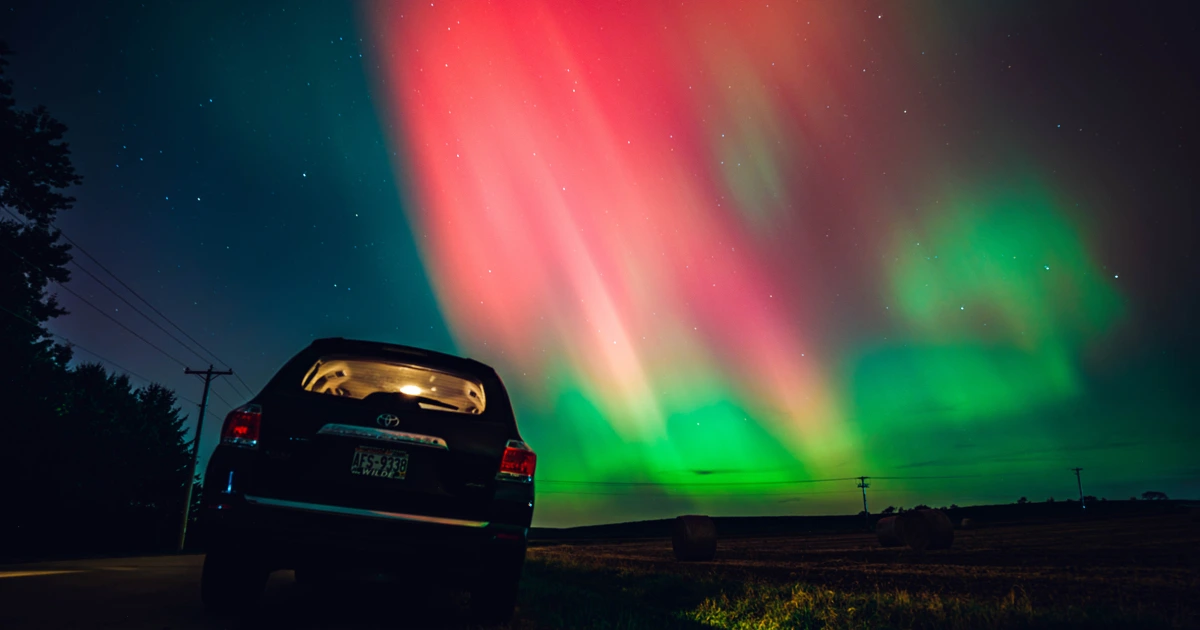
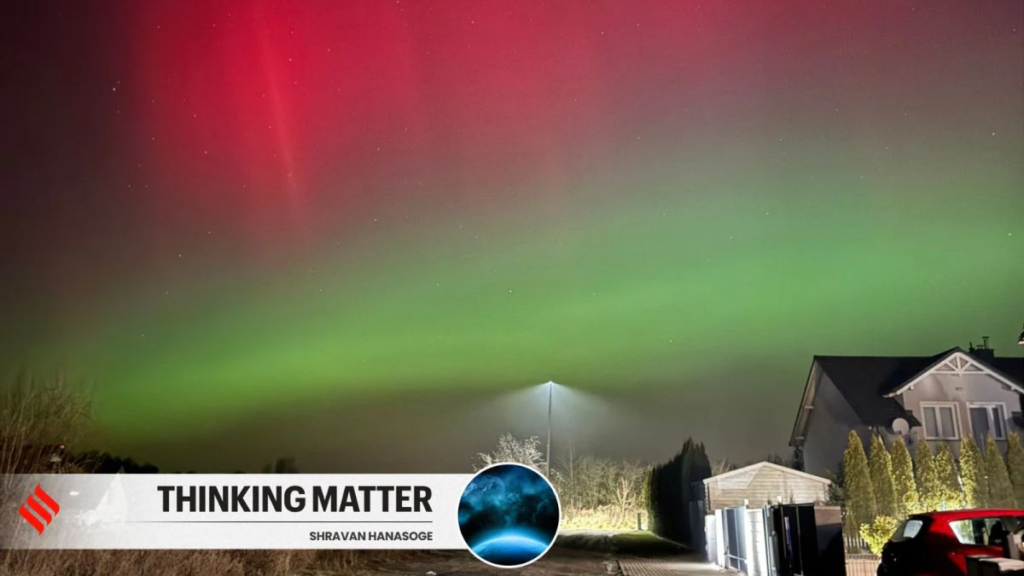
The Chemistry of Color: Why Green Is Common and Red Is Rare
Aurora colors depend on two things: which atoms are hit and how much energy is involved.
The main auroral colors explained simply:
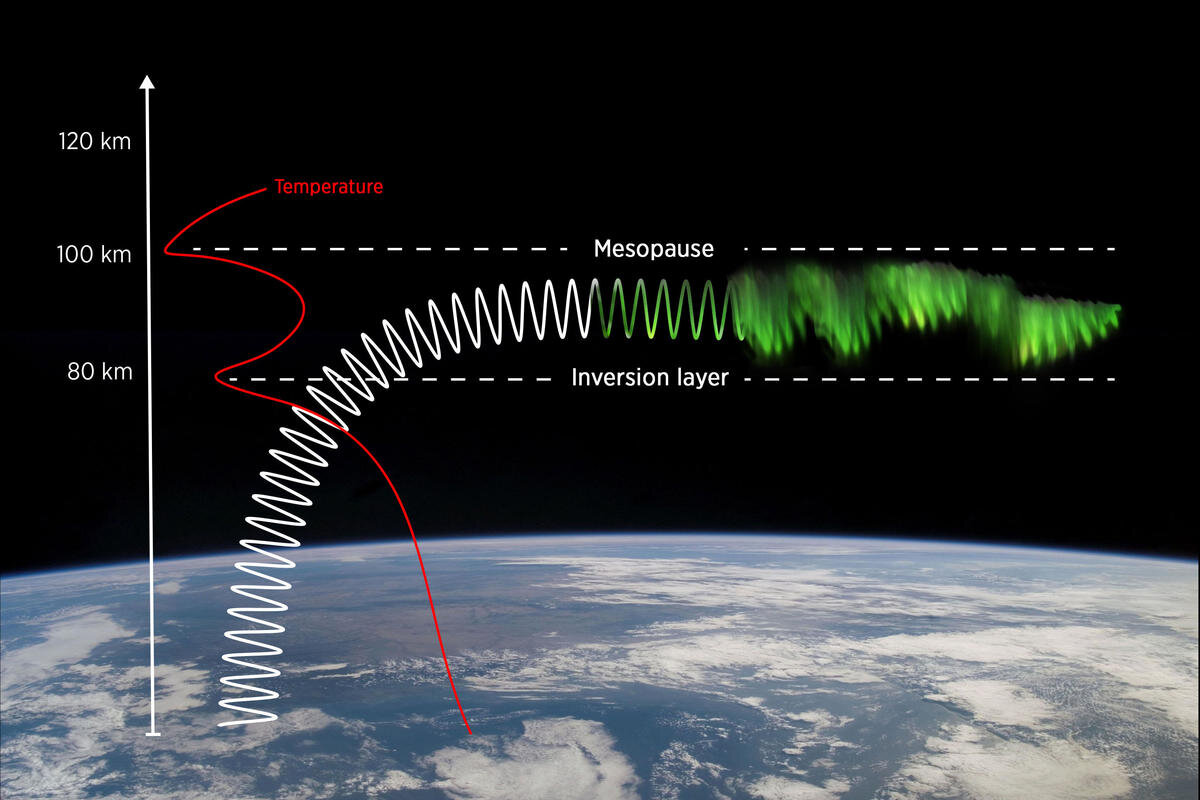
- Green – Oxygen at lower altitudes (~60 miles)
- Red – Oxygen at very high altitudes (150–300 miles)
- Purple/Pink – Nitrogen interactions
Green auroras are common because:
- Oxygen is abundant
- The energy required is moderate
- The light lasts long enough for human eyes to detect
Red auroras are rare because:
- They require extreme energy
- They occur in very thin air
- The light is faint and slow
When red auroras appear far south, scientists know a major geomagnetic storm is underway.
Why Cameras See Auroras Better Than Human Eyes
Many people are disappointed when they see an aurora in person and think it looks faint—until they review their photos.
This isn’t imagination. It’s biology.
Human eyes:
- Lose color sensitivity in low light
- Rely on rod cells that detect motion, not color
- Struggle with red wavelengths
Cameras:
- Collect light over several seconds
- Enhance faint colors
- Reveal details your eyes miss
That’s why some of the best aurora photos are taken accidentally.
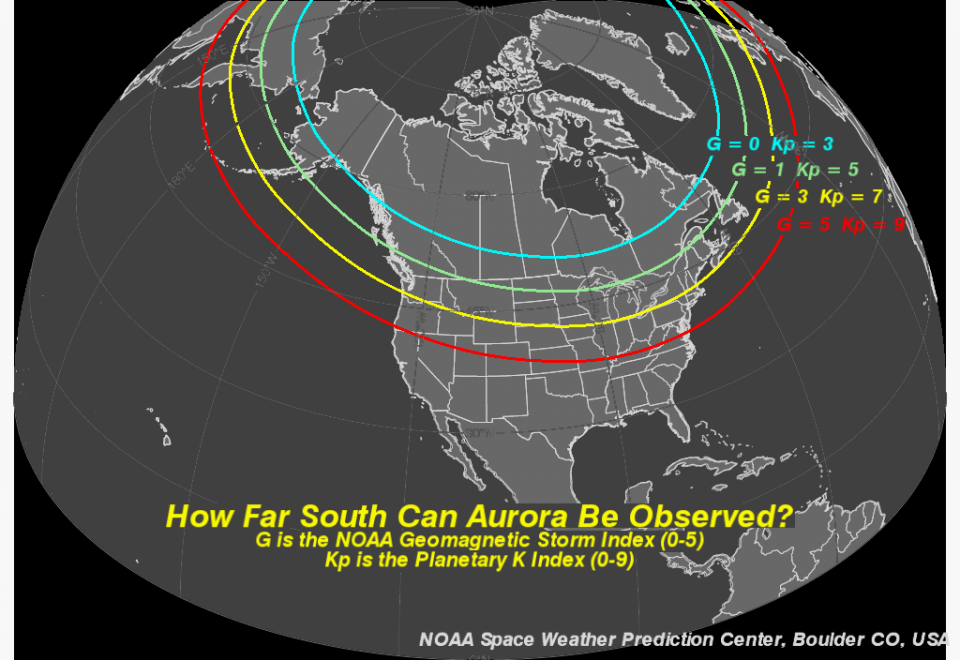
The Auroral Oval: Why Auroras Appear in Unexpected Places
Auroras don’t form a fixed ring around the poles. They form an ever-changing region called the auroral oval.
This oval:
- Expands during solar storms
- Contracts during calm conditions
- Shifts with Earth’s magnetic field
When the oval expands far enough, auroras become visible in:
- The continental United States
- Central Europe
- Even parts of the Deep South
This explains why auroras sometimes appear “out of nowhere.”
Do Auroras Really Make Sound?
For decades, scientists dismissed reports of auroral sounds as imagination. But recent research suggests something intriguing.
Under rare conditions, strong electrical activity in the atmosphere may create faint:
- Crackling
- Popping
- Hissing sounds
The phenomenon is still being studied, but it highlights how much about auroras remains unexplained.
Why Auroras Affect People Emotionally
Auroras don’t just stimulate the eyes—they affect the brain.
Neuroscientists believe auroras:
- Engage attention through slow, rhythmic motion
- Trigger awe, a powerful emotional state
- Reduce mental noise and stress
This may explain why people describe auroras as peaceful, humbling, or spiritual—even when they understand the science.
Why Scientists Still Don’t Fully Understand Auroras
Despite satellites, models, and centuries of observation, auroras still hold mysteries.
Scientists are still studying:
- Why some storms produce intense auroras and others don’t
- How fine-scale auroral structures form
- Why auroras flicker or pulse
- How energy transfers from space into the atmosphere
Auroras are not a solved problem—they are an active area of research.
Practical Insights for Aurora Watchers
Understanding the physics can enhance the experience.
Key takeaways:
- Motion reflects magnetic activity
- Color reveals altitude and energy
- Faint auroras still count
- Storm strength matters more than location
- Patience is essential
The more you understand, the deeper the experience becomes.
10 Relevant & Trending FAQs About the Aurora
1. What actually causes the aurora?
Charged particles from the Sun interacting with Earth’s magnetic field and atmosphere.
2. Why do auroras happen near the poles?
Because Earth’s magnetic field funnels particles toward those regions.
3. Why are auroras usually green?
Green oxygen emissions are easiest for human eyes to detect.
4. What causes red auroras?
High-altitude oxygen excited by extreme energy during strong storms.
5. Are auroras dangerous?
No, they are harmless to people on the ground.
6. Why do auroras move so quickly?
They follow rapidly changing magnetic field lines.
7. Are auroras linked to climate change?
No, they are driven by solar activity.
8. Why do cameras capture auroras better than eyes?
Cameras collect more light over time.
9. Can auroras make sound?
Possibly, under rare atmospheric conditions.
10. Do scientists fully understand auroras?
Not completely—many details remain under study.
Why Explaining the Physics Doesn’t Kill the Mystery
Some worry that science makes auroras less magical.
In reality, understanding that you’re watching:
- The Sun touching Earth
- Magnetic fields reshaping space
- Atoms glowing after cosmic collisions
…makes the experience more powerful, not less.
Auroras are proof that the universe is not distant—it is interactive.
Final Reflection: When Physics Becomes Poetry
The aurora is one of the few places where advanced physics becomes visible to anyone willing to look up.
It is a reminder that invisible forces shape our world, that Earth is part of a larger cosmic system, and that beauty can emerge from pure energy and motion.
Even after everything we know, the aurora still feels alive.
And perhaps that’s the point.