The Northern Lights are no longer staying near the Arctic Circle. From the Midwest to the southern United States, auroras are appearing in places that rarely saw them before. This deep-dive explains the surprising science behind this shift, including powerful solar storms, Earth’s magnetic field, and an unusually active solar cycle—revealing why Americans are suddenly witnessing one of nature’s most stunning phenomena closer to home.
When the Northern Lights Broke Their Own Rules
For most of modern history, the Northern Lights followed an invisible boundary. If you lived near the Arctic Circle, you had a chance. If you didn’t, the aurora remained something you admired in photos or documentaries.
That expectation is now outdated.
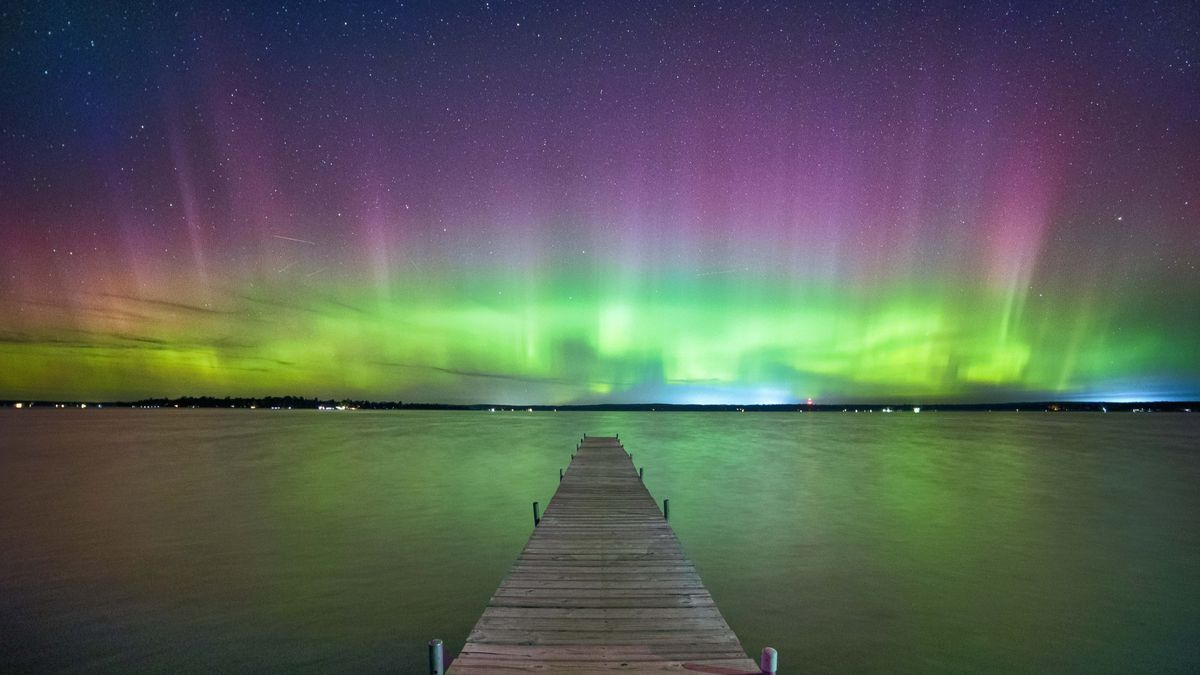
In recent years, Americans living hundreds—and sometimes thousands—of miles south of the Arctic have stepped outside to see shimmering green waves, purple streaks, and glowing skies that seemed impossible just a decade ago. People in Minnesota, Michigan, Wisconsin, Illinois, Texas, and even parts of the Southeast have reported auroras with their own eyes, not just through cameras.
The sudden appearance of auroras in these places has left many asking the same question:
Why is this happening now?
The answer lies in a rare combination of solar behavior, magnetic dynamics, and timing that scientists find fascinating—and skywatchers find unforgettable.
What Are the Northern Lights, in Simple Terms?
Before explaining why auroras are appearing farther south, it’s important to understand what they are without getting lost in technical language.
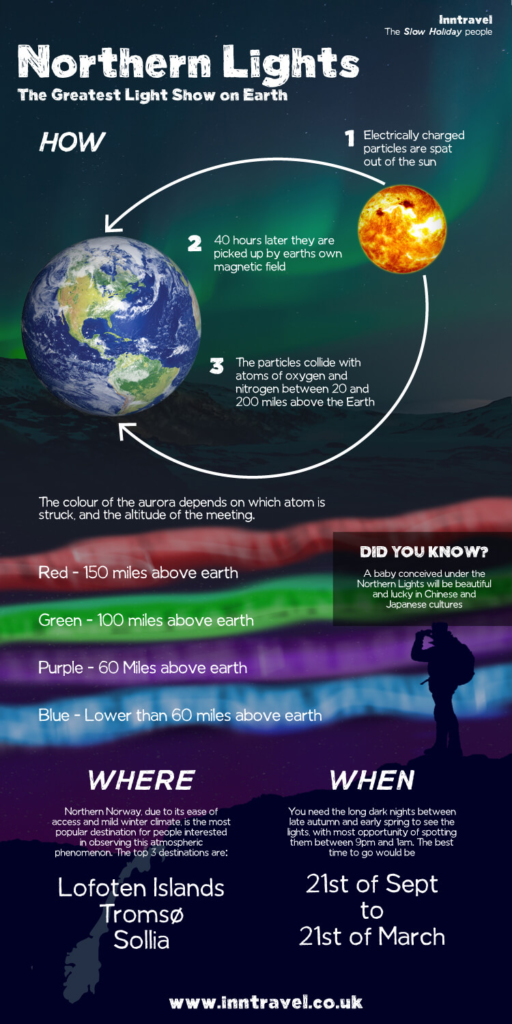
The Northern Lights, known scientifically as aurora borealis, occur when energy from the Sun interacts with Earth’s atmosphere. The Sun constantly releases streams of charged particles into space. Most of the time, Earth’s magnetic field deflects these particles safely around the planet.
However, near the poles, Earth’s magnetic field funnels some of this energy downward. When solar particles collide with oxygen and nitrogen high in the atmosphere, the gases glow—producing the dancing lights we see in the sky.
Different gases and altitudes create different colors:
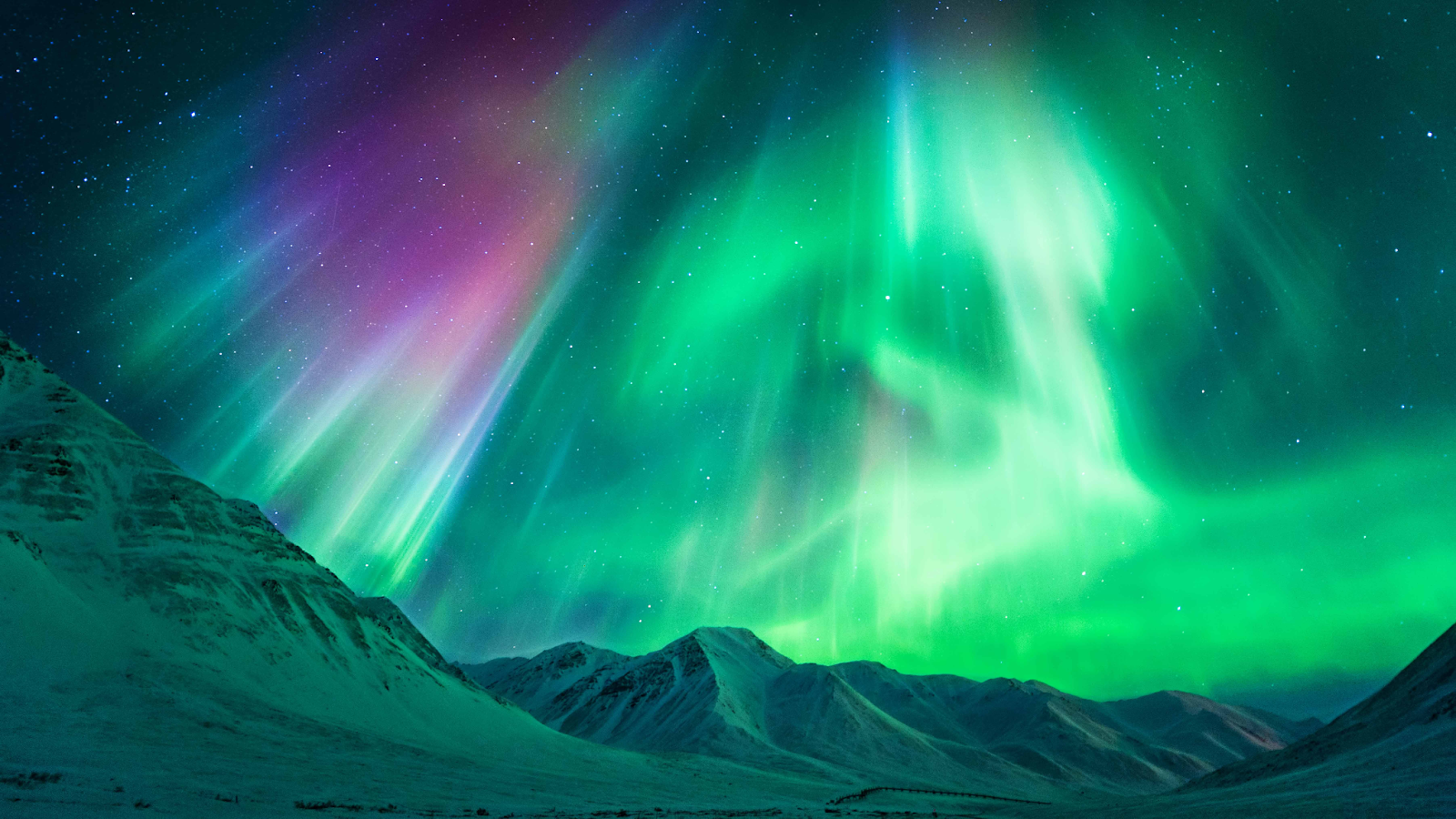
- Green is the most common
- Red appears at higher altitudes
- Purple and blue can appear during stronger storms
Under normal conditions, this process stays confined to the far north. Right now, it isn’t.
Why Are the Northern Lights Appearing South of the Arctic?
The short explanation is simple: the Sun is unusually active.
The full explanation is far more interesting.
The Sun Runs on a Cycle—and We’re in a Powerful One
The Sun follows an approximately 11-year cycle of activity. During quieter phases, solar eruptions are rare, and auroras stay close to the poles. During active phases—called solar maximum—the Sun becomes far more energetic.
We are currently approaching the peak of Solar Cycle 25.
According to NASA and NOAA scientists, this cycle has surprised researchers by becoming stronger faster than originally predicted. Sunspot numbers, which are a key indicator of solar activity, have exceeded early forecasts. This means more opportunities for powerful solar storms.
Simply put, the Sun is throwing more energy into space than it usually does—and Earth is in the line of fire.
What Is a Solar Storm and Why Does It Matter?
Not every burst of solar energy affects Earth. The most important events for auroras are coronal mass ejections, often called CMEs.
A CME is a massive cloud of charged particles launched from the Sun at incredible speed. When one of these clouds is aimed directly at Earth, it can reach us in just a few days and collide with Earth’s magnetic field.
When this happens:
- Earth’s magnetic shield compresses
- Energy is injected into the upper atmosphere
- Auroras intensify and expand southward
The stronger the storm, the farther south auroras can appear.
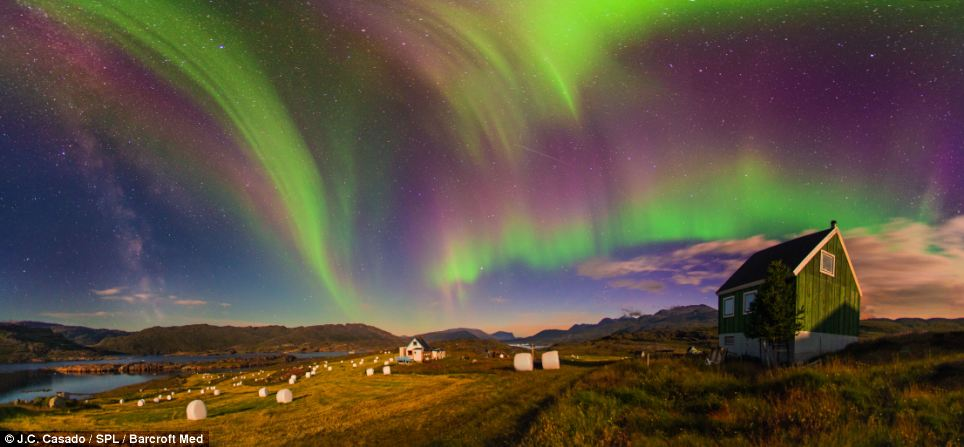
The Aurora Oval: The Invisible Zone That’s Expanding
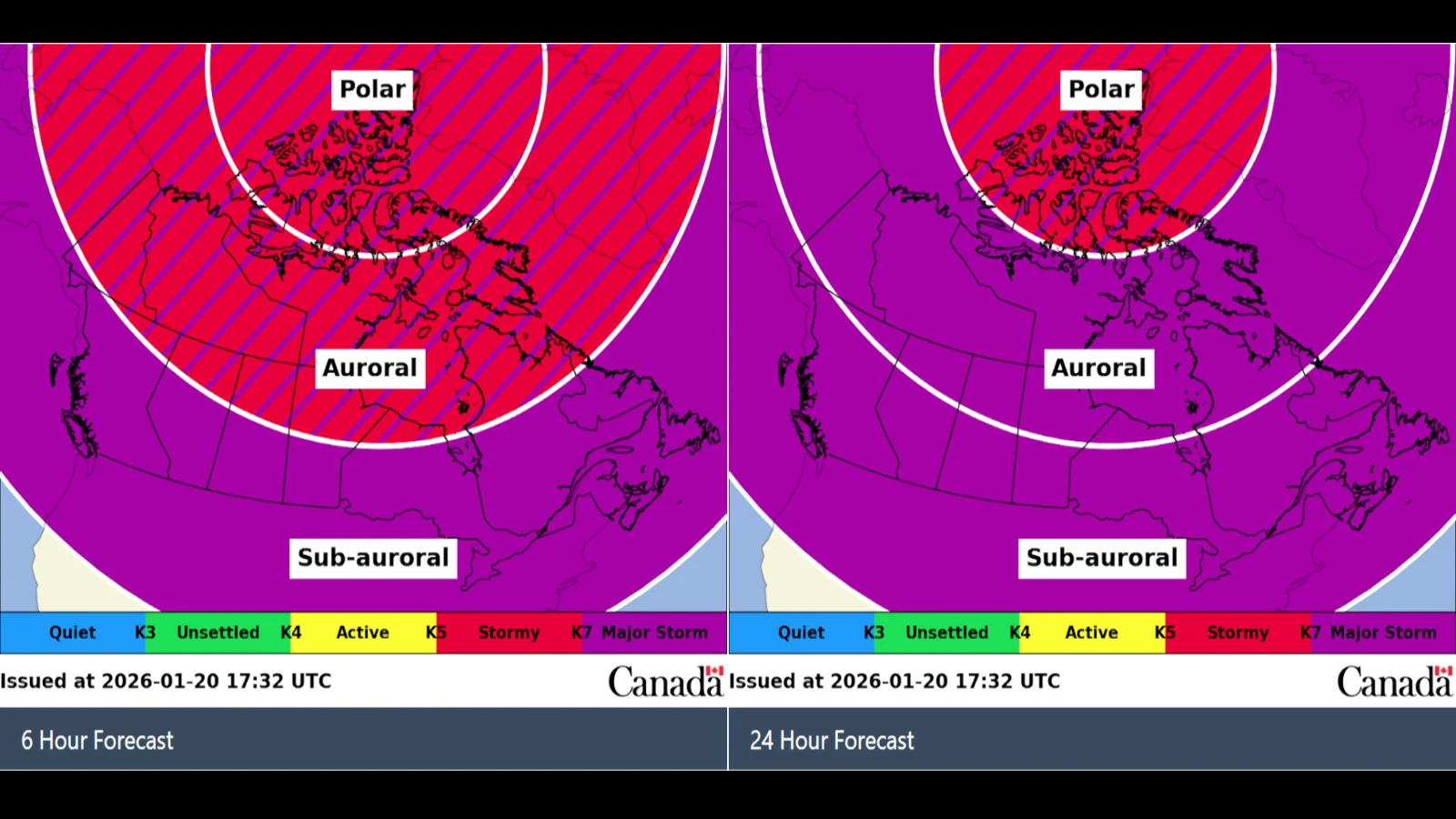
Auroras don’t appear randomly. They form inside a region scientists call the auroral oval—a ring around Earth’s magnetic poles where auroras are most likely to occur.
During calm solar conditions, this oval hugs the Arctic Circle. During strong geomagnetic storms, it expands dramatically.
Recent storms have caused the auroral oval to stretch far enough south to cover:
- The Upper Midwest
- The Northern Plains
- Parts of the Northeast
- Occasionally, the southern United States
This expansion explains why people who never expected to see auroras are suddenly witnessing them from their own backyards.
Why Are These Solar Storms So Intense Right Now?
Several rare factors are aligning at once.
Key Reasons Behind the Intensity
- Solar Cycle 25 is stronger than expected, producing frequent eruptions
- Earth’s magnetic orientation sometimes allows solar energy to connect more efficiently
- Several CMEs have been perfectly aimed at Earth, creating direct impacts
Scientists emphasize that none of this is abnormal in a dangerous sense—it’s just uncommon within a short time span.
Real-Life Examples: When America Looked Up in Shock
This phenomenon isn’t theoretical. It’s being experienced in real time.
- Residents in Minnesota watched auroras ripple above frozen lakes
- Farmers in North Dakota saw glowing curtains over open fields
- People near Chicago reported faint purple skies on the horizon
- Texans captured rare aurora photos during one of the strongest storms on record
Many initially assumed the lights were city glow or clouds—until the colors shifted and began to move.
That movement is unmistakable. Auroras don’t sit still.
Does This Mean Something Is Wrong With the Sun?
This question comes up often, and the answer is reassuring.
The Sun has gone through even stronger periods in the past. Historical records document extreme aurora events in:
- 1859 (the Carrington Event)
- 1921
- 1989
- The early 2000s
What’s different today is awareness. With smartphones, space-weather alerts, and social media, auroras are documented instantly and shared worldwide.
The Sun isn’t malfunctioning—it’s behaving exactly as physics predicts.
Is Earth’s Magnetic Field Weakening?
Another common concern is whether Earth’s magnetic field is failing.
Scientists confirm:
- Earth’s magnetic field naturally shifts over thousands of years
- There is no sudden collapse underway
- Current aurora expansion is driven by solar energy, not magnetic failure
In fact, auroras are a sign that Earth’s magnetic field is actively protecting us by channeling solar energy away from the surface.
Why Are Red and Purple Auroras Showing Up More Often?
Many people report seeing colors they’ve never seen before.
This happens because:
- Green auroras occur lower in the atmosphere
- Red and purple auroras occur much higher
- Stronger storms energize higher-altitude gases
When storms are intense enough, these high-altitude colors become visible farther south, creating unusually vivid displays.
Why Auroras Look Better in Photos Than in Real Life
A frequent question is why camera images look more dramatic than what people remember seeing.
The reason is exposure time.
Cameras can gather light over several seconds, revealing colors that human eyes perceive more subtly. Human vision prioritizes motion and contrast, while cameras prioritize brightness.
Both experiences are real—just different.
Will the Northern Lights Keep Appearing This Far South?
This is one of the most searched aurora questions in the United States.
The Honest Answer
Yes—for the next few years.
Solar Cycle 25 is expected to peak between 2024 and 2026, meaning:
- Continued strong geomagnetic storms
- More auroras reaching lower latitudes
- Increased chances for rare sightings across the U.S.
After the peak, activity will gradually decline, but auroras will not disappear entirely.
How to Know When Auroras Might Appear Near You
You don’t need advanced scientific training to track auroras.
What to Monitor
- NOAA space-weather alerts
- Geomagnetic storm levels (Kp index)
- Local weather forecasts for clear skies
Best Viewing Window
- Between 10 PM and 2 AM
- Often strongest after midnight
Common Myths About Southern Auroras
- “They only happen once.” False—solar cycles repeat
- “They’re dangerous.” False—auroras are harmless
- “You need special gear.” False—eyes are enough during strong storms
- “They signal disaster.” False—this is natural solar behavior
Why Scientists Are Excited About This Moment
For researchers, this period offers rare opportunities.
Auroras provide:
- Real-time data on solar-Earth interactions
- Opportunities to refine space-weather forecasting
- Public engagement with space science
Few scientific phenomena are both measurable and emotionally powerful—and auroras are one of them.
Frequently Asked Questions (Trending in the U.S.)
1. Why are Northern Lights appearing south of the Arctic?
Because powerful solar storms are expanding the auroral oval.
2. Is this related to climate change?
No. Auroras are driven by solar activity, not climate systems.
3. Are auroras harmful to humans?
No. They occur far above Earth’s surface.
4. Can auroras damage electronics?
Rarely, and infrastructure is heavily protected and monitored.
5. How often will this happen again?
Multiple times through 2026 during solar maximum.
6. Can auroras appear suddenly?
Yes. They can form within minutes.
7. Why do some people see different colors?
Vision sensitivity, altitude, and storm strength vary.
8. Do auroras make sound?
Rare reports exist, but this isn’t scientifically confirmed.
9. Can auroras happen in summer?
Yes, but shorter nights make them harder to see.
10. Is this the strongest aurora period in decades?
For the continental U.S., it’s among the most active in 20+ years.
The Bigger Picture: A Reminder of Earth’s Place in Space
Auroras appearing where they “shouldn’t” remind us of something important.
Earth isn’t isolated. It’s part of a vast, dynamic system shaped by the Sun’s energy. The fact that solar activity can light up skies thousands of miles away is a humbling reminder of how interconnected everything is.
For many Americans, seeing the Northern Lights for the first time has been emotional, unexpected, and unforgettable.
Final Takeaway
The Northern Lights aren’t appearing south of the Arctic because something is wrong.
They’re appearing because the Sun is powerful, active, and alive, and Earth is responding exactly as it always has.
What’s different now is that millions of people are finally looking up.
And for a brief window in time, the sky is offering an extraordinary reminder of how beautiful science can be.