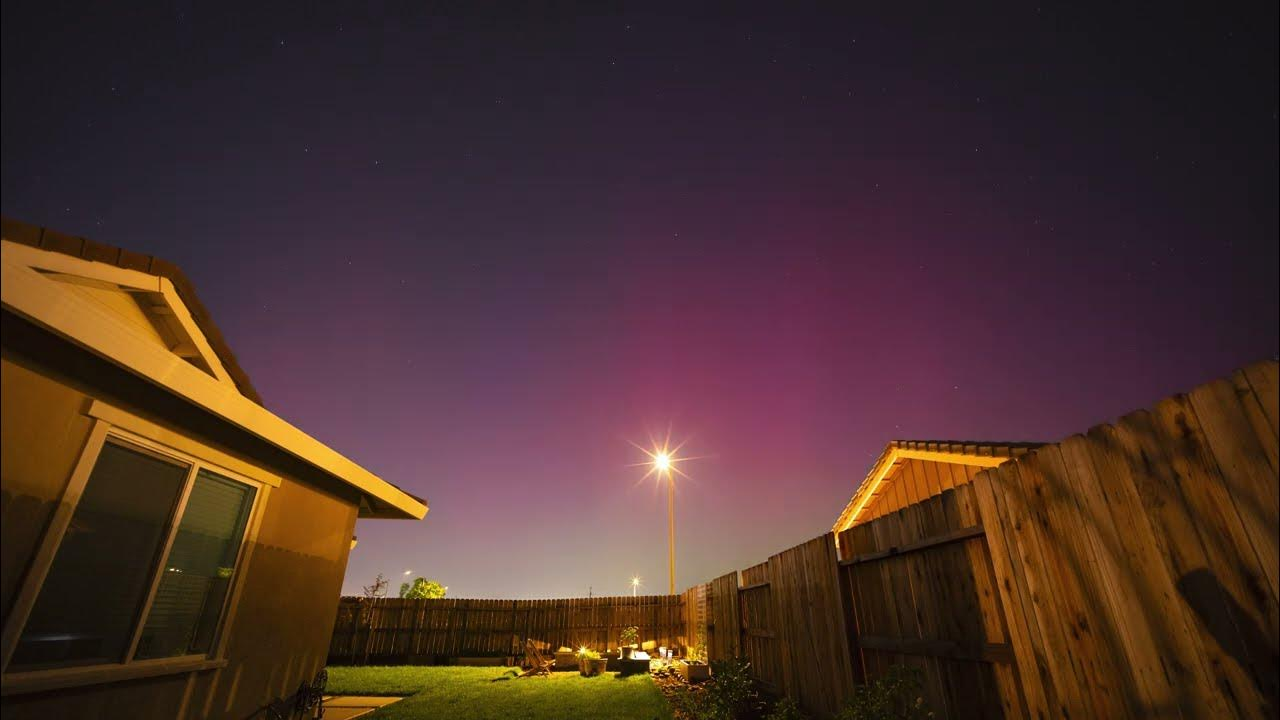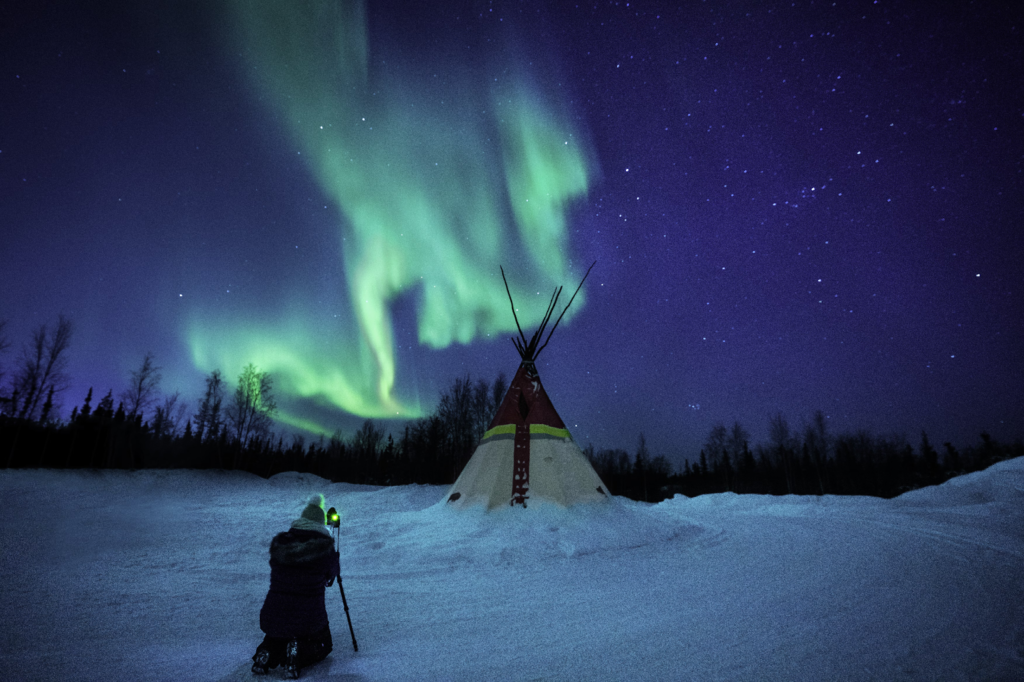
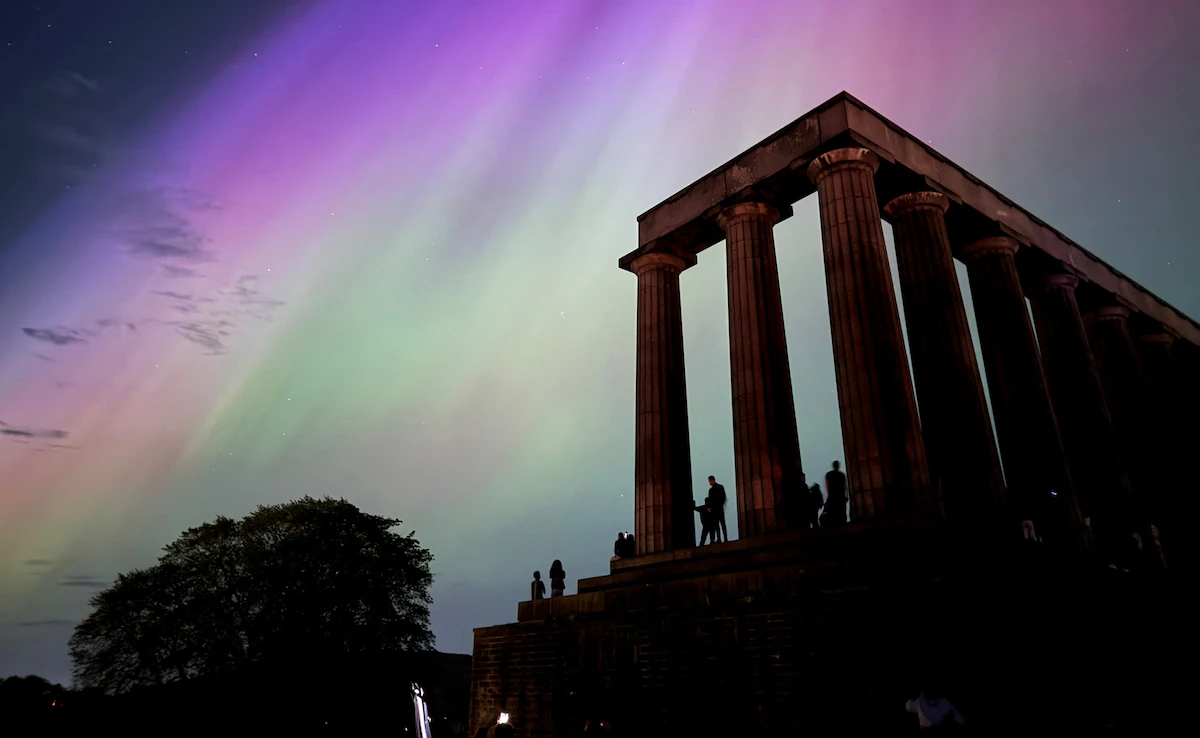
Scientists are closely monitoring an unusual aurora forecast that could signal one of the most powerful geomagnetic events in decades. Fueled by intense and unpredictable solar activity as the Sun approaches solar maximum, this rare prediction suggests auroras could be brighter, more widespread, and more erratic than usual. Here’s why experts are intrigued, what history tells us, and what it could mean for skywatchers across the U.S.
Why Are Scientists Saying This Aurora Forecast Is “Different”?
Aurora forecasts are normally routine. Scientists track solar flares, estimate the arrival of solar particles, and predict how far south the Northern Lights might be visible. Most forecasts fit neatly into established models.
This one doesn’t.
Over the past several weeks, researchers at NASA, NOAA’s Space Weather Prediction Center (SWPC), and international observatories have flagged a pattern of solar behavior that refuses to follow expectations. Instead of isolated solar eruptions, scientists are seeing clusters of powerful solar events, closely spaced in time and interacting with one another.
That interaction is what’s causing uncertainty—and excitement.
Experts aren’t just asking how strong the aurora might be. They’re asking whether current prediction models are being pushed beyond their limits.
What Is the Aurora Prediction That’s Confusing Experts?
The heart of the debate lies in compound solar activity.
Traditionally, aurora forecasts assume:
- One dominant coronal mass ejection (CME)
- A predictable arrival window
- A relatively stable geomagnetic response
What scientists are seeing now looks very different.
Current observations show:
- Multiple CMEs launched within short timeframes
- Solar flares overlapping in sequence
- Magnetic fields that may merge or amplify one another
- Uncertain arrival timing and orientation
According to NOAA scientists, when CMEs interact before reaching Earth, they can strengthen, slow down, speed up, or even rotate—dramatically altering their impact.
This makes aurora prediction far more complex than usual.
Why Timing Matters More Than Ever Right Now
The Sun operates on an approximately 11-year solar cycle, shifting between quiet periods and peaks of intense activity known as solar maximum.
We are currently approaching solar maximum, expected around 2025–2026. Historically, this phase produces:
- The brightest auroras
- The most widespread geomagnetic storms
- The most unpredictable space-weather behavior
What’s unusual this time is how early and how aggressively solar activity has ramped up.
NASA confirms:
- Solar activity is rising faster than predicted
- Large sunspot regions are forming earlier
- Strong flares are occurring more frequently
This combination raises the possibility that aurora activity could rival—or exceed—events from previous decades.
How Is This Solar Cycle Different From the Last Few?
Scientists are careful not to overstate comparisons, but several differences stand out.
Key anomalies experts are watching include:
- Earlier-than-expected high-intensity flares
- Repeated M-class and X-class solar flares
- Multiple Earth-directed CMEs in short succession
- Complex magnetic structures within those CMEs
In past cycles, these conditions often preceded major geomagnetic storms—the kind that produce auroras visible far beyond their usual range.
Could This Be the Strongest Aurora Event Since 2003?
Whenever scientists talk about extreme auroras, one historical benchmark inevitably comes up: the Halloween Solar Storms of 2003.
Those storms:
- Produced auroras visible across much of the continental U.S.
- Disrupted satellites and radio communications
- Caused power grid issues in parts of the world
- Recorded some of the strongest geomagnetic readings ever measured
No responsible scientist is claiming an identical repeat is guaranteed. However, some say the current solar setup shows early similarities to the conditions that led to those storms.
That alone makes this prediction impossible to ignore.
How Do Scientists Actually Predict Auroras?
Aurora forecasting blends physics, observation, and probability.
Scientists rely on:
- Solar observatories monitoring sunspots and flares
- Spacecraft such as SOHO and DSCOVR measuring solar wind
- Magnetometers tracking Earth’s magnetic response
- Computer models simulating CME behavior
One of the most critical—and unpredictable—factors is magnetic orientation.
If a CME’s magnetic field points southward when it hits Earth, it couples more strongly with Earth’s magnetic field, producing brighter auroras. Unfortunately, orientation often isn’t known until hours before impact.
Why This Prediction Is So Uncertain
In space weather, small changes produce big consequences.
Minor differences in:
- CME speed
- Magnetic polarity
- Density of charged particles
…can dramatically change the outcome.
That’s why some experts are urging caution while others are openly fascinated. Both reactions reflect the same reality: this event sits at the edge of predictability.
What Could This Mean for Aurora Visibility in the U.S.?
If the more extreme forecasts prove accurate, auroras could:
- Appear much farther south than usual
- Persist across multiple nights
- Display deeper reds, purples, and pinks
- Become visible even in areas not known for auroras
Historically, during extreme geomagnetic storms, auroras have been documented as far south as:
- Illinois
- Ohio
- Pennsylvania
- Parts of the southern U.S. as faint red glows
These events are rare—but scientifically documented.
Real-Life Examples When Predictions Fell Short—or Surpassed Expectations
Recent years have offered several reminders that auroras don’t always follow forecasts.
During past geomagnetic storms:
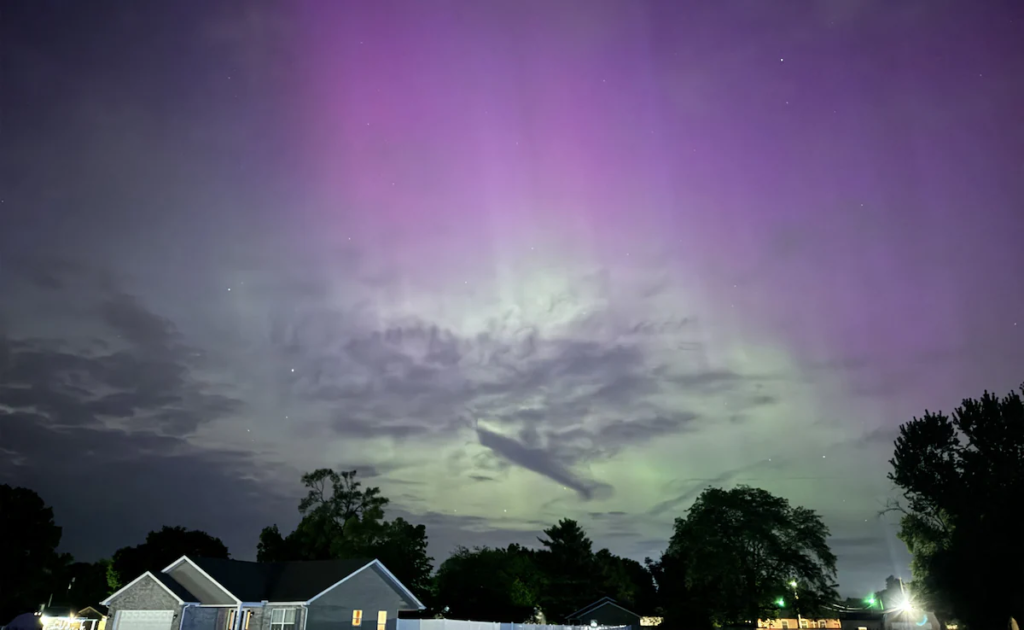
- Midwest residents saw auroras directly overhead
- East Coast observers reported unexpected red skies
- Social media filled with sightings from unlikely locations
In many cases, these displays exceeded initial predictions—fueling speculation that current models may underestimate extreme events.
What Would an Exceptionally Strong Aurora Look Like?
Stronger auroras don’t just mean brighter green lights.
During major events, observers often see:
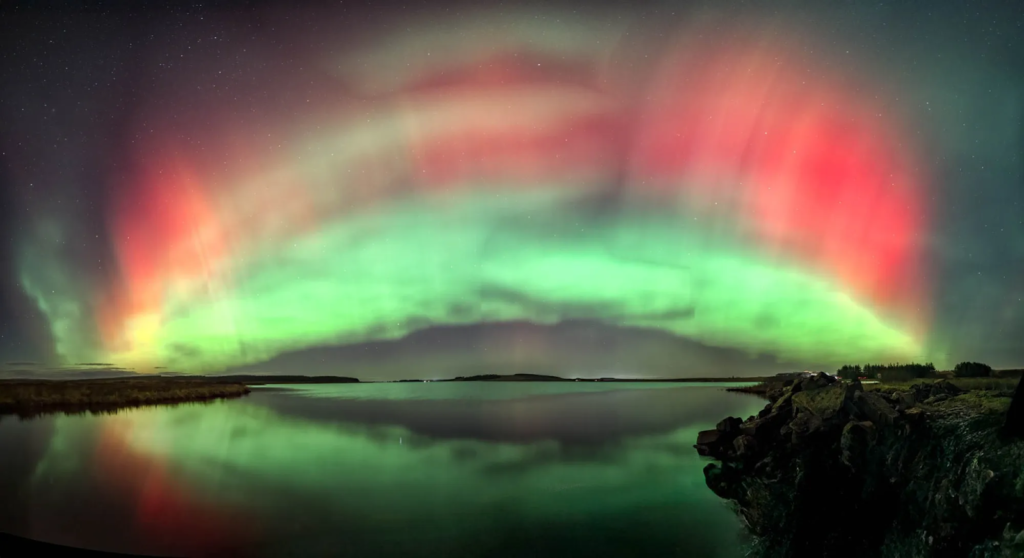
- Vast red or pink arcs stretching across the sky
- Slow, wave-like motion lasting hours
- Aurora activity visible in all directions, not just north
At lower latitudes, red auroras dominate because they occur at higher altitudes and travel farther south.
Many first-time viewers mistake them for clouds—until they begin to move.
Are There Any Risks Associated With Stronger Auroras?
Auroras themselves are completely harmless to observe.
However, strong geomagnetic storms can affect:
- GPS accuracy
- High-frequency radio communications
- Satellites in orbit
- Power grids (rarely, but historically documented)
NOAA emphasizes that modern infrastructure is far better protected than in the past, and monitoring systems exist precisely to manage these risks.
Should You Be Worried—or Excited?
For most people, excitement is the appropriate response.
Auroras are a visible reminder of Earth’s connection to the Sun—a cosmic interaction that is both scientifically fascinating and emotionally powerful.
Scientists stress:
- Increased auroras are normal near solar maximum
- This activity fits known solar cycles
- There is no evidence of catastrophic risk
In short, this isn’t a warning—it’s an opportunity.
When Could This “Strongest in Decades” Event Happen?
This is the hardest question of all.
Experts say:
- Conditions could develop suddenly
- Activity may arrive in waves rather than one event
- Peak displays could occur anytime over the next 12–24 months
That uncertainty is why scientists continue monitoring solar activity daily.
How Can You Track This Prediction Yourself?
You don’t need specialized training to stay informed.
Helpful tools include:
- NOAA’s Aurora Forecast
- Space weather mobile apps
- Local meteorologist updates
Watching the Kp index is especially useful. Values above 6 suggest widespread aurora potential.
What Should First-Time Aurora Watchers Know?
If a major event occurs, expectations matter.
Auroras are:
- Often subtle at first
- Stronger away from city lights
- Best viewed with patience and dark-adapted eyes
Many people miss them simply because they don’t wait long enough.
Why Scientists Are Choosing Their Words Carefully
You may notice experts using cautious language like:
- “Elevated probability”
- “Unusual solar behavior”
- “Potentially significant event”
This isn’t hesitation—it’s scientific responsibility. Extraordinary claims require extraordinary evidence.
Could This Change How Auroras Are Predicted in the Future?
Possibly.
If this solar cycle continues to exceed expectations, scientists may need to:
- Update long-standing models
- Improve real-time CME interaction simulations
- Refine aurora visibility forecasts
This is part of why the current prediction matters beyond casual skywatching.
Frequently Asked Questions (Trending U.S. Searches)
1. Is this really the strongest aurora prediction in decades?
Scientists say it has the potential to be among the strongest, but certainty isn’t possible.
2. Why is this prediction so difficult?
Multiple interacting solar eruptions make outcomes harder to model.
3. When could this happen?
At any point during the next 1–2 years as solar maximum approaches.
4. Will auroras be visible in the U.S.?
Yes, especially in northern states—and possibly farther south during peak events.
5. Are auroras dangerous?
No. They are completely safe to watch.
6. What colors might appear?
Green is common, but red and purple are more likely during extreme events.
7. Is this related to climate change?
No. Auroras are driven by solar activity, not Earth’s climate.
8. How can I increase my chances of seeing it?
Monitor forecasts, seek dark skies, and be patient.
9. Have similar events happened before?
Yes, including major events in 2003 and earlier cycles.
10. Should I be concerned?
No. This is a natural part of the Sun’s long-term behavior.
Final Thoughts: Are We Witnessing a Rare Chapter in Solar History?
Whether or not this becomes the strongest aurora event in decades, one thing is clear:
We are entering a period of heightened solar activity that could redefine what many Americans think is possible in their night sky.
Sometimes, science doesn’t deliver certainty—it delivers opportunity.
And this prediction may be one of those moments when simply looking up becomes unforgettable.