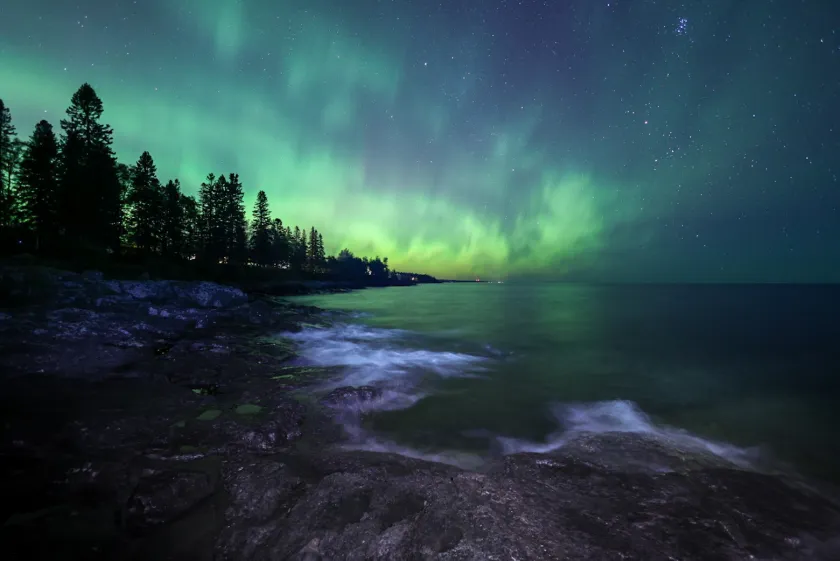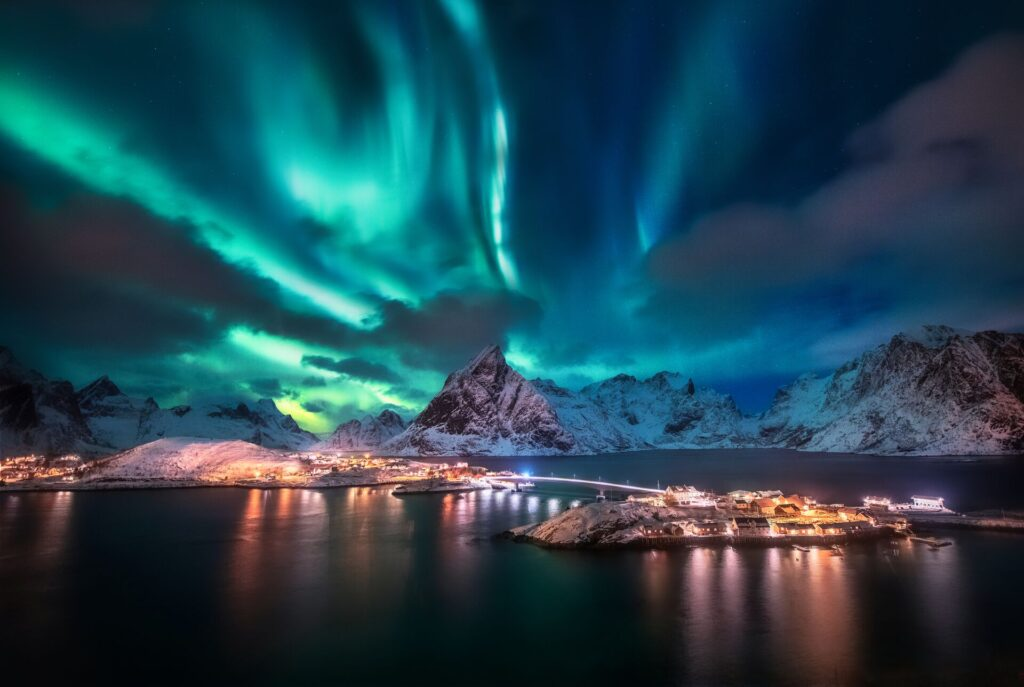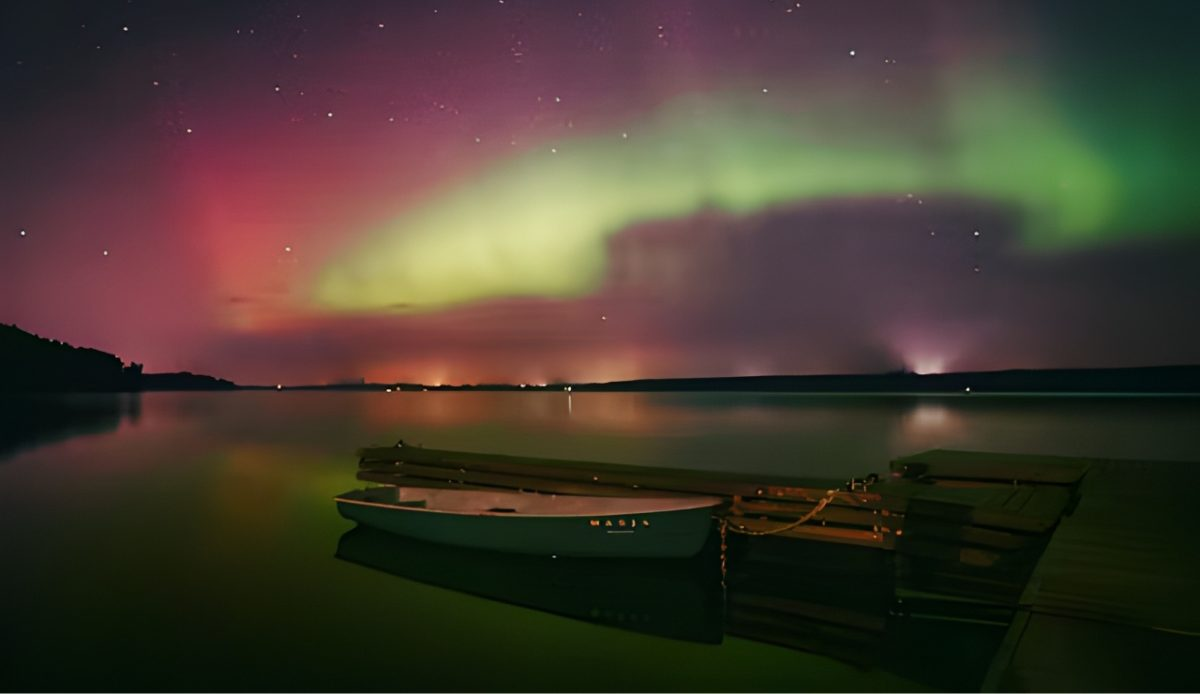
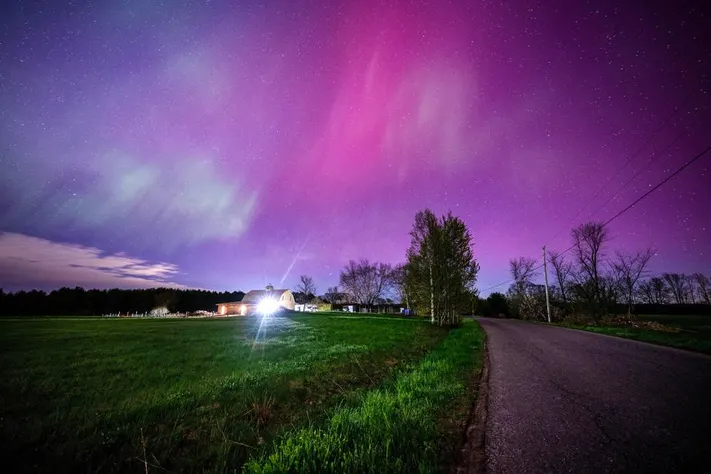
Scientists are tracking an unusually strong surge in solar activity that could make the Northern Lights visible across multiple U.S. states this week. Driven by powerful solar storms and an active solar cycle, auroras may stretch far beyond their usual Arctic range. From the Midwest to parts of the East and South, millions of Americans could witness a rare celestial display—if they know where and when to look.
Something Rare Is Happening Above the United States
For most Americans, the Northern Lights have always felt distant—something you associate with Alaska, Iceland, or remote Arctic regions far from everyday life. Seeing them usually meant expensive travel, extreme cold, and careful planning.
But this week, scientists say that assumption may no longer apply.
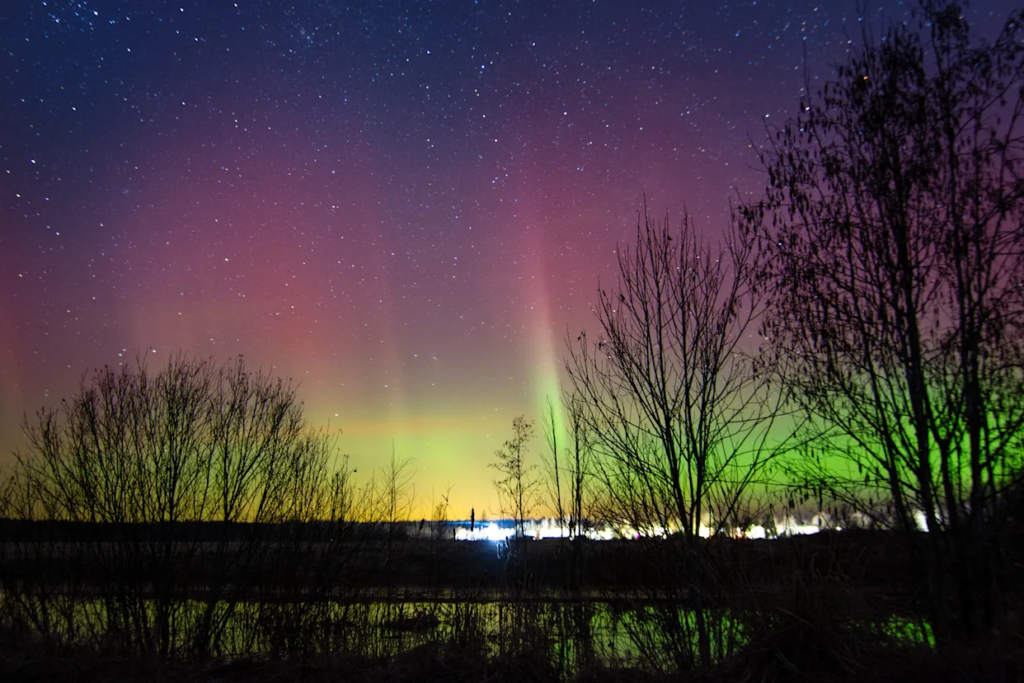
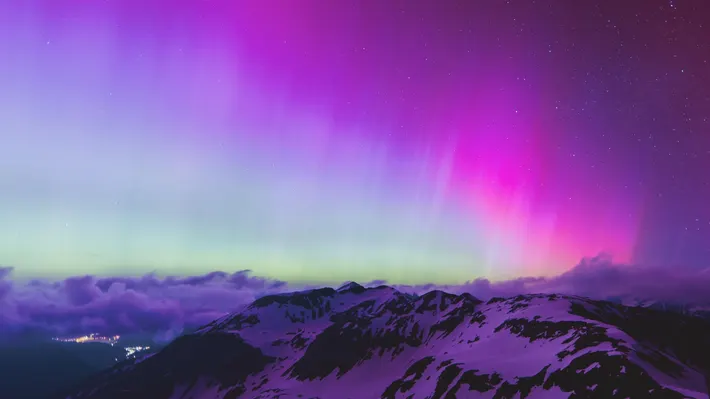
Space-weather experts are warning that a powerful geomagnetic storm could push auroras far south into the continental United States. If conditions align, residents in multiple states may look up over the next few nights and see shimmering green, pink, or red lights dancing across skies where auroras are almost never expected.
What makes this moment extraordinary is not just the science behind it—but how close it feels to home.
What Are Scientists Actually Warning About This Week?
Scientists who study space weather monitor the Sun constantly. Using satellites positioned between Earth and the Sun, they track solar flares, magnetic eruptions, and streams of charged particles traveling through space.
This week, several of those indicators have converged.
Researchers have detected Earth-directed coronal mass ejections (CMEs)—massive clouds of solar plasma traveling at millions of miles per hour. When these clouds reach Earth, they compress our planet’s magnetic field and trigger geomagnetic storms.
When those storms reach high intensity, the auroral zone expands dramatically.
That expansion is what scientists are watching right now.
Why the Aurora Doesn’t Stay Where It “Belongs”
The Northern Lights form when charged particles from the Sun collide with gases in Earth’s upper atmosphere. Normally, Earth’s magnetic field funnels those particles toward the poles, keeping auroras near Alaska and northern Canada.
But during strong solar storms, Earth’s magnetic defenses weaken temporarily.
That allows solar particles to reach lower latitudes—sometimes thousands of miles farther south than usual.
In simple terms:
- A calm Sun keeps auroras near the Arctic
- An active Sun pushes auroras toward populated U.S. states
And right now, the Sun is anything but calm.
Which States Could See the Aurora This Week?
States With the Highest Probability
Based on current geomagnetic forecasts, scientists say auroras could be visible—at least faintly—in these states if skies are clear:
- Washington
- Oregon
- Idaho
- Montana
- North Dakota
- South Dakota
- Minnesota
- Wisconsin
- Michigan
- Illinois
- Indiana
- Ohio
- Pennsylvania
- New York
- Vermont
- New Hampshire
- Maine
These states lie within the zone most likely to experience visible auroras during a strong geomagnetic storm.
States With a Secondary Chance
If the storm intensifies more than expected, auroras could push even farther south into:
- Iowa
- Missouri
- Nebraska
- Kansas
- Kentucky
- Tennessee
- North Carolina
In these regions, auroras may appear closer to the horizon and for shorter periods—but sightings are still possible.
Why This Solar Activity Is Happening Now
The Role of Solar Cycle 25
The Sun follows an approximately 11-year activity cycle. During solar maximum, sunspots, solar flares, and CMEs increase dramatically.
We are currently approaching the peak of Solar Cycle 25, and scientists now believe it is stronger than early predictions suggested.
Over the past year:
- Large sunspot clusters have appeared more frequently
- High-energy solar flares have increased
- Earth-directed CMEs have become more common
This combination creates ideal conditions for widespread auroras.
Real Americans Have Already Seen This Happen
These forecasts aren’t theoretical. Similar storms over the past year have already produced stunning results.
In Michigan, families reported seeing soft green glows stretching above suburban neighborhoods—something many thought was impossible.
In Ohio, photographers captured auroral arcs above farmland, with lights reflecting faintly off barns and silos.
In Pennsylvania, people shared images of pink-tinged skies above rolling hills, initially mistaking them for distant city glow.
In Maine, beachgoers witnessed auroras reflecting off the Atlantic Ocean, creating a surreal mix of cosmic light and crashing waves.
In nearly every case, people didn’t expect to see anything at all. They simply noticed something unusual and looked up.
What Will the Aurora Look Like in These States?
One of the biggest reasons people miss auroras is expectation.
Outside Alaska, auroras often look subtle, especially to first-time viewers.
Instead of dramatic curtains of light, many Americans see:
- Faint green or white glows near the horizon
- Pink or red hues during stronger storms
- Vertical pillars of light
- Slow shimmering rather than fast movement
Sometimes, the aurora is easier to detect by movement than by color.
Why Your Phone Camera May Reveal the Aurora First
Modern smartphone cameras use long exposure and light amplification. This allows them to capture faint auroral colors that human eyes struggle to see in low-light conditions.
That’s why many people say:
“I didn’t realize it was the Northern Lights until I checked my photos.”
If you suspect an aurora, taking a photo can confirm what your eyes are only partially detecting.
When Is the Best Time to Look This Week?
Timing is critical.
Typical Aurora Viewing Window
- 10:00 PM to 2:00 AM local time
- Peak activity often occurs near midnight
- Displays can appear suddenly and fade just as quickly
Some auroras last only minutes. Others linger for hours. Patience matters.
Where Should You Go to Improve Your Chances?
Even in the right state, location makes a huge difference.
Best Places to Watch
- Rural areas far from city lights
- Open fields with a clear northern view
- Lakeshores and coastlines
- National parks or dark-sky reserves
Many of the best sightings in recent months happened just outside small towns, where light pollution drops dramatically.
Why Scientists Monitor These Storms So Closely
Auroras are beautiful, but they’re also evidence of intense space weather.
Strong geomagnetic storms can affect:
- GPS accuracy
- Satellite communications
- Aviation navigation systems
- Radio signals
- Electrical power grids
While most storms cause no serious problems, scientists track them carefully to protect modern infrastructure.
Is It Safe to Watch the Aurora?
This is one of the most common questions Americans ask.
The answer is simple and reassuring.
Auroras pose no danger to people on the ground. Earth’s atmosphere and magnetic field shield us from harmful radiation.
Watching the Northern Lights is completely safe.
Is This a One-Time Event or a Pattern?
Solar Cycle 25 is expected to remain active for several more years. That means:
- More geomagnetic storms
- Increased chances of auroras in the U.S.
- Occasional surprise sightings farther south
However, storms strong enough to produce widespread U.S. auroras are still rare—which is why this week’s forecast matters.
How to Stay Informed About Aurora Alerts
Many people miss auroras simply because they don’t know when to look.
Helpful resources include:
- Space-weather alert apps
- Aurora forecast websites
- Meteorologists and space scientists on social media
Even a short warning can be enough to catch a once-in-a-lifetime display.
Why Seeing the Aurora Feels So Emotional
People often struggle to explain how it feels to see the Northern Lights—especially in places where they never expected them.
Common reactions include:
- Awe and disbelief
- Emotional chills
- Silence and stillness
- A strong urge to share the moment
For many Americans, it’s not just about the lights—it’s about realizing how dynamic and interconnected our planet truly is.
10 Frequently Asked Questions (Trending U.S. Searches)
1. Which states can see the aurora this week?
Northern and central states have the highest chances, with possible visibility extending farther south during strong storms.
2. Can the Northern Lights really be seen outside Alaska?
Yes. Strong geomagnetic storms can push auroras into the continental United States.
3. What causes auroras to move south?
Powerful solar storms compress Earth’s magnetic field, expanding the auroral zone.
4. What time should I look for the aurora?
Between 10 PM and 2 AM local time is usually best.
5. Do auroras look different in the U.S. than in Alaska?
They are often fainter and subtler but still genuine auroras.
6. Can city residents see the aurora?
Sometimes, but light pollution significantly reduces visibility.
7. Are red auroras normal?
Red auroras are rarer and typically occur during strong solar storms.
8. Is it safe to watch the Northern Lights?
Yes. Auroras pose no risk to observers.
9. Will auroras keep happening this year?
Solar activity remains elevated, increasing chances throughout the year.
10. Do I need special equipment to see the aurora?
No. Naked eyes are enough, though cameras can help reveal faint colors.
Final Thoughts: Are You on the List?
If you live in one of the states scientists are watching, this week could bring a rare opportunity—one that doesn’t require travel, special gear, or expert knowledge.
The Northern Lights are no longer just an Arctic phenomenon. They are a reminder that Earth exists within a powerful cosmic system, and sometimes that system paints our skies in ways we never expect.
So over the next few nights, step outside, turn off the lights, and look north.
You just might witness something unforgettable.