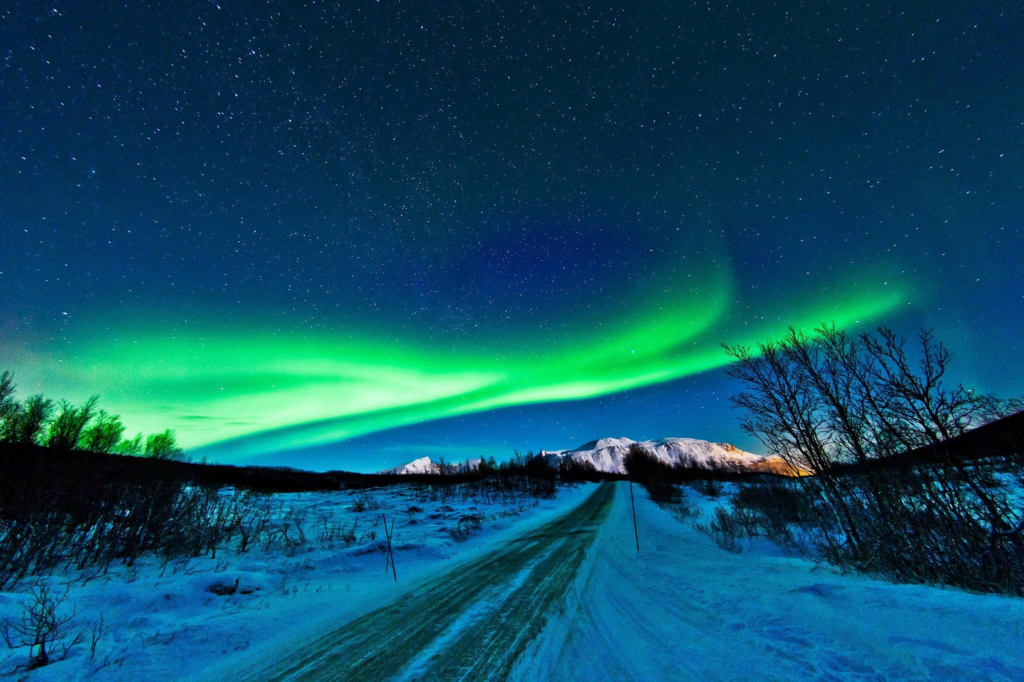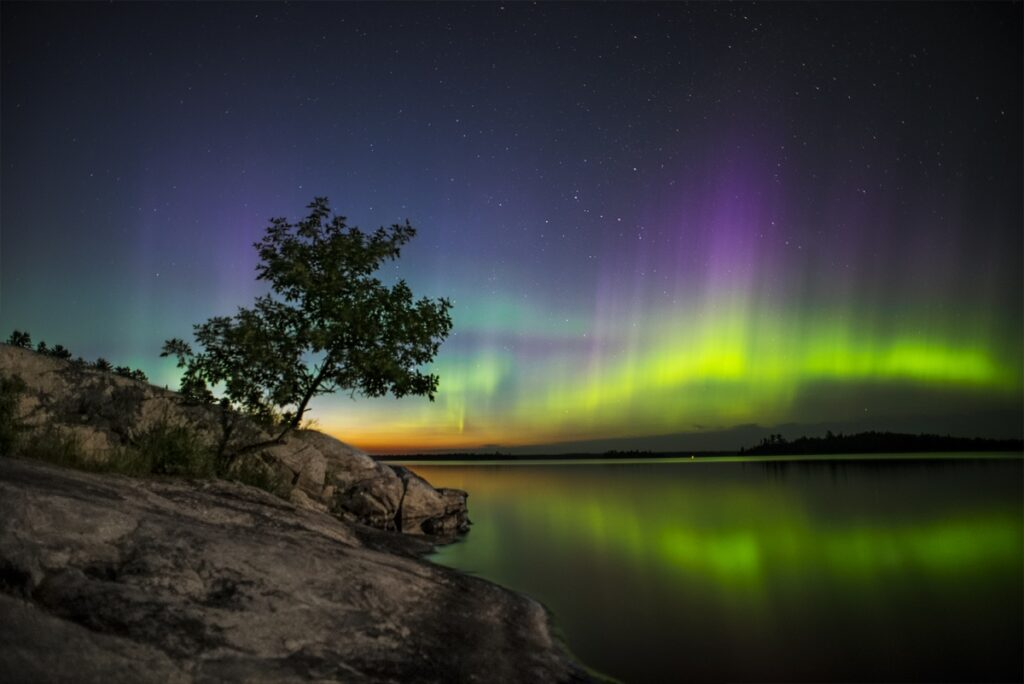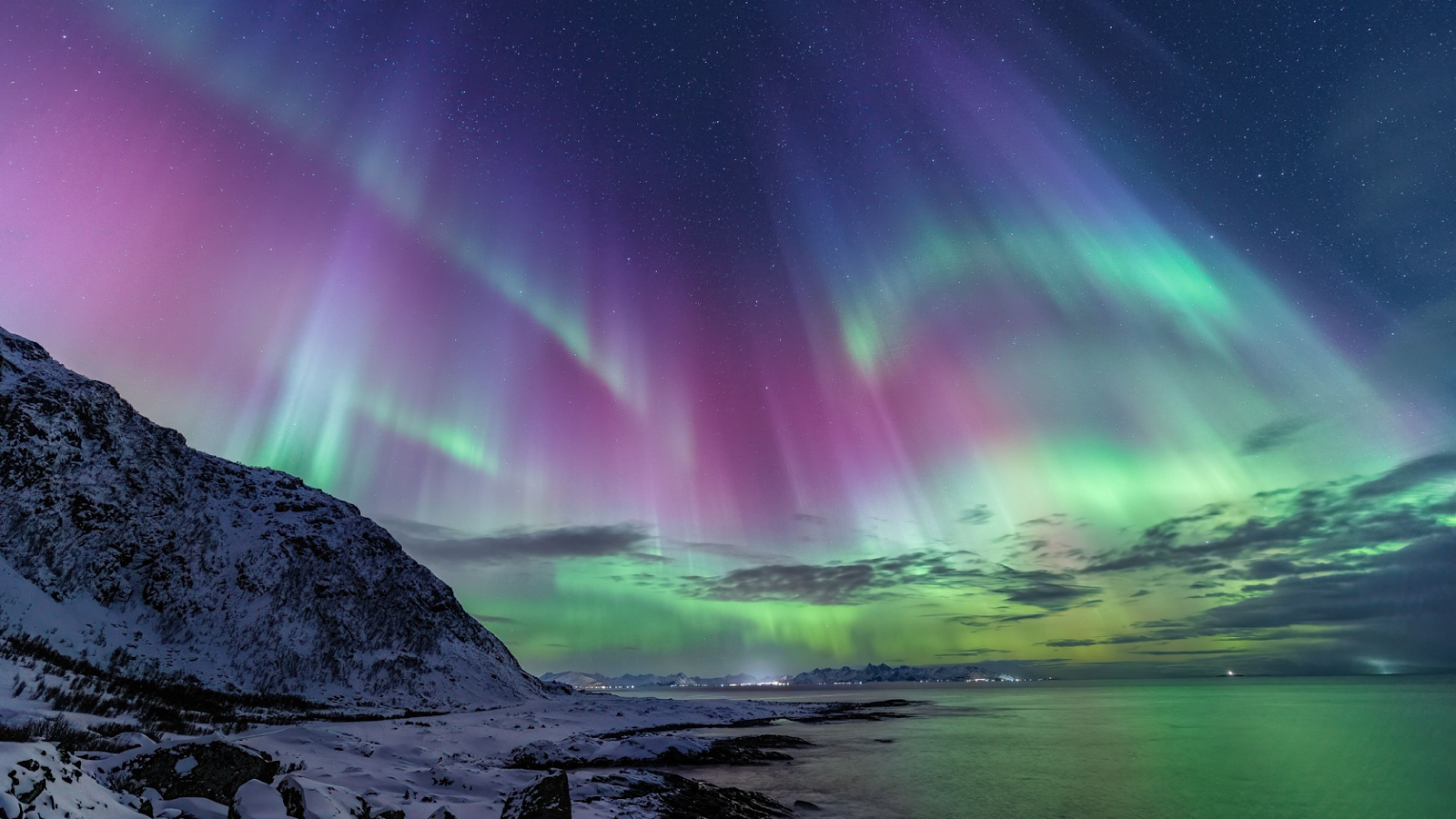
Rare aurora events driven by heightened solar activity could soon illuminate skies over major U.S. cities far beyond traditional northern viewing zones. As Solar Cycle 25 intensifies, powerful geomagnetic storms are expanding aurora visibility across America. This in-depth guide explores which cities could be affected, when auroras may appear, what they look like in urban areas, and how Americans can prepare for these once-in-a-generation sky events.
Introduction: Why Americans Are Suddenly Watching the Sky Over Their Cities
For most of modern history, the northern lights felt distant—an Arctic spectacle reserved for Alaska, northern Canada, or far-flung Scandinavian landscapes. City dwellers in the United States rarely considered auroras part of their reality. Streetlights, skyscrapers, and glowing highways seemed incompatible with glowing skies.
That assumption is rapidly changing.
Over the past few years, millions of Americans have witnessed auroras from places they never expected: suburban neighborhoods, urban rooftops, downtown skylines, and even interstate rest stops. Social media has filled with stunned reactions—pink skies over Chicago, faint red glows behind New York’s skyline, shimmering horizons outside Denver suburbs.
What once sounded impossible is now happening.
The question Americans are asking isn’t “Do auroras happen in the U.S.?”
It’s “Could they happen over my city?”
Thanks to intensifying solar activity, the answer is increasingly yes.
What Makes These Aurora Events Truly “Rare”?
Auroras themselves are not rare near the Earth’s poles. What is rare is when they become strong enough—and travel far enough south—to be seen over large, light-polluted cities.
These rare urban aurora events require a precise alignment of factors:
- Exceptionally strong solar eruptions
- Earth-directed coronal mass ejections (CMEs)
- Favorable magnetic alignment between the Sun and Earth
- Nighttime conditions over populated regions
According to the NOAA Space Weather Prediction Center, storms classified as G4 (Severe) or G5 (Extreme) are responsible for most city-level aurora sightings. These events occur only a handful of times per solar cycle, making each one notable.
When they do occur, the auroral oval expands dramatically, sometimes covering much of the continental United States.
Why Are Rare Aurora Events Becoming More Likely Right Now?
The driving force behind this surge is Solar Cycle 25.
The Sun follows an approximately 11-year cycle, alternating between quiet and active phases. We are currently approaching the peak of Solar Cycle 25, and both NASA and NOAA confirm it is stronger than scientists initially predicted.
Recent solar data shows:
- Higher-than-expected sunspot numbers
- More frequent powerful solar flares
- Multiple fast-moving CMEs aimed directly at Earth
Each of these increases the odds of strong geomagnetic storms—exactly the conditions needed for rare auroras to reach U.S. cities.
How Do Auroras Reach Cities Despite Light Pollution?
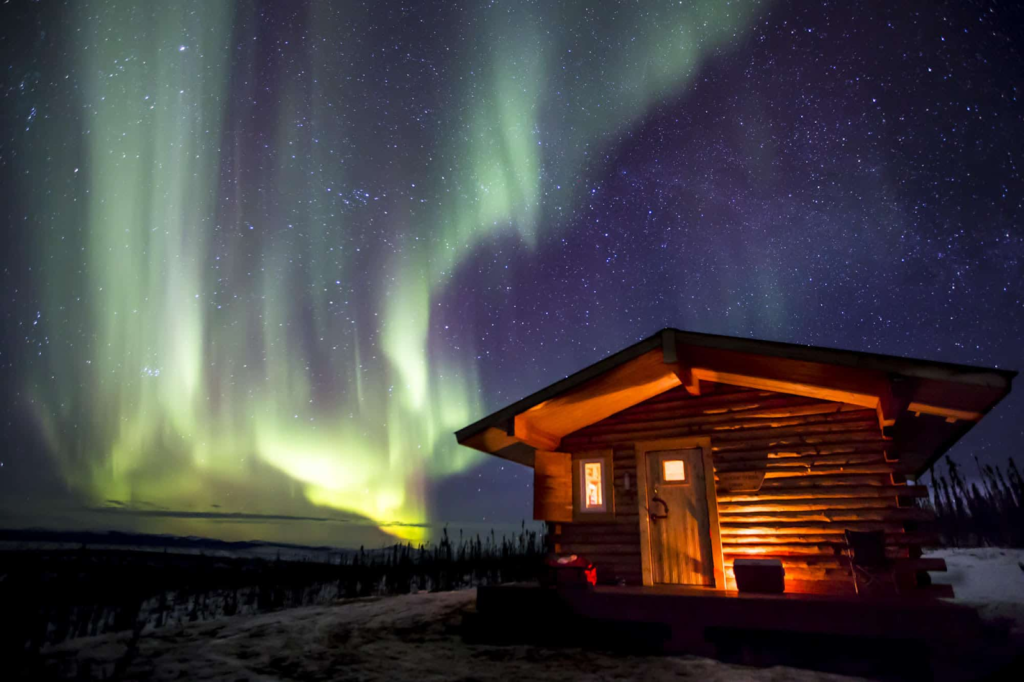
Urban auroras don’t gently appear—they overwhelm.
During intense geomagnetic storms:
- Auroras become brighter and more widespread
- Red emissions dominate at higher altitudes
- The entire sky can glow rather than flicker
Instead of delicate green curtains near the horizon, city observers often see:
- Broad red or magenta glows
- Diffuse light filling large sections of the sky
- Subtle motion that’s easier to detect over time
These effects can punch through city lighting, especially when viewed with modern smartphone cameras.
Which US Cities Could See Rare Aurora Events?
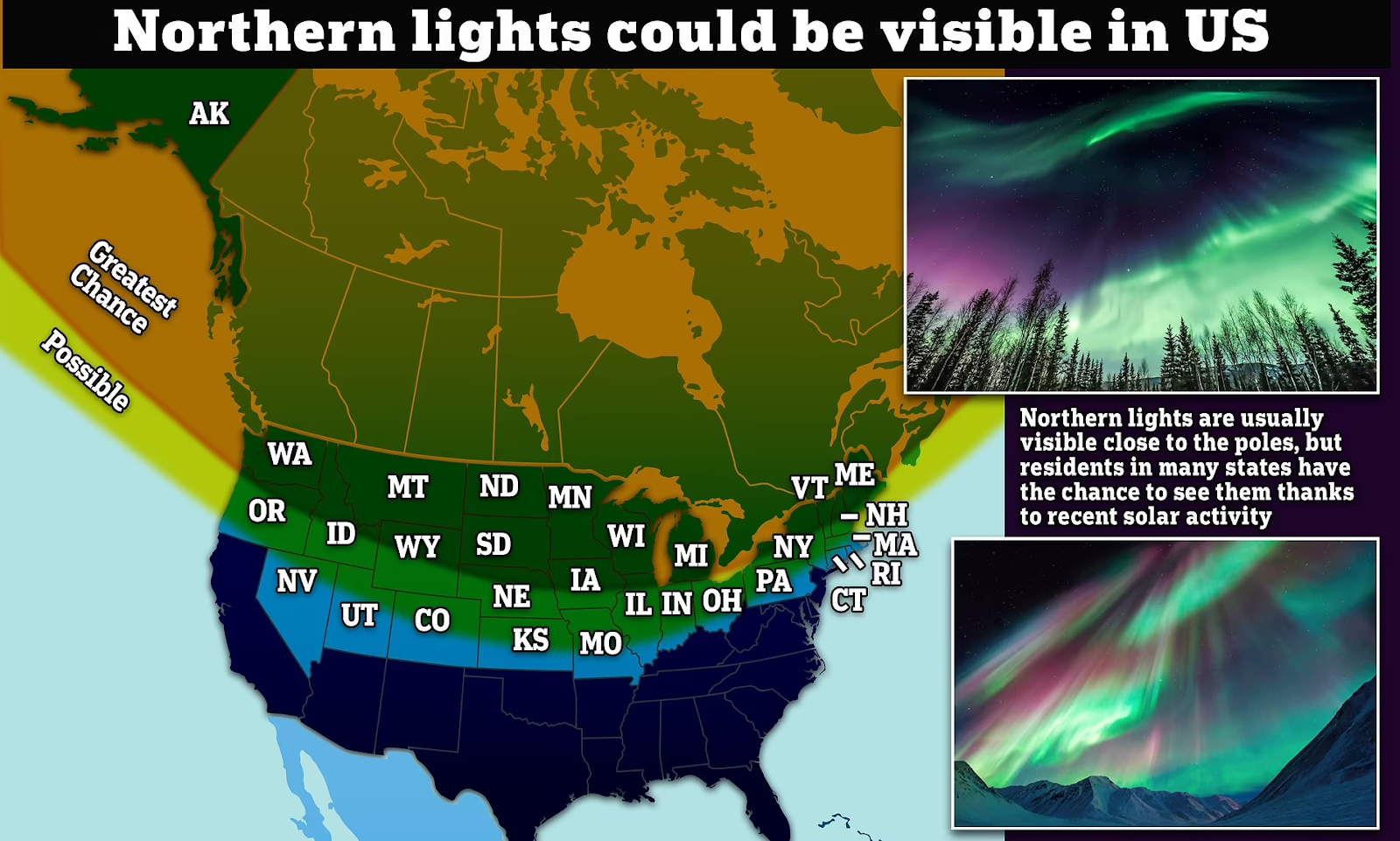
Based on NOAA aurora probability maps, historical storm data, and latitude, several U.S. cities are increasingly at risk during strong solar storms.
Cities With the Highest Urban Aurora Potential
These cities sit at favorable latitudes and have already experienced documented aurora sightings in recent years.
Chicago, Illinois
Chicago has quietly become one of the most documented urban aurora cities in America.
Real-life example:
During a severe geomagnetic storm, residents along Lake Michigan reported a deep red glow stretching across the northern sky. Many initially assumed it was distant industrial lighting or fires—until the glow shifted and pulsed, revealing its auroral nature.
The lake’s open horizon enhances visibility, making Chicago more aurora-friendly than many expect.
Minneapolis–St. Paul, Minnesota
One of the most reliable metro areas for auroras in the Lower 48.
- Northern latitude
- Nearby dark-sky regions
- Frequent inclusion in aurora alert zones
Auroras have appeared not just near suburbs, but directly over downtown skylines during strong storms.
Denver, Colorado
Denver’s elevation gives it a unique advantage.
Real-life example:
During a recent geomagnetic storm, suburban residents captured pink and red auroras above the foothills. Though subtle to the naked eye, phone cameras revealed full auroral arcs rising over the city’s western horizon.
Northeast Cities Entering the Aurora Conversation
Auroras in the Northeast were once considered extremely rare. That assumption no longer holds.
New York City
While still uncommon, NYC has experienced auroral glows during extreme storms.
Real-life example:
Long-exposure photos captured red auroras behind the Manhattan skyline during a powerful geomagnetic event—later confirmed by NOAA data.
Boston, Massachusetts
Boston’s northern latitude and coastal horizons increase its aurora potential during strong storms, especially when skies are clear.
Buffalo and Rochester, New York
Proximity to the Great Lakes and darker surrounding areas improve visibility significantly during severe geomagnetic activity.
Midwest Cities That Could Be Affected
Strong storms can push auroras deeper into the central U.S.
Cities with realistic potential include:
- Omaha
- Des Moines
- Madison
- Milwaukee
- Kansas City
In these locations, auroras usually appear as low red glows near the northern horizon rather than overhead displays.
Western Cities With Unexpected Aurora Potential
Seattle, Washington
Cloud cover is the biggest challenge, but when skies clear during strong storms, auroras can be visible even near urban areas.
Portland, Oregon
Rare but documented auroras have appeared during severe geomagnetic events, especially when skies cooperate.
Boise, Idaho
Smaller metro size, darker surroundings, and higher latitude give Boise better odds than many larger cities.
What Would a City Aurora Actually Look Like?
Unrealistic expectations cause many people to miss auroras entirely.
Typical Urban Aurora Characteristics
- Red or pink glow dominating the sky
- Subtle movement rather than dramatic waves
- Occasional faint green bands near the horizon
- Stronger colors captured by cameras than by eyes
Auroras rarely appear directly overhead in cities; they usually concentrate in the northern sky.
Why Phones Detect Auroras Before Human Eyes
This surprises many first-time observers.
Smartphone cameras:
- Are more sensitive to low-light color
- Amplify faint red and green emissions
- Reveal auroras invisible to casual viewing
Many viral city aurora photos were taken by people who didn’t realize what they had captured until later.
When Are These Rare Aurora Events Most Likely?
Timing is critical.
Best Seasonal Windows
- September–October (fall equinox)
- February–March (spring equinox)
These periods align with peaks in geomagnetic efficiency.
Best Time of Night
- Between 10:00 PM and 2:00 AM local time
- Occasionally earlier during very strong storms
Auroras often intensify suddenly, sometimes after appearing faint for hours.
How to Prepare If You Live in or Near a City
Preparation dramatically improves your chances.
Before the event
- Follow NOAA Space Weather alerts
- Monitor Kp index forecasts
- Identify nearby darker viewing spots
During the event
- Face north
- Turn off nearby lights if possible
- Use your phone camera to scan the sky
- Stay outside longer than you expect
Why Many City Residents Miss Auroras Completely
Even during major storms, countless people never notice anything unusual.
Common reasons include:
- Expecting bright green lights
- Looking straight overhead instead of north
- Staying indoors
- Assuming city skies can’t host auroras
Urban auroras reward patience and curiosity.
Are Rare Aurora Events Dangerous for Cities?
Auroras themselves are not dangerous.
However, strong geomagnetic storms can:
- Disrupt satellites
- Affect GPS signals
- Stress power grids
Utilities and space agencies monitor these risks closely. Watching the sky is completely safe.
How Often Do These Rare City-Level Aurora Events Happen?
They are uncommon—but not mythical.
- Minor urban auroras: every few years
- Major city-visible auroras: once or twice per solar cycle
- Extreme events: once a decade or longer
Solar Cycle 25 increases the odds through 2026.
Why This Matters Beyond the Visual Spectacle
Auroras remind Americans that Earth is connected to space weather.
They:
- Spark public interest in science
- Encourage outdoor awareness
- Create shared national experiences
For many, seeing an aurora over their city becomes a lifelong memory.
Frequently Asked Questions (10 Relevant FAQs)
1. Can auroras really be seen in U.S. cities?
Yes, during strong geomagnetic storms.
2. Which U.S. cities have seen auroras before?
Chicago, Minneapolis, Denver, New York, Boston, and others.
3. Are city auroras bright?
Usually subtle, often red or pink rather than bright green.
4. Do cameras help?
Yes. Cameras reveal auroras more clearly than the naked eye.
5. What is the Kp index?
A 0–9 scale measuring geomagnetic activity.
6. Are auroras harmful?
No. Auroras pose no health risks.
7. Can auroras appear in summer?
Yes, but shorter nights reduce visibility.
8. How far south can auroras reach?
During extreme storms, as far as Texas and Florida.
9. Will light pollution block auroras completely?
Not during strong events.
10. Will these rare events happen again?
Yes, especially through 2026.
Final Thoughts: Are You Ready to Look Up?
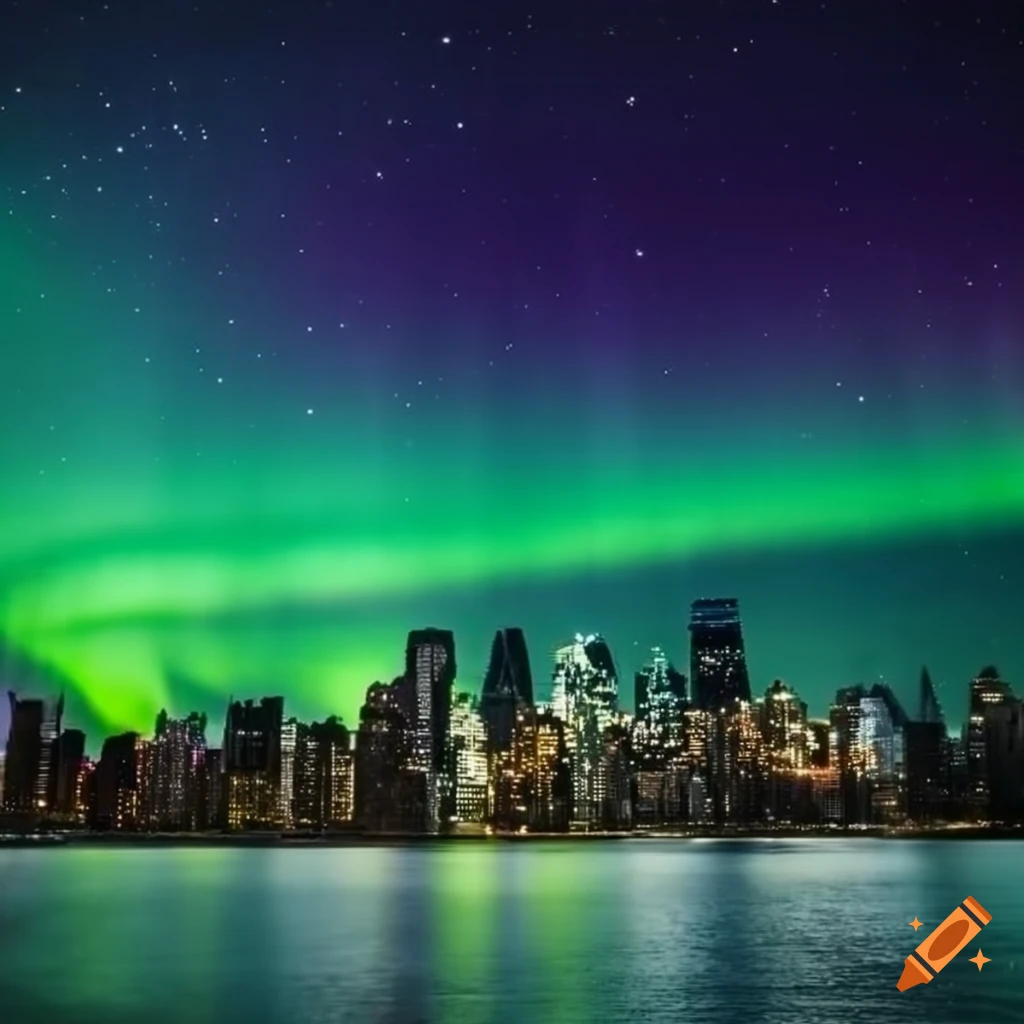
Rare aurora events are no longer confined to distant wilderness. They are creeping into American cities—quietly, unpredictably, and beautifully.
Most people miss them not because they aren’t there, but because they never thought to look.
As solar activity intensifies, the question isn’t whether auroras can light up U.S. cities—it’s whether you’ll be ready when they do.
Sometimes, the most extraordinary sights appear above the most ordinary places.