NASA is warning that a powerful geomagnetic storm triggered by intense solar activity could temporarily disrupt satellites, GPS, power grids, and communications—while also producing vivid auroras across unusually wide areas of the United States. Scientists say this rare combination of technological risk and sky-watching opportunity highlights Earth’s growing vulnerability to space weather.
A Rare Moment When the Sky Turns Spectacular—and Technology Turns Fragile
When NASA issues a warning about space weather, it’s not meant to scare people—it’s meant to prepare them. But when that warning includes both potential technology disruptions and spectacular auroras, it captures national attention.
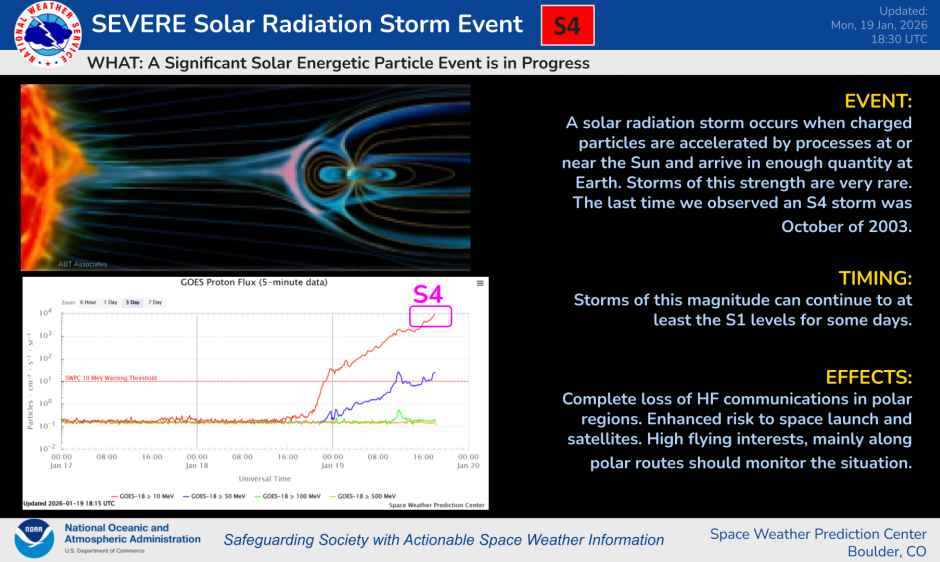
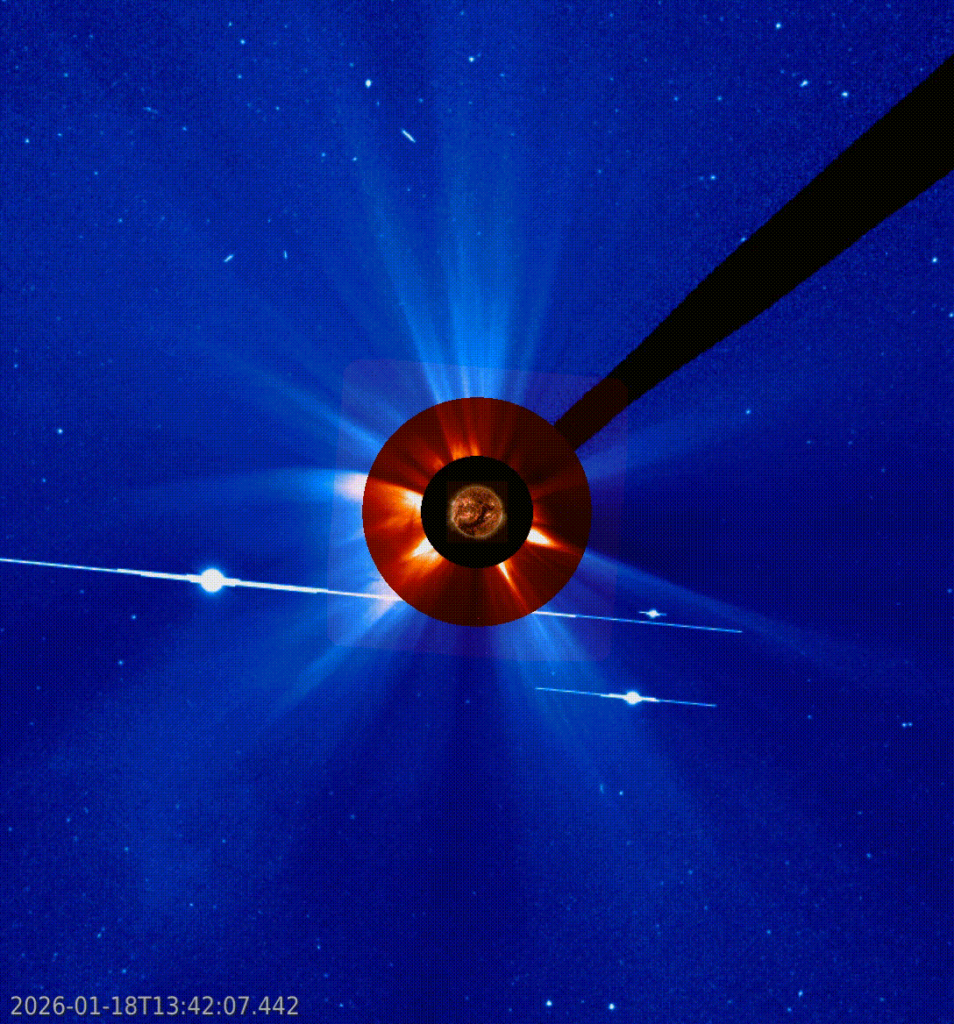
Over the past several days, NASA and NOAA scientists have been tracking a significant geomagnetic storm caused by powerful eruptions from the Sun. The storm has the potential to affect critical systems that modern life depends on, from satellite navigation to power infrastructure. At the same time, it could create dazzling auroras visible far beyond their normal polar regions.
For many Americans, this event represents a rare convergence of beauty and vulnerability—one that reveals just how connected our daily lives are to the Sun, 93 million miles away.
What Is a Geomagnetic Storm, in Plain English?
A geomagnetic storm happens when the Sun sends a massive burst of charged particles toward Earth. These particles usually come from solar flares or coronal mass ejections (CMEs)—violent eruptions that blast solar material into space at millions of miles per hour.
When this energy reaches Earth, it slams into our planet’s magnetic field, causing it to ripple, compress, and fluctuate. Those disturbances can travel through the atmosphere and near-Earth space, sometimes interfering with technology.
Most geomagnetic storms are mild and go unnoticed. But when storms are strong enough, they can have visible and measurable effects—both in the sky and on the ground.
Why NASA Is Warning About This Particular Storm
NASA and NOAA issue warnings only when data suggests a real possibility of impact. This storm stands out because of several key factors coming together at once.
Scientists are concerned because:
- The solar eruption involved strong solar flares
- The coronal mass ejection is fast-moving
- The energy is directed straight at Earth
- Multiple eruptions occurred close together
- Earth’s magnetic orientation is favorable for strong interaction
This combination significantly increases the chances of both aurora expansion and temporary technological disruption.
How Geomagnetic Storms Can Affect Everyday Technology
Most people don’t realize how sensitive modern technology is to space weather. Our systems are built for efficiency, not cosmic turbulence.
During strong geomagnetic storms, disturbances in Earth’s magnetic field can induce electrical currents and interfere with signals.
Systems that may be affected include:
- GPS navigation and location services
- Communication satellites
- Airline navigation and polar flight routes
- Radio communications
- Power grid monitoring systems
While catastrophic failures are rare, even small disruptions can have noticeable effects—especially in industries that rely on precise timing and positioning.
Real-Life Examples: When Solar Storms Disrupted Technology
This isn’t just theory—it has happened before.
In 1989, a powerful geomagnetic storm collapsed the Hydro-Québec power grid, leaving millions without electricity for hours. In 2003, the Halloween Solar Storms caused satellite malfunctions, GPS errors, and airline route changes.
More recently, weaker storms have:
- Reduced GPS accuracy for drivers and pilots
- Increased atmospheric drag on satellites
- Caused brief communication blackouts
These examples explain why NASA treats geomagnetic storms as serious, even when impacts are expected to be temporary.
Why Auroras Are the Most Visible Effect of a Geomagnetic Storm
While engineers focus on protecting infrastructure, scientists and skywatchers focus on the storm’s most beautiful consequence: auroras.
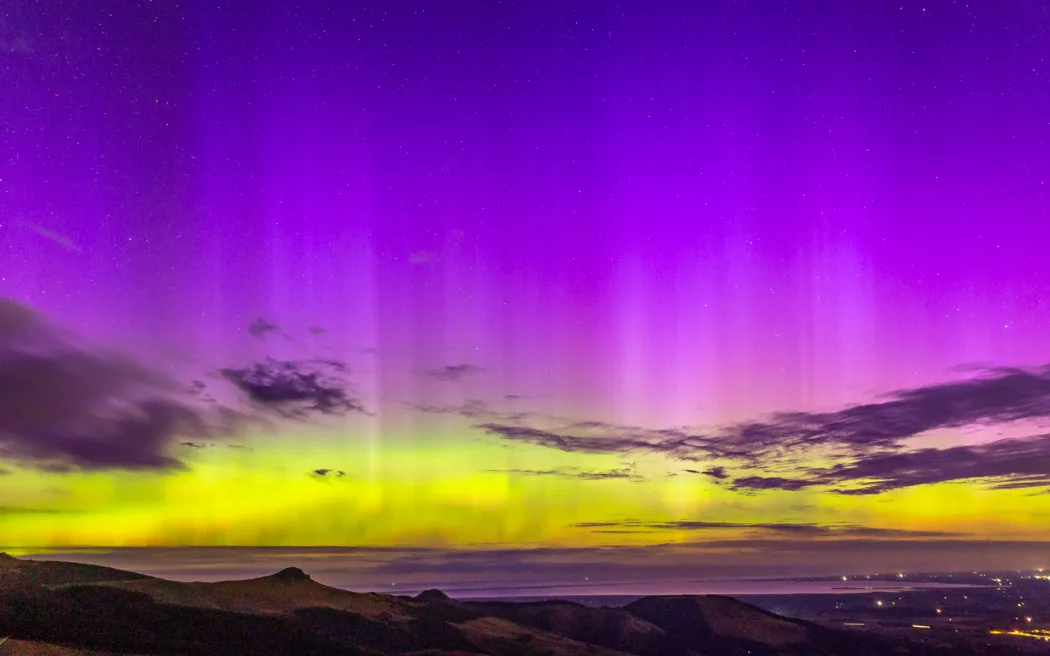
Auroras occur when solar particles collide with oxygen and nitrogen atoms in Earth’s upper atmosphere. The energy released from these collisions produces glowing light in various colors.
During strong storms:
- Auroras become brighter
- They spread farther south
- Rare colors appear
- Displays last longer
This storm has the potential to create auroras visible far beyond their usual Arctic boundaries.
How Far South Could the Aurora Be Seen?
One of the most searched questions during geomagnetic storms is how far south auroras might appear.
Based on current forecasts, auroras could be visible:
- Across much of the northern U.S.
- In parts of the Midwest
- Possibly into central and southeastern states
In southern areas, auroras are more likely to appear as faint red or pink glows near the horizon rather than bright green overhead curtains.
Why Red Auroras Are a Big Deal
Red auroras are rare and scientifically important. They form at much higher altitudes than green auroras and require significantly more energy.
When red auroras appear far from the poles, scientists know the storm is strong.
Red auroras help researchers:
- Measure storm intensity
- Study upper-atmospheric physics
- Validate space-weather models
For observers, they often appear as eerie crimson skies—something many people never forget.
Is This Geomagnetic Storm Dangerous to People?
This is one of the most common concerns—and the answer is reassuring.
Geomagnetic storms and auroras do not pose a direct health risk to people on the ground. Earth’s atmosphere shields us from harmful radiation.
However, indirect effects may include:
- Temporary GPS inaccuracies
- Communication disruptions
- Increased monitoring of power systems
For most people, the storm’s main impact will be visual rather than physical.
Why Solar Cycle 25 Is Making Storms Like This More Common
The Sun follows an approximately 11-year activity cycle. We are currently approaching the peak of Solar Cycle 25, a period characterized by increased solar activity.
During this phase:
- Sunspots multiply
- Solar flares occur more often
- Geomagnetic storms become stronger
NASA scientists have noted that Solar Cycle 25 is proving to be more active than initially expected, raising the likelihood of events like this one.
How NASA and NOAA Monitor Space Weather in Real Time
Geomagnetic storms don’t come without warning. NASA and NOAA monitor the Sun around the clock using a network of spacecraft and ground-based instruments.
These include:
- Solar observation satellites
- Magnetometers in space and on Earth
- Real-time data from spacecraft positioned between Earth and the Sun
- Advanced forecasting models
This system allows scientists to issue warnings hours or even days in advance.
What Americans Might Notice During This Storm
Most people will not experience dramatic disruptions, but subtle effects are possible.
You may notice:
- Slight GPS or navigation errors
- Temporary radio interference
- News alerts about aurora visibility
- Unusual colors in the night sky
For many, the most memorable moment will simply be looking up and seeing the sky glow.
Simple Steps to Stay Prepared
While major disruptions are unlikely, being informed helps.
Practical steps include:
- Keeping devices updated
- Downloading offline maps if traveling
- Following official alerts from NOAA
- Being patient with temporary connectivity issues
Critical infrastructure operators are already trained and prepared for events like this.
Why Scientists Welcome Storms Like This
From a research perspective, geomagnetic storms are incredibly valuable.
They allow scientists to:
- Improve space-weather forecasts
- Test technological resilience
- Study Sun-Earth interactions
- Prepare for more extreme future events
Each storm improves our understanding of how vulnerable—and adaptable—modern society is to space weather.
Common Myths About Geomagnetic Storms
Misunderstandings often cause unnecessary fear.
Let’s clear a few up:
- Geomagnetic storms do not cause earthquakes
- Auroras are not radioactive
- Phones will not be “fried”
- The internet will not collapse
Most geomagnetic storms are manageable and temporary.
Why This NASA Warning Matters
This event matters because it highlights a modern reality: we are more dependent on technology than ever, and that technology exists within a solar system that is far from quiet.
At the same time, the storm offers a reminder of nature’s beauty—one that can bring people together under a glowing sky.
10 Relevant & Trending FAQs
1. What is a geomagnetic storm?
A disturbance in Earth’s magnetic field caused by solar eruptions.
2. Why is NASA warning about this storm?
Because it may temporarily disrupt technology while creating widespread auroras.
3. Can geomagnetic storms damage electronics?
Large systems may be affected; household electronics are generally safe.
4. Will GPS stop working?
Temporary inaccuracies are possible, but total failure is unlikely.
5. Where will auroras be visible?
Across northern states and possibly farther south.
6. Are auroras dangerous to watch?
No, they are completely safe.
7. How long do geomagnetic storms last?
From several hours to a few days.
8. Is this related to climate change?
No, geomagnetic storms are driven by solar activity.
9. How often do storms like this occur?
A few times per solar cycle at notable strength.
10. Where can I get accurate updates?
NASA and NOAA’s Space Weather Prediction Center.
Final Takeaway: When the Sun Reminds Us Who’s in Charge
NASA’s warning is not about panic—it’s about awareness.
This geomagnetic storm is a reminder that we live on a planet deeply connected to the Sun. The same forces that make life possible can also challenge the systems we rely on. Yet, they also give us moments of awe, when the night sky comes alive with color.
For many Americans, this storm will be remembered not for a disruption—but for a moment of wonder.