Meteorologists across the United States are issuing aurora alerts as powerful solar activity increases the chances of Northern Lights appearing far south of the Arctic. From the Upper Midwest to parts of the Northeast and Plains, Americans are being urged to look up. This in-depth guide explains why these alerts are happening, where auroras are most likely next, and how to catch the sky glowing green.
When Meteorologists Start Warning You to Look Up Instead of Take Cover
Most weather alerts signal danger. Severe storms. Heat waves. Blizzards. But a different kind of alert has been appearing on weather apps, local TV forecasts, and push notifications—one that doesn’t bring fear, but excitement.
Aurora alerts.
Meteorologists are now warning viewers that the Northern Lights could become visible far outside their usual Arctic home. For many Americans, it’s the first time they’ve ever heard their state—or even their town—mentioned in an aurora forecast.
And when meteorologists issue these alerts, it isn’t hype.
It’s science.
What an Aurora Alert Actually Means (And What It Doesn’t)
An aurora alert doesn’t guarantee glowing skies. Instead, it signals that conditions are unusually favorable.
Meteorologists issue aurora alerts when:
- Strong solar storms are detected or imminent
- Earth’s magnetic field is expected to be disturbed
- The auroral oval is forecast to expand southward
In plain terms:
The sky has the potential to turn green in places that rarely see it.
These alerts are becoming more frequent—and more relevant—because the Sun is entering a powerful phase.
Why Aurora Alerts Are Suddenly Everywhere
The surge in alerts isn’t random. It’s driven by a rare alignment of solar behavior, advanced forecasting, and public awareness.
Solar Cycle 25: The Real Reason Behind the Warnings
The Sun operates on an 11-year solar cycle, swinging between calm periods and highly active ones. We are now approaching the peak of Solar Cycle 25, which scientists at NASA and NOAA confirm is stronger than originally predicted.
Solar Cycle 25 has already produced:
- Elevated sunspot counts
- More frequent solar flares
- Multiple powerful coronal mass ejections (CMEs)
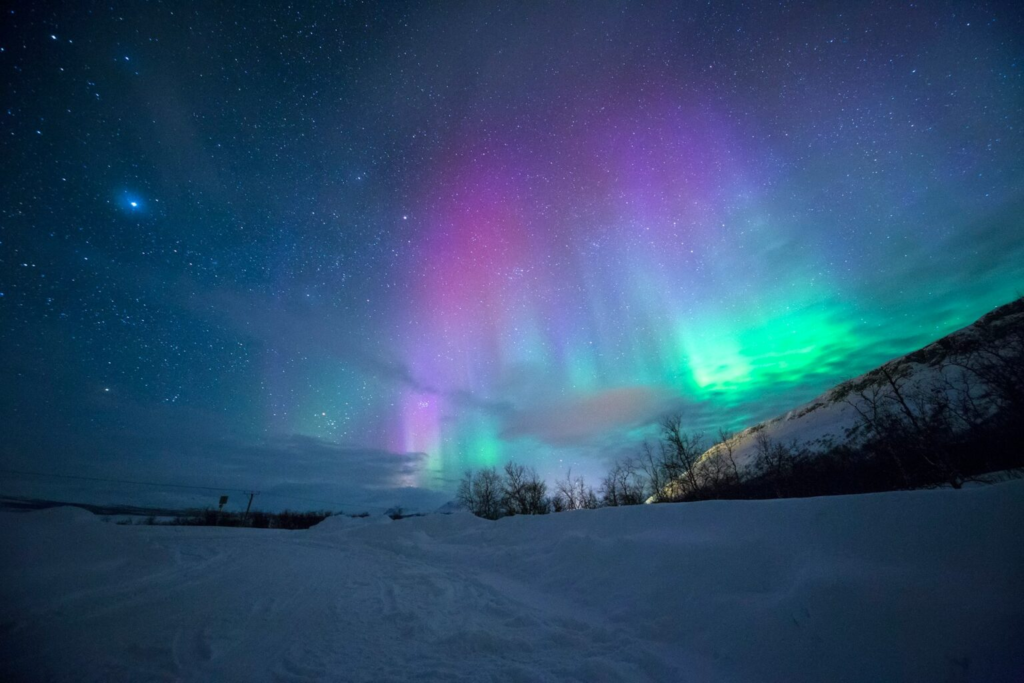
CMEs are massive clouds of charged particles ejected from the Sun. When one is aimed directly at Earth, it can trigger a geomagnetic storm—the engine behind auroras.
The stronger the storm, the farther south auroras can appear.
What Happens When a Solar Storm Hits Earth
When a CME collides with Earth’s magnetic field:
- The magnetosphere compresses
- Energy is channeled toward the poles
- Auroras intensify and expand
During mild storms, auroras remain near the Arctic. During severe storms, the auroral oval expands dramatically—sometimes covering large portions of the continental United States.
Meteorologists track these events in real time, which is why aurora alerts can appear with short notice.
Where the Sky Could Turn Green Next
This is the question Americans are asking most right now.
Auroras can never be guaranteed, but meteorologists identify high-probability regions based on latitude, storm strength, and local conditions.
1. Upper Midwest: America’s Aurora Sweet Spot
The Upper Midwest remains the most reliable aurora zone outside Alaska.
States most frequently included in aurora alerts:
- Minnesota
- Michigan (especially the Upper Peninsula)
- Wisconsin
- North Dakota
These areas sit at ideal latitudes and often have darker skies than more populated regions.
Real-life example:
During a recent G4 geomagnetic storm, residents across northern Minnesota reported vivid green auroras visible to the naked eye for over an hour.
2. Great Lakes Region: Nature’s Light Amplifier
The Great Lakes don’t just provide latitude—they enhance visibility.
Large bodies of water such as Lake Superior and Lake Michigan offer:
- Open northern horizons
- Minimal obstruction
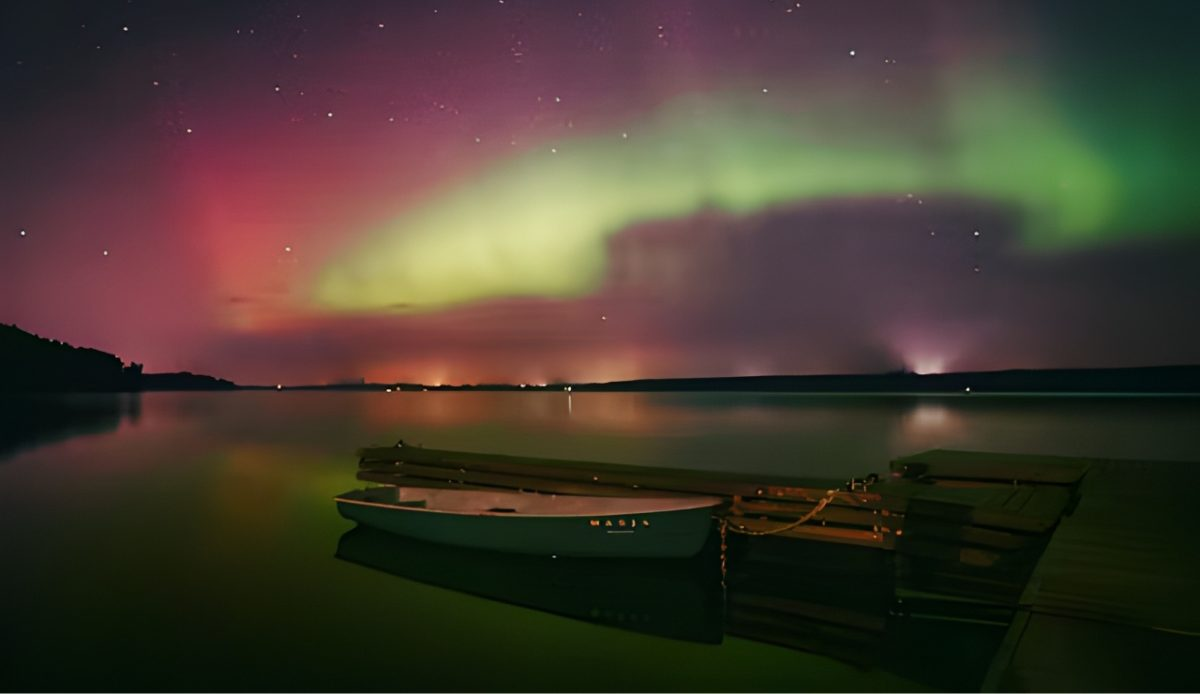
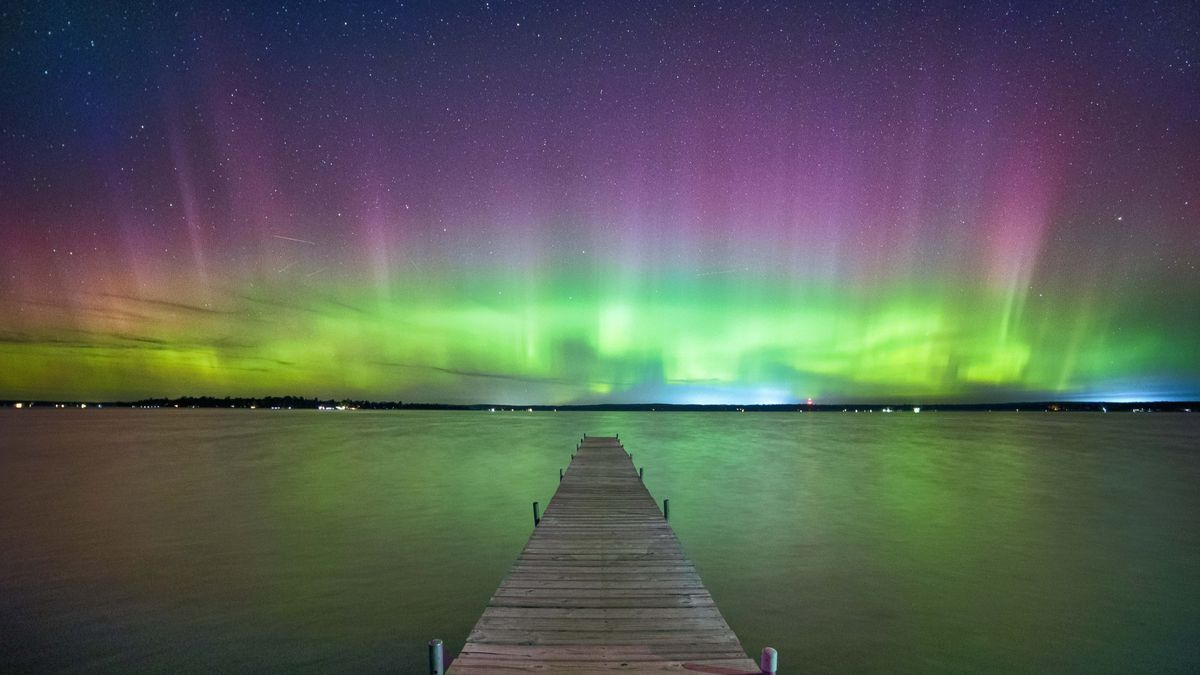
- Reflective surfaces that amplify auroral light
Meteorologists frequently highlight:
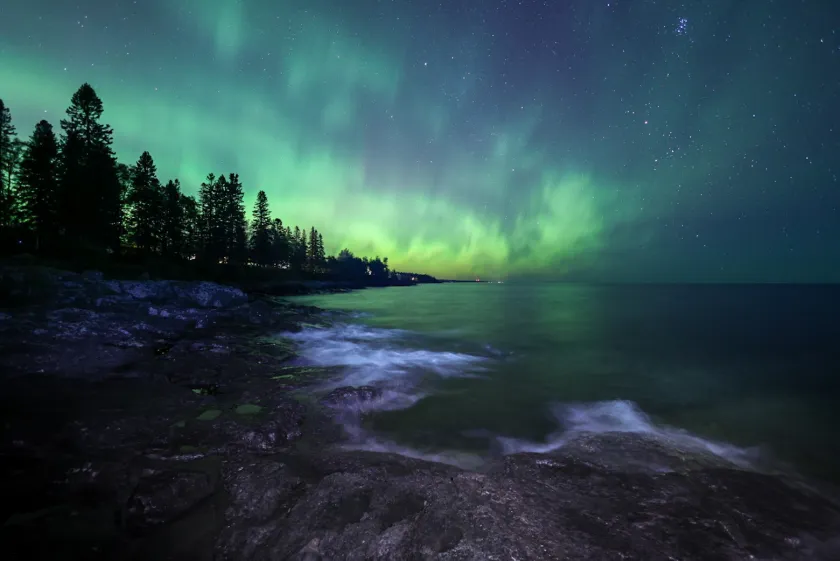
- Minnesota’s North Shore
- Michigan’s Upper Peninsula
- Northern Wisconsin near Lake Superior
Auroras reflected on water often appear brighter and more dramatic.
3. Northern Plains: Wide Skies, Big Possibilities
Northern Plains states are increasingly appearing in aurora alerts.
Key areas include:
- Northern North Dakota
- Northern South Dakota
- Eastern Montana
These regions benefit from:
- Extremely low light pollution
- Flat, open landscapes
- Clear skies following cold fronts
Auroras here can stretch from horizon to horizon during strong storms.
4. Northeast: Less Frequent, But No Longer Impossible
Auroras in the Northeast are rarer—but increasingly possible.
Meteorologists sometimes include:
- Northern Maine
- Northern New Hampshire
- Upstate New York
During severe storms, faint green or white auroras may become visible, especially in dark rural areas.
5. Rare Southern Events: Why Alerts Sometimes Mention the South
During extreme geomagnetic storms (G5), auroras can push far beyond expectations.
In recent years, meteorologists have documented auroras:
- In Texas
- Across the Southeast
- Near the Gulf Coast
These events are rare but real—and they’re why aurora alerts occasionally make national headlines.
Why Green Is Usually the First Color People See
When auroras appear, green almost always comes first.
That’s because:
- Green auroras form lower in the atmosphere
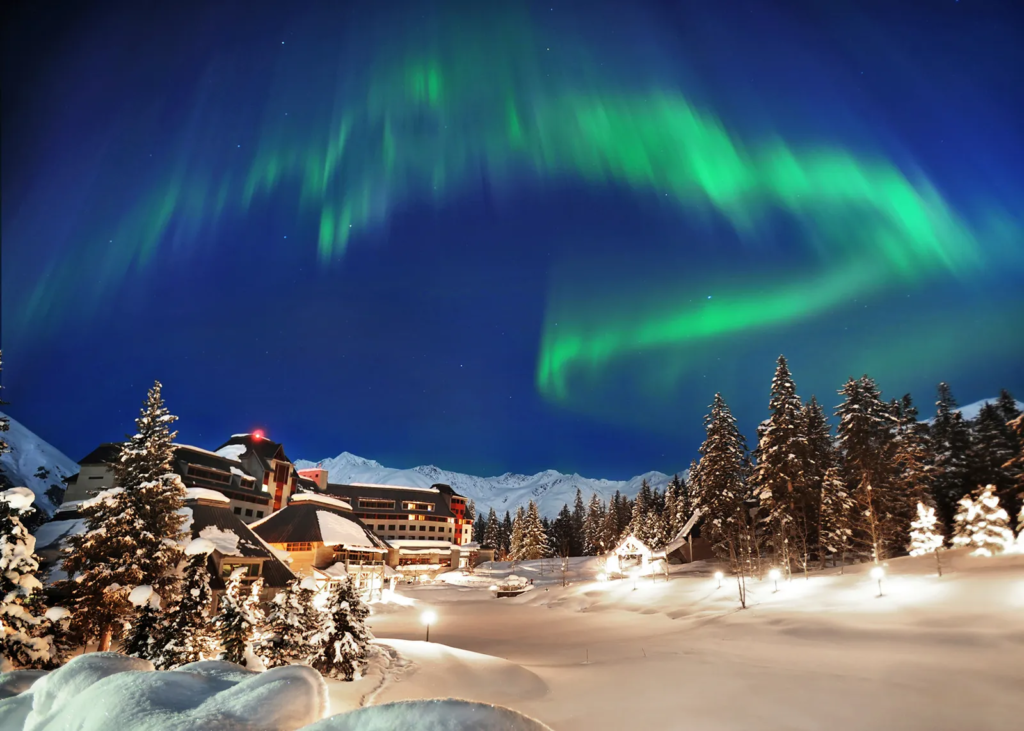
- Oxygen atoms emit green light when energized
- Human eyes detect green more easily than other colors
Red and purple auroras occur higher up and typically require stronger storms.
If the sky starts glowing green near the horizon, an aurora alert is paying off.
What People Experience When an Aurora Alert Hits
Auroras aren’t just visual—they’re emotional.
People often describe:
- Stepping outside “just for a minute” and staying an hour
- Calling friends or neighbors to come outside
- Feeling disbelief that the sky is changing overhead
One Wisconsin resident said she thought the glow was city light—until it began to ripple.
City lights don’t move. Auroras do.
How Meteorologists Predict Aurora Visibility
Aurora forecasting blends atmospheric science with space physics.
Meteorologists analyze:
- Solar wind speed and density
- Magnetic field orientation
- Geomagnetic storm intensity (Kp index)
- Cloud cover and moon phase
When multiple indicators align, alerts are issued.
It’s not guesswork—it’s probability-based forecasting backed by real-time data.
When Should You Go Outside After an Aurora Alert?
Timing is critical.
Best Time Windows
- Usually 10:00 PM to 2:00 AM
- Often strongest around local midnight
- Sometimes visible shortly after sunset during extreme storms
Winter offers the longest darkness, but fall and early spring can also deliver spectacular displays.
Common Reasons People Miss Auroras Despite Alerts
Many people miss auroras even when alerts are accurate.
Common mistakes include:
- Staying near streetlights
- Looking only briefly
- Expecting bright colors immediately
- Giving up too early
Auroras often build slowly and fade in waves. Patience matters.
What You Actually Need to See the Aurora
You DO need
- Dark skies
- Clear weather
- A view facing north
- Warm clothing
You DON’T need
- Special glasses
- Expensive equipment
- Scientific knowledge
- International travel
Strong auroras are visible to the naked eye.
Why Aurora Alerts Are Becoming More Common
Aurora alerts feel new—but the phenomenon isn’t.
What’s changed:
- Solar activity has intensified
- Forecasting technology has improved
- Public awareness has skyrocketed
Meteorologists can now issue alerts faster and more accurately than ever before.
How Long This Elevated Aurora Activity Will Last
Solar Cycle 25 is expected to peak between 2024 and 2026.
That means:
- More frequent aurora alerts
- More chances for southern visibility
- More nights when the sky surprises people
After the peak, activity will gradually decline—but auroras won’t vanish.
Why Scientists Are Excited About These Alerts
Aurora alerts aren’t just exciting for the public—they’re valuable for science.
They allow researchers to:
- Study solar-Earth interactions
- Improve space-weather models
- Observe auroras at mid-latitudes
Scientists consider this one of the most important aurora periods in decades.
Frequently Asked Questions (Trending in the U.S.)
1. What does an aurora alert really mean?
It means conditions are favorable—not guaranteed—for aurora visibility.
2. Can the sky really turn green where I live?
Yes, during strong geomagnetic storms, even mid-latitude regions can see green auroras.
3. Are aurora alerts reliable?
They are probability-based and increasingly accurate.
4. Is this related to climate change?
No. Auroras are driven by solar activity, not Earth’s climate.
5. Are auroras dangerous?
No. They occur far above Earth’s surface and are harmless.
6. Do clouds ruin aurora viewing?
Yes. Clear skies are essential.
7. Can auroras appear suddenly?
Yes. They can form and intensify within minutes.
8. Why do some people see colors others don’t?
Vision sensitivity, light pollution, and storm strength vary.
9. How often do extreme storms happen?
Rarely—but more often during solar maximum.
10. Is this the best aurora period in decades?
For much of the U.S., yes—this is one of the strongest periods in 20+ years.
The Bigger Picture: Why Aurora Alerts Matter
Aurora alerts aren’t just forecasts. They’re invitations.
They invite people to:
- Step outside
- Look up
- Witness a cosmic event that humans have watched for thousands of years
For many Americans, seeing the sky glow green over their hometown is a once-in-a-lifetime experience.
And right now, more people than ever are getting that chance.
Final Takeaway
Meteorologists don’t issue aurora alerts lightly.
They do it because the Sun is active, the data supports it, and the sky truly has the potential to change color far beyond the Arctic.
If you see an aurora alert for your area, take it seriously—but take it with curiosity and wonder.
Because on the right night, the sky really could turn green next.