A rare and powerful solar storm is triggering what could become the most widespread aurora display in over a decade, with the Northern Lights potentially visible across 28 U.S. states tonight. Driven by heightened solar activity and favorable geomagnetic conditions, this event may rival historic aurora sightings from 2003 and 2013—offering millions of Americans a once-in-a-generation chance to witness the sky come alive.
A Once-in-a-Decade Sky Event Is Unfolding Over America
For most Americans, the Northern Lights have always felt distant—something reserved for Arctic explorers, Alaskan winters, or bucket-list trips to Iceland and Norway. Seeing the aurora from your own backyard has long seemed improbable, even impossible.
But tonight, that perception may be shattered.
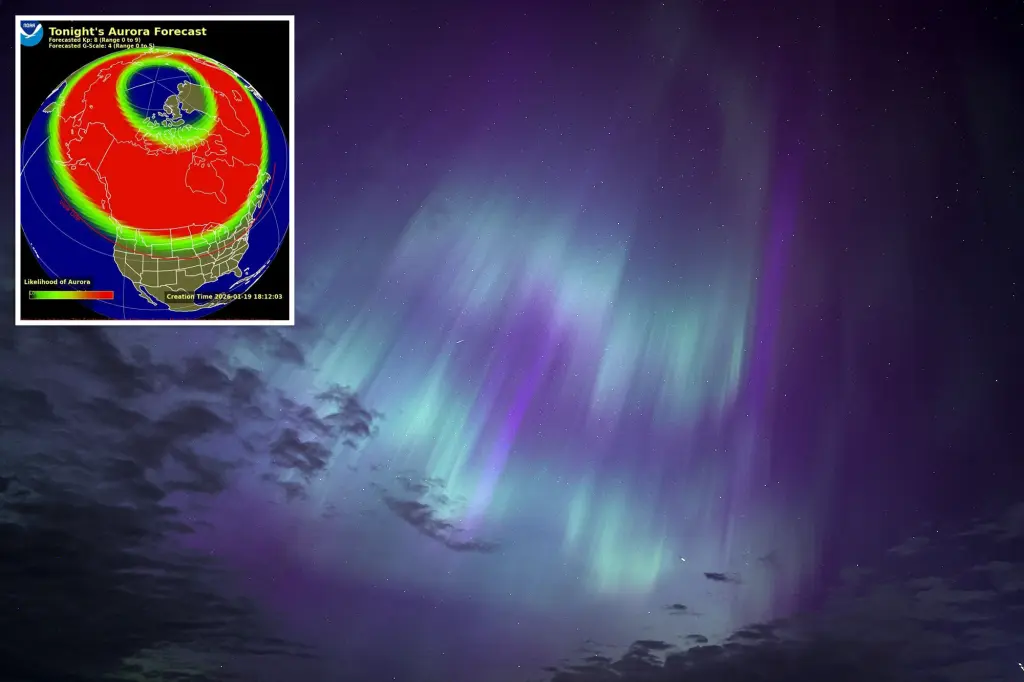
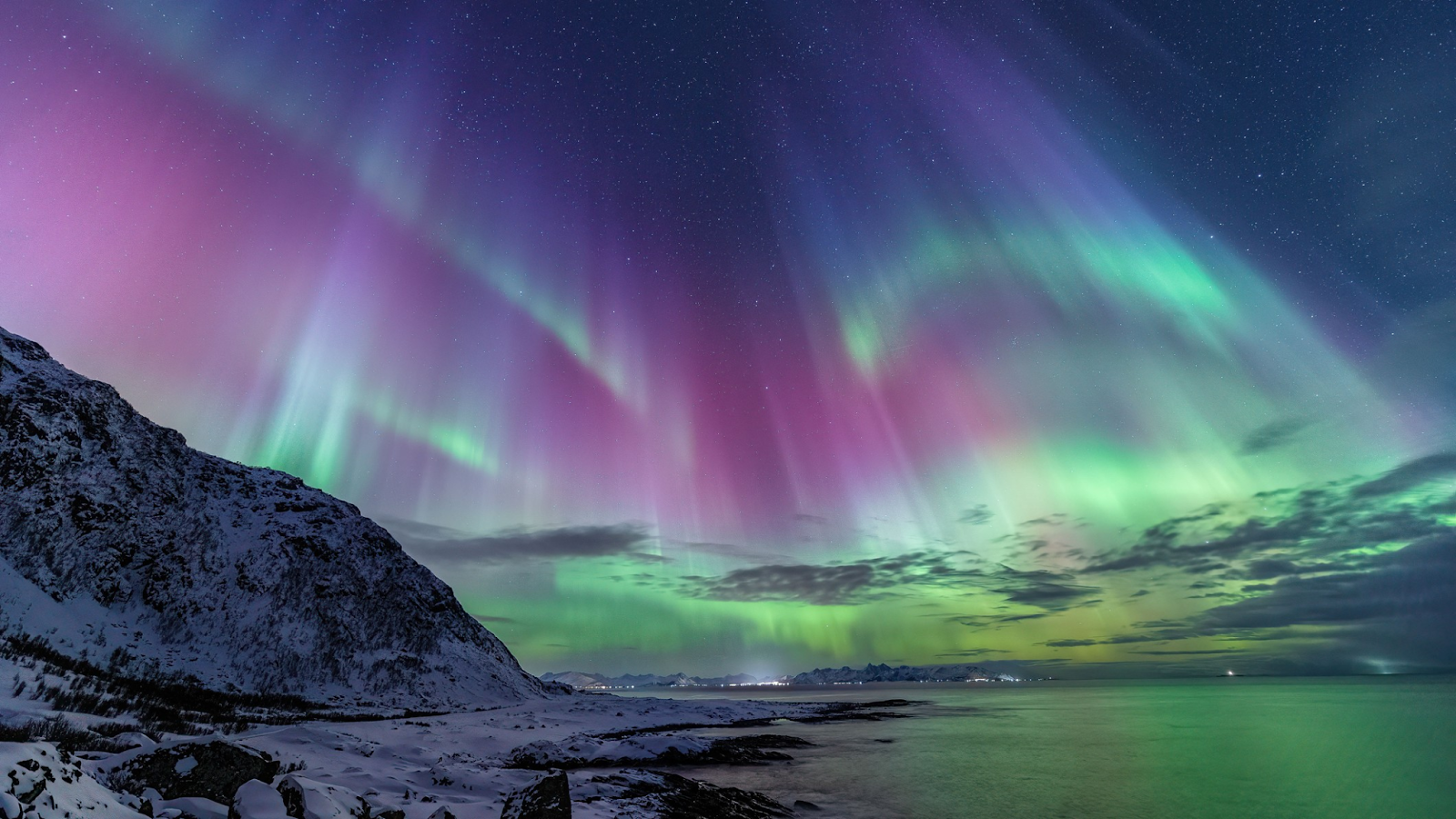
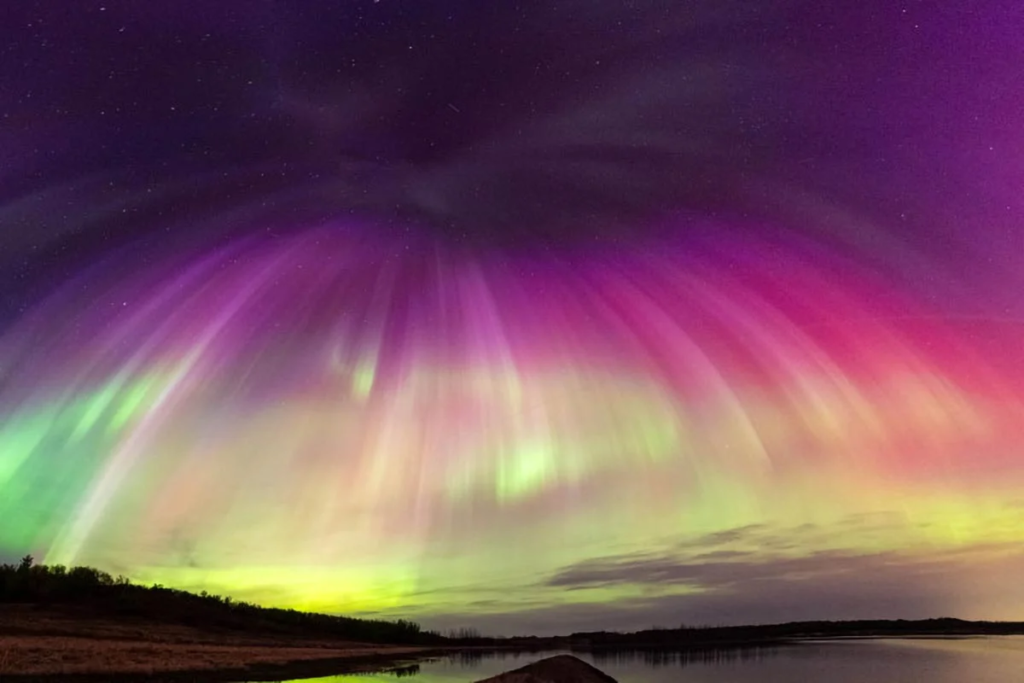
Space weather forecasters and astronomers are warning that a powerful geomagnetic storm could push auroral activity far south into the continental United States. If current predictions hold, as many as 28 states may have a chance to witness shimmering ribbons of green, pink, and violet light dancing across the night sky.
This isn’t hype. Experts suggest this event could be the most geographically widespread aurora display in over ten years, possibly rivaling legendary solar storms that lit up skies in 2013 and even the historic Halloween storms of 2003.
For millions of Americans, this may be a rare moment when the universe puts on a free, unforgettable show—no passport required.
What Exactly Is Causing This Massive Aurora Event?
Auroras occur when charged particles from the Sun collide with Earth’s magnetic field and atmosphere. These particles excite gases like oxygen and nitrogen, causing them to glow and create the ethereal light displays known as the Aurora Borealis.
While this process happens constantly near the poles, auroras rarely extend far into the United States unless conditions are just right.
Tonight’s event is the result of an unusually powerful chain reaction in space.
Key factors driving this aurora storm:
- A coronal mass ejection (CME) erupted from the Sun, releasing billions of tons of charged particles
- The CME is traveling directly toward Earth, not glancing past it
- Solar wind speed and density are unusually high
- Earth’s magnetic field is currently aligned in a way that allows deeper particle penetration
In simple terms, Earth is taking a direct hit from the Sun’s energy, and our atmosphere is about to glow in response.
Why Scientists Are Calling This a Rare and Historic Moment
Not all solar storms are created equal. Many produce only minor auroral activity visible in Canada or Alaska. What makes this event extraordinary is its potential reach.
Space weather models suggest a Kp index between 7 and 8, which places this storm firmly in the “strong to severe” category. Events of this magnitude don’t happen often—and when they do, they tend to be remembered for years.
Historical comparisons:
- 2013 St. Patrick’s Day Storm – Aurora visible across the Midwest and Northeast
- 2003 Halloween Storms – Aurora sightings reported as far south as Florida
- 1989 Quebec Storm – Triggered power outages and brilliant auroras across North America
If tonight’s storm performs as expected, it could become the most photographed aurora event of the 2020s so far.
Which 28 U.S. States Could See the Northern Lights Tonight?
Visibility depends on cloud cover, light pollution, and local geography, but forecasts indicate a broad swath of the U.S. could be affected.
States with the highest likelihood of clear aurora visibility:
- Alaska
- Minnesota
- North Dakota
- South Dakota
- Montana
- Michigan
- Wisconsin
- Maine
- Vermont
- New Hampshire
- New York
States with possible visibility under ideal conditions:
- Pennsylvania
- Ohio
- Illinois
- Indiana
- Iowa
- Nebraska
- Wyoming
- Idaho
- Washington
- Oregon
- Colorado
- Missouri
- Kentucky
- Virginia
- North Carolina
During similar storms in the past, people in Kansas, Arkansas, and even northern Texas captured faint aurora glows using smartphones—sometimes before realizing what they were seeing.
When Is the Best Time to Look Up?
Timing is critical when it comes to auroras.
Most displays peak between 10:00 PM and 2:00 AM local time, when Earth’s magnetic field is best positioned relative to incoming solar particles.
However, strong geomagnetic storms don’t always follow the rules.
Real-life example
During the March 2015 storm, residents in Michigan and Wisconsin reported auroras appearing shortly after sunset, while others saw activity continue until nearly dawn.
If the storm intensifies suddenly, auroras could appear earlier—or linger longer—than expected.
How Bright Will the Aurora Be?
Aurora brightness is measured using the Kp index, which ranges from 0 (quiet) to 9 (extreme).
- Kp 5–6: Visible in northern U.S. states
- Kp 7: Strong auroras, noticeable movement and color
- Kp 8–9: Rare, intense, and widespread events
Current forecasts indicate Kp 7–8, meaning vibrant colors, rapid motion, and visibility far south of the Canadian border.
In strong storms, auroras don’t just glow—they ripple, pulse, and stretch across the sky like living curtains of light.
Why This Aurora Is Captivating America Right Now
There’s something deeply emotional about witnessing an aurora. People often describe it as humbling, surreal, and profoundly moving.
For many Americans, this event represents:
- A bucket-list experience without travel
- A shared national moment of awe
- A reminder of how small we are in a vast universe
During the 2013 aurora storm, social media exploded with posts from people who had never seen anything like it. Parents woke children in the middle of the night. Neighbors gathered outside. Complete strangers bonded over the sky.
Tonight has the potential to do the same—on an even larger scale.
How to See the Aurora Even If You Live in a City
Light pollution makes auroras harder to see, but not impossible.
Practical viewing tips:
- Face north and scan the horizon
- Turn off nearby lights
- Let your eyes adjust for 10–15 minutes
- Use your smartphone camera—auroras often appear brighter on screen
- If possible, drive 20–30 minutes away from city centers
Many first-time viewers mistake auroras for thin clouds or haze. If something looks “off” in the sky, take a photo—you may be surprised by what appears.
What Colors Can You Expect to See?
Aurora colors depend on altitude and atmospheric gases.
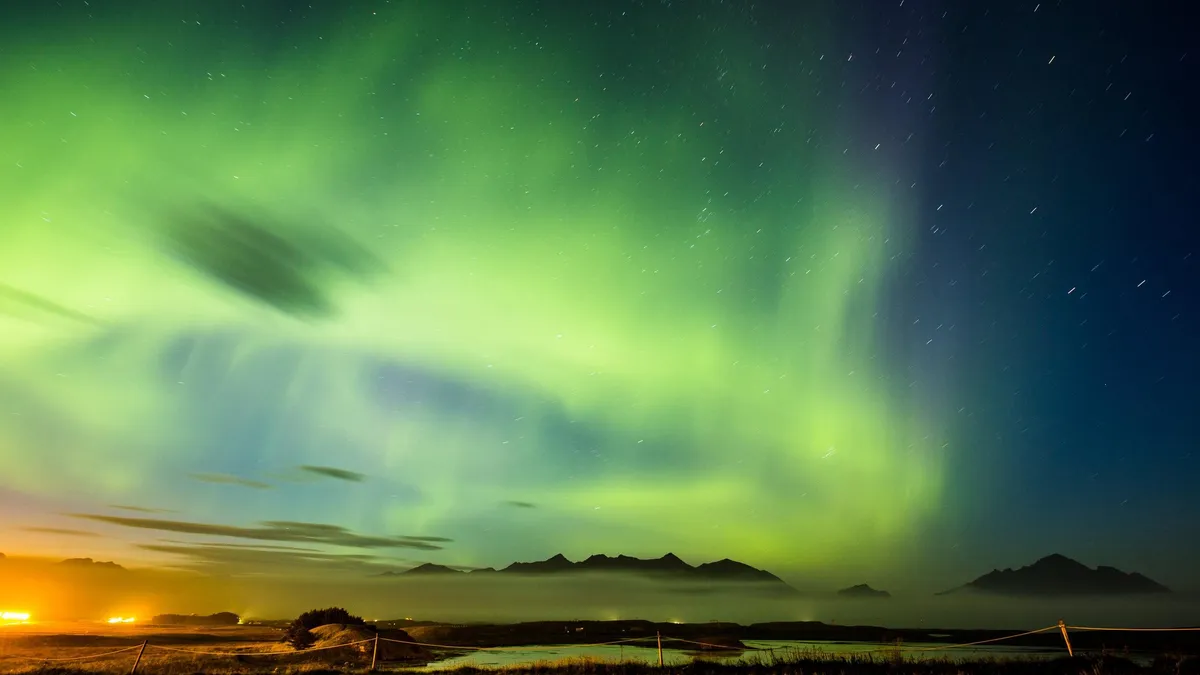
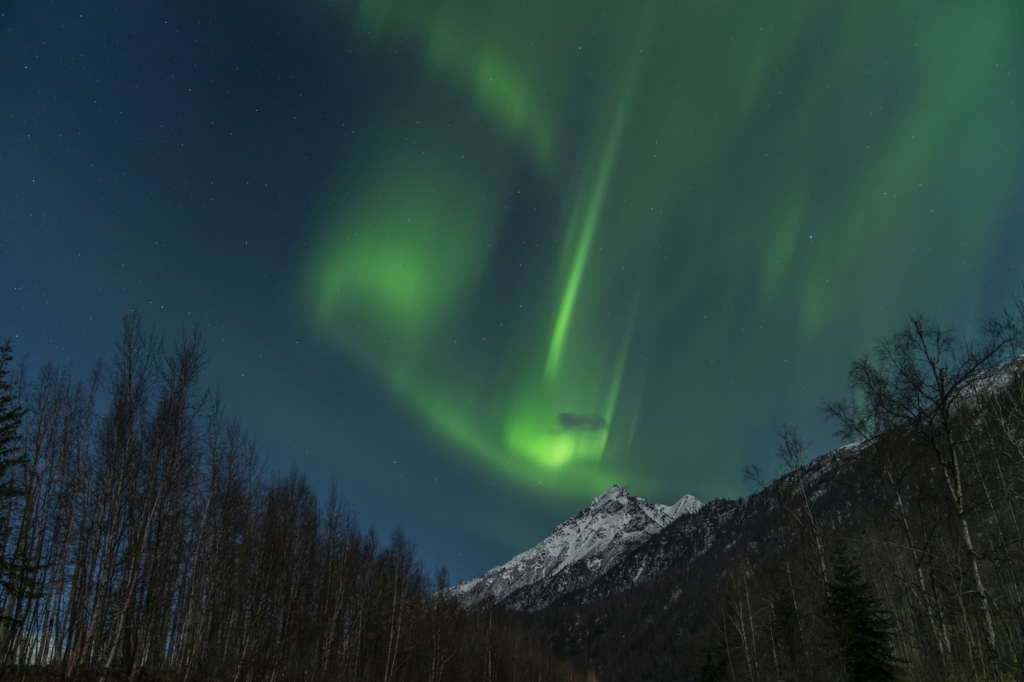
- Green – Most common, caused by oxygen
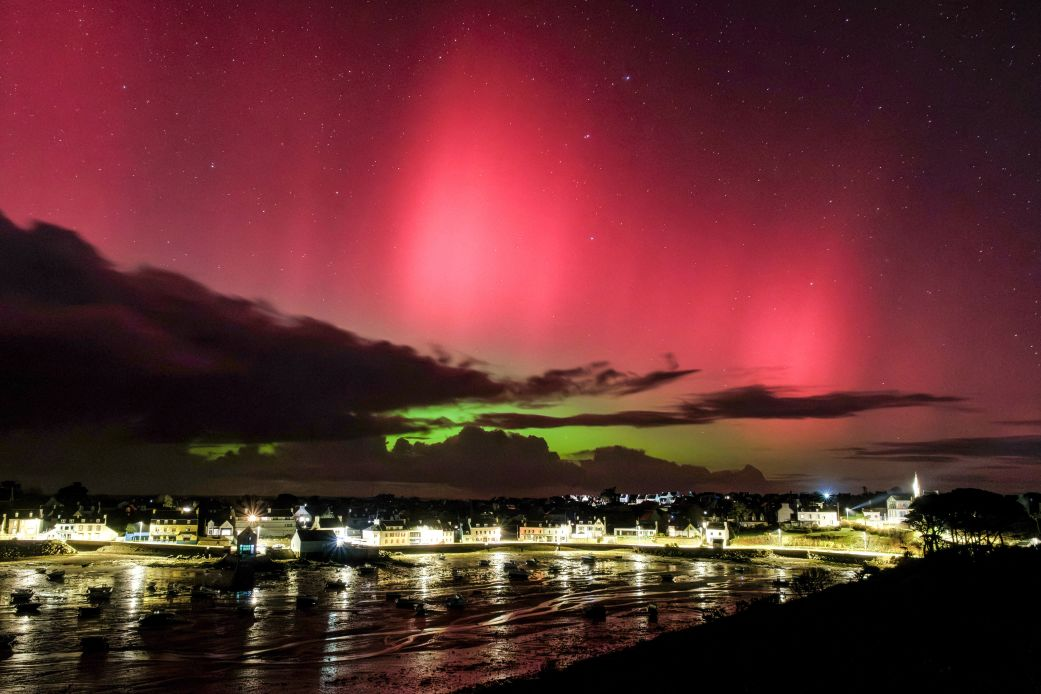
- Pink and red – Strong storms and higher altitudes
- Purple and blue – Rare but possible during intense activity
During major events, multiple colors can appear simultaneously, creating breathtaking displays.
Can This Aurora Affect Technology or Daily Life?
Strong geomagnetic storms can have minor technological effects, though modern systems are well-prepared.
Possible impacts include:
- Temporary GPS inaccuracies
- Minor satellite signal disruptions
- Radio communication interference
- Airline route adjustments near polar regions
Experts emphasize that there is no danger to public safety. Power grids and satellites are actively monitored, and no widespread disruptions are expected.
Is This Linked to the Sun’s Current Solar Cycle?
Yes—and that’s why aurora events are becoming more frequent.
The Sun operates on an 11-year solar cycle, alternating between quiet and active phases. We are currently approaching the peak of Solar Cycle 25, expected around 2025–2026.
This means:
- More solar flares
- More coronal mass ejections
- More aurora opportunities
Many scientists believe the next two years could bring multiple major aurora events, not just this one.
How Does This Compare to Past Famous Aurora Events?
2013 St. Patrick’s Day Storm
- Aurora visible in over 17 states
- Massive social media reaction
2003 Halloween Storms
- Aurora seen in the southern U.S.
- Significant geomagnetic disturbances
Tonight’s event may not surpass 2003 in intensity—but it could exceed both events in public awareness and participation, thanks to smartphones and social media.
Frequently Asked Questions (Trending Searches)
1. Can you really see the Northern Lights from the U.S. tonight?
Yes, forecasts suggest aurora visibility across up to 28 states.
2. Do I need special equipment to see the aurora?
No. The naked eye is enough, though cameras enhance visibility.
3. What time should I look for the aurora?
Between 10 PM and 2 AM local time, though earlier sightings are possible.
4. Will clouds block the aurora?
Yes. Clear skies are essential.
5. Is this aurora dangerous?
No. It’s visually stunning but completely safe.
6. What colors will I see?
Mostly green, with possible pink, red, and purple hues.
7. Can children safely watch the aurora?
Absolutely. It’s a safe and educational experience.
8. Why do phones capture auroras better than eyes?
Cameras gather light over time, revealing faint colors.
9. Will this happen again soon?
Likely. Solar activity is increasing through 2026.
10. What if I miss it tonight?
More aurora storms are expected in the coming months.
Final Thoughts: Why You Should Look Up Tonight
In a world dominated by screens, deadlines, and daily stress, moments like this are rare.
Tonight’s aurora offers:
- A free, shared experience
- A reminder of nature’s power and beauty
- A story you’ll tell for years
If the skies are clear where you live, step outside. Look north. Take a breath.
You may never see this again.