A powerful geomagnetic storm triggered by intense solar activity has illuminated skies across the United States, producing rare auroras far beyond their usual polar regions. From unexpected Northern Lights sightings in southern states to concerns about satellites and power grids, this event highlights the Sun’s growing influence during solar maximum. Here’s what’s happening, why it matters, and what Americans should know.
When the Sky Over America Suddenly Looked Different
It started quietly.
Across the United States, people stepped outside on what seemed like a normal night—walking dogs, locking cars, or taking out the trash—only to notice something strange above them. The sky looked different. Not cloudy. Not stormy. But glowing.
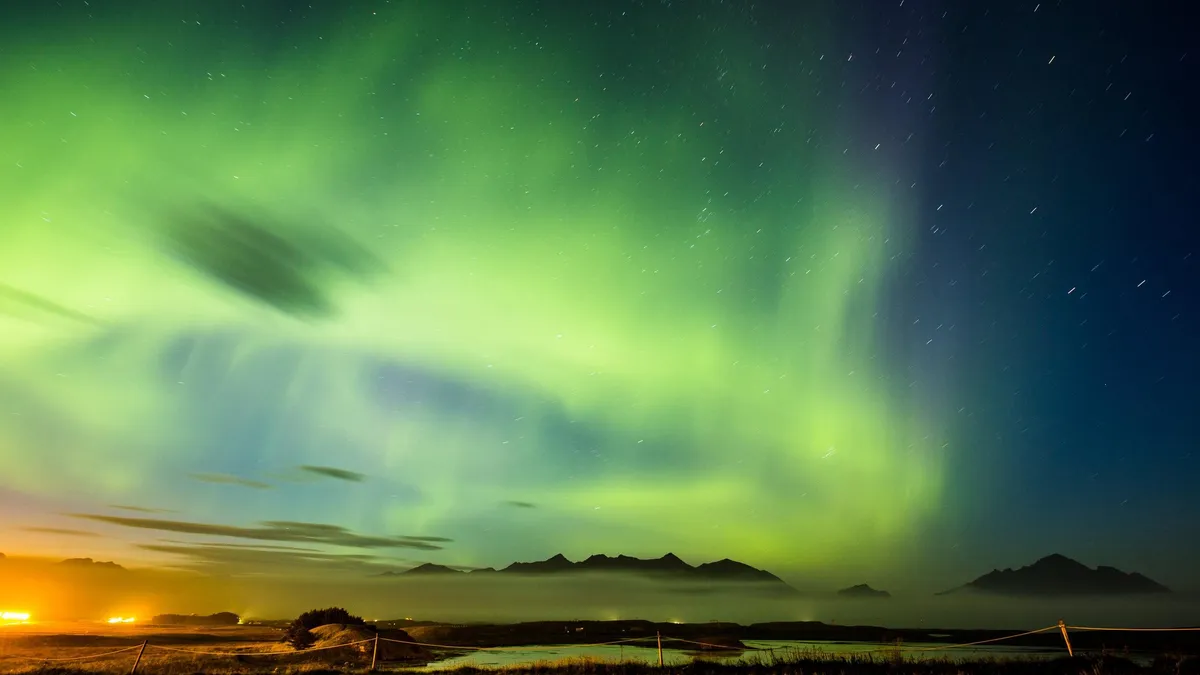
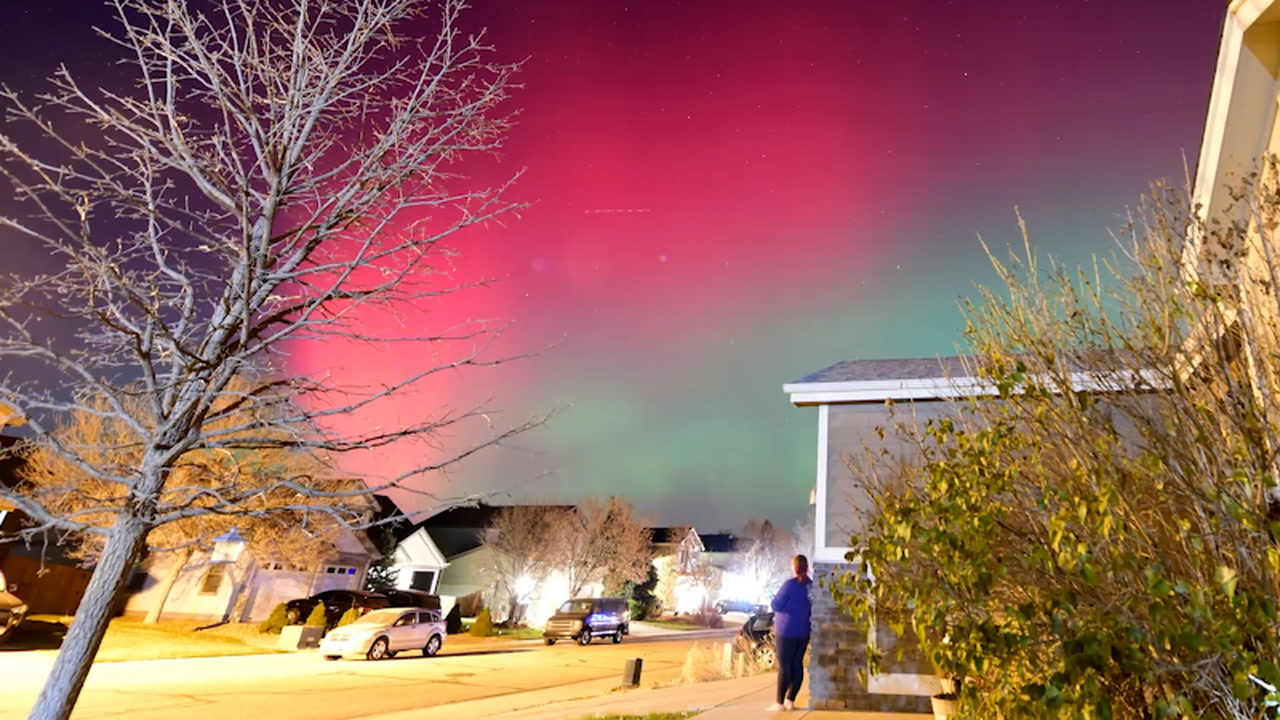
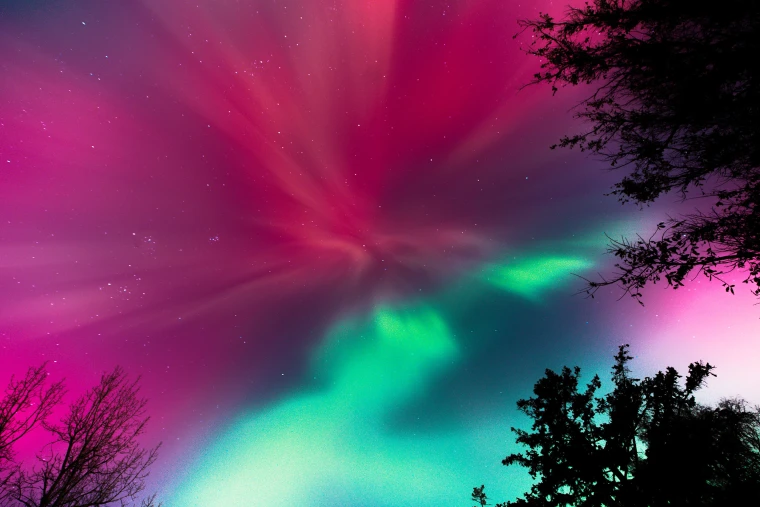
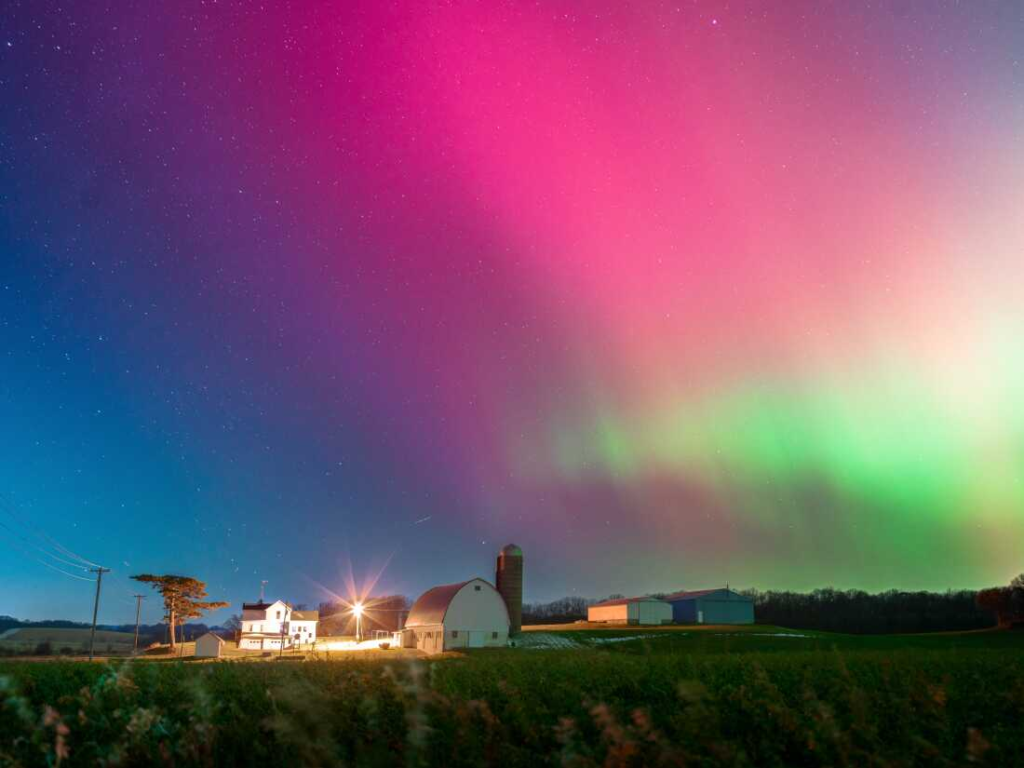
In states where the Northern Lights are almost unheard of, faint streaks of red and pink stretched across the horizon. In northern regions, vibrant green curtains rippled overhead. Smartphones came out. Photos were shared. Social media lit up.
For millions of Americans, this wasn’t just a beautiful moment—it was a shock.
Behind the spectacle was a powerful geomagnetic storm, one strong enough to distort Earth’s magnetic field and allow energy from the Sun to paint the night sky. Scientists had been watching it closely. The public was seeing the results.
What Is a Geomagnetic Storm? A Clear, Simple Explanation
A geomagnetic storm happens when energy and charged particles from the Sun collide with Earth’s magnetic field. These storms are usually triggered by massive solar events called coronal mass ejections, or CMEs.
A CME is essentially a gigantic cloud of magnetized plasma blasted into space from the Sun. When one of these clouds is aimed directly at Earth, the results can be dramatic.
Under normal circumstances, Earth’s magnetic field acts like a shield, deflecting most of the Sun’s charged particles. But during intense solar events, that shield can temporarily weaken or stretch, allowing particles to penetrate deeper into Earth’s atmosphere.
That interaction is what creates auroras—and when the storm is strong enough, those auroras spread far beyond the poles.
Why This Geomagnetic Storm Is Making Headlines
Not all solar storms are equal. Scientists track solar activity constantly, but only the most powerful events capture nationwide attention.
This storm stood out for three reasons:
- Its strength
- Its wide geographic impact
- Its timing during solar maximum
According to NOAA’s Space Weather Prediction Center, the storm reached G4–G5 levels, placing it among the strongest geomagnetic storms in years. At that intensity, auroras are no longer confined to Alaska or Canada—they can spread across much of the continental United States.
The Sun’s Role: Why Solar Maximum Changes Everything
The Sun follows an approximately 11-year solar cycle, moving between quieter and more active periods. Scientists confirm we are currently in—or rapidly approaching—the solar maximum, the most volatile phase of that cycle.
During solar maximum:
- Sunspots multiply across the Sun’s surface
- Solar flares become more frequent
- Coronal mass ejections grow stronger
- Geomagnetic storms occur more often
In simple terms, the Sun becomes more explosive.
This storm is not an isolated incident—it’s part of a broader pattern scientists expect to continue for the next one to two years.
From the Sun to Earth: How the Storm Reached American Skies
The journey from solar eruption to aurora-lit skies happens faster than many people realize.
Step-by-Step Breakdown
- The Sun releases a massive coronal mass ejection
- Billions of tons of charged plasma are hurled into space
- The particles travel over a million miles per hour
- Earth lies directly in the CME’s path
- Earth’s magnetic field absorbs the impact
- Magnetic field lines stretch and distort
- Charged particles reach the upper atmosphere
- Auroras ignite across wide regions
From eruption to impact, the entire process can take as little as 48 to 72 hours.
Why Auroras Appeared Far From the Poles
Auroras typically form near the North and South Poles because Earth’s magnetic field naturally funnels solar particles toward those regions. But during a strong geomagnetic storm, that funnel widens dramatically.
When that happens:
- The auroral oval expands southward
- States far from the Arctic fall under auroral zones
- Southern skies glow faintly but unmistakably
This storm expanded the auroral zone far enough that Americans from the Midwest to the Deep South caught glimpses of the lights.
Real-Life American Experiences From the Storm
In Texas, residents noticed faint red glows hovering low on the northern horizon. Many assumed it was distant city light pollution—until photos revealed smooth, curved auroral arcs.
In Alabama, amateur skywatchers captured pink streaks using only smartphone cameras. Some had never even heard of auroras appearing so far south.
In Michigan and Minnesota, green auroras danced overhead, illuminating lakes, forests, and quiet neighborhoods. Families gathered outside in pajamas. Kids asked questions. Parents searched online for explanations.
Across the country, the reaction was the same: disbelief followed by awe.
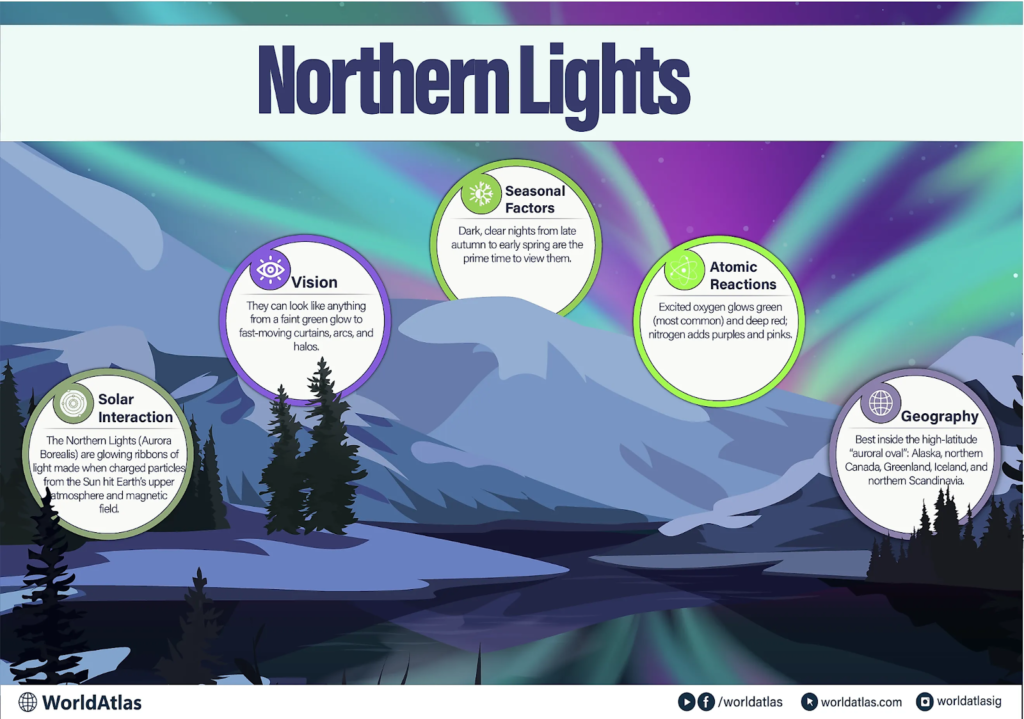
Understanding the Colors in the Sky
Auroral colors are not random—they depend on altitude and atmospheric composition.
- Green auroras occur when solar particles collide with oxygen at lower altitudes
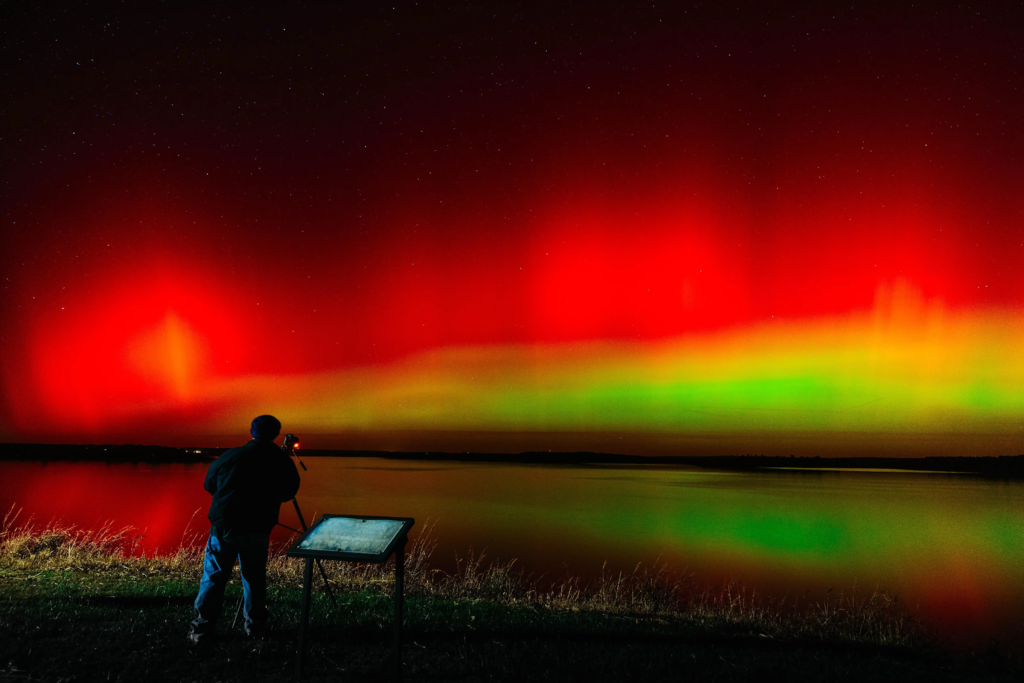
- Red auroras form at higher altitudes, often seen farther south
- Purple and blue hues come from nitrogen interactions
Southern states often see red auroras because the particles interact higher in the atmosphere, producing a softer but haunting glow.
Is a Geomagnetic Storm Dangerous?
This is one of the most common questions Americans ask—and the answer is reassuring.
Geomagnetic storms are not dangerous to people on the ground.
The auroras themselves are completely harmless.
However, strong storms can affect modern technology.
Possible Impacts Scientists Monitor
- GPS accuracy issues
- Radio communication disruptions
- Satellite interference
- Increased radiation exposure for astronauts
- Rare stress on power grids
Utilities, airlines, and satellite operators closely monitor these events, especially during severe storms like this one.
Why Scientists Are Excited—Not Just Concerned
While geomagnetic storms pose challenges, they also offer rare research opportunities.
Today’s scientists have tools previous generations lacked:
- Real-time solar monitoring satellites
- AI-driven storm prediction models
- Global sensor networks
- Millions of citizen scientists sharing observations
Each storm improves understanding of space weather, helping protect critical infrastructure and improve forecasting accuracy.
How Americans Can Track the Next Storm
Space weather forecasting has advanced significantly. Scientists can usually provide 1–3 days’ notice before a major storm reaches Earth.
Trusted sources include:
- NOAA Space Weather Prediction Center
- NASA solar observatories
- Astronomy and weather alert apps
When the Kp Index reaches 7 or higher, auroras may become visible across much of the U.S.
How to See Auroras During a Geomagnetic Storm
You don’t need special equipment—just the right conditions.
Practical Viewing Tips
- Get away from city lights
- Face north after sunset
- Give your eyes time to adjust
- Use night mode on your phone
- Be patient; auroras appear in waves
In southern regions, auroras often appear faint to the naked eye but vivid on camera.
Is Climate Change Responsible for These Storms?
This question trends after every major aurora event.
The scientific answer is clear: no.
Geomagnetic storms are caused by solar activity, not Earth’s climate. Climate change does not influence solar flares or coronal mass ejections.
However:
- Light pollution reduces visibility
- Atmospheric conditions affect clarity
- Dark rural skies remain ideal
The storm itself is purely cosmic.
Why This Moment Felt So Powerful
Beyond science, this storm tapped into something deeply human.
For a brief moment, millions of Americans paused, looked up, and felt connected—to the planet, the Sun, and the universe beyond daily routines.
In a world dominated by constant notifications and stress, the sky reminded us that nature still has the power to surprise us.
Key Takeaways
- A powerful geomagnetic storm illuminated U.S. skies
- The storm was driven by intense solar activity
- Auroras appeared far beyond polar regions
- Modern technology captured and studied the event
- More storms are likely during solar maximum
Frequently Asked Questions (10 Trending FAQs)
1. What caused the geomagnetic storm?
A massive coronal mass ejection from the Sun.
2. Why were auroras visible across the United States?
The storm weakened Earth’s magnetic field, expanding auroral zones.
3. Are geomagnetic storms dangerous to humans?
No, they are safe for people on the ground.
4. Can geomagnetic storms affect power grids?
Rarely, but extreme storms can stress electrical systems.
5. Why did the sky look red instead of green?
Red auroras form at higher altitudes, common in southern sightings.
6. How long do geomagnetic storms last?
Anywhere from several hours to a few days.
7. Will there be more auroras soon?
Yes, solar maximum increases the likelihood.
8. Can I photograph auroras with my phone?
Yes, night mode works very well.
9. Is this related to climate change?
No, auroras are driven by solar activity.
10. Where can I track future geomagnetic storms?
NOAA’s Space Weather Prediction Center.