Auroras are fueled by massive streams of energy flowing from space into Earth’s atmosphere—but could that energy ever be harnessed for technology? Scientists say not directly, yet the physics behind auroras is already reshaping power grids, satellites, and future energy systems. This deep-dive explores how auroral energy works, why it’s so powerful, and how it may quietly change technology forever.
When a Night Sky Spectacle Sparks a Radical Question
Anyone who has stood beneath an aurora knows the feeling: the sky doesn’t just glow—it moves. Curtains ripple. Colors pulse. The air itself seems alive.
That sensation often leads to a question that sounds futuristic, even naïve at first:
If auroras contain so much energy, could we ever use it?
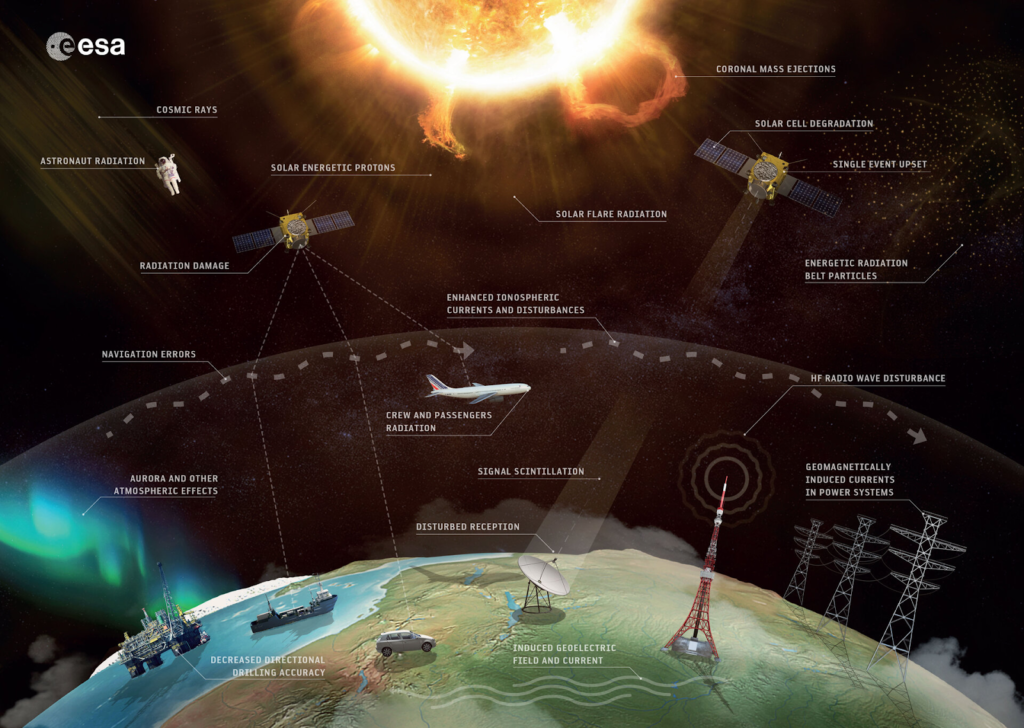
It’s a fair question. Auroras are not passive light shows. They are powered by enormous electromagnetic forces connecting the Sun to Earth. In fact, the same energy that creates auroras can disrupt satellites, damage power grids, and interfere with GPS systems.
So if auroras already affect technology—sometimes violently—could they one day be harnessed intentionally?
The answer is more complex, more realistic, and more fascinating than a simple yes or no.
What Auroras Really Are: Energy Made Visible
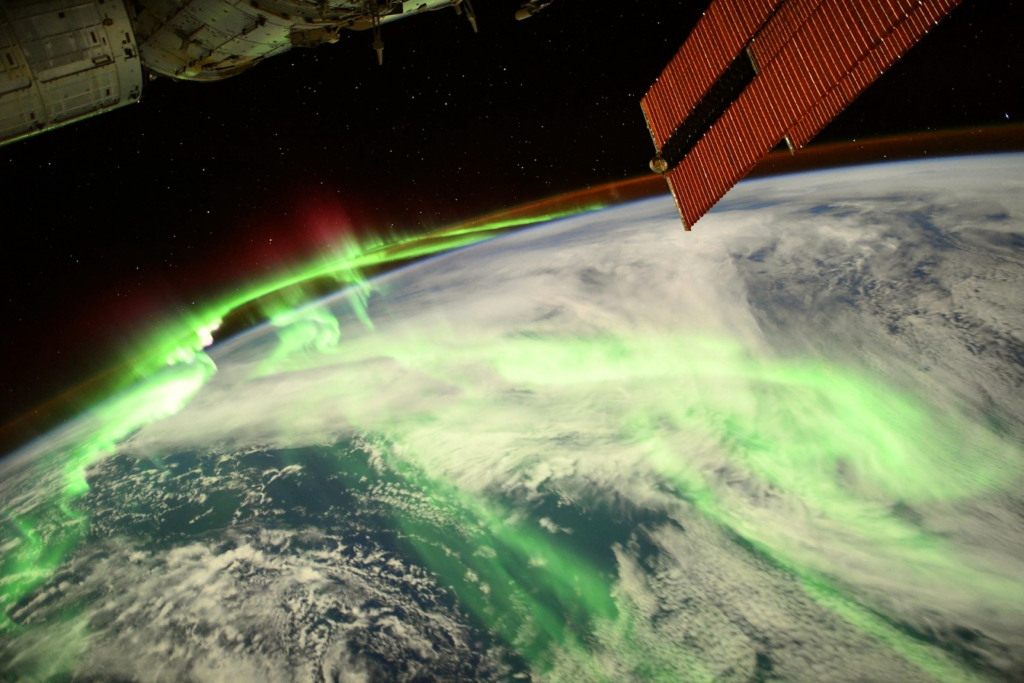
Auroras are not light in the traditional sense. They are energy transfer events.
Here’s what’s actually happening:
- The Sun ejects charged particles into space
- Earth’s magnetic field captures and funnels those particles
- Electrical currents form along magnetic field lines
- Energy is released when particles collide with atmospheric gases
The glowing colors are merely the final expression of a much larger electromagnetic process.
Behind every aurora is a massive flow of energy moving through near-Earth space.
How Much Energy Are We Talking About?
This is where the idea becomes tempting.
During strong geomagnetic storms, scientists estimate that auroral energy input into Earth’s upper atmosphere can reach:
- 100–500 gigawatts globally
- Comparable to the output of dozens of large power plants combined
That sounds enormous—and it is.
But raw energy alone doesn’t make a usable power source.
Why Enormous Energy Doesn’t Mean Easy Energy
Auroral energy has several traits that make it incredibly difficult to harness:
- It’s spread across vast geographic regions
- It occurs 60–300 miles above Earth
- It fluctuates minute by minute
- It depends entirely on solar activity
Unlike solar or wind energy, auroras:
- Cannot be turned on or off
- Cannot be predicted precisely days in advance
- Cannot be localized easily
In short, auroras are powerful—but wildly uncontrollable.
Have Scientists Ever Tried to Harvest Aurora Energy?
Not in the sci-fi sense.
There have been no serious attempts to build devices that “capture” auroral energy directly. The cost, risk, and unpredictability make that unrealistic with current technology.
However, scientists have spent decades studying auroral currents—and that research has already changed modern technology in major ways.
Real-World Example: How Auroras Already Affect Power Systems
Auroral energy doesn’t stay politely in the sky.
During strong geomagnetic storms:
- Electric currents can flow into long power lines
- Transformers can overheat
- Power grids can destabilize
The most famous example occurred in 1989, when a geomagnetic storm triggered by auroral currents caused a massive blackout in Quebec, leaving millions without power.
That event forced engineers worldwide to redesign grid protections.
In other words, auroral energy already “powers” technology—just not in a helpful way.
Could That Same Energy Ever Be Used Constructively?
This is where modern research becomes interesting.
Rather than trying to capture auroral energy like electricity from a turbine, scientists are exploring how to:
- Predict its effects earlier
- Redirect its impacts safely
- Use it as a signal rather than a fuel
The goal isn’t extraction—it’s integration.
Auroras as a Natural Energy Laboratory
Auroras give scientists something extremely rare:
- A visible demonstration of electromagnetic energy on a planetary scale
They allow researchers to:
- Study energy transfer without wires
- Observe magnetic reconnection in real time
- Test models of plasma behavior
This knowledge feeds directly into future energy and space technologies.
The Ionosphere: Earth’s Hidden Electrical Network
Auroras occur in the ionosphere, a region already critical to modern technology.
The ionosphere:
- Reflects radio waves
- Enables GPS and satellite communication
- Carries electrical currents around the globe
By studying auroral currents, scientists learn how energy flows through this natural electrical layer—and how technology might coexist with it more safely.
Could Satellites Use Auroral Energy Indirectly?
While satellites cannot harvest auroral energy for power, they can respond to it intelligently.
Future satellite systems may:
- Detect auroral energy surges early
- Adjust orientation and electronics automatically
- Enter protective modes during storms
In this way, auroras become a data source, not a power source.
Why Space Agencies Take Auroral Energy Seriously
NASA, NOAA, and ESA invest heavily in aurora research because auroral energy:
- Threatens satellites and astronauts
- Impacts aviation routes
- Affects communication systems
- Influences long-term space infrastructure
Any future technology operating beyond Earth must account for auroral energy—whether it uses it or not.
Could Auroras Inspire Wireless Energy Transfer?
Auroras demonstrate something remarkable:
- Energy can move vast distances via electromagnetic fields
This principle inspires research into:
- Wireless power transmission
- Space-based solar power
- Long-distance energy coupling
Auroras themselves aren’t the solution—but they prove the physics works.
Why the “Aurora Power Plant” Idea Won’t Go Away
People keep asking this question because auroras feel like:
- Wasted energy
- Untapped power
- A natural battery
History shows that many energy breakthroughs began as curiosity-driven questions.
Even if auroras never power cities, asking why they can’t leads to discoveries that matter.
What Makes Auroral Energy So Hard to Control
Several major barriers exist:
- Energy input varies wildly
- Solar conditions change without warning
- Auroral zones shift constantly
- Access requires space-based infrastructure
Unlike renewable energy on Earth, auroras are not cooperative.
How Scientists Are Reframing the Conversation
Instead of asking:
“Can we use auroras for power?”
Researchers now ask:
“What can auroras teach us about managing extreme energy?”
That shift has already improved:
- Power grid resilience
- Satellite durability
- Space weather forecasting
Real-Life Example: Space Weather Forecasting as Energy Protection
Modern aurora and space weather forecasts allow:
- Power grids to reduce load during storms
- Satellites to power down sensitive systems
- Airlines to reroute polar flights
- Astronauts to seek radiation shelter
This is auroral energy being used indirectly—as information that protects technology.
Could Aurora Energy Ever Be Stored?
Direct storage is unlikely with current science.
However, future systems may:
- Buffer energy effects
- Predict surge timing using AI
- Design infrastructure around auroral environments
Again, the value is awareness, not extraction.
Why This Idea Isn’t Science Fiction
Every major energy innovation started as speculation:
- Solar power was once impractical
- Wind energy was once unreliable
- Nuclear power was once unimaginable
Auroral energy may never become fuel—but understanding it deeply may unlock technologies we haven’t imagined yet.
Ethical and Environmental Considerations
Some scientists raise important concerns:
- Auroras are part of Earth’s natural balance
- Large-scale interference could have unknown effects
- Space is a shared environment
For now, auroral research remains observational, not exploitative.
What the Future Most Likely Looks Like
Experts predict:
- Smarter power grids that respond to space energy
- Satellites designed for auroral environments
- Improved forecasting systems
- Energy infrastructure inspired by space physics
The impact will be subtle—but transformative.
10 Trending FAQs Americans Are Asking
1. Can auroras really power technology?
Not directly, but they influence how technology is designed.
2. How powerful are auroras?
Global energy input can reach hundreds of gigawatts during storms.
3. Why can’t we harvest aurora energy?
It’s too unpredictable, spread out, and inaccessible.
4. Do auroras already affect power grids?
Yes—sometimes causing serious disruptions.
5. Could auroras power satellites?
No, but they shape satellite design and protection.
6. Is anyone researching this seriously?
Yes—space agencies and universities worldwide.
7. Could future tech change this?
Possibly indirectly, through better energy management.
8. Are auroras dangerous to people?
No—they occur far above Earth’s surface.
9. Do auroras waste energy?
No—they’re part of Earth’s natural energy system.
10. Will auroras ever replace renewables?
No—but they may inspire new technologies.
Why Auroras Matter Even If We Never Use Them
Auroras remind us that Earth exists inside a constant flow of cosmic energy.
They reveal:
- How connected space and Earth truly are
- How vulnerable modern technology can be
- How much we still have to learn
That perspective alone has value.
Final Takeaway: Auroras Won’t Power Cities—But They Might Power the Future
Auroras are unlikely to charge our phones or light our homes.
But they already power:
- Scientific discovery
- Technological resilience
- New ways of thinking about energy
Sometimes the most powerful ideas don’t come from capturing energy—but from understanding it.
When the sky lights up, it’s not offering electricity.
It’s offering insight.