Aurora borealis is more than a beautiful natural phenomenon—it can interfere with GPS accuracy through space weather effects most people never hear about. Solar storms that trigger auroras disturb Earth’s ionosphere, bending and delaying satellite signals. This in-depth guide explains how auroras affect GPS, who is most impacted, real-world examples, and what you can do to stay prepared.
When the Sky Puts on a Show—and Your GPS Quietly Struggles
On nights when the Northern Lights appear, most people feel wonder, not worry. Phones come out, social media fills with glowing skies, and the moment feels peaceful.
But above those shimmering curtains of green and red, something else is happening—something invisible, energetic, and deeply connected to the technology guiding cars, planes, ships, and smartphones around the world.
During strong auroral events, GPS systems can lose accuracy. Routes drift. Coordinates jump. Navigation apps hesitate. For everyday users, the effects may seem minor. For pilots, farmers, surveyors, and emergency services, they can be serious.
Aurora borealis isn’t just a light show. It’s a visible signal that space weather is actively disturbing Earth’s upper atmosphere, and that disturbance can ripple straight into your GPS.
How GPS Actually Works (And Why the Sky Matters So Much)
GPS feels simple from the user’s perspective. You open an app, type a destination, and follow directions. But behind the scenes, the process is delicate and precise.
GPS relies on:
- A network of satellites orbiting Earth
- Extremely accurate atomic clocks onboard those satellites
- Radio signals traveling at the speed of light
- Precise timing calculations to determine location
Your GPS receiver calculates where you are by measuring how long signals take to reach it from multiple satellites.
That calculation assumes something critical: the signals travel through the atmosphere in a predictable way.
Auroras disrupt that assumption.
The Ionosphere: The Hidden Layer GPS Depends On
Between GPS satellites and your receiver lies the ionosphere, a region of Earth’s upper atmosphere filled with electrically charged particles.
Under normal conditions, the ionosphere:
- Slightly slows GPS signals in predictable ways
- Helps radio communication travel long distances
- Remains relatively stable
During solar storms, the ionosphere becomes chaotic.
Charged particles surge in, densities fluctuate, and the smooth signal path GPS depends on turns turbulent.
Auroras happen inside this region.
Why Auroras Are a Warning Sign for GPS Systems
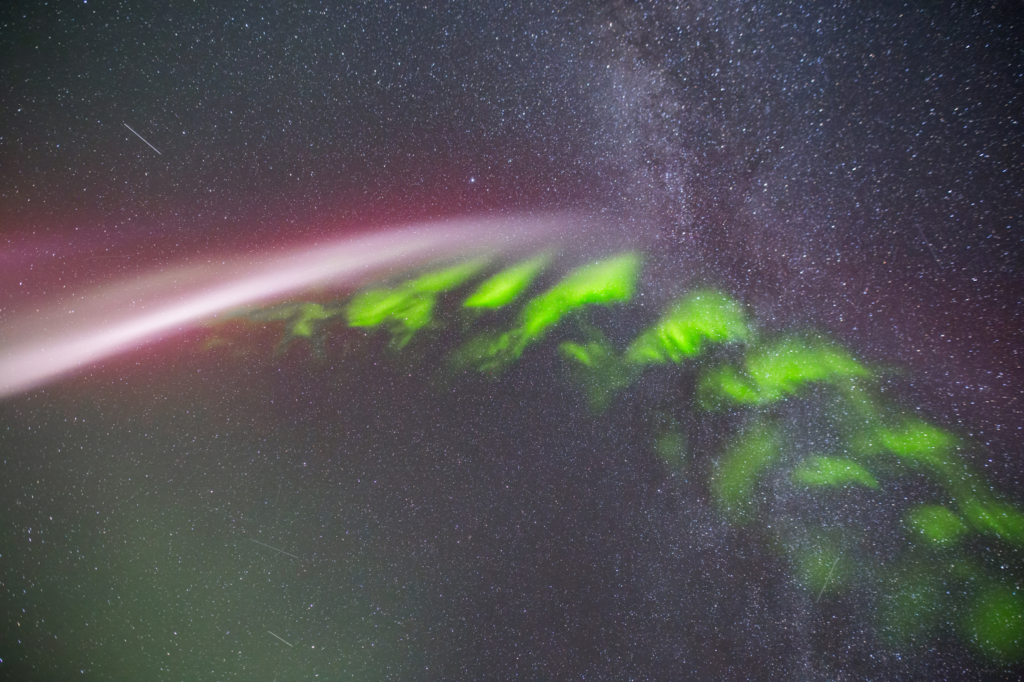
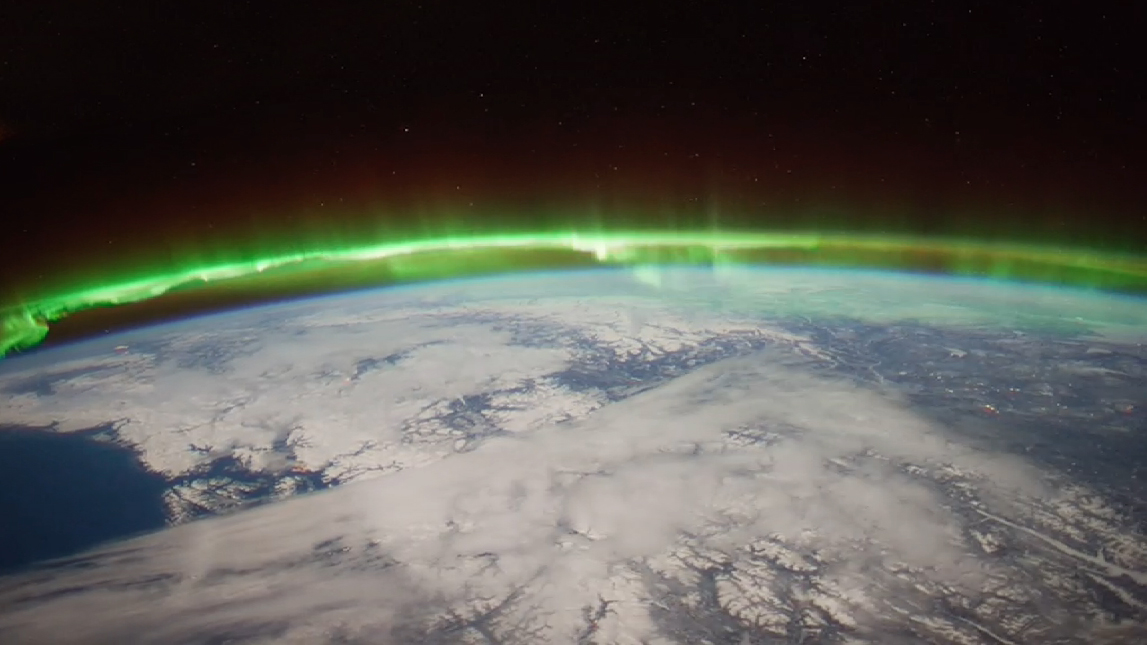
Auroras appear when energetic solar particles collide with Earth’s magnetic field and atmosphere. When the aurora brightens or spreads southward, it’s a clear sign that space weather conditions are intensifying.
That same energy:
- Increases ionospheric turbulence
- Creates uneven pockets of charged particles
- Bends and delays GPS signals unpredictably
So when you see auroras, GPS engineers see potential problems.
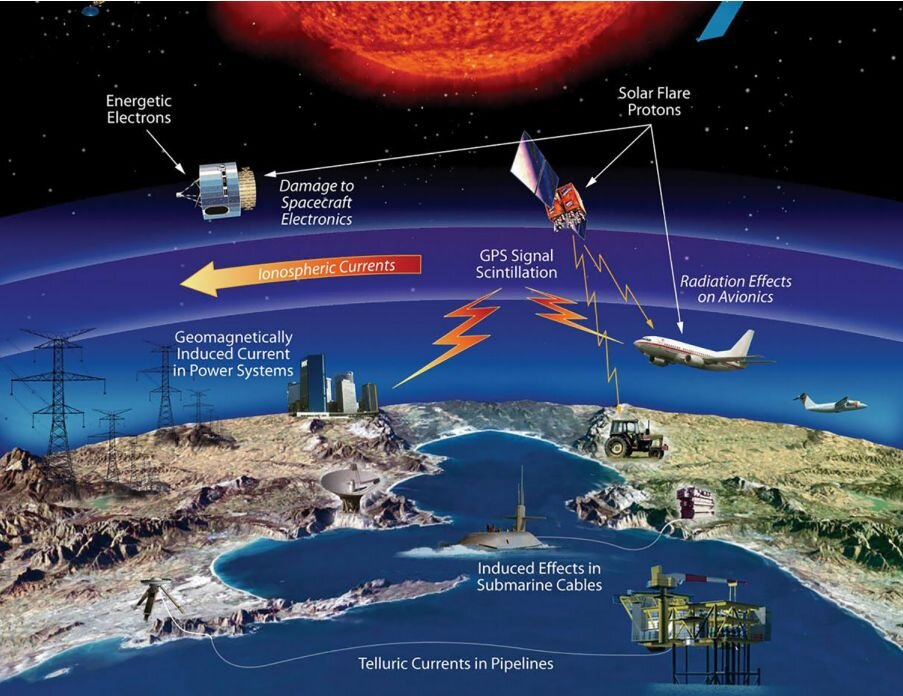
The Solar Storm Connection Most People Never Hear About
Auroras don’t happen on calm solar days. They happen during solar storms—periods when the Sun releases powerful bursts of energy.
These storms often include:
- Solar flares
- Coronal mass ejections (CMEs)
- High-speed streams of solar wind
When these particles reach Earth, they compress Earth’s magnetic field and inject energy into the ionosphere.
The brighter and wider the aurora, the more stressed the GPS environment usually is.
Real-World Examples: When GPS Accuracy Actually Dropped
This isn’t speculation—it’s documented.
During major geomagnetic storms:
- Pilots flying polar routes have reported degraded navigation accuracy
- Surveyors recorded errors ranging from several meters to tens of meters
- Precision agriculture equipment veered off programmed paths
- Smartphone GPS briefly placed users blocks away from their true location
NOAA has documented events where GPS errors exceeded 30–50 meters during strong auroral activity in North America.
That may not sound dramatic—until you consider aviation, shipping lanes, or automated machinery.
Why GPS Errors Are Often Worse at Night
Auroras happen at night, and so do many GPS disruptions. That’s not a coincidence.
At night:
- The ionosphere naturally changes structure
- Solar-driven disturbances linger longer
- Auroral electric currents intensify
As a result, GPS signal paths become more unstable after sunset during geomagnetic storms.
Does This Affect Smartphone GPS or Only Professional Systems?
The answer is both, but not equally.
Consumer devices:
- Usually smooth out small errors
- Often rely on cell towers and Wi-Fi as backups
- Recover quickly after disturbances
Professional systems:
- Require centimeter-level accuracy
- Cannot tolerate even small signal delays
- Are far more vulnerable to ionospheric disruption
This is why farmers, pilots, surveyors, and maritime operators take auroras seriously—even when casual users barely notice.
Why Airlines Reroute Flights During Strong Auroras
When auroras intensify, airlines don’t just admire them—they adjust operations.
Strong space weather can:
- Reduce GPS reliability at high latitudes
- Disrupt high-frequency radio communication
- Increase radiation exposure on polar routes
That’s why airlines often reroute polar flights during major auroral storms, prioritizing safety over fuel efficiency.
The “Scintillation” Effect: GPS’s Biggest Weakness
One of the most disruptive aurora-related effects is ionospheric scintillation.
Scintillation occurs when GPS signals pass through rapidly changing ionized regions, causing:
- Sudden signal fading
- Rapid phase shifts
- Loss of satellite lock
To a GPS receiver, the signal looks unstable—like trying to watch TV during a thunderstorm.
Auroras significantly increase scintillation risk.
Why Some People Never Notice GPS Issues at All
Many people assume GPS always works perfectly because problems often go unnoticed.
That’s because:
- Errors may be small and short-lived
- Maps and roads hide inaccuracies
- Apps average positions over time
But when precision matters, those hidden errors become visible fast.
Solar Cycle 25: Why GPS Issues May Become More Common
The Sun operates on an approximately 11-year activity cycle. We are now entering the most active phase of Solar Cycle 25.
Scientists are observing:
- More frequent auroras
- Stronger geomagnetic storms
- Increased reports of GPS degradation
As solar activity increases, so does the likelihood of space-weather-related navigation issues.
How Scientists Monitor GPS-Threatening Space Weather
GPS disruptions don’t arrive without warning.
NASA and NOAA monitor:
- Solar eruptions
- Magnetic field fluctuations
- Ionospheric density changes
- Real-time GPS signal integrity
When risk increases, alerts are issued so aviation, maritime, and infrastructure operators can prepare.
What You Can Do to Reduce GPS Frustration
You can’t stop space weather—but you can adapt.
Practical steps:
- Don’t rely solely on GPS during strong auroras
- Download offline maps before traveling
- Use visual navigation cues as backup
- Build time buffers into precision tasks
- Follow NOAA space-weather alerts if accuracy matters
Prepared users are rarely surprised.
Is GPS Failure Dangerous for Everyday Drivers?
For most drivers, GPS disruptions are inconvenient, not dangerous.
You might notice:
- Delayed position updates
- Slight misplacement on maps
- Extra route recalculations
Road signs, landmarks, and common sense still work.
The real risks apply to high-precision navigation, not casual driving.
Why Scientists Call Auroras “Space Weather Warning Lights”
Auroras are nature’s notification system.
They tell scientists:
- Energy is entering Earth’s system
- The magnetic field is disturbed
- Satellite signals may degrade
To space-weather experts, a bright aurora is a signal to watch the tech closely.
Could a Massive Solar Storm Shut GPS Down Completely?
This question often comes up—and the honest answer is nuanced.
A Carrington-level event (like 1859) could:
- Severely disrupt GPS
- Damage satellites
- Require extended recovery time
However, such storms are rare, and modern systems are designed with redundancy and resilience.
Preparedness—not panic—is the goal.
Why This Space-Weather Link Matters More Than You Think
GPS is woven into daily life:
- Navigation and transportation
- Emergency response
- Power grids and financial timing
- Agriculture and shipping
Understanding how auroras affect GPS is not niche science—it’s modern awareness.
10 Relevant & Trending FAQs
1. Can aurora borealis really affect GPS accuracy?
Yes, auroras are linked to ionospheric disturbances that degrade GPS signals.
2. Does GPS stop working during auroras?
Usually no, but accuracy can decrease significantly.
3. Are smartphone GPS apps affected?
Yes, though errors are often subtle and temporary.
4. Why are GPS problems worse near the poles?
Auroral activity and ionospheric turbulence are strongest there.
5. Can auroras affect car navigation systems?
Yes, especially during strong geomagnetic storms.
6. Do airlines worry about auroras?
Yes, polar routes are often adjusted during solar storms.
7. Is this happening more often now?
Yes, due to increasing solar activity in Solar Cycle 25.
8. Can GPS errors be dangerous?
Mostly for aviation, maritime, and precision industries.
9. How can I check for GPS disruption risk?
NOAA’s Space Weather Prediction Center provides alerts.
10. Will future GPS systems handle this better?
Yes, newer systems are being designed to resist space-weather effects.
Why Auroras Are Beautiful—and Technologically Serious
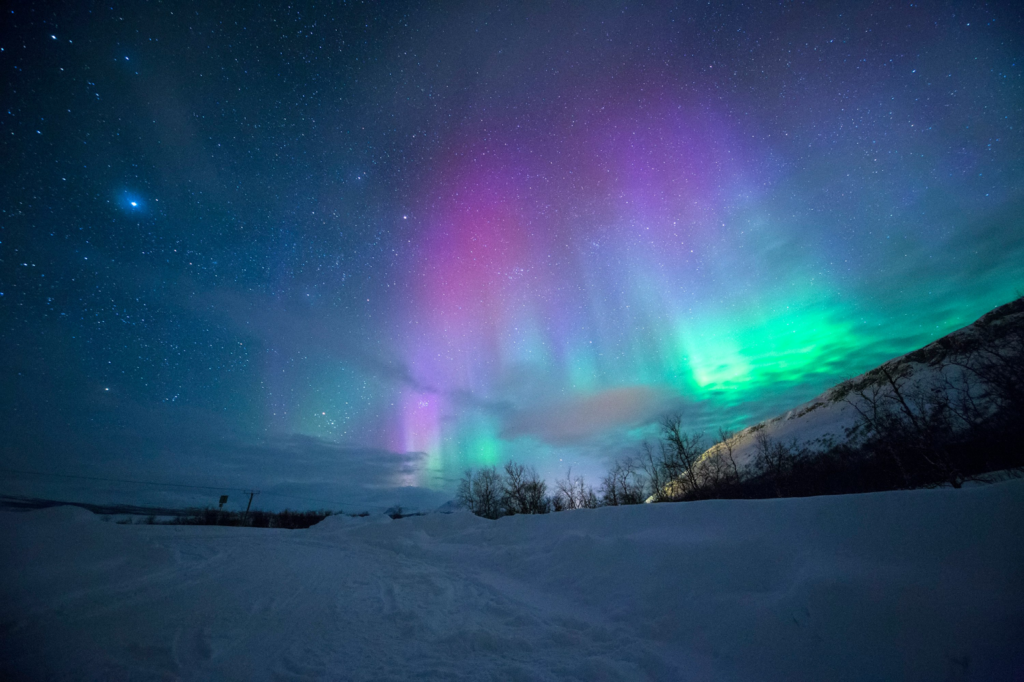
Auroras remind us that Earth exists inside a living solar system. The same energy that paints the sky can bend signals, confuse satellites, and challenge navigation systems.
Beauty and disruption come from the same source.
Final Takeaway: The Sky and Your GPS Are More Connected Than You Think
Aurora borealis may feel distant and poetic, but its effects are practical and real.
The next time the sky glows and your GPS hesitates, remember: you’re not lost.
You’re just experiencing the reality of living on an electrified planet.