Backyard aurora sightings are no longer rare anomalies limited to the Arctic Circle. As solar activity intensifies during the current solar maximum, Americans across the Midwest, Northeast, and even the South are witnessing stunning auroras from home. This in-depth guide blends real experiences with accessible science, explaining why auroras occur, how to spot them, and why now is a historic moment.
Introduction: When the Universe Shows Up at Your Back Door
For generations, the Northern Lights—scientifically known as the aurora borealis—were viewed as a distant miracle. You had to travel far north, endure freezing temperatures, and hope the sky cooperated. Seeing an aurora was a privilege reserved for Arctic explorers, professional photographers, or travelers with deep pockets and deeper patience.
But something extraordinary is happening.
Across the United States, everyday people are stepping into their backyards and witnessing glowing skies once thought impossible at their latitude. Parents are waking children after midnight. Farmers are pausing under star-filled skies. Amateur photographers are capturing colors that don’t look real—until you realize they are.
These backyard aurora sightings are not myths, camera tricks, or internet exaggerations. They are the visible fingerprints of a highly active Sun interacting with Earth in ways that science understands—and predicts.
This article brings together firsthand stories from aurora chasers, clear and non-technical explanations of the science, and practical guidance to help readers understand why auroras are appearing closer to home—and how they might see one themselves.
What Exactly Is an Aurora? A Plain-English Explanation
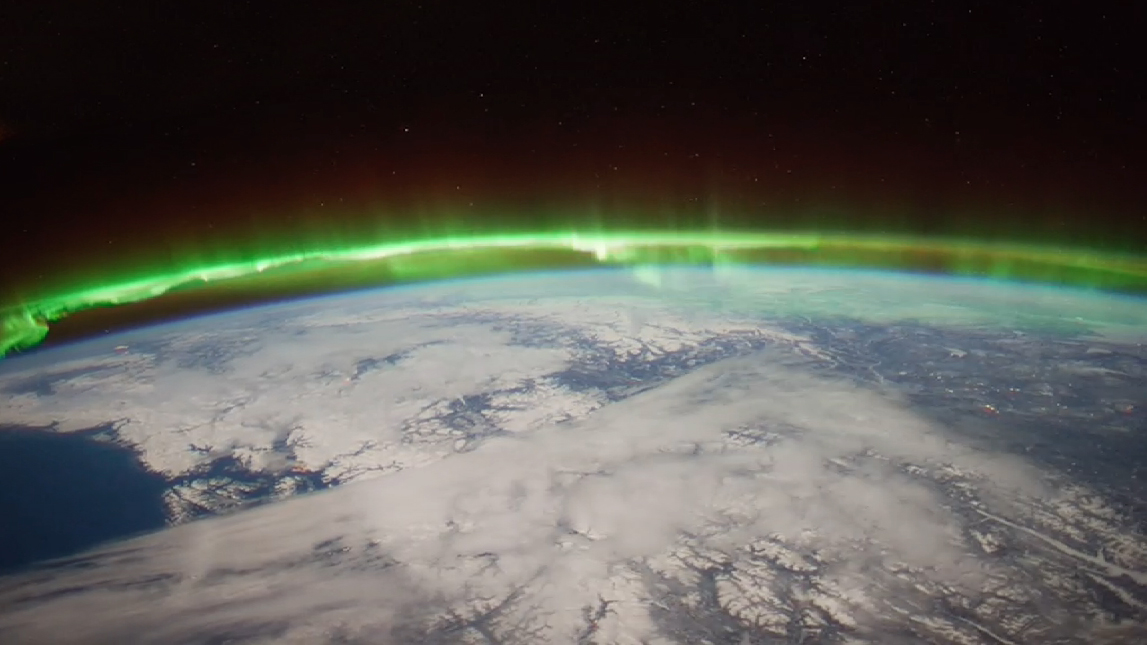
An aurora is a natural light display that occurs when charged particles from the Sun collide with Earth’s upper atmosphere. While that may sound complex, the underlying process is surprisingly elegant.
The Sun constantly emits a stream of electrically charged particles known as the solar wind. Most of the time, Earth’s magnetic field deflects these particles harmlessly into space. But when solar activity increases—especially during solar storms—some of these particles get funneled toward Earth’s magnetic poles.
Once there, they collide with atmospheric gases such as oxygen and nitrogen. These collisions release energy in the form of light, producing the glowing curtains, arcs, and ripples we recognize as auroras.
Different gases and altitudes create different colors:
- Green: Oxygen at lower altitudes (most common)
- Red: Oxygen at higher altitudes (rarer and dramatic)
- Blue and purple: Nitrogen interactions
- Pink: A mix of red and green emissions
Auroras typically stay near the poles—but during strong solar events, they expand southward.
That expansion is the key to backyard sightings.
Real Backyard Aurora Sightings: Stories From Across America
“I’ve Lived Here 40 Years and Never Seen This” — Wisconsin
In rural Wisconsin, longtime resident and amateur stargazer Linda Carlson stepped outside after noticing an unusual brightness in the sky.
“At first, I thought it was light pollution,” she said. “Then the sky started moving.”
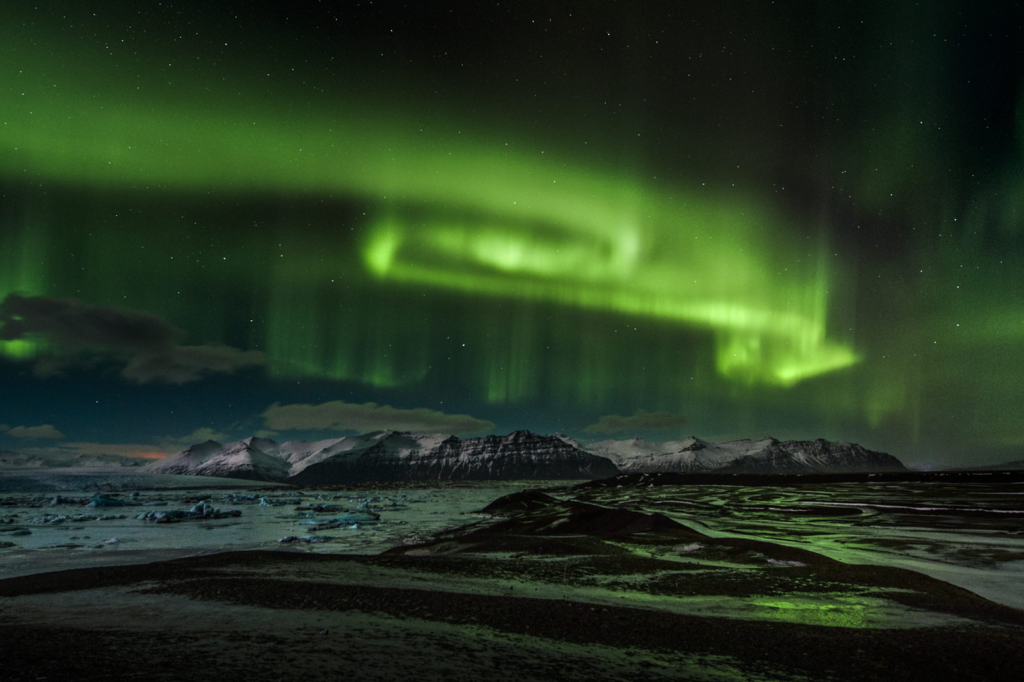
Soft green bands rippled overhead, slowly shifting like ocean waves. Linda grabbed her phone, took a photo, and posted it online. Within minutes, neighbors confirmed they were seeing the same thing.
“I’ve chased meteor showers and eclipses,” she said, “but this felt different. It felt alive.”
A Suburban Family Moment in Pennsylvania
In a quiet Pennsylvania suburb, Amanda Lewis nearly ignored a late-night notification from a space weather app. Instead, she opened her back door—and froze.
“There was this pale green glow above the trees,” she recalled.
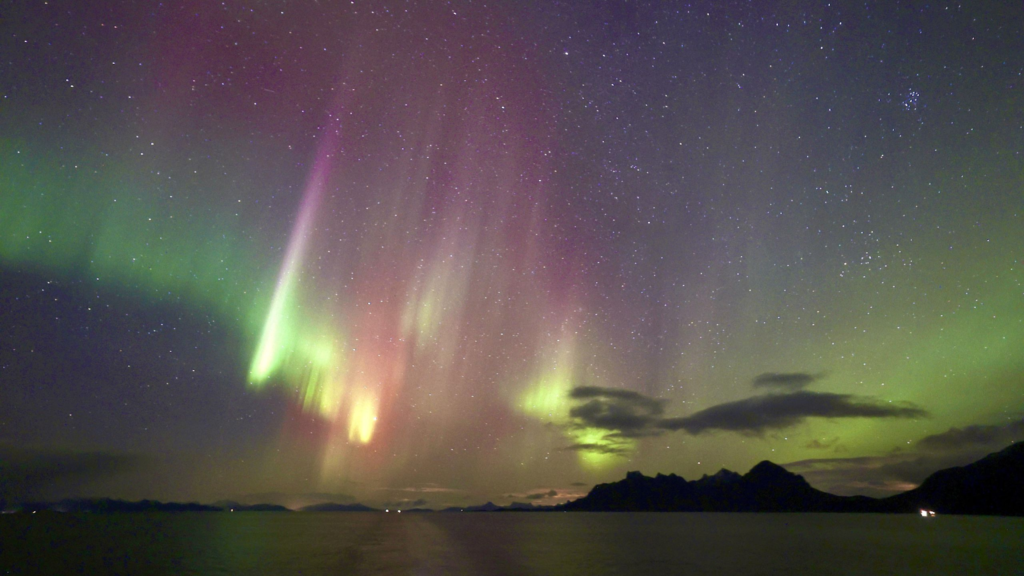
She woke her children, wrapped them in blankets, and they stood barefoot on the driveway watching faint auroral arcs stretch across the sky.
“My son asked if aliens were coming,” she laughed. “But then we just stood there in silence. It was peaceful.”
For that family, the aurora wasn’t just a scientific phenomenon—it was a shared memory.
The Texas Aurora That Shocked the Internet
Few sightings generated as much disbelief as the aurora photos from Texas.
During an intense geomagnetic storm, photographers across northern Texas captured unmistakable red and magenta auroras hovering above flat landscapes and open ranch land.
At first, many dismissed the images as fake.
But they weren’t.
According to data from the NOAA Space Weather Prediction Center, the geomagnetic storm responsible reached Kp levels of 8 to 9, strong enough to push auroras deep into the southern United States.
For Texans who had never seen anything like it, the experience was surreal.
“I’ve watched sunsets here my whole life,” one rancher commented online. “This was something else entirely.”
Why Are Backyard Auroras Happening More Often?
The answer lies 93 million miles away.
Understanding the Sun’s 11-Year Solar Cycle
The Sun goes through a repeating cycle of activity roughly every 11 years. During a solar minimum, the Sun is relatively calm. During a solar maximum, sunspots, solar flares, and coronal mass ejections (CMEs) become more frequent and more powerful.
We are currently in Solar Cycle 25, which scientists expect to peak between 2024 and 2026.
What makes this cycle special is its intensity. According to NASA and NOAA observations, Solar Cycle 25 is outperforming earlier predictions, producing stronger and more frequent solar storms.
Each powerful CME increases the chance of auroras expanding southward.
How Geomagnetic Storms Push Auroras Toward the U.S.
When a CME reaches Earth, it interacts with Earth’s magnetic field, triggering a geomagnetic storm.
This process involves:
- Compression of Earth’s magnetosphere
- Magnetic reconnection that releases stored energy
- Accelerated particles flowing into the upper atmosphere
- Expansion of the auroral oval toward lower latitudes
Scientists measure storm intensity using the Kp Index, which ranges from 0 (quiet) to 9 (extreme).
- Kp 4–5: Northern U.S. states may see auroras
- Kp 6–7: Midwest and New England
- Kp 8–9: Southern states possible
Recent storms reaching Kp 8 and 9 explain why auroras are appearing far beyond their usual range.
What Backyard Auroras Really Look Like (Vs. Viral Photos)
One of the biggest misconceptions about auroras comes from photography.
Professional and smartphone cameras are more sensitive to low light than human eyes. As a result, auroras often appear brighter and more colorful in photos than they do in real life.
In person, backyard auroras often look like:
- Pale green or white arcs
- Faint glowing clouds
- Subtle red or pink hues near the horizon
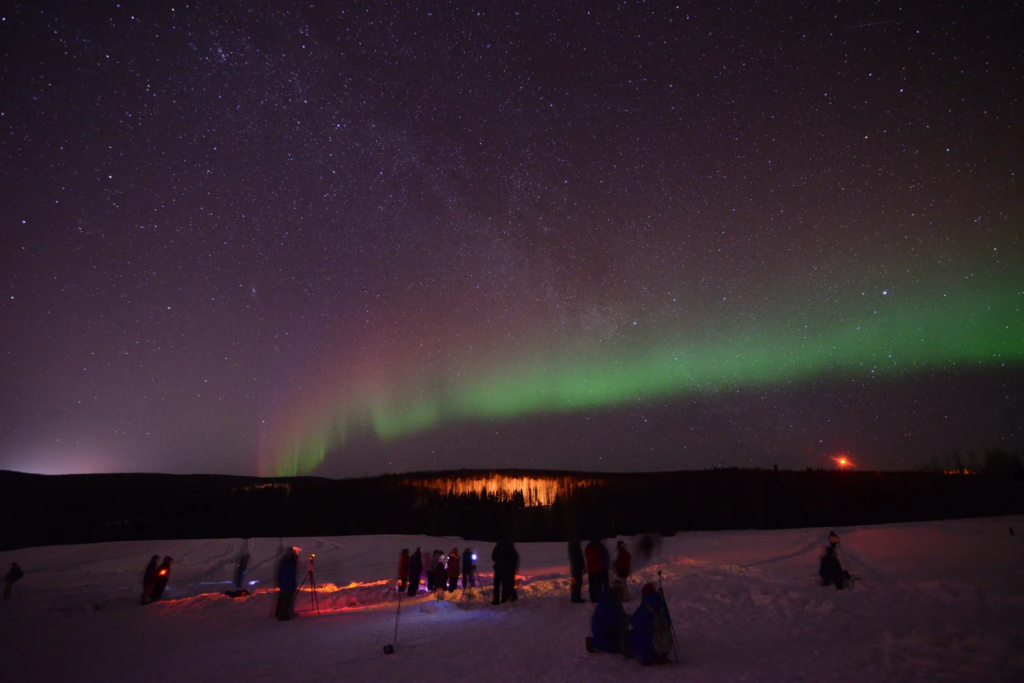
- Gentle motion rather than explosive brightness
That said, during intense storms, colors can become vivid even to the naked eye—especially reds.
Many aurora chasers agree that movement, not brightness, is the most mesmerizing part.
The Science of Aurora Colors (Without the Jargon)
Aurora colors depend on two main factors: altitude and gas type.
- Green auroras occur around 60–150 miles above Earth
- Red auroras form above 150 miles
- Blue and purple auroras appear lower, during intense storms
Red auroras are particularly important because they signal strong geomagnetic activity—and they are often visible farther south.
That’s why many recent backyard sightings include red skies, especially near the horizon.
Why Cameras See More Than Human Eyes
Smartphones and digital cameras can capture auroras more vividly because:
- They use long exposure times
- Sensors detect light beyond human sensitivity
- Image processing enhances faint colors
This doesn’t mean auroras aren’t real—it simply means technology can reveal details our eyes struggle to see in darkness.
Best Conditions for Seeing an Aurora From Your Backyard
Aurora chasers emphasize that preparation matters as much as luck.
Key Conditions That Improve Visibility
- Clear skies with minimal cloud cover
- Low light pollution
- Strong geomagnetic storm activity
- Viewing between 10 PM and 3 AM
- Looking toward the northern horizon
Tools Real Aurora Watchers Use
- NOAA space weather alerts
- Aurora forecast apps
- Local astronomy groups and social media
Can Auroras Really Be Seen in the Southern U.S.?
Yes—but rarely.
Southern aurora sightings usually involve:
- Extremely strong solar storms
- Red auroras rather than green
- Low northern horizon glows
States with documented rare sightings include Texas, Alabama, Georgia, Arizona, and even Florida under exceptional conditions.
While uncommon, these events are becoming more plausible during the current solar maximum.
The Emotional Side of Backyard Auroras
Many aurora chasers say backyard sightings feel more powerful than travel experiences.
Why?
Because they are unexpected.
Seeing cosmic energy unfold above your own home creates a sense of connection—between Earth, Sun, and human life.
One observer put it simply:
“It made the universe feel closer.”
Practical Tips for First-Time Backyard Aurora Watchers
- Spend time outside; don’t rely only on photos
- Allow your eyes to adjust for 15–20 minutes
- Scan the entire sky, not just straight north
- Be patient—auroras pulse and fade
- Dress warmly and bring curiosity
Frequently Asked Questions (Trending Searches)
1. Can I really see the Northern Lights from my backyard?
Yes, during strong geomagnetic storms, especially in northern and central U.S. states.
2. Why are auroras appearing farther south now?
Increased solar activity during Solar Cycle 25 is expanding auroral visibility.
3. What time are auroras most visible?
Typically between 10 PM and 3 AM local time.
4. Do auroras appear every night during storms?
No. Visibility depends on cloud cover, timing, and storm strength.
5. Why do some auroras look red instead of green?
Red auroras form at higher altitudes during intense solar storms.
6. Are auroras dangerous to watch?
No. They occur high above Earth and pose no risk to people.
7. Can solar storms affect technology?
Yes. Strong storms can impact satellites, GPS, and power grids.
8. Do auroras make sound?
There is no confirmed scientific evidence of audible auroras.
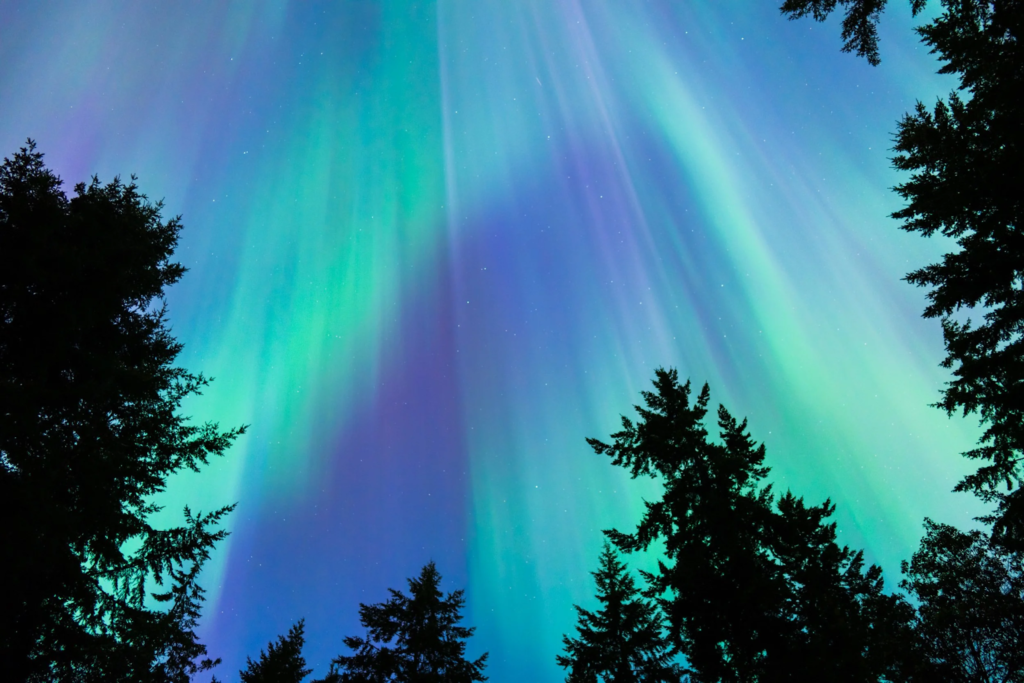
9. Why do cameras capture more color than eyes?
Cameras are more sensitive to low light and long exposures.
10. Will auroras disappear after 2026?
Auroras will continue, but sightings may decrease as solar activity declines.
Final Thoughts: A Rare Moment in Time
We are living through a historic solar maximum—one that has already delivered some of the most widespread aurora displays in decades.
For many Americans, this is the first time the universe has come to their doorstep.
No plane ticket.
No Arctic expedition.
Just a clear night, a quiet moment, and a sky that decides to perform.
Sometimes, the greatest wonders are closer than we think.