Astronomers have confirmed that a mysterious purple ribbon of light called STEVE is not a traditional aurora but an entirely different atmospheric phenomenon. Appearing far south of typical Northern Lights, STEVE reveals new information about Earth’s magnetic field and space weather. Scientists say this discovery is reshaping how we understand auroras and the planet’s interaction with the Sun.
A Purple Ribbon in the Sky That Changed Everything Scientists Thought They Knew
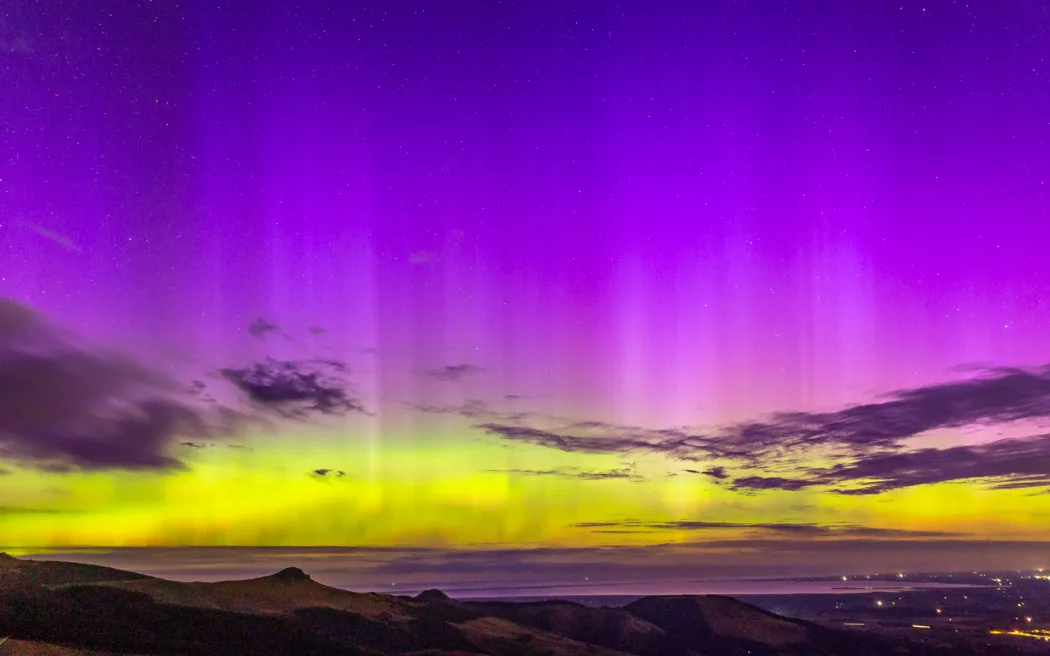
For centuries, auroras followed a predictable script. They appeared near the poles, glowed green or red, and danced in curtains across the night sky. Scientists believed they understood the rules that governed these lights well enough to predict where and when they would appear.
Then something completely unexpected showed up.
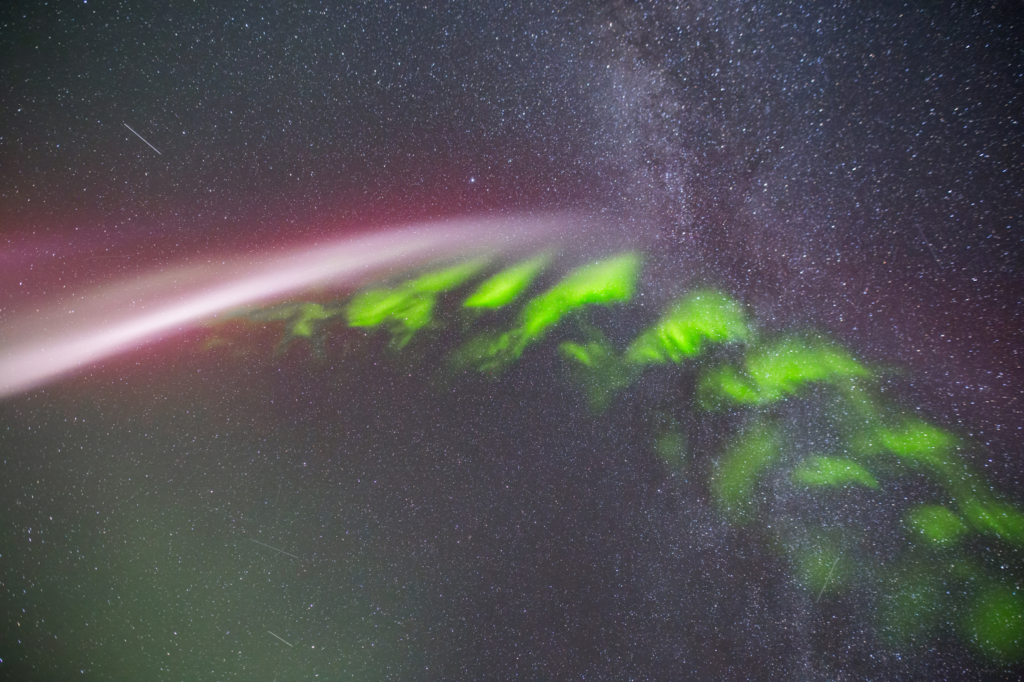
Across North America, observers began noticing a thin, glowing purple ribbon stretching cleanly from east to west. It didn’t ripple like auroras. It didn’t spread like auroras. And most confusing of all, it often appeared south of where auroras were supposed to exist.
At first, scientists assumed it was simply a strange new color of the Northern Lights. That assumption didn’t last long.
What astronomers eventually discovered forced a rewrite of space-weather science. The phenomenon became known as STEVE, and its existence revealed that Earth’s upper atmosphere behaves in ways researchers had never directly observed before.
What Is STEVE and Why Is It Not a Normal Aurora
What the Name STEVE Actually Means
STEVE stands for Strong Thermal Emission Velocity Enhancement. While the name sounds technical, the meaning is simple: STEVE is created by extremely fast-moving, super-heated charged particles in Earth’s upper atmosphere.
That distinction is critical.
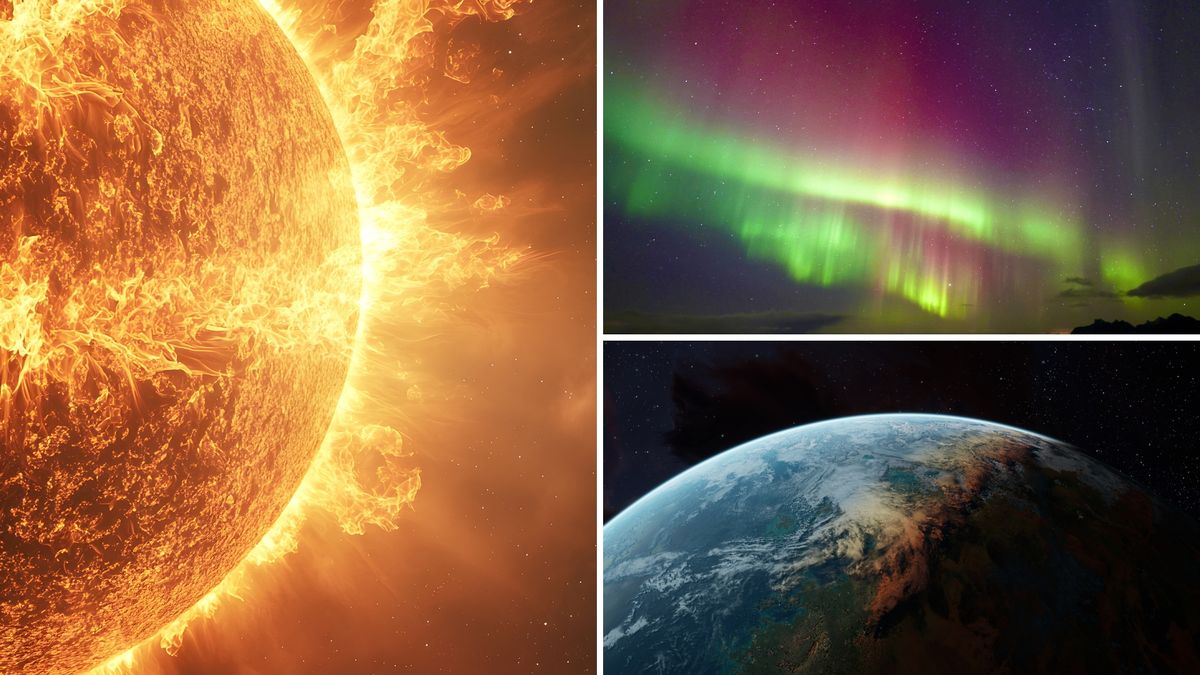
Traditional auroras form when charged particles from the Sun collide with oxygen and nitrogen atoms, causing them to glow. STEVE forms without those particle collisions. This alone makes it fundamentally different.
Key differences include:
- STEVE is a narrow ribbon instead of wide curtains
- STEVE appears purple or mauve instead of green
- STEVE forms south of the auroral oval
- STEVE is driven by ion heating and velocity, not particle rain
Real-life example:
Photographers in Montana captured a purple arc in 2016 that looked almost artificial, like a laser beam across the sky. Those images became the first major evidence that STEVE was not an aurora at all.
How Astronomers Realized STEVE Was Something Entirely New
When scientists first examined STEVE images, they tried to match them to known auroral processes. But satellite data refused to cooperate.
NASA’s Swarm satellites detected:
- Extremely high ion temperatures
- Fast plasma flows moving east to west
- No evidence of energetic particle precipitation
This combination made no sense under existing aurora models.
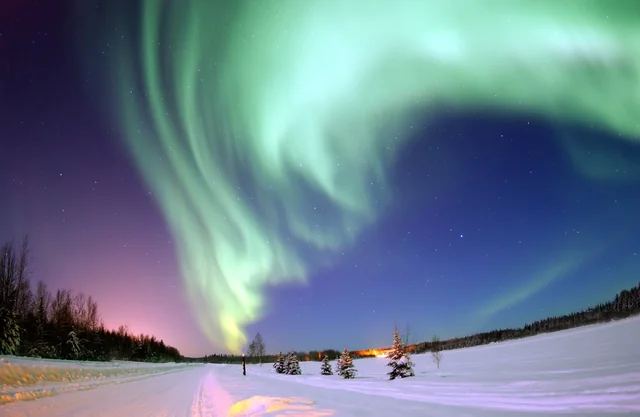
Auroras require particles raining down from space. STEVE had none.
That moment marked a turning point. Scientists realized they were observing a previously undocumented atmospheric phenomenon, not a variation of something already known.
Why Is STEVE Purple Instead of Green or Red
Aurora colors are well understood. Green comes from oxygen at lower altitudes. Red comes from oxygen at higher altitudes. Nitrogen adds blue or pink tones.
STEVE’s purple color does not follow this rulebook.
Researchers believe STEVE’s color comes from:
- Extreme heating of atmospheric ions
- Unusual excitation mechanisms not tied to collisions
- Emissions at wavelengths rarely observed visually
Real-life example:
Observers often describe STEVE as looking like “cosmic neon” or “a glowing purple highway in the sky.” These descriptions are strikingly different from how people describe auroras.
Where STEVE Appears and Why Americans Are Seeing It
One reason STEVE has captured public attention is its location.
Unlike auroras, STEVE often appears over densely populated regions.
States and regions where STEVE has been reported include:
- Montana
- North Dakota
- Minnesota
- Michigan
- Wisconsin
- New York
- Pennsylvania
Because STEVE forms south of traditional aurora zones, millions of Americans live directly beneath its potential viewing area.
This explains why STEVE has been photographed so frequently compared to many rare atmospheric phenomena.
The Role Citizen Scientists Played in Discovering STEVE
STEVE represents one of the most important examples of citizen science in modern astronomy.
The phenomenon was first noticed by:
- Amateur photographers
- Stargazers
- Night-sky hobbyists
These observers shared photos online, noticing patterns scientists had overlooked.
Astronomers then collaborated with the public to:
- Match sightings with satellite data
- Identify timing patterns
- Confirm physical mechanisms
This partnership demonstrated that scientific discovery no longer happens only in observatories—it happens wherever people are paying attention.
How STEVE Forms According to Current Scientific Understanding
STEVE forms during intense space-weather events when Earth’s magnetic field is strongly disturbed.
Current research suggests STEVE appears when:
- Plasma flows accelerate rapidly
- Ions heat to extreme temperatures
- Energy dissipates as visible light
- Magnetic field lines shift temporarily
Unlike auroras, STEVE is more closely linked to ionospheric dynamics than solar particle collisions.
Scientists emphasize that this understanding is still evolving.
Why STEVE Matters More Than a Beautiful Sky
STEVE is not just visually stunning—it fills a major gap in space-weather science.
Its discovery shows:
- Energy can move through Earth’s atmosphere in unexpected ways
- Existing aurora models are incomplete
- Magnetic field behavior is more complex than assumed
NASA researchers have described STEVE as a missing puzzle piece in understanding how Earth handles energy from the Sun.
Could STEVE Affect Technology or Infrastructure
STEVE itself is harmless. However, the conditions that create STEVE are significant.
STEVE appears during strong geomagnetic disturbances, which can affect:
- GPS accuracy
- Satellite navigation
- Radio communications
- Power grid monitoring systems
Real-life example:
During storms where STEVE was observed, satellite operators reported unusual drag and signal fluctuations—leading to closer monitoring protocols.
Why STEVE Is Often Mistaken for the Northern Lights
To the untrained eye, STEVE can look like an aurora. But experts note clear differences.
STEVE:
- Appears as a single smooth ribbon
- Remains stable instead of shimmering
- Has a distinct purple color
- Forms south of auroras
Auroras:
- Appear as moving curtains
- Flicker and dance
- Are typically green or red
- Form closer to the poles
Understanding this distinction improves scientific reporting and public awareness.
Why STEVE Sightings Are Increasing
Scientists believe STEVE sightings are increasing for several reasons:
- Stronger solar cycles
- Improved camera technology
- Greater public interest in space
- Social media sharing
It’s possible STEVE has existed for centuries but went unnoticed due to limited observation tools.
How to Tell If You’re Seeing STEVE or an Aurora
If you see a strange light in the sky, consider:
- Is it purple or mauve
- Is it thin and ribbon-like
- Is it stretching east to west
- Is it south of known aurora zones
If the answer is yes, you may be witnessing STEVE.
What STEVE Reveals About Earth’s Magnetic Field
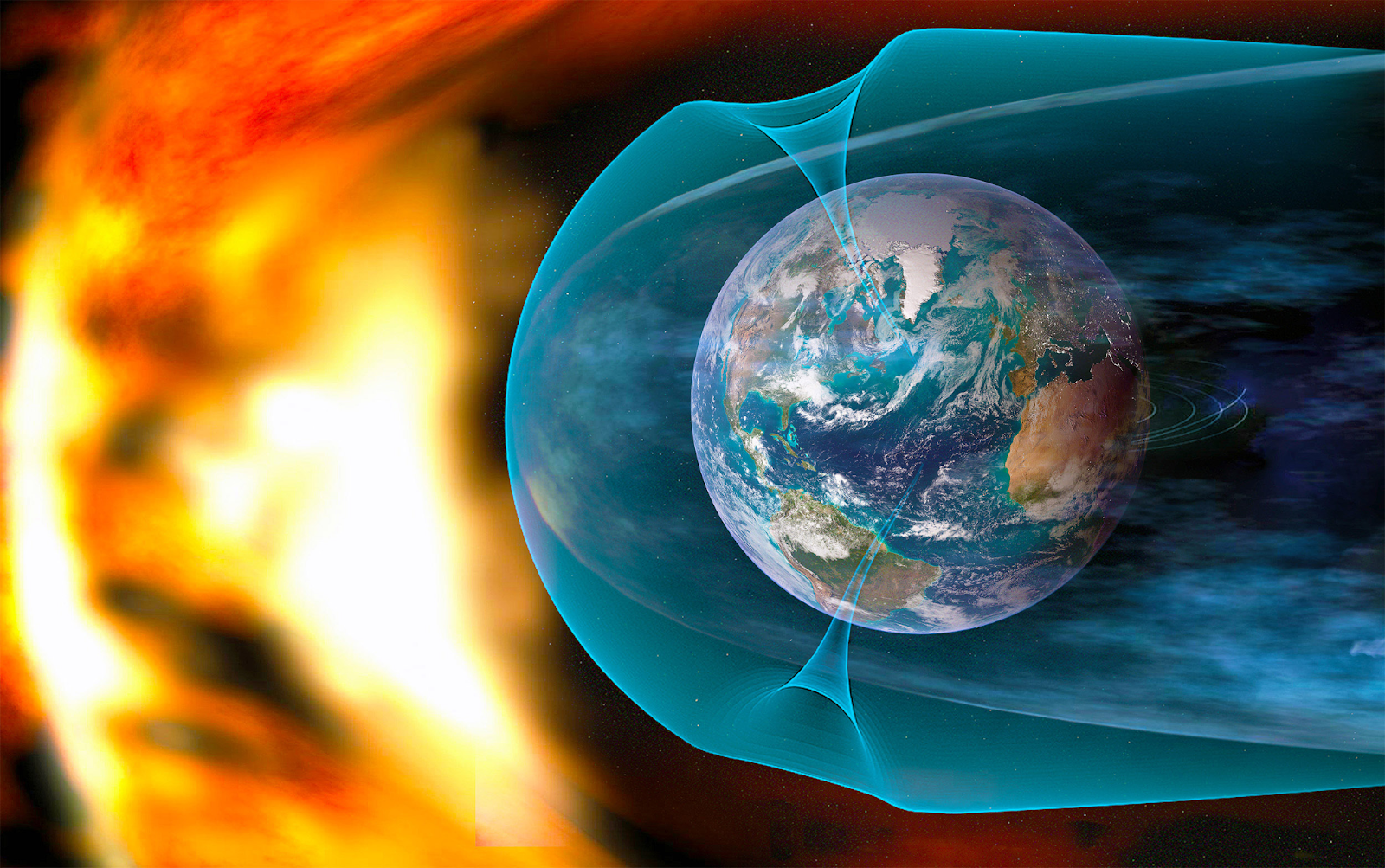
STEVE highlights the dynamic nature of Earth’s magnetosphere.
It shows that:
- Energy flows are not always visible as auroras
- Magnetic disturbances create new phenomena
- Our planet’s protective shield is flexible
These insights influence not only Earth science but planetary science across the solar system.
Could STEVE Exist on Other Planets
Researchers believe STEVE-like phenomena could exist on planets with strong magnetic fields, such as:
- Jupiter
- Saturn
- Possibly Mars
Studying STEVE helps scientists understand how magnetic environments behave beyond Earth.
How Americans Can Safely Observe STEVE
To increase your chances of seeing STEVE:
- Monitor geomagnetic storm forecasts
- Watch south of aurora activity
- Use long-exposure photography
- Avoid light pollution
Real-life example:
Many photographers captured STEVE accidentally while aiming for auroras—only realizing later they had documented something rare.
Why Scientists Call STEVE a Breakthrough Discovery
STEVE represents:
- A new category of atmospheric phenomenon
- A challenge to long-standing models
- Proof that discovery is ongoing
NASA scientists describe STEVE as evidence that Earth’s upper atmosphere still holds surprises.
10 Frequently Asked Questions About STEVE
Is STEVE an aurora
No STEVE is a distinct atmospheric phenomenon
Why is STEVE purple
Due to extreme ion heating and unusual emissions
Where is STEVE usually seen
South of traditional aurora zones in North America
Is STEVE dangerous
No it poses no risk to people
Can STEVE damage electronics
Only indirectly through geomagnetic conditions
How long does STEVE last
From minutes to about an hour
Can STEVE be seen without a camera
Yes but cameras capture it better
Is STEVE rare
Yes but sightings are increasing
Who discovered STEVE
Citizen scientists working with astronomers
Will STEVE happen again
Yes during future geomagnetic storms
Final Thoughts Why STEVE Matters
STEVE proves that even in an age of satellites and supercomputers, Earth can still surprise us.
This strange purple ribbon has forced scientists to rethink long-held assumptions about auroras, magnetic fields, and space weather. It has also shown the power of public participation in scientific discovery.
The night sky is not finished telling its story. STEVE is proof of that.