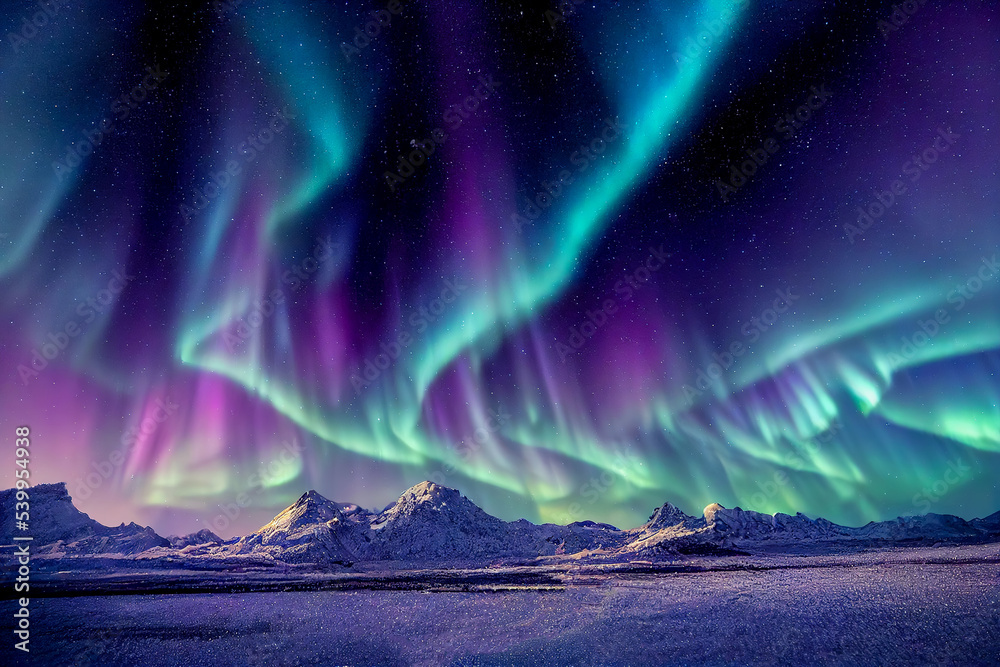
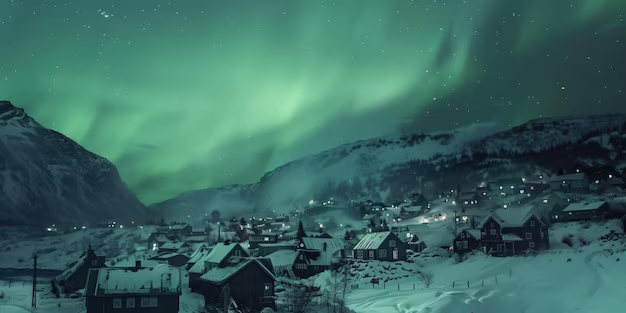
A quiet American town has unexpectedly entered the national spotlight after confirmed aurora sightings placed it on official auroras visibility maps. Triggered by rare solar activity and ideal local conditions, the Northern Lights appeared where they were never expected. Scientists, travelers, and skywatchers are now watching closely—because this may not be a one-time event.
A Normal Night That Changed Everything
For most of its history, this small town lived comfortably outside the spotlight. It was the kind of place where nights were quiet, skies were dark, and people knew their neighbors by name. Nothing about it suggested that it would ever make national headlines—especially not for a cosmic phenomenon usually reserved for far-northern regions.
Then came one unforgettable night.
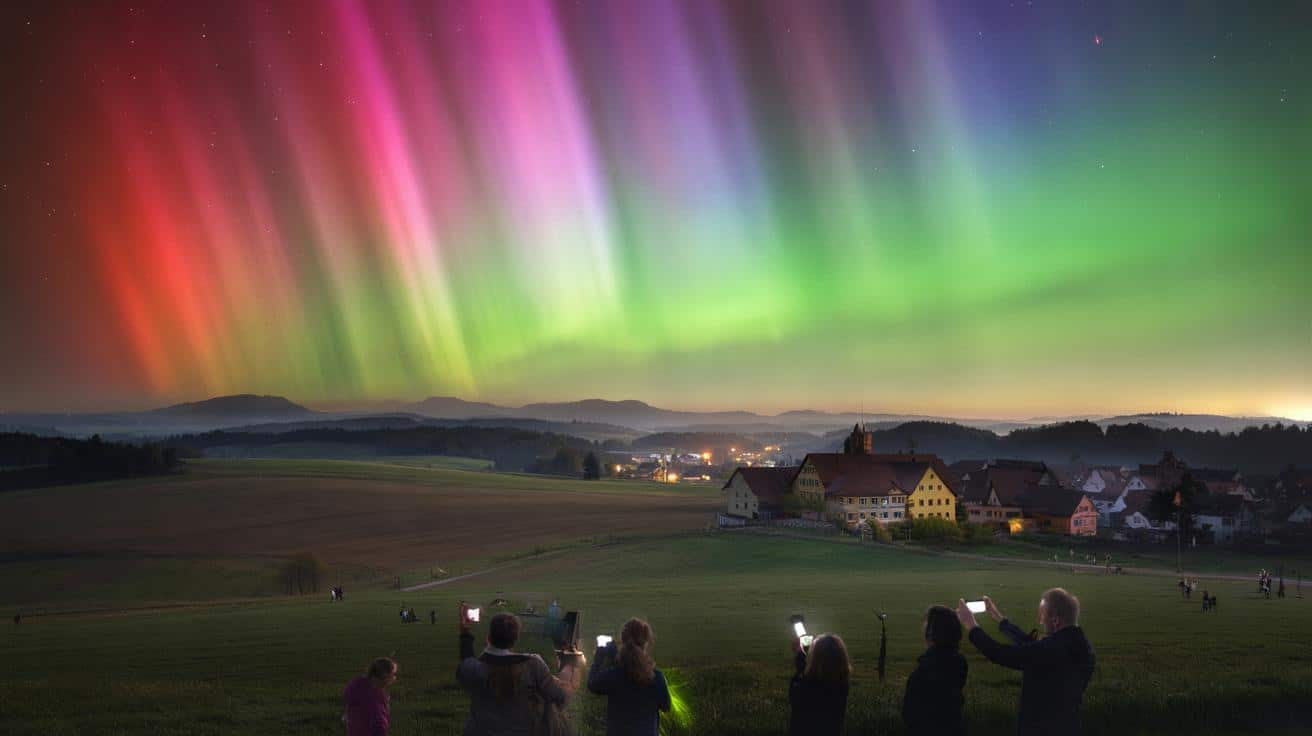
Residents stepped outside expecting the familiar blanket of darkness. Instead, they noticed something strange on the horizon—a faint reddish glow that didn’t behave like clouds or distant city lights. As minutes passed, the glow shifted. It pulsed. It stretched.
Phones came out. Photos were taken. Messages spread through local Facebook groups.
By morning, scientists confirmed what many still struggled to believe: the Northern Lights had appeared here.
Within hours, the town wasn’t just a dot on a map anymore—it was officially part of the auroras visibility zone.
What Does “Added to the Auroras Map” Actually Mean?
When people hear that a town has been “added to the auroras map,” it can sound dramatic or symbolic. In reality, it’s a scientifically meaningful designation.
Auroras occur within a region called the auroral oval, an ever-shifting ring around Earth’s magnetic poles. During normal solar conditions, this oval stays close to the Arctic. But during strong geomagnetic storms, it expands—sometimes dramatically.
When scientists say a town has been added, they mean:
- Verified aurora sightings occurred at that location
- Space weather data supports the visibility claims
- The town now falls within expanded forecast models
- Future aurora probability has increased during strong storms
In other words, this town crossed a scientific threshold.
Why This Town’s Location Matters More Than You Think
Geography played a quiet but crucial role.
This town sits just far enough north—and just far enough away from major cities—to benefit from exceptionally dark skies. Unlike urban centers, where artificial light washes out faint celestial events, this area retains a natural night environment.
Several geographic factors worked together:
- Low light pollution
- Open landscapes with clear horizons
- Relatively stable weather patterns
- Occasional high elevation relative to surrounding terrain
None of these create auroras—but when auroras appear, they make all the difference.
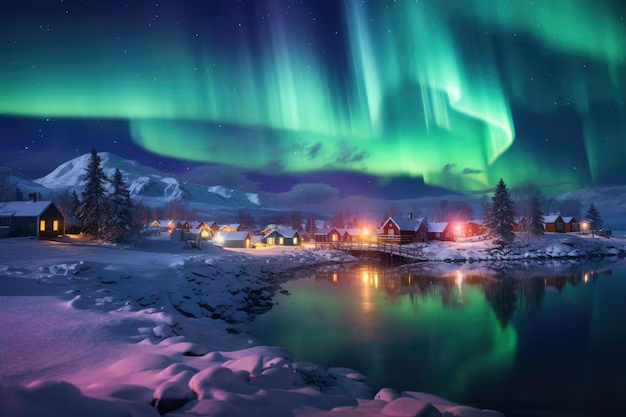
The Night the Sky Put This Town on the Map
Residents recall the night vividly.
At first, there was confusion. Some thought it was distant wildfire smoke reflecting light. Others assumed it was a camera glitch. But as the glow lingered and shifted, uncertainty turned into excitement.
Local amateur astronomers quickly checked space weather alerts. The data lined up perfectly.
- Solar activity had surged
- Geomagnetic storm levels reached severe thresholds
- The auroral oval had expanded southward
By dawn, confirmation arrived from multiple sources. The event wasn’t just real—it was historically significant.
Why Did the Aurora Reach This Town Now?
The answer begins with the Sun.
We are currently approaching solar maximum, the most active phase of the Sun’s roughly 11-year cycle. During this period, solar flares and coronal mass ejections (CMEs) become more frequent and intense.
In the days leading up to the sighting:
- The Sun released multiple strong CMEs
- Charged particles slammed into Earth’s magnetic field
- Earth’s magnetosphere temporarily distorted
- The auroral oval expanded far south of its usual range
According to NASA and NOAA data, conditions were strong enough to push auroras into regions long considered “out of bounds.”
This town just happened to be perfectly positioned.
Why This Wasn’t Just a One-Time Fluke
Auroras occasionally appear in unexpected places—but most disappear from history as curiosities. What sets this town apart is verification and repeat potential.
Scientists analyzed:
- Satellite magnetometer readings
- Ground-based observatory data
- Multiple eyewitness reports across different locations
- Timing consistency with geomagnetic activity
The conclusion was clear: this wasn’t a random anomaly.
The town now appears in expanded aurora forecast models, meaning it could see auroras again during future solar storms.
That’s why scientists are paying attention—and why the public is fascinated.
How the Community Reacted: From Confusion to Celebration
The emotional arc was almost universal.
First came disbelief. Then excitement. Then something deeper—pride.
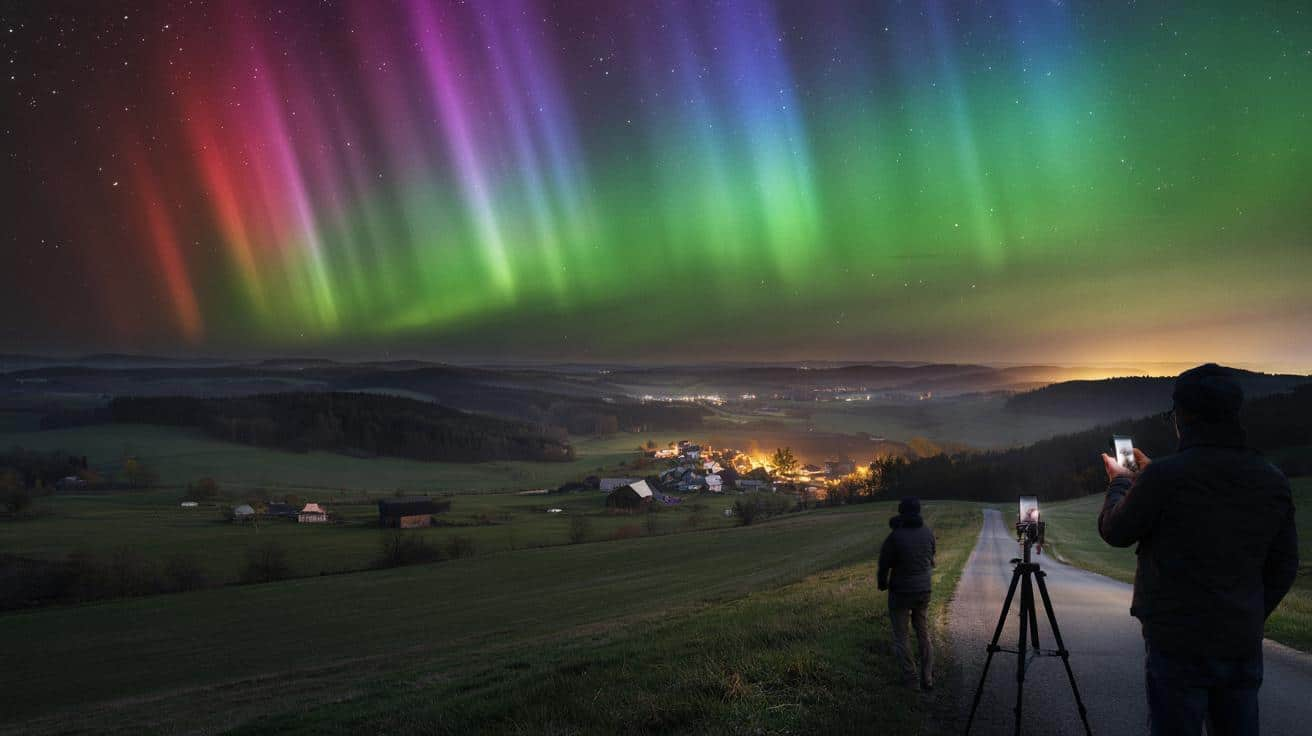
Local businesses noticed changes immediately. Cafés stayed open later. Hotels received unexpected bookings. Visitors from nearby states arrived with tripods and cameras.
Residents shared stories like:
- Parents waking children past midnight to see the lights
- Elderly locals witnessing their first aurora without traveling north
- Farmers stopping mid-work to watch the sky
This wasn’t just a scientific event. It became a shared memory.
Why Scientists Say This Matters for the Future
From a research perspective, this town represents a valuable data point.
Auroras help scientists understand:
- Solar-Earth interactions
- Magnetospheric behavior during storms
- How far auroral visibility can realistically extend
Every confirmed low-latitude sighting improves predictive models.
As solar maximum continues into 2025–2026, researchers expect more boundary-pushing events. This town may be one of many—but it was among the first to be officially recognized.
Could Other Small Towns Be Next?
Yes—and that possibility is fueling excitement nationwide.
Experts suggest that during the peak of solar maximum:
- Severe geomagnetic storms may occur more frequently
- Auroral ovals may expand farther south than average
- Mid-latitude regions could see rare visibility events
This doesn’t mean auroras will become common everywhere. But it does mean the map is no longer as fixed as we once believed.
The Role Social Media Played in Making This Town Famous
Decades ago, this event might have remained local lore.
Today, it went viral overnight.
Photos and videos spread across:
- Facebook community pages
- TikTok night-sky clips
- Reddit astronomy threads
- Instagram reels tagged with disbelief
Many people learned about the aurora before local news even reported it.
Social media didn’t create the moment—but it amplified it into a national conversation.
Practical Advice: How to See the Aurora in Places Like This
If you’re inspired to visit—or hoping your own town might be next—preparation matters.
Best time to look
- During geomagnetic storms (Kp 7 or higher)
- Between 10 PM and 2 AM
- On clear, moonless nights
Best locations
- Away from city lights
- With open northern horizons
- Near fields, lakes, or elevated terrain
Best tools
- Your eyes (after 20 minutes of dark adaptation)
- Smartphone night mode
- Long-exposure photography for clearer colors
Patience is essential. Auroras come in waves.
Why Auroras Matter Beyond Their Beauty
Auroras aren’t just pretty lights—they’re visible reminders of Earth’s relationship with the Sun.
Strong solar storms can influence:
- Satellite operations
- GPS accuracy
- Radio communications
- Power grids in extreme cases
While this event caused no disruptions, it highlighted how space weather quietly shapes modern life.
Frequently Asked Questions (Trending U.S. Searches)
1. What does it mean when a town is added to the auroras map?
It means verified aurora visibility has been confirmed within that geographic area.
2. Is the town guaranteed to see auroras again?
No, but its chances during strong solar storms are now higher.
3. How rare is this event?
Very rare, especially for towns outside traditional northern aurora zones.
4. Are auroras becoming more common in the U.S.?
They are becoming more visible during the current solar maximum phase.
5. Can auroras be seen with the naked eye?
Yes, though cameras often capture colors more vividly.
6. Why were many auroras red instead of green?
Red auroras occur at higher altitudes and are visible farther south.
7. Do auroras affect health or safety?
No. Auroras themselves are harmless to people on the ground.
8. Is this related to climate change?
No. Auroras are driven by solar activity, not Earth’s climate.
9. How can I track future aurora chances?
NOAA’s Space Weather Prediction Center provides reliable forecasts.
10. Will more towns be added soon?
As solar activity increases, additional towns may experience rare visibility.
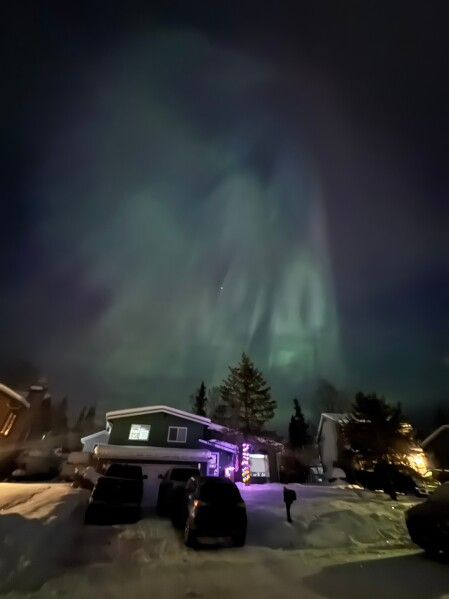
Final Thoughts: When the Sky Changes the Story
Maps feel permanent.
But sometimes, the universe redraws them.
This small town didn’t seek attention. It didn’t chase the aurora. It simply stood in the right place at the right moment—and the sky did the rest.
For the people who witnessed it, the memory will last forever.
For scientists, it’s a valuable data point.
For the rest of us, it’s a reminder:
Even the quietest places can suddenly become part of something extraordinary.