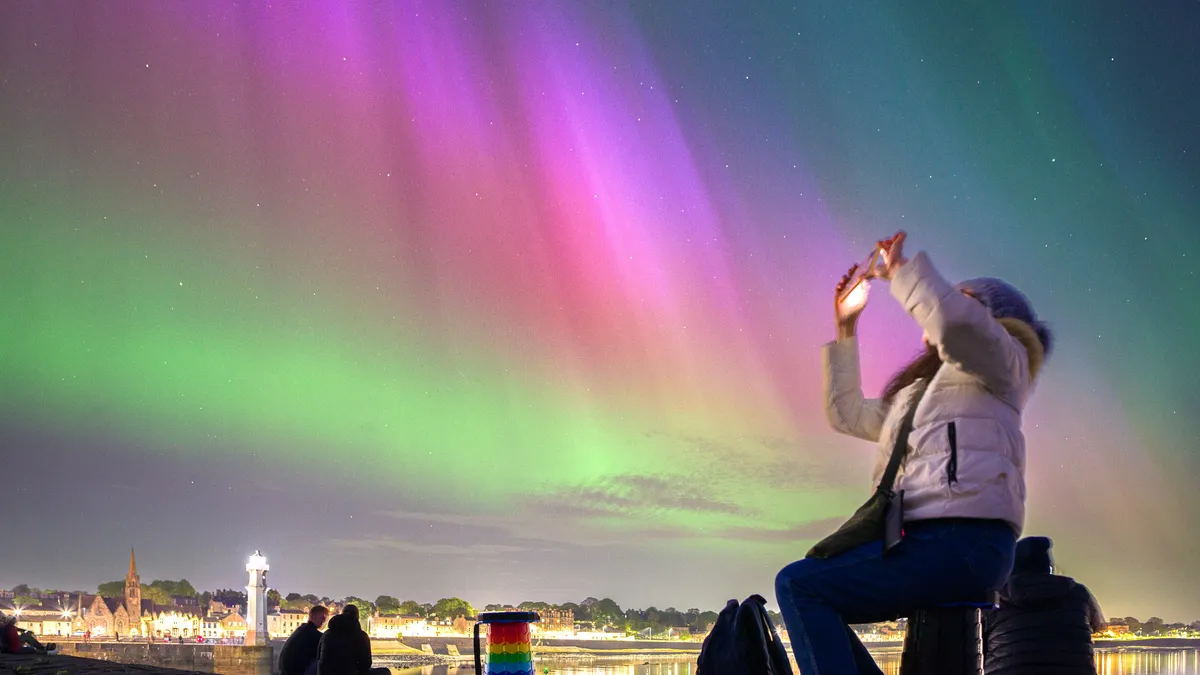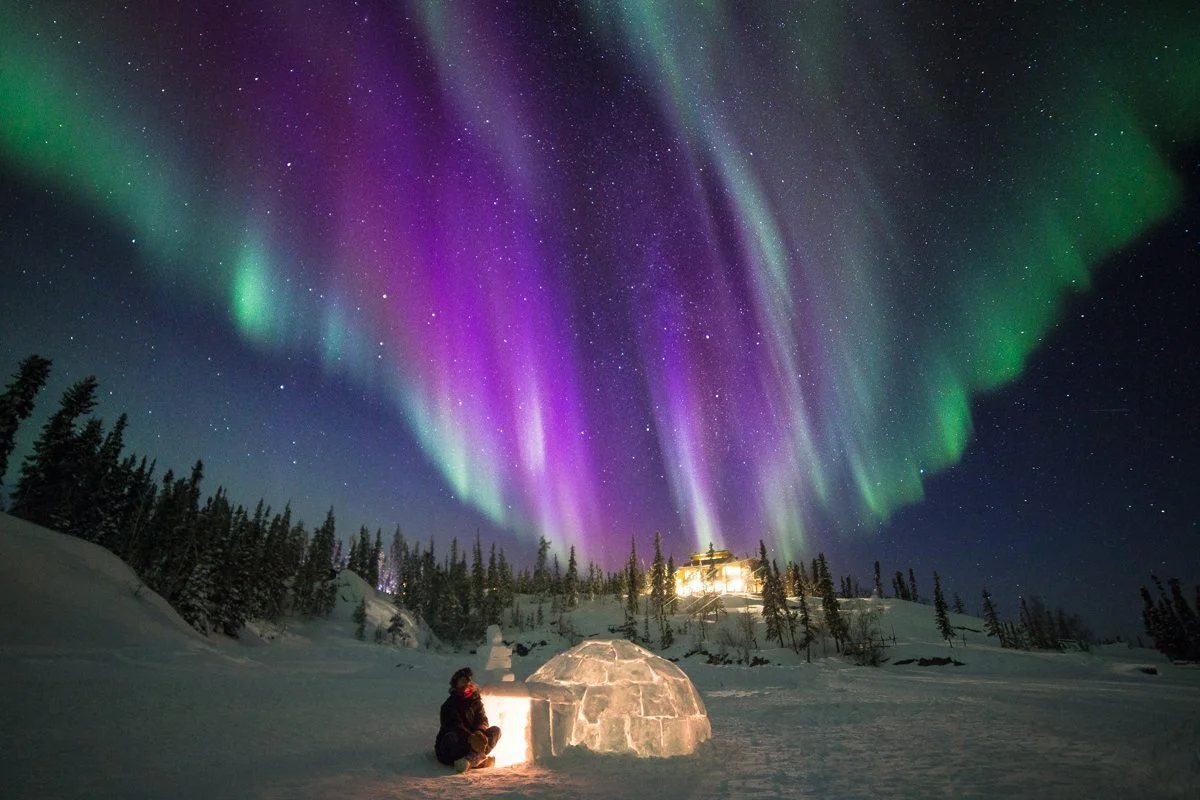
NOAA scientists are warning that an upcoming Arctic Aurora could be one of the strongest and most widespread displays in decades. Fueled by intense solar storms during an unusually active solar maximum, this aurora may be visible far beyond the Arctic, including much of the southern United States. This in-depth guide explains why NOAA is sounding the alarm and what makes this aurora exceptional.
Introduction: A Rare Warning From NOAA Has Skywatchers on Edge
When the National Oceanic and Atmospheric Administration (NOAA) issues a strong statement about space weather, astronomers, power companies, airlines, and skywatchers all pay attention. NOAA is not known for exaggeration. Its alerts are grounded in satellite data, long-term solar observation, and decades of scientific modeling.
That is why recent warnings about an extraordinary Arctic Aurora have captured national attention.
According to NOAA scientists, the auroral events currently unfolding—and expected to continue—may rank among the most powerful and far-reaching auroras in recent memory. These are not routine Northern Lights confined to the polar regions. Instead, they are driven by unusually intense solar activity that is pushing auroras far beyond their normal boundaries.
For millions of Americans, this could mean something once unimaginable: seeing the Northern Lights from places where they have almost never appeared before.
What NOAA Is Actually Saying—and Why It Matters
NOAA’s Space Weather Prediction Center (SWPC) monitors solar activity around the clock. Its language is deliberately conservative, which makes recent statements particularly notable.
NOAA has highlighted:
- Strong and fast-moving coronal mass ejections (CMEs)
- Sustained high-speed solar wind impacting Earth
- Forecasted geomagnetic storms reaching G4 (Severe) and G5 (Extreme) levels
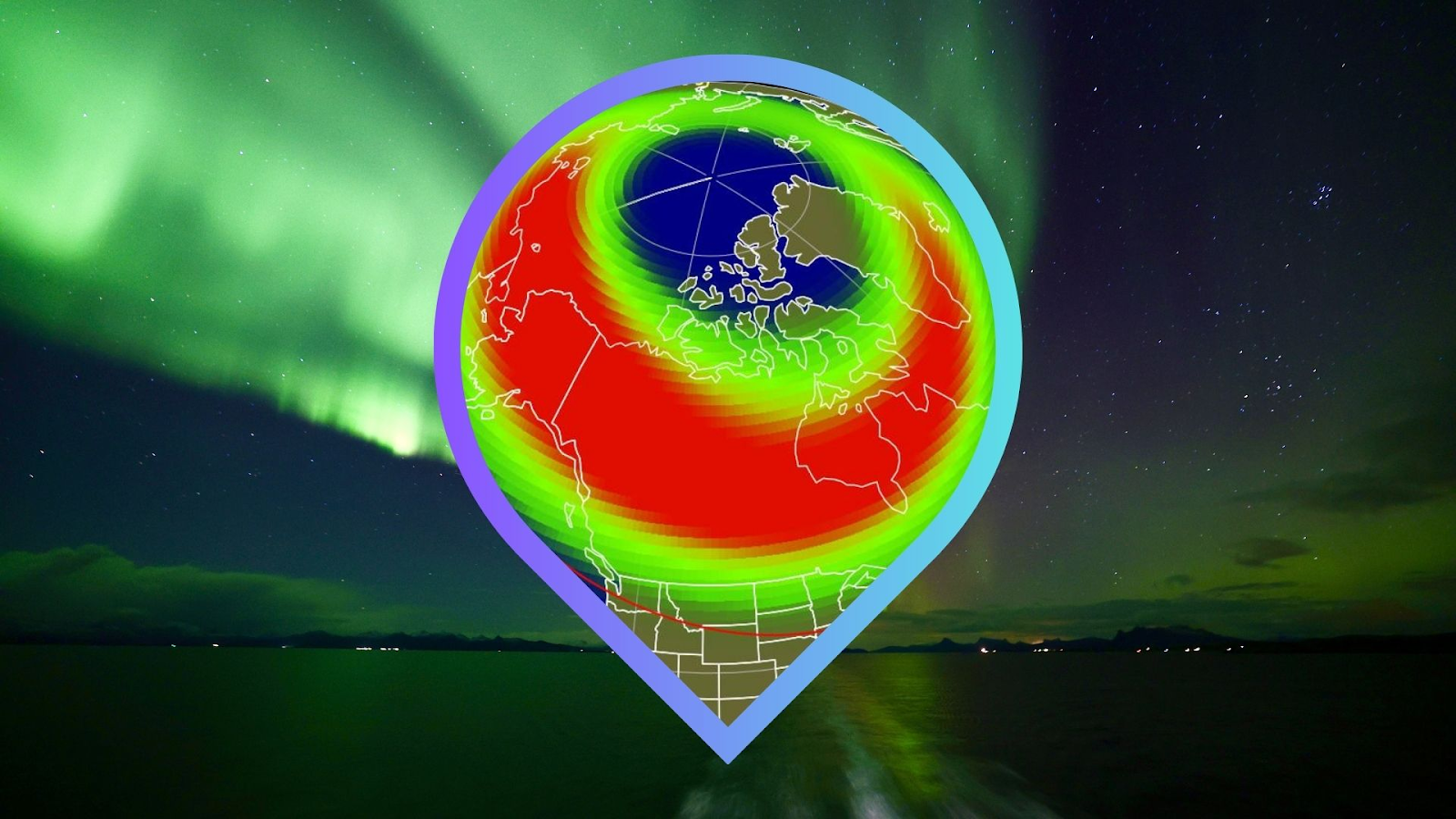
- Auroral ovals expanding far south of typical Arctic regions
A G5 geomagnetic storm is the highest level NOAA assigns. These storms are rare and historically associated with auroras visible across much of the continental United States.
Real-world perspective
The last storms of similar magnitude occurred during the early 2000s. Many Americans—especially those under 30—have never experienced auroras this strong or widespread.
What Is the Arctic Aurora, Explained Simply
The Arctic Aurora, commonly called the aurora borealis, is a natural light display created when charged particles from the Sun collide with Earth’s magnetic field and upper atmosphere.
These particles interact with atmospheric gases:
- Oxygen produces green and red light
- Nitrogen produces purple and blue tones
Normally, Earth’s magnetic field funnels these particles toward the poles, keeping auroras near the Arctic and Antarctic Circles. But when solar activity intensifies, this balance changes.
Why This Aurora Is Different From Typical Northern Lights
Auroras are not all created equal. NOAA scientists say this one stands apart for several critical reasons.
1. Solar Cycle 25 Is Stronger Than Expected
Solar Cycle 25 was initially predicted to be mild. Instead, it has surprised scientists.
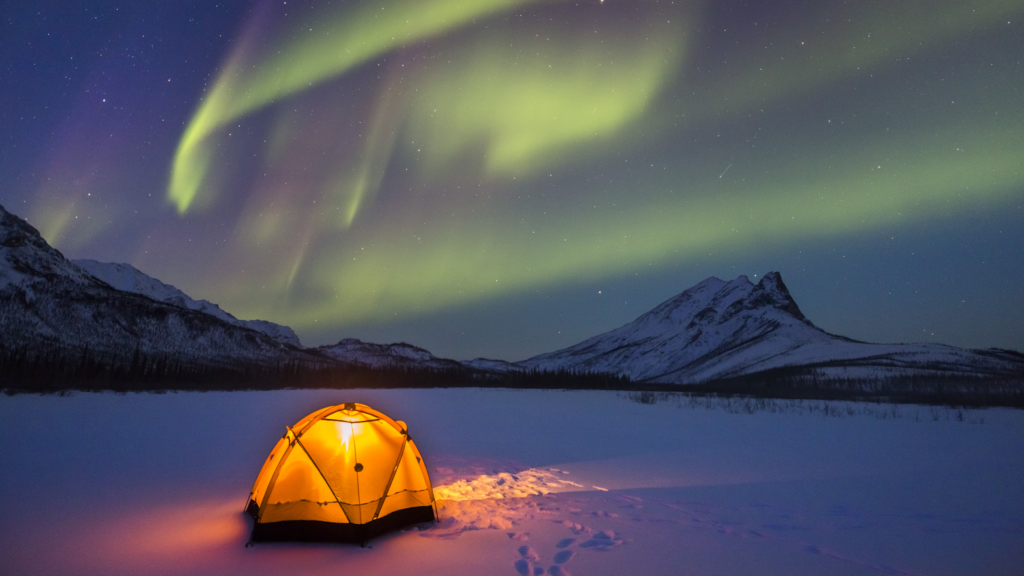
NOAA and NASA data show:
- Higher sunspot counts than forecast
- More frequent and powerful solar flares
- Increased magnetic complexity on the Sun’s surface
This means more energy is being directed toward Earth.
2. Multiple Solar Storms Are Arriving Back-to-Back
Rather than isolated events, NOAA has observed clusters of CMEs arriving within short timeframes. When one storm clears a path through space, the next can strike Earth more forcefully.
This “storm stacking” effect significantly amplifies geomagnetic impact.
3. Earth’s Magnetic Field Is Temporarily More Vulnerable
For auroras to intensify, the magnetic orientation of incoming solar storms must align correctly. NOAA reports that recent CMEs have carried southward-oriented magnetic fields, allowing maximum energy transfer into Earth’s magnetosphere.
In simple terms, the door is wide open.
How Strong Could This Arctic Aurora Really Be?
NOAA measures geomagnetic storms on a G-scale:
- G1 (Minor) – Weak auroras near the poles
- G2–G3 (Moderate to Strong) – Brighter auroras, limited southward reach
- G4 (Severe) – Auroras visible across much of the U.S.
- G5 (Extreme) – Rare, historic-level displays
NOAA forecasts suggest G4 to G5 conditions, placing this aurora among the strongest of the solar cycle.
What this means visually
During extreme storms:
- Auroras may appear overhead, not just on the horizon
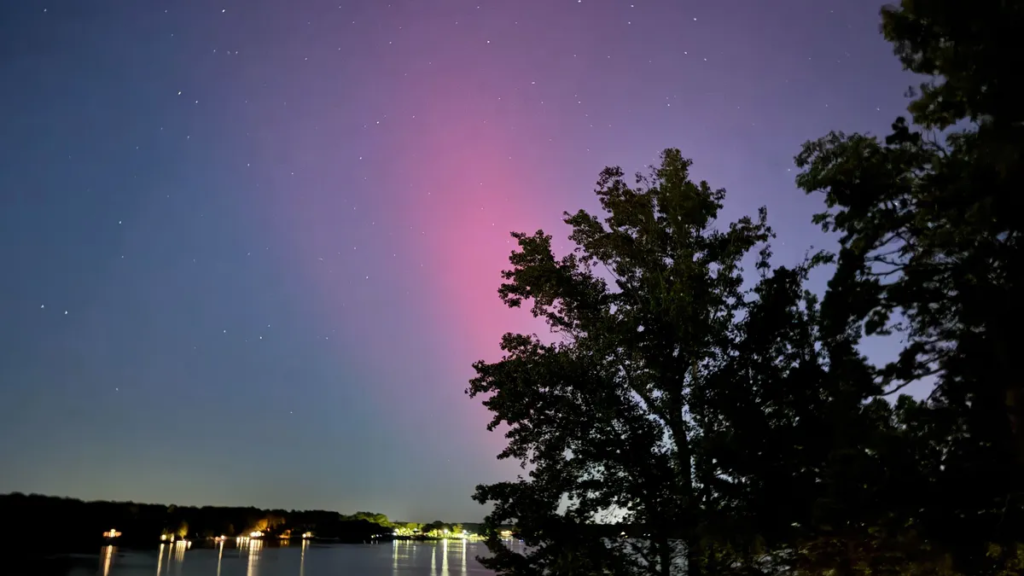
- Red and purple auroras become visible at lower latitudes
- Displays can last for hours instead of minutes
Why Auroras Are Appearing in Unexpected Places
Recent aurora sightings have stunned residents in states where Northern Lights were once considered impossible.
People have reported auroras in:
- Texas
- Georgia
- Arizona
- Oklahoma
- Southern California
This happens because strong geomagnetic storms expand the auroral oval, pushing it thousands of miles farther south than normal.
Real-life example
During a severe storm in 2024, residents in the Midwest watched the sky glow red for nearly an hour—a phenomenon usually reserved for polar regions.
Why NOAA Believes This Could Be a Historic Event
NOAA’s confidence comes from a rare combination of factors:
- Sustained solar activity rather than brief bursts
- Strong magnetic alignment within CMEs
- Repeated storm impacts over multiple days
- Solar maximum conditions amplifying every event
This convergence dramatically increases the odds of an exceptional auroral display.
What the Arctic Aurora Could Look Like This Time
Many people imagine auroras as gentle green curtains. NOAA scientists suggest this event could be far more intense.
Possible visual features include:
- Bright green arcs spanning the sky
- Deep red auroras visible at mid and low latitudes
- Rapid movement and pulsing light
- Vertical rays and full-sky coronas
For many viewers, this could be their first time seeing colorful auroras with the naked eye.
When NOAA Expects Peak Activity
Auroras are most likely during nighttime hours, but extreme storms break the rules.
Typical peak window
- 10:00 PM to 2:00 AM local time
During severe storms:
- Auroras may appear shortly after sunset
- Displays can return multiple times overnight
- Visibility may persist longer than usual
NOAA emphasizes that flexibility and patience increase the chances of seeing the strongest displays.
Could This Be the Brightest Aurora of the Decade?
While NOAA avoids absolute predictions, many scientists agree this event ranks among the strongest aurora opportunities in decades.
Supporting factors include:
- Solar maximum intensity
- Multiple high-energy CMEs
- Sustained geomagnetic storm forecasts
- Unusual southern expansion of auroral ovals
For many Americans, this may be the best aurora they ever see without traveling north.
Is the Arctic Aurora Dangerous?
For observers on the ground, auroras are completely safe.
However, NOAA notes that extreme geomagnetic storms can sometimes affect:
- GPS accuracy
- Radio communications
- Satellite operations
- Power grids (rare and closely monitored)
These impacts are managed by infrastructure operators and pose no direct risk to the public.
How NOAA Predicts and Tracks Aurora Events
NOAA uses a network of tools, including:
- Solar observation satellites like DSCOVR
- Ground-based magnetometers
- Advanced space weather models
These systems allow NOAA to issue alerts hours to days in advance—something not possible in earlier decades.
What This Means for the Future of Aurora Viewing
NOAA confirms that heightened auroral activity will likely continue through 2025 and into 2026 as Solar Cycle 25 reaches its peak.
This means:
- More frequent aurora alerts
- Increased chances of southern visibility
- A rare era for skywatchers, photographers, and casual observers
Once solar activity declines, events like this will become far less common.
Final Thoughts: A Moment We May Not See Again Soon
When NOAA says an Arctic Aurora could top all others in recent memory, it is not sensationalism—it is a scientific conclusion drawn from decades of data.
The Sun, Earth, and magnetic fields are aligning in a way that allows millions of Americans to witness a phenomenon once limited to the far north. These moments are rare, unpredictable, and fleeting.
For those who look up at the right time, this aurora may become a lifelong memory.
Frequently Asked Questions (FAQ)
1. Why does NOAA believe this aurora is special?
Because solar storms are unusually strong, frequent, and well-aligned with Earth’s magnetic field.
2. What is a G5 geomagnetic storm?
The most extreme category of geomagnetic storm, capable of producing widespread auroras.
3. Can this aurora really be seen in southern states?
Yes. Severe storms can push auroras far south.
4. Is this related to solar maximum?
Yes. We are near the peak of Solar Cycle 25.
5. How often do auroras this strong occur?
Only a few times per solar cycle, sometimes less.
6. Will auroras look colorful to the naked eye?
During extreme storms, yes—especially reds and greens.
7. Can clouds block the aurora?
Yes. Clear skies are essential.
8. Is it safe to watch the aurora?
Yes. Auroras pose no health risk to observers.
9. How long can an aurora last?
Anywhere from minutes to several hours.
10. Will more events like this happen soon?
Possibly, but intensity varies and declines after solar maximum.