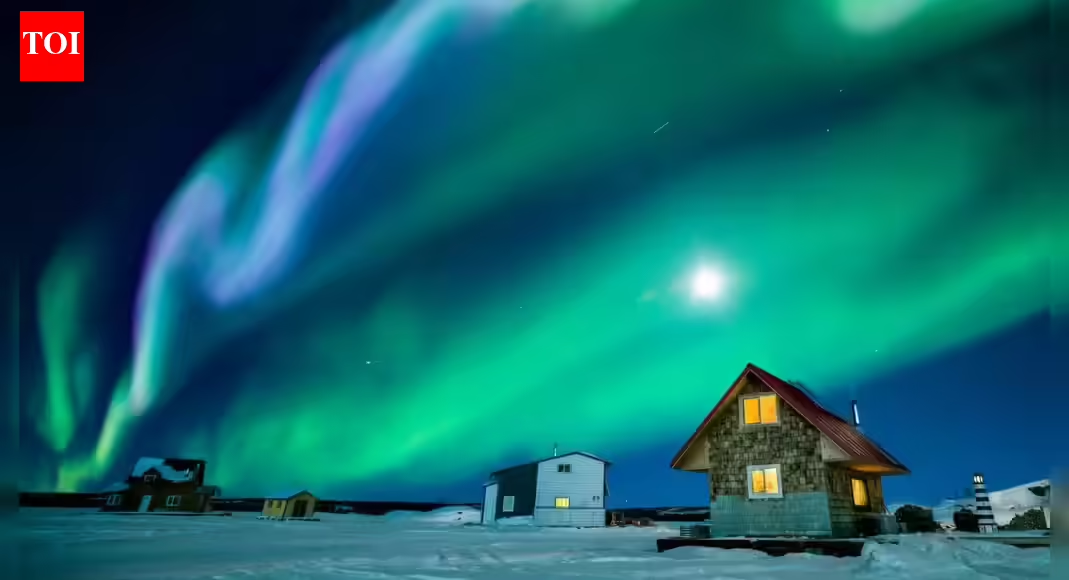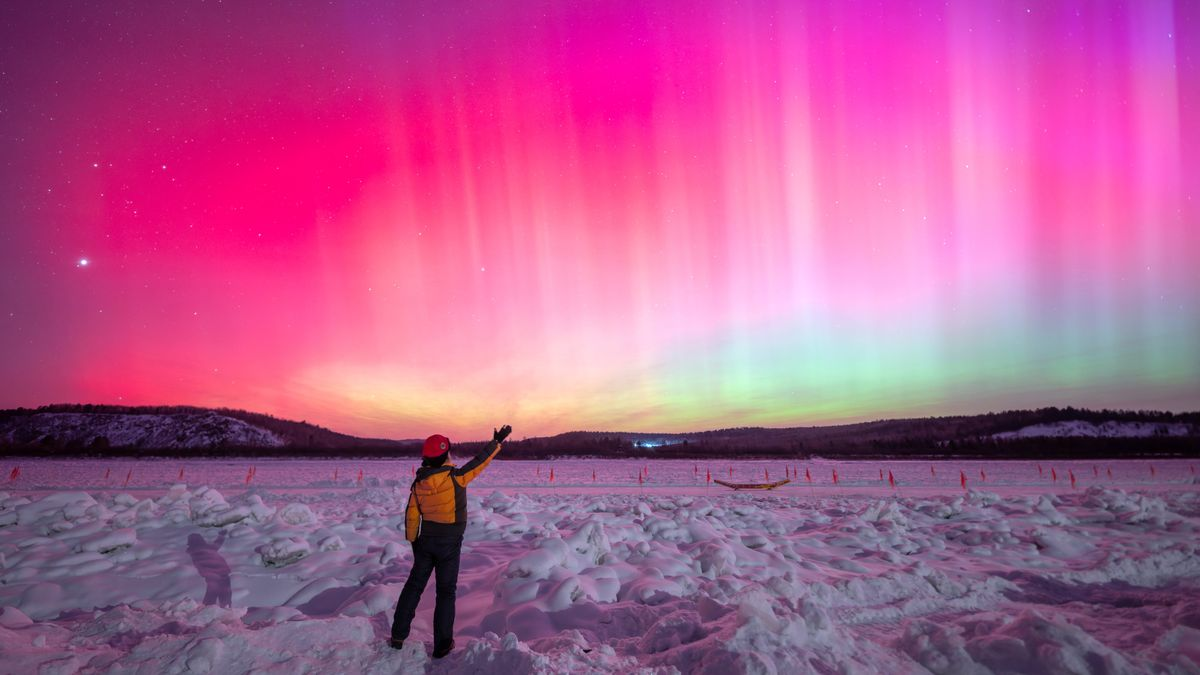
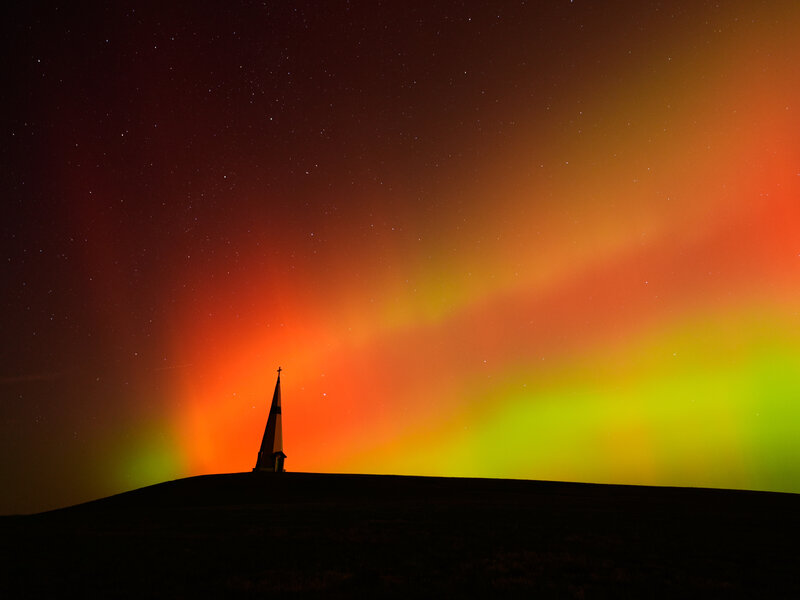
The Arctic Aurora, once visible only near the polar regions, is now appearing far south due to heightened solar activity. Strong geomagnetic storms are pushing the Northern Lights into unexpected areas across the United States. This complete guide explains how to see the aurora tonight—even from southern states—using real-time forecasts, practical tips, and proven viewing strategies.
Introduction: Why Everyone Is Suddenly Talking About the Arctic Aurora
For most of modern history, seeing the Arctic Aurora—commonly known as the Northern Lights—meant traveling to remote places like Alaska, northern Canada, Iceland, or Norway. It was considered a bucket-list experience reserved for adventurers, photographers, and scientists.
But something remarkable has changed.
In recent months, Americans living far from the Arctic—places like Texas, Georgia, Arizona, and even parts of Florida—have been stepping outside at night and witnessing glowing skies filled with green, pink, and purple light. Social media has exploded with images captioned, “I can’t believe this was visible from my backyard.”
If you’ve been wondering how this is possible—or whether you could see the Arctic Aurora tonight from the South—you’re not alone. Millions of people are searching for answers, forecasts, and step-by-step guidance.
This article explains exactly how to see the Arctic Aurora tonight—even if you live far south of where it usually appears. It combines scientific accuracy with real-life experiences, practical advice, and up-to-date space weather insights.
What Is the Arctic Aurora? A Simple Explanation
The Arctic Aurora, scientifically called aurora borealis, is a natural light display caused by interactions between the Sun and Earth’s atmosphere.
The Sun constantly releases charged particles through a stream known as the solar wind. When powerful bursts—called solar flares or coronal mass ejections (CMEs)—reach Earth, they collide with our planet’s magnetic field. These particles are guided toward the poles, where they interact with atmospheric gases like oxygen and nitrogen, producing glowing light.
- Green auroras come from oxygen at lower altitudes
- Red auroras appear at higher altitudes
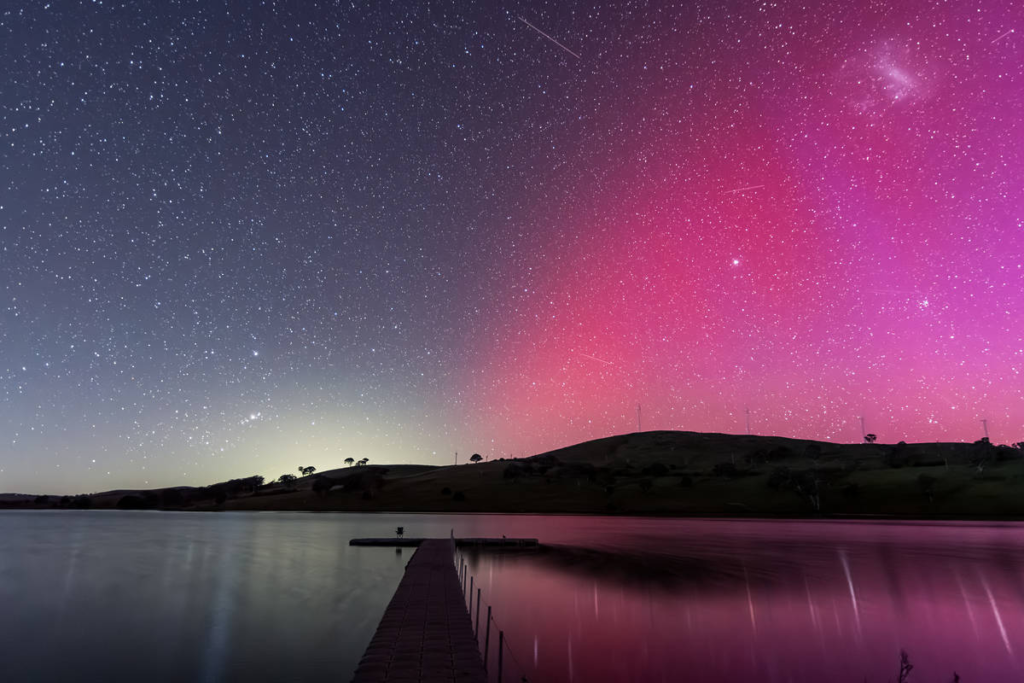
- Purple and blue hues come from nitrogen
Traditionally, this phenomenon stays close to the Arctic Circle. But when solar activity intensifies, the aurora expands outward—sometimes dramatically.
Why Is the Arctic Aurora Visible So Far South Right Now?
The key reason is solar maximum.
The Sun operates on an approximately 11-year solar cycle. During solar maximum, the Sun becomes more active, producing more sunspots, flares, and geomagnetic storms.
According to NASA and NOAA scientists:
- Solar Cycle 25 is stronger than initially predicted
- Peak activity is expected between 2024 and 2026
- Geomagnetic storms are occurring more frequently and with greater intensity
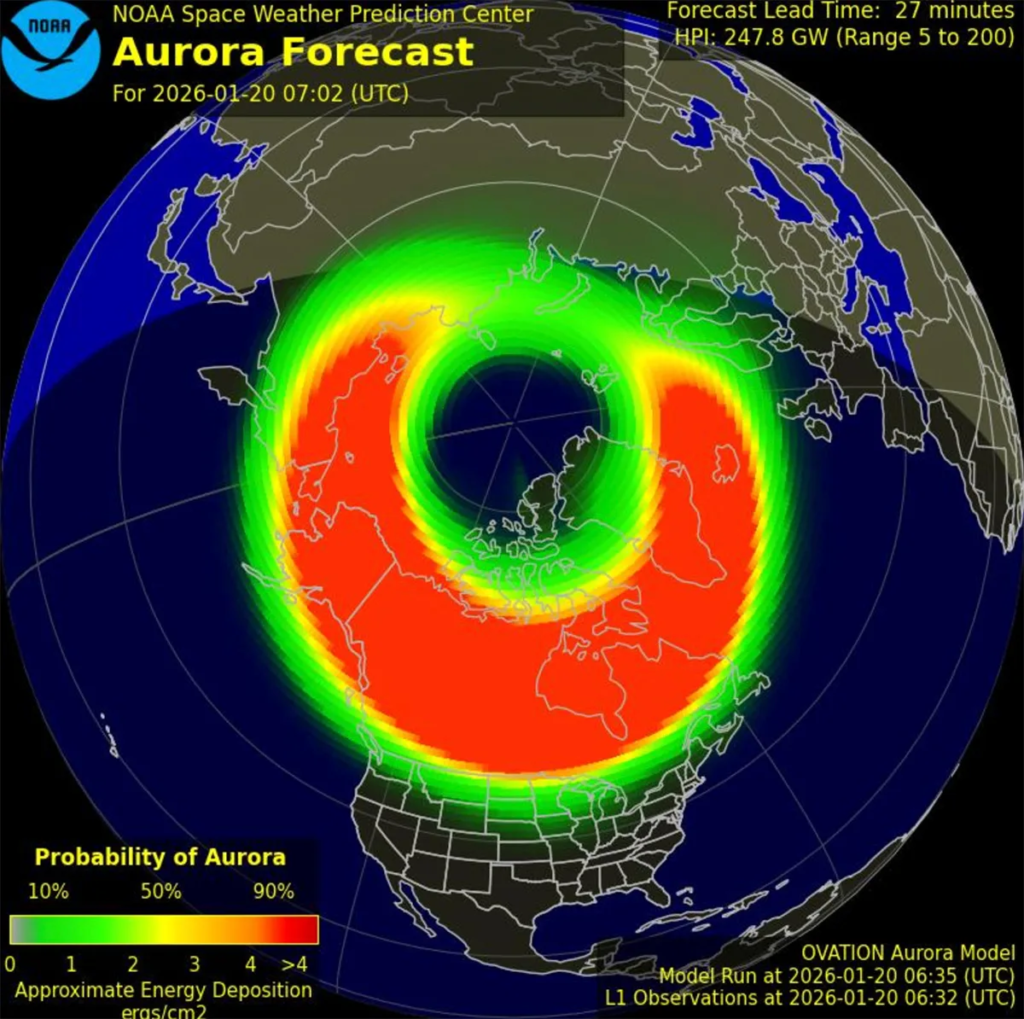
When a strong geomagnetic storm hits Earth, the auroral oval expands southward. This is how people in unexpected locations suddenly see auroras.
Real-life example
In May 2024, one of the strongest geomagnetic storms in decades caused auroras to appear across much of the continental United States. Residents in Alabama, Missouri, Oklahoma, and Arizona reported visible auroras—many for the first time in their lives.
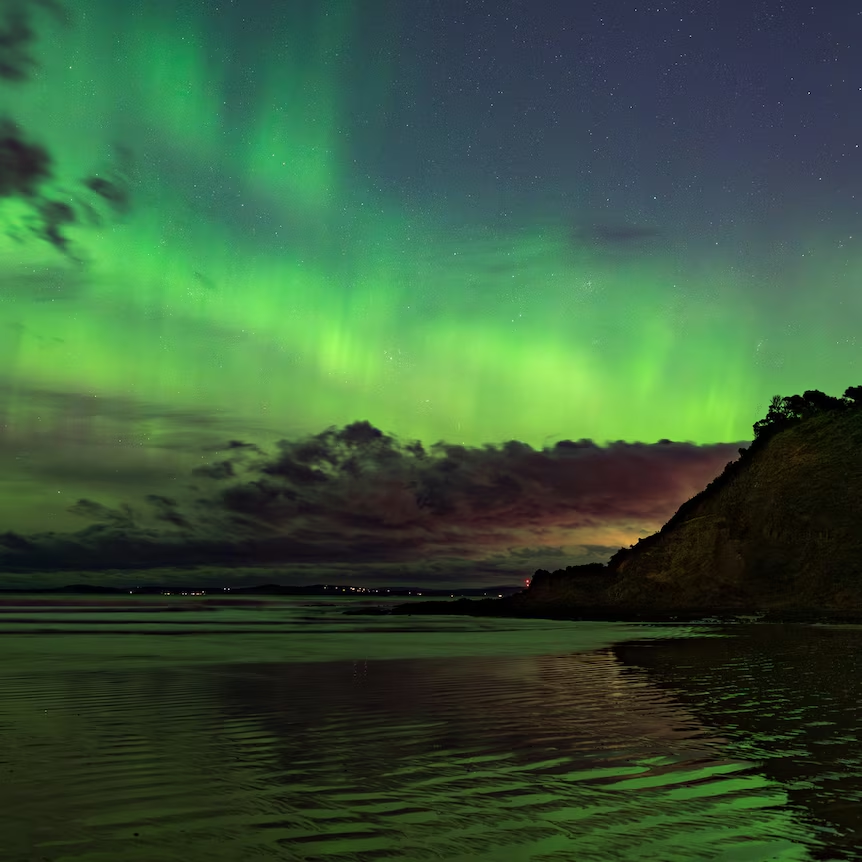
Can You Really See the Arctic Aurora From the Southern U.S.?
Yes—but not every night, and not without preparation.
Aurora visibility in the South depends on a combination of space weather and local conditions. The most important factor is the Kp index, which measures geomagnetic activity on a scale from 0 to 9.
General visibility guidelines
- Kp 5–6: Northern states may see auroras near the horizon
- Kp 7: Auroras may reach mid-latitude states
- Kp 8–9: Auroras can be visible deep into the southern U.S.
At higher Kp levels, auroras don’t just appear farther south—they also become brighter and more dynamic.
How to Check If the Arctic Aurora Is Visible Tonight
Aurora viewing is no longer guesswork. Several reliable tools provide real-time and forecasted data.
Best aurora forecast resources
- NOAA Space Weather Prediction Center (SWPC)
- NASA Space Weather Dashboard
- Aurora forecast apps like My Aurora Forecast or SpaceWeatherLive
These tools show:
- Current and predicted Kp index
- Solar wind speed and density
- Estimated auroral oval coverage
Real-life insight
Many people miss auroras simply because they don’t check updates frequently. Space weather can change rapidly, and storms often intensify with little warning. Checking alerts every 30–60 minutes during active periods can make all the difference.
Best Time to See the Arctic Aurora Tonight
Auroras don’t follow a fixed schedule, but patterns exist.
Prime viewing hours
- 10:00 PM to 2:00 AM local time
- Activity often peaks around midnight
However, during strong storms, auroras can appear:
- Shortly after sunset
- Just before sunrise
- In brief, intense bursts
Patience is crucial. Many experienced aurora watchers recommend staying outside for at least 30–60 minutes, even if nothing appears immediately.
Where to Look in the Sky From Southern Locations
If you’re far from the Arctic, where you look matters just as much as when.
Direction matters
- Face north or northeast
- Start by scanning the horizon
- Watch for faint glows, arcs, or vertical streaks
In southern states, auroras often appear lower on the horizon and may not resemble dramatic curtains at first.
What it might look like
- A faint green or white haze
- Slow-moving light pillars
- Subtle pulses or brightening patches
Many people mistake auroras for clouds or light pollution until they take photos.
Seeing the Aurora With Your Eyes vs. Your Camera
One of the most surprising aspects of southern auroras is how different they can look in photos versus real life.
Naked-eye experience
- Colors may appear muted
- Light often looks white or pale green
- Movement may be subtle
Camera advantage
Modern smartphones and cameras are far more sensitive to light than the human eye.
- Night mode reveals color
- Long exposure captures detail
- Photos often confirm aurora activity
Real-life example
During recent geomagnetic storms, thousands of people only realized they saw an aurora after reviewing their phone photos. What looked like faint clouds suddenly appeared as vibrant green and purple lights on screen.
Best Places in the South to See the Arctic Aurora
Location plays a huge role in visibility.
Ideal viewing spots
- Rural areas with minimal light pollution
- Hilltops or open fields
- Lakeshores, beaches, and deserts
- National parks and countryside roads
Avoid
- City centers
- Stadium lighting
- Shopping districts
- High-traffic highways
Even driving 15–30 minutes away from urban lights can dramatically improve your chances.
Weather Conditions That Matter More Than You Think
You can have the strongest geomagnetic storm in years and still see nothing if the weather doesn’t cooperate.
Best conditions
- Clear skies
- Low humidity
- Minimal cloud cover
Common obstacles
- Thin high-altitude clouds
- Haze or smog
- Bright moonlight
Interestingly, cold fronts often bring clearer skies, which is why many southern aurora sightings happen on unusually crisp nights.
Why This Is a Once-in-a-Generation Opportunity
Experts agree that we are currently living through one of the best aurora-viewing periods in decades.
According to NASA:
- Solar Cycle 25 is more active than expected
- Extreme geomagnetic storms are becoming more frequent
- Aurora visibility will remain elevated through at least 2026
This means seeing the Arctic Aurora from the South may happen multiple times, not just once.
Common Mistakes That Cause People to Miss the Aurora
Many people technically could see the aurora—but don’t.
Most common errors
- Checking too early and giving up
- Not looking north
- Staying under streetlights
- Assuming auroras must look dramatic
- Ignoring real-time alerts
Aurora viewing rewards preparation, patience, and awareness.
Is the Arctic Aurora Dangerous?
For people watching from the ground, auroras are completely safe.
However, strong geomagnetic storms can:
- Disrupt GPS signals
- Affect radio communications
- Cause minor power grid fluctuations
These risks are monitored closely by space weather agencies and utilities.
Final Thoughts: Tonight Might Be Your Night
The Arctic Aurora is no longer confined to the far north. Thanks to increased solar activity, people across the southern United States are witnessing skies that were once unimaginable at their latitude.
If conditions are right tonight, all it takes is:
- Checking the forecast
- Finding a dark location
- Looking north
- Giving the sky time
You might just experience one of nature’s most breathtaking phenomena—without ever leaving home.
Frequently Asked Questions (FAQ)
1. Can you see the Northern Lights from the southern United States?
Yes. During strong geomagnetic storms, auroras can reach far into the southern U.S.
2. What Kp index is needed to see the aurora in the South?
Typically Kp 7–9, though faint displays may appear at Kp 6.
3. What time is best to see the Arctic Aurora tonight?
Between 10 PM and 2 AM local time.
4. Can you see the aurora without a camera?
Yes, but colors may appear faint or white.
5. Do phone cameras really help?
Absolutely. Night mode often reveals colors invisible to the naked eye.
6. Will clouds block the aurora?
Yes. Even thin clouds can reduce visibility significantly.
7. Can auroras appear suddenly?
Yes. Activity can intensify within minutes.
8. Is 2025 a good year to see the aurora?
Yes. Solar activity is near its peak.
9. Does moonlight affect aurora viewing?
Bright moonlight reduces contrast but doesn’t eliminate strong auroras.
10. Is it safe to watch the aurora?
Yes. Auroras pose no health risk to observers.