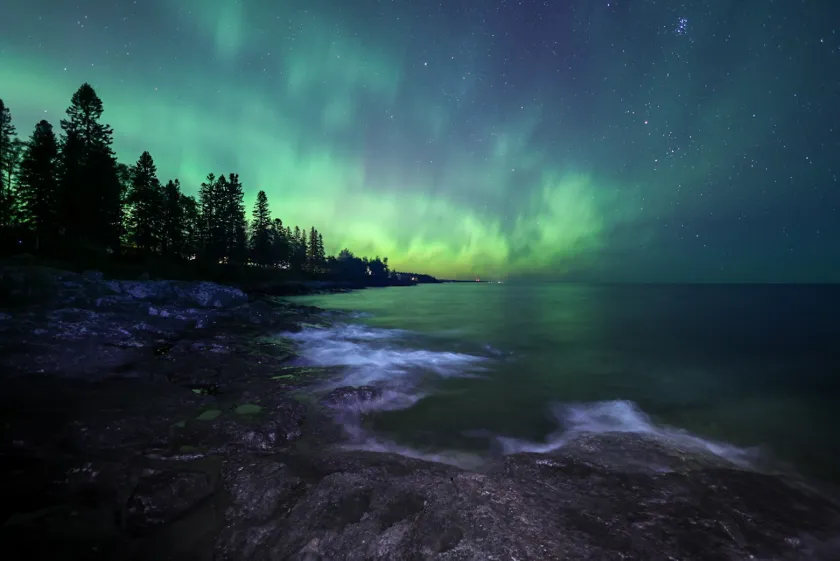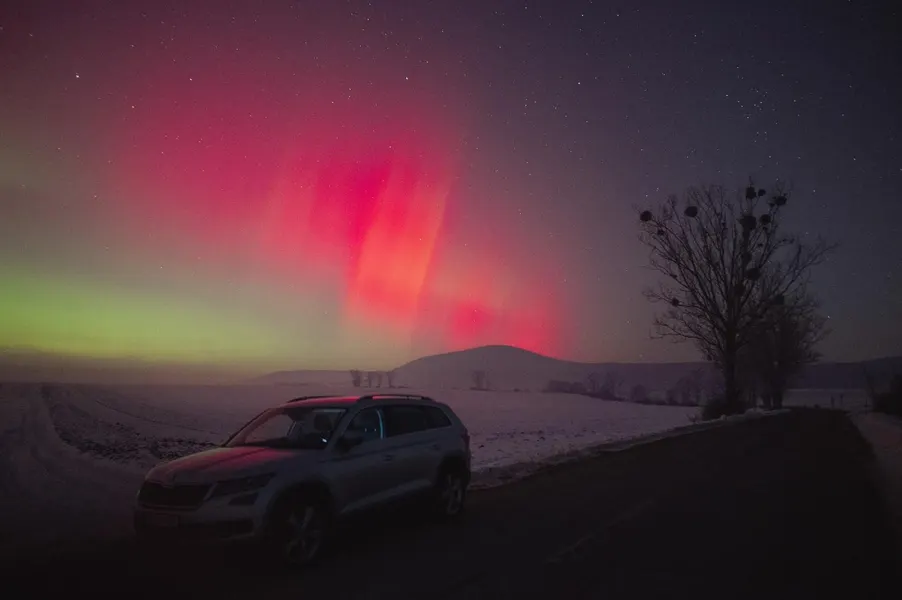
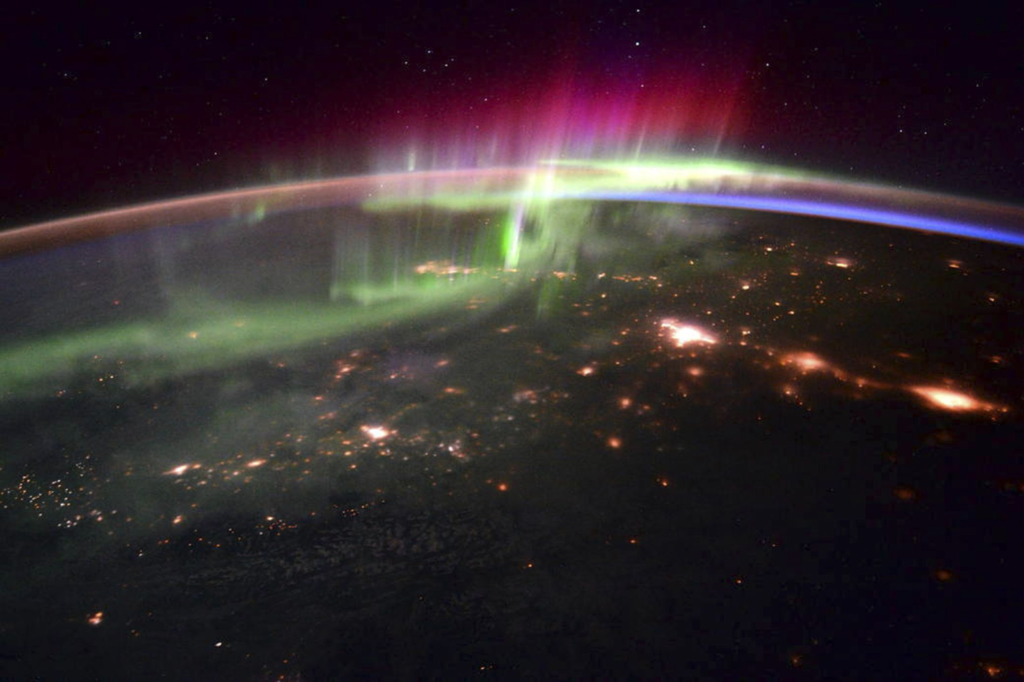
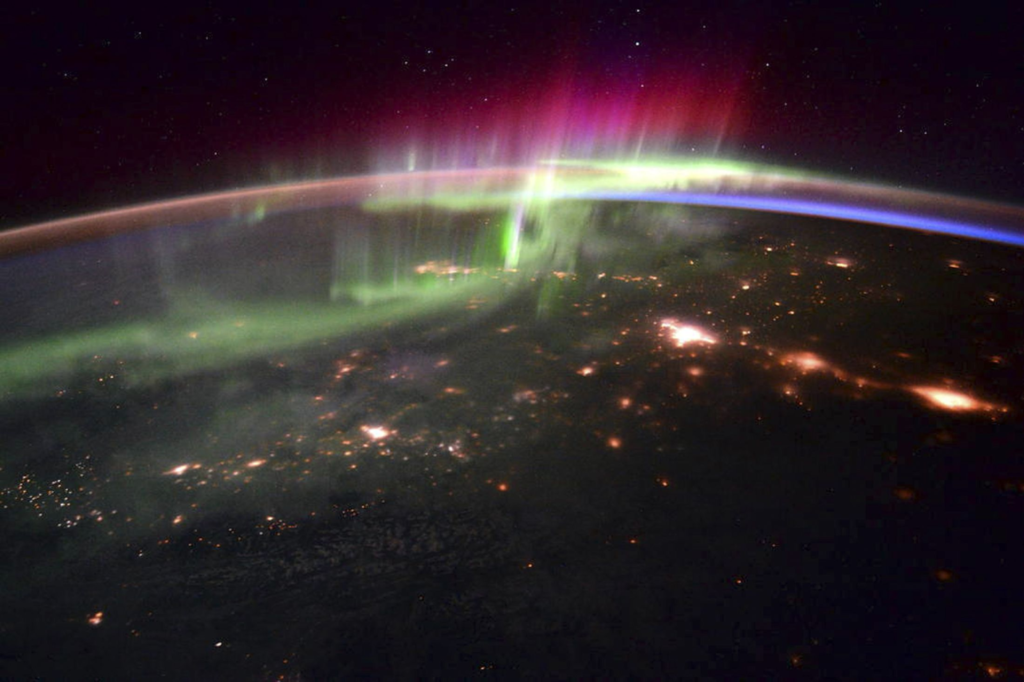
Meteorologists have issued rare aurora alerts as intense solar storms surge toward Earth, expanding Northern Lights visibility far beyond Alaska. Millions of Americans may be included without realizing it. This comprehensive guide explains what these alerts mean, why they’re unusual, which states are affected, and how to know if you’re on the list—plus how to safely watch the skies tonight.
Why Aurora Alerts Suddenly Have Everyone’s Attention
Aurora alerts don’t appear on your phone as often as heat advisories or storm warnings. When they do, it usually signals something extraordinary is happening far beyond Earth’s atmosphere.
In recent months, meteorologists and space-weather scientists from NOAA’s Space Weather Prediction Center (SWPC) and NASA have issued a series of unusually strong geomagnetic storm watches and warnings. Some of these alerts reached G4 and G5 levels, categories reserved for the most intense solar events.
That alone is rare.
But what has truly captured public attention is where these alerts apply. Instead of being limited to Alaska or northern Canada, recent alerts have included large portions of the continental United States—sometimes stretching deep into states that rarely see auroras at all.
As a result, Americans are searching in record numbers:
- “Aurora alert tonight”
- “Am I in the Northern Lights zone?”
- “Meteorologists issued aurora warning—what does it mean?”
- “Can I see the Northern Lights from my state?”
If you’re asking these questions, you’re not alone—and you may already be on the list.
What Exactly Is an Aurora Alert?
One of the most misunderstood aspects of this phenomenon is the alert itself.
An aurora alert is not speculation or hype. It’s issued when real-time measurements show that solar activity is actively disturbing Earth’s magnetic field in ways known to produce auroras.
These alerts are based on:
- Solar observatory data
- Spacecraft measurements of solar wind
- Magnetometer readings on Earth
- Models predicting geomagnetic response
Unlike typical weather forecasts that can look days ahead, aurora alerts often come with short lead times—sometimes just hours—because solar storms travel fast and evolve unpredictably.
When meteorologists issue an aurora alert, it means the conditions are already forming or actively occurring.
Why Meteorologists Are Calling These Alerts “Rare”
Not every aurora requires an alert.
Minor geomagnetic disturbances happen regularly and usually go unnoticed outside polar regions. What makes recent alerts exceptional is their intensity and scope.
NOAA classifies geomagnetic storms on a G-scale:
- G1 (Minor): Common, limited impact
- G2 (Moderate): Noticeable auroras at high latitudes
- G3 (Strong): Less common, auroras move south
- G4 (Severe): Rare, widespread auroras
- G5 (Extreme): Very rare, historic potential
G4 and G5 storms may occur only a handful of times during an entire 11-year solar cycle. When meteorologists issue alerts at these levels, it’s because conditions resemble some of the most active space-weather events on record.
What’s Causing This Surge in Aurora Alerts?
The source of all this activity is the Sun itself.
We are currently deep into Solar Cycle 25, a natural cycle of solar magnetic activity that peaks roughly every 11 years. During these peak years, the Sun produces:
- More sunspots
- More solar flares
- More coronal mass ejections (CMEs)
Early forecasts predicted a relatively mild cycle. But updated data from NASA and NOAA now show that Solar Cycle 25 is stronger than expected.
CMEs—massive clouds of charged solar particles—have been striking Earth more frequently and with greater force. When these particles collide with Earth’s magnetosphere, they create geomagnetic storms powerful enough to trigger widespread auroras.
In simple terms:
The Sun is unusually active, and Earth is directly in its path.
Which States Are Most Likely Included in Aurora Alerts?
This is the question that matters most to readers.
Aurora alerts don’t guarantee visibility, but they define potential viewing zones based on storm strength. During recent events, meteorologists included the following areas:
States Most Frequently Included
- Alaska
- Minnesota
- North Dakota
- Montana
- Michigan (especially the Upper Peninsula)
- Wisconsin
- Maine
- Northern Idaho
- Northern Washington
States Sometimes Included During Strong Storms
- New York
- Pennsylvania
- South Dakota
- Nebraska
- Iowa
- Illinois
- Oregon
States Included Only During Extreme Events
- Texas
- Alabama
- Georgia
- Arizona
- California
Confirmed sightings from these southern states have occurred during G5-level storms, proving that auroras can reach far beyond traditional boundaries.
Why Many Americans Are on the List Without Realizing It
Unlike tornado warnings or hurricane alerts, aurora alerts are easy to miss.
They often:
- Appear on specialized NOAA pages
- Get buried in meteorological briefings
- Aren’t pushed by default weather apps
- Use technical terminology unfamiliar to most people
As a result, millions of Americans technically fall within alert zones without knowing it until social media fills with photos the next morning.
This disconnect explains why so many people say:
“I didn’t know we could see the Northern Lights here.”
In many cases, they could—they just didn’t know to look.
What Happens When an Aurora Alert Goes Live?
Auroras rarely appear suddenly in dramatic fashion.
Real-life experiences from recent events show a common pattern:
- The sky looks normal at first
- A faint gray or greenish haze appears
- Subtle movement becomes visible
- Brightness and color intensify rapidly
- Curtains, arcs, or rays form unexpectedly
Many first-time viewers miss auroras because they expect instant brilliance. In reality, auroras often begin subtly and build over time.
Patience is critical.
Why Cameras Often Detect Auroras Before Human Eyes
A trending question across the U.S. right now is:
“Why does my phone see the aurora but I don’t?”
Modern cameras—especially smartphones—use:
- Long exposure
- Image stacking
- AI-based brightness enhancement
These tools allow cameras to capture faint auroral light invisible to unadapted human eyes. Often, the aurora becomes obvious only after reviewing a photo.
This doesn’t mean the aurora isn’t real. It means your eyes need time to adjust, and cameras perceive light differently.
How Long Do Aurora Alerts Usually Last?
Aurora alerts typically cover a broad time window, often several hours. However, the actual display may:
- Appear briefly
- Fade
- Return suddenly
- Intensify without warning
Some of the most spectacular auroras last only minutes, while others persist for much of the night.
Many people leave too early—missing the strongest phase entirely.
How to Know If You’re Affected Tonight
If you want a practical checklist, follow these steps.
Step 1: Check Official Space-Weather Sources
- NOAA Space Weather Prediction Center
- National Weather Service space-weather updates
Step 2: Understand the Kp Index
- Kp 5–6: Northern U.S.
- Kp 7–8: Central U.S.
- Kp 9: Rare southern visibility
Step 3: Evaluate Local Conditions
- Clear skies matter more than storm strength
- Darkness beats urban locations
- Cold, dry air improves contrast
Best Times to Look During an Aurora Alert
While auroras can appear anytime after sunset, historical data suggests:
- Best window: 10:00 PM – 3:00 AM
- Strongest bursts often occur after midnight
- Activity can spike suddenly
Staying up late dramatically increases your chances.
Are Aurora Alerts Dangerous?
This question comes up frequently—and understandably.
For people on the ground:
- Auroras are not dangerous
- No special eye protection is needed
- Safe for children and pets
However, strong geomagnetic storms can affect:
- Power grids
- Satellites
- GPS and radio communication
This is why meteorologists and utility operators monitor these events closely, even though the visual effects are harmless.
Why This Moment Is Historically Significant
Space-weather researchers note that the current level of geomagnetic activity rivals some of the most active periods of the past 20–30 years.
Several recent storms have been compared to events from the early 2000s, a period remembered for widespread aurora sightings across North America.
If Solar Cycle 25 continues at this pace, the next few years may offer a once-in-a-generation opportunity for Americans to see the Northern Lights without international travel.
Frequently Asked Questions (Trending Right Now)
1. What does an aurora alert mean?
It indicates strong solar activity capable of producing visible auroras.
2. How rare are severe aurora alerts?
G4–G5 alerts occur only a few times per solar cycle.
3. Can auroras really appear in the lower 48 states?
Yes, during strong geomagnetic storms.
4. What time should I watch for auroras?
Usually between 10 PM and 3 AM.
5. Why do auroras sometimes look gray or white?
Human eyes struggle to detect color in low light.
6. Do aurora alerts disrupt daily life?
Mostly no, though satellites and power grids are monitored.
7. Are auroras visible all night during an alert?
No. Visibility fluctuates rapidly.
8. Do I need special equipment?
No. Auroras are visible with the naked eye.
9. Why do photos look brighter than real life?
Cameras enhance faint light and color.
10. Will aurora alerts continue in the coming years?
Yes, as solar activity increases toward peak.
Final Takeaway: Are You on the List?
If meteorologists issue a rare aurora alert, there’s a strong chance millions of Americans are included—often without realizing it.
These alerts represent:
- Exceptional solar activity
- Rare viewing opportunities
- A reminder that Earth is connected to space in real time
If you ever see an aurora alert mentioned—even briefly—don’t ignore it.
Step outside.
Look north.
You might already be on the list.