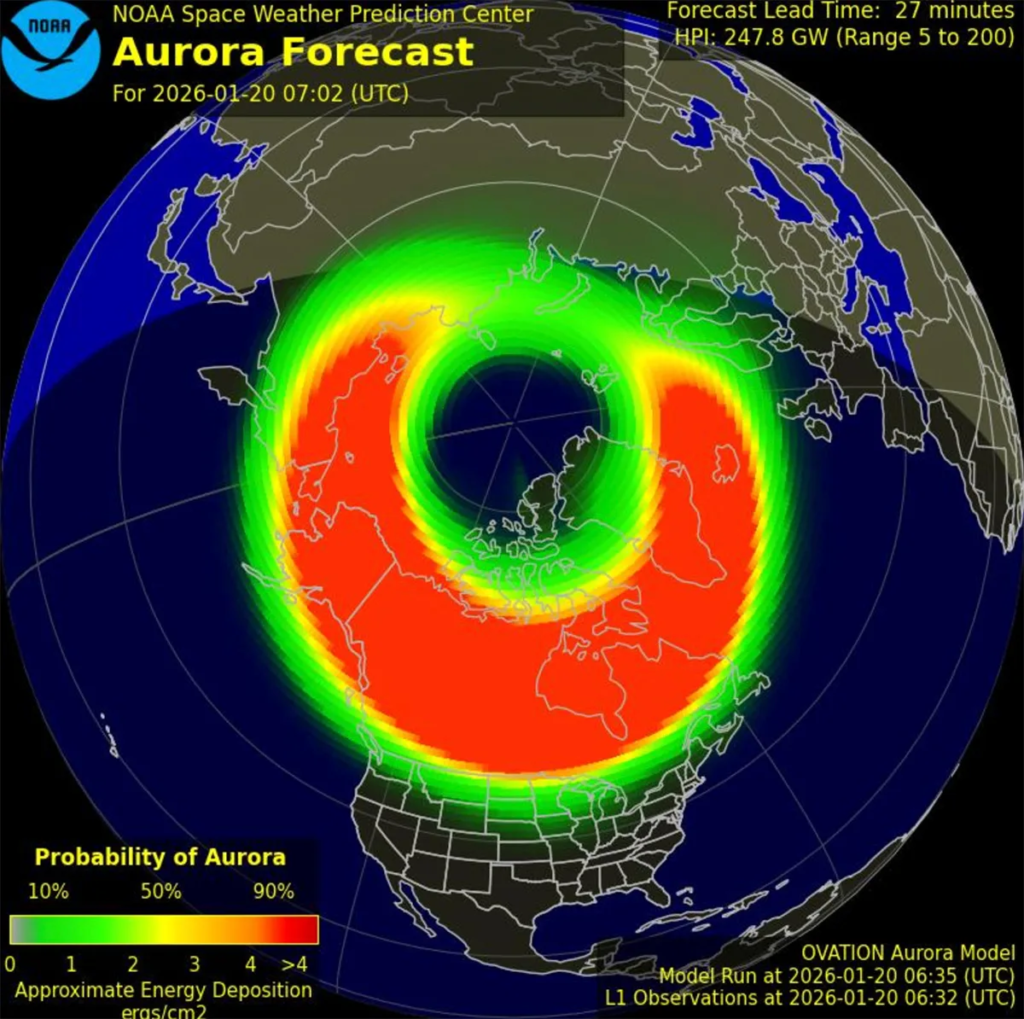

Powerful solar activity is increasing the chances that auroras could appear far beyond the Arctic—possibly even over American backyards. As the Sun approaches peak activity, geomagnetic storms are becoming stronger and more frequent, pushing the Northern Lights southward. This guide explains how auroras work, why they’re reaching unexpected places, and how you can spot them.
Why Americans Are Suddenly Wondering If the Aurora Could Appear at Home
For decades, auroras felt distant and exotic—something seen only by travelers who ventured deep into Alaska or northern Canada. The idea that the Northern Lights could appear over a suburban neighborhood or quiet farmland in the United States sounded impossible.
That perception has changed.
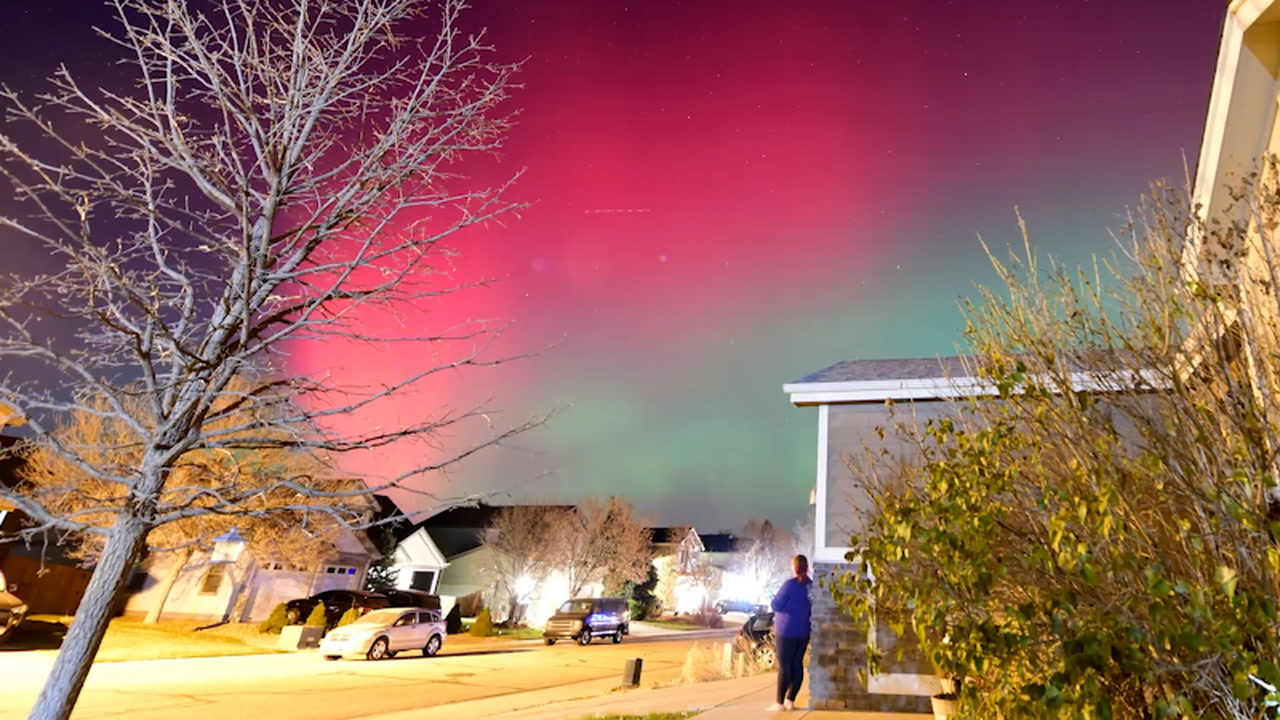
In recent years, Americans across Texas, Alabama, Ohio, Missouri, California, and other states have shared photos showing glowing skies in shades of red, pink, and green. Many of these sightings happened close to home—over backyards, neighborhoods, and familiar landmarks.
Scientists confirmed what many people struggled to believe: those lights were real auroras.
As these events become more frequent, a once-unthinkable question is now trending nationwide:
Could the aurora really reach my backyard?
What an Aurora Really Is (Without the Complicated Science)
At its core, an aurora is the visible result of a space-weather interaction between the Sun and Earth.
The Sun constantly emits energy, but during periods of intense activity it releases massive clouds of charged particles known as coronal mass ejections (CMEs). When one of these eruptions travels toward Earth, it can collide with our planet’s magnetic field.
Those charged particles follow magnetic field lines and strike gases high in Earth’s atmosphere. When that happens, energy is released in the form of light—creating an aurora.
Different gases create different colors:
- Oxygen produces green and red light
- Nitrogen produces blue and purple hues
Normally, this process happens near the poles. But when solar activity intensifies, the aurora’s reach expands.
The Hidden Role of Earth’s Magnetic Shield
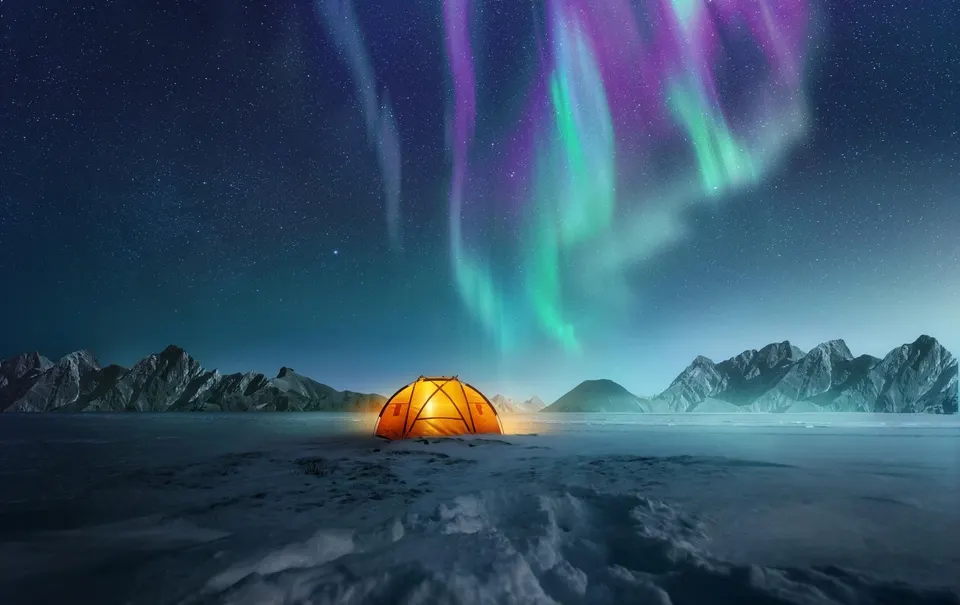
Earth is protected by a magnetic field that normally keeps solar particles from reaching most of the atmosphere. This magnetic shield funnels particles toward the Arctic and Antarctic, which is why auroras typically appear far north or south.
However, during strong solar storms, that shield temporarily weakens and stretches. Scientists call this a geomagnetic storm.
When a geomagnetic storm occurs:
- The auroral zone expands toward the equator
- Lower-latitude regions become visible aurora zones
- Auroras form higher in the atmosphere
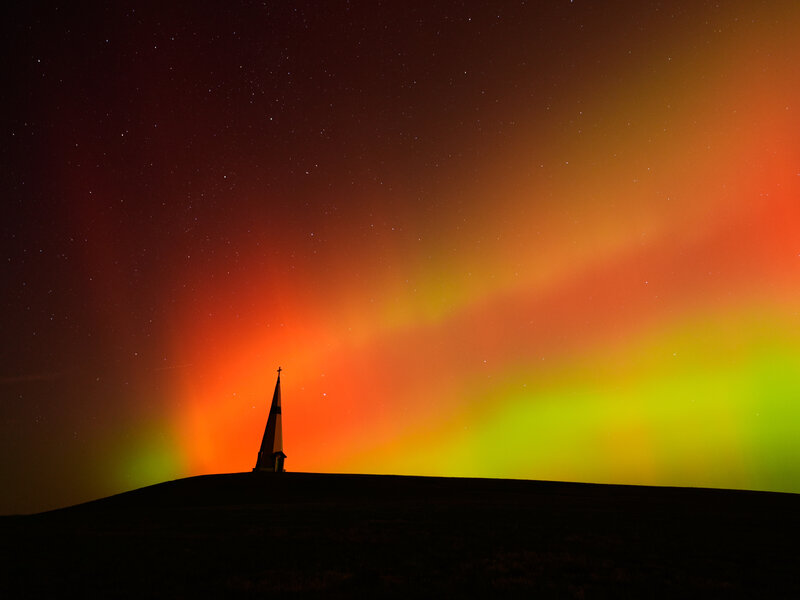
- Red and pink hues become more common
This is the key reason auroras have started appearing in places where most Americans never expected to see them.
The Solar Cycle Most People Never Hear About
One of the biggest secrets behind backyard auroras is the Sun’s natural rhythm.
The Sun follows an approximately 11-year solar cycle, shifting between quieter periods and highly active ones. The most intense phase is known as solar maximum.
During solar maximum:
- Sunspots multiply rapidly
- Solar flares become more frequent
- Coronal mass ejections grow stronger
- Geomagnetic storms intensify
According to NASA and NOAA data, the current solar cycle is stronger than scientists originally predicted. This increases the odds of powerful aurora-producing storms.
Real-Life Proof That Backyard Auroras Are Possible
This isn’t theoretical—it’s already happened.
Texas
In North Texas, residents stepped outside to skies glowing red and pink. Many assumed the color came from distant city lights until photos revealed smooth auroral arcs stretching across the horizon.
Alabama
Rural areas outside Birmingham and Huntsville reported faint pink streaks visible even without special equipment. Smartphone photos made the auroras unmistakable.
Midwest States
In Ohio, Missouri, Indiana, and Illinois, families captured green and red auroras shimmering above treelines and suburban streets.
West Coast
Parts of California and Oregon saw auroras blending with ocean horizons and city skylines—an extremely rare sight.
These moments turned ordinary backyards into front-row seats to a cosmic event.
Why Cameras Capture Auroras Better Than Human Eyes
One reason backyard auroras surprise people is that your eyes and your camera work differently.
Human vision struggles in very low light. Smartphone cameras, however, can collect light over several seconds and amplify faint colors.
That’s why:
- Auroras may look gray or barely visible to the eye
- Photos reveal vivid reds, greens, and purples
- Night mode dramatically improves results
Many Americans only realized they had witnessed an aurora after reviewing their photos.
What Determines Whether the Aurora Reaches Your Location
Auroras don’t appear randomly. Several factors must align.
Key Conditions That Matter
- Strength of the solar storm
- Earth’s magnetic response
- Your geographic latitude
- Local light pollution
- Cloud cover
Scientists use the Kp index to measure geomagnetic activity. When the index reaches 7 or higher, auroras can become visible across much of the continental U.S.
Why Backyard Auroras Look Different From Arctic Ones
People often expect bright green curtains rippling overhead. Backyard auroras usually look different.
That’s because auroras seen farther south form higher in the atmosphere.
Southern auroras often appear as:
- Red or pink glows near the horizon
- Broad, diffuse light rather than sharp curtains
- Subtle movement instead of dramatic waves
They may be quieter visually—but they’re no less extraordinary.
Are Backyard Auroras Safe?
This is one of the most common questions Americans ask.
Auroras themselves are completely harmless to people, pets, and property.
However, the solar storms that create them can affect technology.
Potential Effects Scientists Monitor
- GPS inaccuracies
- Radio communication disruptions
- Satellite interference
- Aviation navigation issues
- Rare stress on power grids
Modern infrastructure is far more resilient than in the past, and agencies monitor strong storms closely.
Why Scientists Are Excited About Backyard Aurora Sightings
For researchers, backyard auroras are a treasure trove of data.
Each photo and report helps scientists:
- Map how far auroras spread
- Measure storm intensity
- Improve space-weather prediction models
- Better protect satellites and power systems
Millions of Americans unknowingly become citizen scientists when they share aurora photos.
How to Increase Your Chances of Seeing an Aurora From Home
You don’t need special equipment—just awareness and timing.
Practical Aurora-Watching Tips
- Follow NOAA space-weather alerts
- Step outside after sunset
- Look toward the northern horizon
- Reduce nearby lights if possible
- Use your phone’s night mode
- Check the sky repeatedly
Auroras often appear in short bursts and can fade quickly.
Is Climate Change Responsible for Backyard Auroras?
This is a common misunderstanding.
Auroras are driven by solar activity, not Earth’s climate. Climate change does not influence solar flares or geomagnetic storms.
That said:
- Light pollution affects visibility
- Clear skies improve viewing
- Rural areas offer the best experience
The cause of auroras remains purely solar.
Why Backyard Auroras Feel So Emotionally Powerful
Beyond science, backyard auroras tap into something deeply human.
Parents call children outside. Neighbors talk under glowing skies. Strangers share photos online, united by awe.
For many Americans, these moments become lifelong memories—proof that even familiar places can suddenly feel extraordinary.
Key Takeaways
- Auroras are caused by solar activity and geomagnetic storms
- Strong solar cycles increase southern aurora sightings
- Backyard auroras are rare—but possible
- Smartphone cameras often reveal more than human eyes
- More sightings are likely during solar maximum
Frequently Asked Questions (10 Trending FAQs)
1. Can the aurora really reach my backyard?
Yes, during strong geomagnetic storms, auroras can reach much of the U.S.
2. Which states can see backyard auroras?
Texas, Alabama, Ohio, Missouri, California, and many others during extreme events.
3. Why do backyard auroras look red?
They form higher in the atmosphere, producing red light.
4. Are auroras dangerous to humans?
No, auroras are harmless.
5. Can auroras damage electronics?
The solar storms behind them can affect satellites and GPS.
6. How often do backyard auroras happen?
Only during strong solar storms—usually a few times per solar cycle.
7. Do I need special equipment to see them?
No, but a smartphone camera helps significantly.
8. Is climate change causing more auroras?
No, auroras are driven by solar activity.
9. When is the best time to look?
Late evening to early morning during storm alerts.
10. Where can I track aurora alerts?
NOAA’s Space Weather Prediction Center.