A once-quiet stretch of Lake Superior has suddenly become one of the most coveted aurora photography destinations in the United States. Driven by heightened solar activity, pristine dark skies, and unmatched water reflections, photographers are capturing Northern Lights images here that rival Alaska and Iceland. This in-depth guide explains what changed, why this location matters, and how photographers are getting once-in-a-lifetime shots.
How One Night on Lake Superior Changed Everything
The image didn’t look real.
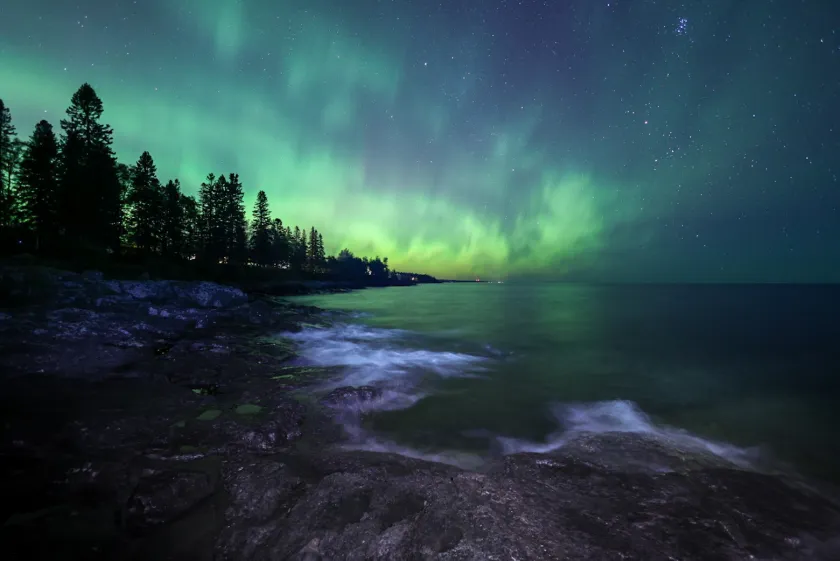
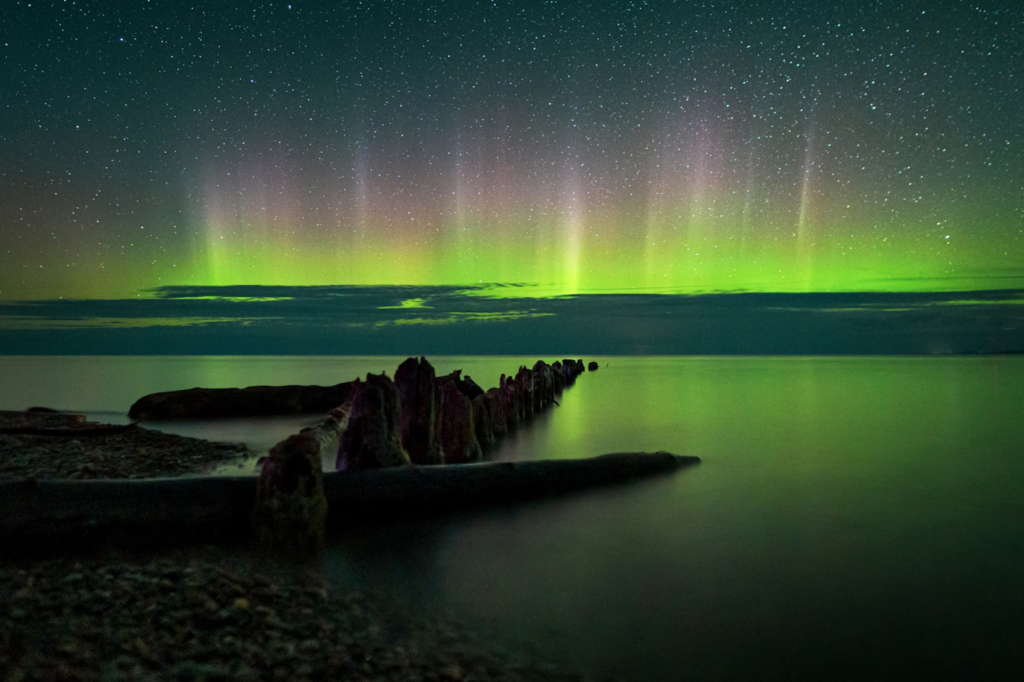
Green light poured across a jagged shoreline. Stars glittered between glowing arcs. Below it all, Lake Superior mirrored the sky so perfectly it looked like the aurora had doubled itself. The caption was simple:
“North Shore, Lake Superior — tonight.”
Within hours, photographers across the Midwest were sharing the image. Within days, professionals from Chicago, Milwaukee, Minneapolis, and beyond were packing cars, checking solar forecasts, and heading north in the middle of the night.
This wasn’t Iceland.
This wasn’t Alaska.
This was Lake Superior’s North Shore.
And it had quietly become one of the most powerful aurora photography locations in the Lower 48.
Where Exactly Is This Lake Superior Aurora Hotspot?
When photographers talk about “that Lake Superior spot,” they’re usually referring to Minnesota’s North Shore, particularly the rugged stretch between:
- Split Rock Lighthouse
- Tettegouche State Park
- Grand Marais
- Schroeder and Temperance River areas
This region hugs Lake Superior’s northern edge, offering dramatic cliffs, rocky shorelines, frozen coves, and wide-open horizons facing true north—the ideal direction for aurora viewing.
For decades, this area was known for fall colors, waterfalls, and summer hiking. Night photography was mostly limited to stars and the Milky Way.
That changed fast.
Why the North Shore Became an Aurora Photography Goldmine
Aurora photography isn’t about luck alone. It’s about alignment—of science, geography, and conditions. Lake Superior’s North Shore now sits at the center of all three.
1. The Sun Is Producing Stronger Storms Than Expected
The most important factor isn’t the lake. It’s the Sun.
We are approaching the peak of Solar Cycle 25, part of the Sun’s natural 11-year activity rhythm. According to NASA and NOAA’s Space Weather Prediction Center, this solar cycle has already exceeded early predictions for strength and frequency.
That means:
- More sunspots
- More solar flares
- More coronal mass ejections (CMEs)
When a CME is aimed directly at Earth, it can trigger a geomagnetic storm. Strong storms expand the auroral oval, pushing the Northern Lights far south—sometimes into the continental United States.
Lake Superior’s North Shore sits right where these expanded auroras become visible first.
2. Lake Superior Creates an Unmatched Natural Canvas
Photographers don’t just need auroras—they need something to frame them.
Lake Superior provides:
- A massive, unobstructed northern horizon
- Minimal tree cover along rocky shorelines
- Open water or ice that reflects light
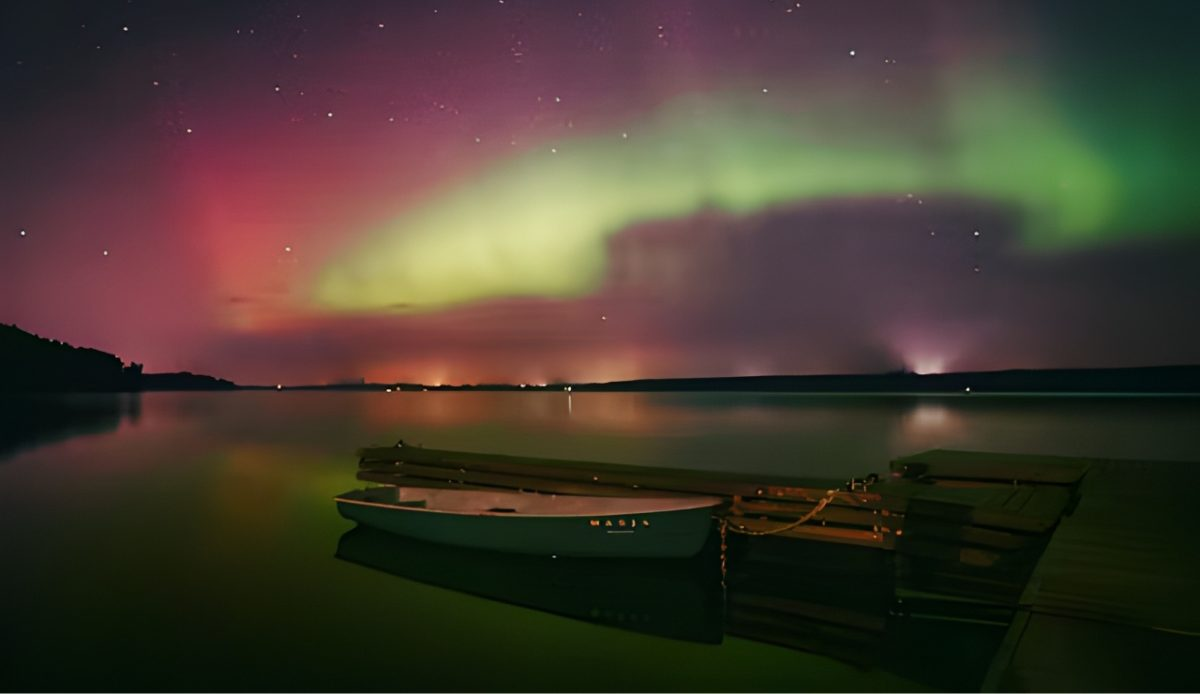
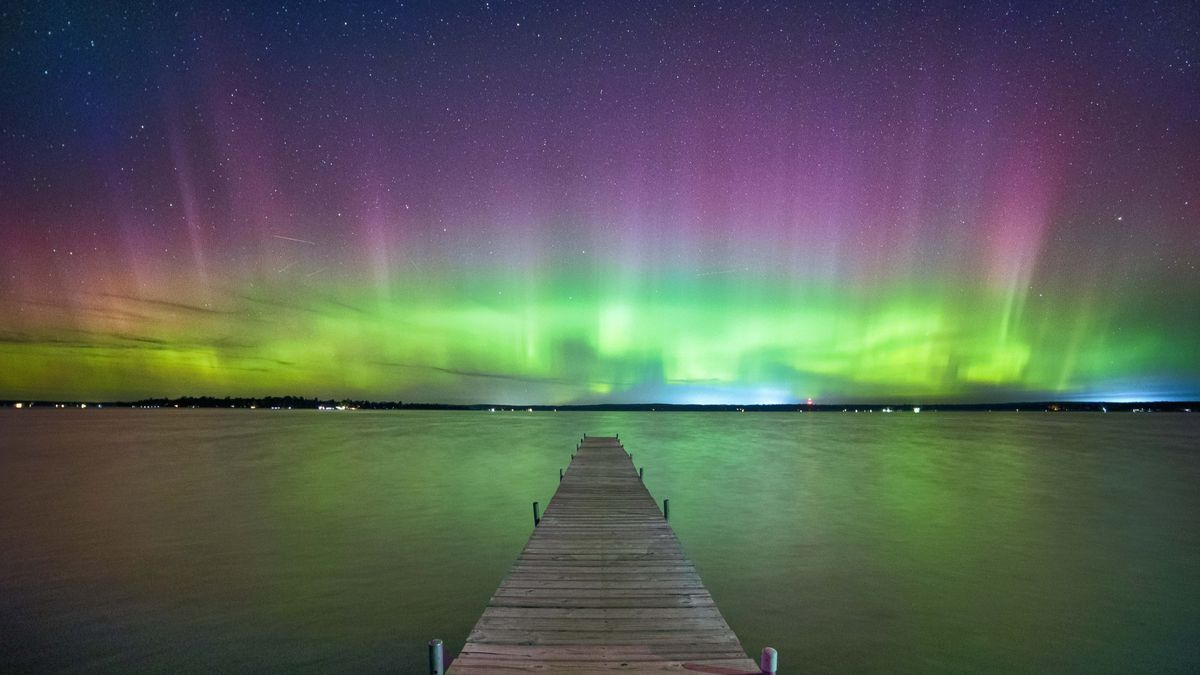
On calm nights, the lake becomes a natural mirror, reflecting auroral light back toward the camera. This reflection effect doubles perceived brightness and creates symmetry rarely seen outside Arctic regions.
Photographers often say it feels like cheating.
3. Dark Skies Do the Heavy Lifting
Auroras don’t need darkness to exist—but photography does.
The North Shore benefits from:
- Low population density
- Few nearby cities
- Minimal highway lighting
- Cold, dry air that reduces haze
Light-pollution maps consistently rank this region among the darkest areas in the eastern half of the U.S.
That darkness allows cameras to capture:
- True aurora color
- Fine structure and motion
- Long exposures without washout
Even moderate auroras photograph beautifully here.
Real Photographer Stories From the North Shore
This isn’t theory. It’s happening in real time.
A Minneapolis-based photographer described leaving home at 9 p.m. after a sudden G4 storm alert. He reached Split Rock Lighthouse just before midnight and watched green curtains roll overhead for nearly an hour, reflected so clearly on the lake he could see individual stars between the bands.
A Chicago photographer who had previously shot auroras in Iceland said his North Shore images were “shockingly similar—without the crowds or expense.”
Even beginners are succeeding. One first-time aurora shooter from Duluth captured a viral image on their first attempt using a mid-range mirrorless camera and a kit lens.
Why This Location Beats Most Lower-48 Aurora Spots
Many places in the Lower 48 can see auroras. Very few can photograph them well.
The North Shore wins because it combines:
- Strong aurora visibility
- Iconic foregrounds
- Natural reflections
- Reliable access
Flat inland locations often lack foreground interest. Forested areas block horizons. Urban areas wash out color.
Lake Superior solves all of that at once.
The Reflection Effect: Why These Photos Look Unreal
Reflection is the secret weapon.
On still nights, Lake Superior becomes glass-smooth. Auroras appear in the sky and on the lake simultaneously, creating symmetry that photographers usually have to travel internationally to find.
This effect:
- Increases visual impact
- Makes weaker auroras look stronger
- Adds depth and scale to images
Some photographers report that a Kp 5 storm here looks more impressive than a Kp 6 storm elsewhere.
When Photographers Are Timing Their Trips
Timing is everything.
Best Conditions for Aurora Photography on Lake Superior
- Geomagnetic storms rated Kp 6 or higher
- Clear skies with minimal cloud cover
- Little to no moonlight
- Prime window: 10:00 PM – 2:00 AM
Winter offers the longest darkness, but late fall and early spring are also excellent—especially when the lake remains unfrozen and reflective.
Why Social Media Triggered the Rush
Once images from this region began circulating on Instagram, X, and photography forums, interest exploded.
Photographers realized:
- They could get Arctic-level results domestically
- Crowds were minimal
- Access was straightforward
Unlike Iceland or Alaska, this location still feels undiscovered.
What Gear Photographers Are Actually Using
You don’t need exotic equipment—but preparation matters.
Commonly Used Gear
- Full-frame or APS-C cameras
- Wide-angle lenses (14–24mm preferred)
- Solid tripods for wind
- Intervalometers for time-lapse
What Matters More Than Gear
- Scouting foregrounds in daylight
- Monitoring space-weather alerts
- Understanding aurora motion and exposure balance
Many award-winning images from this region were captured with modest setups.
Mistakes That Ruin Otherwise Perfect Aurora Nights
Even in an ideal location, mistakes happen.
Common issues include:
- Overexposing bright auroras
- Ignoring foreground composition
- Shooting too wide with no structure
- Leaving too early
Veteran shooters often say the best displays begin after midnight, once patience pays off.
Why This Location Represents the Future of U.S. Aurora Photography
As Solar Cycle 25 continues through 2026, photographers expect:
- More frequent strong storms
- Increased southern aurora reach
- Continued success along the North Shore
This region represents a shift toward domestic aurora travel, driven by science rather than hype.
Will This Area Become Overcrowded?
So far, no.
Cold temperatures, late nights, and unpredictable weather naturally limit crowds. Many photographers report having entire shorelines to themselves—even during major storms.
That solitude is part of the appeal.
Why Photographing the Aurora Here Feels Different
Photographers often talk about the emotional side.
Standing alone on a frozen shoreline, hearing waves crash under ice, watching the sky move above a massive lake—it’s not just photography. It’s perspective.
Many describe it as the most meaningful shoot of their careers.
Frequently Asked Questions (Trending in the U.S.)
1. Why are photographers choosing Lake Superior over Alaska?
Because it offers reflections, dark skies, and accessibility without international travel.
2. Is this location reliable for auroras?
Yes, during strong geomagnetic storms it’s one of the best in the Lower 48.
3. Do you need professional camera gear?
No. Entry-level and mid-range cameras work well here.
4. Are auroras visible to the naked eye?
Yes, especially during strong storms.
5. Is winter the best season?
Winter offers long nights, but fall and spring can also be excellent.
6. Does the lake need to be frozen?
No. Open water actually improves reflections.
7. Is night photography safe here?
Yes, with proper cold-weather preparation.
8. Can beginners succeed here?
Absolutely. Many first-time aurora shooters get excellent results.
9. How often do strong auroras happen now?
More frequently during solar maximum (2024–2026).
10. Is this the best aurora period in decades?
For the Lower 48, it’s among the strongest in 20+ years.
The Bigger Picture: Why This Place Matters Right Now
Lake Superior’s North Shore didn’t change.
The sky did.
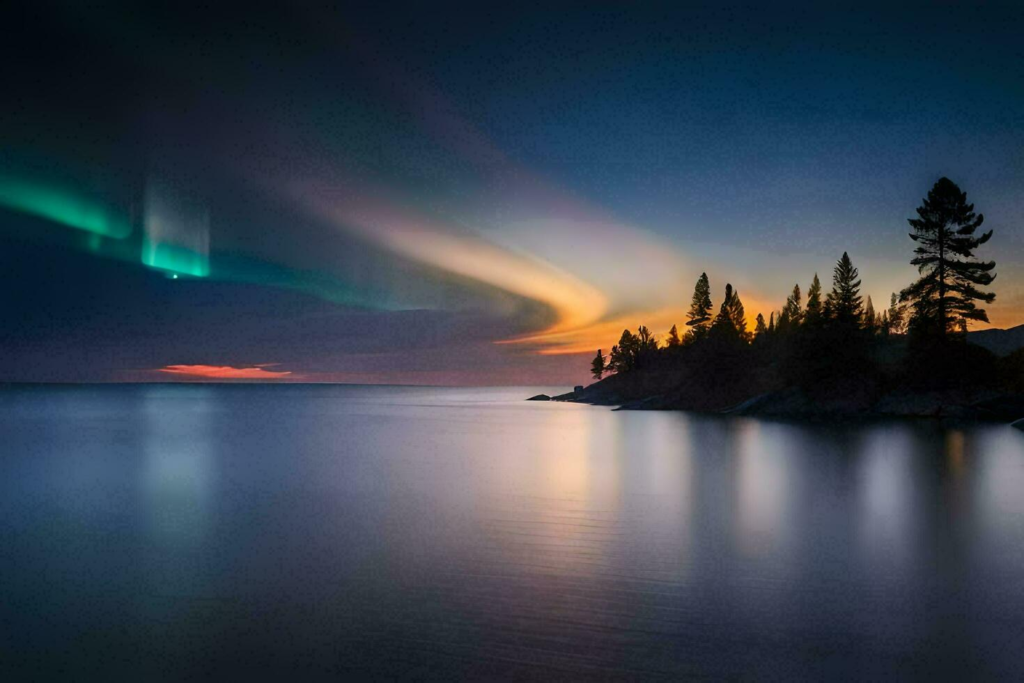
As the Sun grows more active and auroras push farther south, this once-quiet stretch of shoreline has become one of the most visually powerful aurora photography locations in the continental United States.
For photographers, it’s rare to find a place where science, scenery, and silence align so perfectly.
Final Takeaway
Photographers aren’t racing to this Lake Superior location by accident.
They’re coming because:
- Solar activity supports it
- Geography enhances it
- Results consistently deliver
As Solar Cycle 25 continues, Minnesota’s North Shore has firmly established itself as one of the best aurora photography destinations in the Lower 48—no passport required.
And for those who arrive on the right night, the images speak for themselves.