Seeing the northern lights in the United States is more achievable than ever thanks to heightened solar activity during Solar Cycle 25. From Alaska and the Upper Midwest to surprising dark-sky locations farther south, auroras are appearing more frequently this season. This insider guide reveals where to go, when to look, what to expect, and proven tips to maximize your chances of witnessing this unforgettable natural phenomenon.
Introduction: Why This Season Is a Rare Opportunity for Aurora Watchers in the US
For most Americans, the northern lights have always felt distant—something you travel thousands of miles to see. Alaska, Canada, Iceland, and Scandinavia dominated the conversation, while the rest of the United States watched from afar.
That perception is now outdated.
Over the past few seasons, auroras have been lighting up skies across the U.S. with surprising frequency. Residents of Minnesota, North Dakota, Michigan, Montana, and even parts of the central Midwest have captured photos of glowing red and green skies—often from their own backyards. Many of these sightings weren’t planned. People stepped outside for unrelated reasons and looked up at exactly the right moment.
This surge isn’t coincidence or social-media exaggeration. It’s driven by science.
According to NASA and the NOAA Space Weather Prediction Center, the Sun has entered one of its most active phases in decades. Solar Cycle 25, which runs through roughly 2026, is producing stronger and more frequent geomagnetic storms. These storms expand the auroral oval, pushing the northern lights farther south and making them visible in places that rarely saw them before.
If you’ve ever wanted to see the aurora borealis without leaving the U.S., this season may be one of the best chances in a generation.
What Causes the Northern Lights (Without the Jargon)
Auroras happen when energy from the Sun interacts with Earth’s atmosphere.
In simple terms:
- The Sun releases charged particles during solar flares or coronal mass ejections (CMEs)
- Those particles travel toward Earth
- Earth’s magnetic field funnels them toward the poles
- When they collide with gases high above the planet, the sky lights up
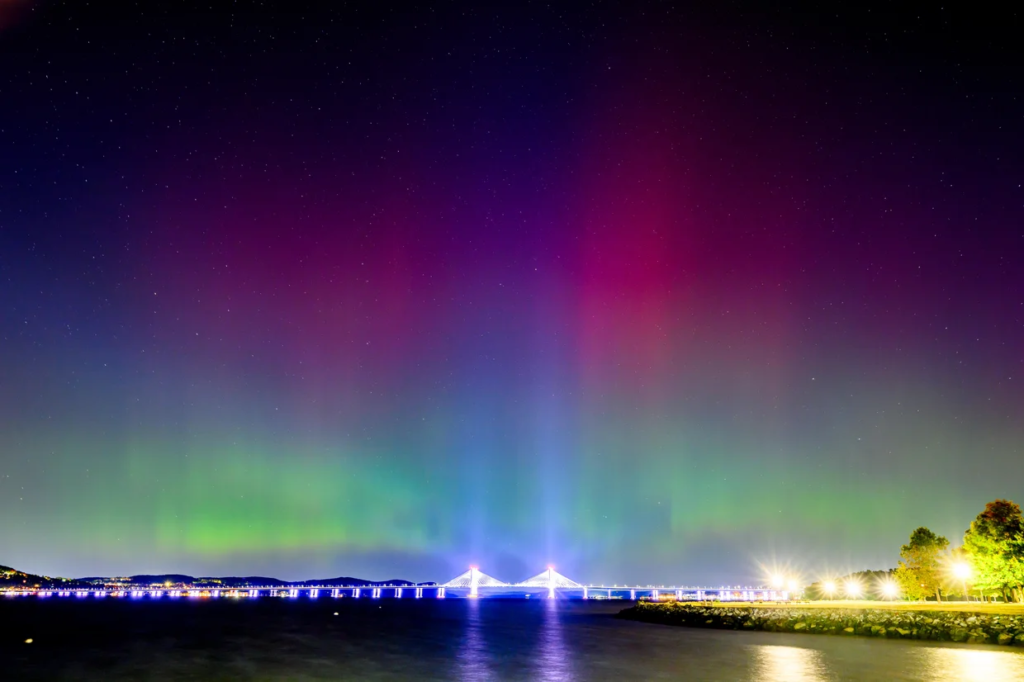
Green auroras are the most common and come from oxygen at lower altitudes. Red auroras occur higher up and usually appear during stronger geomagnetic storms—especially in the continental U.S.
The stronger the storm, the farther south the auroras can be seen.
Why Solar Cycle 25 Makes This Season Special
The Sun follows an approximately 11-year activity cycle, moving between quiet and active phases. We are currently near the peak of Solar Cycle 25, and scientists at NASA and NOAA have confirmed it is stronger than initially expected.
Recent observations show:
- Higher-than-predicted sunspot counts
- More frequent powerful solar flares
- Repeated Earth-directed CMEs
For aurora watchers, this means:
- More aurora nights overall
- Brighter and longer-lasting displays
- Increased chances outside traditional northern zones
This is why aurora alerts are appearing in U.S. states that rarely saw them just a decade ago.
How Far South Can the Northern Lights Really Be Seen?
This is one of the most common questions Americans ask.
Under normal conditions, auroras stay close to the Arctic. During strong geomagnetic storms, however, the auroral oval expands dramatically.
In recent years, auroras have been confirmed as far south as:
- Texas
- Oklahoma
- Arkansas
- Alabama
- Florida (faint red auroras during extreme storms)
These sightings are rare, but they prove that latitude is not an absolute limit during powerful solar events.
The Best US Locations to See the Northern Lights This Season
Below are the locations insiders rely on—not tourist hype, but places with proven results.
Alaska: The Undisputed Champion
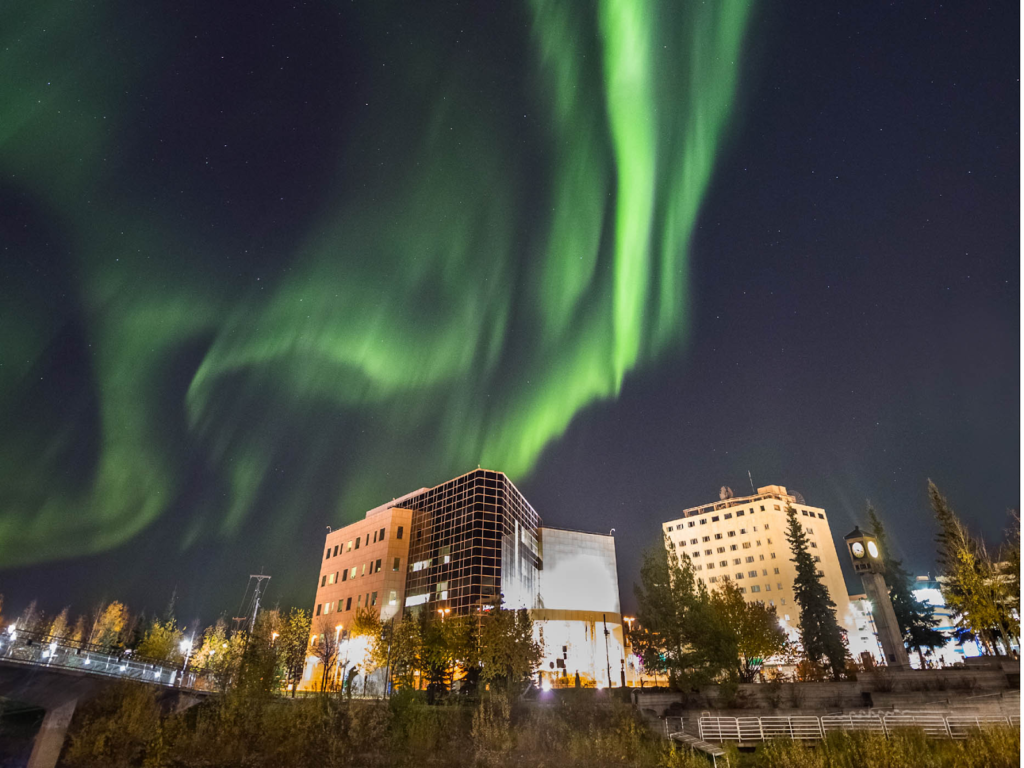
Fairbanks, Alaska — The Most Reliable Aurora City in the US
Fairbanks sits directly under the auroral oval, making it one of the best aurora locations on Earth.
Why Fairbanks works so well
- Extremely frequent auroras
- Long, dark winter nights
- Infrastructure built specifically for aurora viewing
Real-life experience
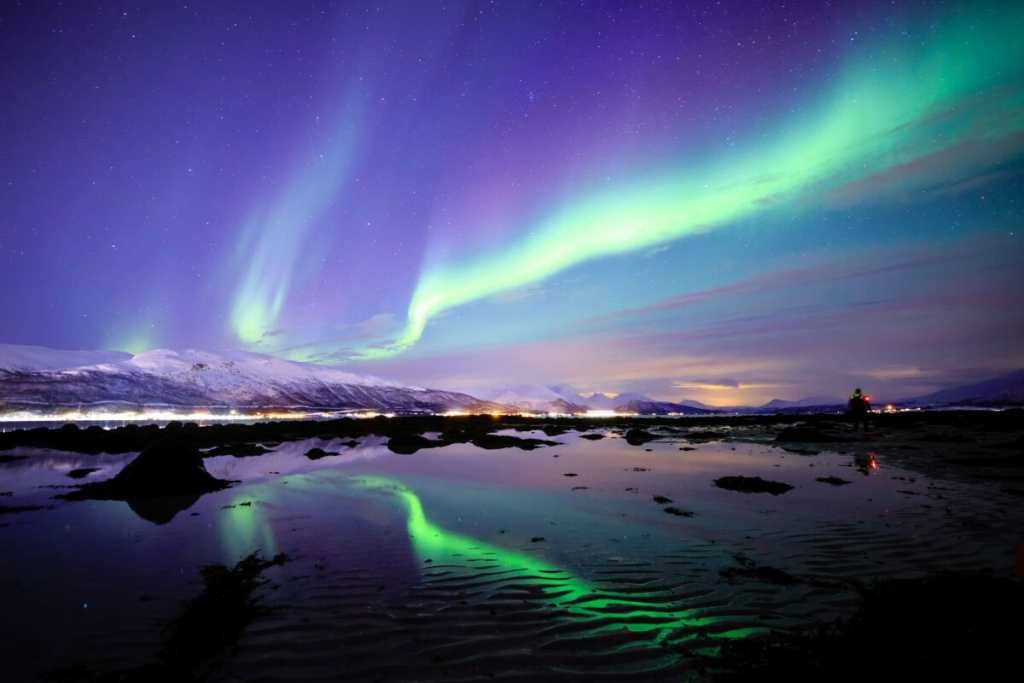
First-time visitors often describe the sky as “alive.” Green curtains ripple overhead, purple edges shimmer, and movement fills the entire sky. Many people see auroras on multiple nights during a single trip.
Denali Region — Darker Skies, Fewer Crowds
For travelers who want solitude, the Denali area offers darker skies and dramatic scenery.
Auroras here often feel more immersive, framed by mountains and untouched wilderness.
Montana: Big Sky Country’s Hidden Aurora Advantage
Montana doesn’t advertise auroras—but insiders know it’s one of the Lower 48’s strongest contenders.
Why Montana Belongs on Your List
- Northern latitude
- Vast, open landscapes
- Extremely low light pollution
Real-life example
Ranchers in eastern Montana have described auroras bright enough to cast faint shadows across snow-covered fields—something most people associate only with Alaska.
North Dakota: America’s Most Underrated Aurora State
Among experienced aurora watchers, North Dakota is quietly respected.
Why North Dakota Delivers
- Flat terrain with unobstructed horizons
- Some of the darkest skies in the continental U.S.
- Frequent inclusion in NOAA aurora forecasts
Real-life example
Drivers on rural highways have pulled over after noticing red and green glows stretching across the horizon—often alone, surrounded by silence.
Minnesota: Lakes, Forests, and Consistent Auroras
Northern Minnesota has become one of the most dependable aurora regions outside Alaska.
Boundary Waters & Arrowhead Region
This area combines:
- Northern latitude
- Vast wilderness
- Hundreds of lakes that reflect auroras
Real-life example
Winter campers often report auroras so frequently that checking the sky becomes routine rather than special.
Michigan’s Upper Peninsula: Great Lakes Aurora Magic
The Upper Peninsula (UP) deserves a permanent spot on any U.S. aurora bucket list.
Why the UP Is Special
- Surrounded by Lake Superior
- Minimal light pollution
- Clear northern horizons over water
Auroras reflecting off frozen lakes have produced images often mistaken for Iceland or Norway.
Wisconsin: A Quiet but Reliable Aurora Companion
Northern Wisconsin regularly falls under aurora alert zones.
Auroras here are usually subtler, but:
- Dark forests
- Numerous lakes
- Easy access
make it a rewarding destination for patient viewers.
Idaho: The Unexpected Mountain Aurora Destination
Idaho rarely appears in aurora guides, but it consistently surprises those who visit.
Why Idaho Works
- Higher elevations
- Extensive wilderness
- Very low light pollution
Real-life example
Campers near remote Idaho lakes have stepped outside at night to find green arcs rising behind pine silhouettes—completely unplanned and unforgettable.
New York & New England: The Eastern Edge of Aurora Viewing
Auroras in the Northeast are no longer myths.
Northern New York & Adirondacks
Proximity to Canada and dark skies make this region productive during strong storms.
Vermont, New Hampshire, and Maine
Higher elevations and rural darkness increase aurora potential.
Northern Maine, especially Aroostook County, has become a genuine aurora hotspot during Solar Cycle 25.
Insider Timing Tips: When to Look This Season
Timing matters as much as location.
Best Months
- September–October
- February–March
These periods align with geomagnetic peaks near the equinoxes.
Best Time of Night
- Typically 10 PM to 2 AM local time
- Strong storms can produce auroras earlier or later
Many people leave too early. Patience is often rewarded.
How to Read Aurora Forecasts Without Overthinking
You don’t need advanced science knowledge.
Key indicators:
- Kp index (0–9)
- Kp 5–6: northern states
- Kp 7–8: Midwest potential
- Kp 9: extreme southern reach
- Kp 5–6: northern states
- NOAA aurora maps showing an expanded oval
- Alerts mentioning “severe” or “extreme” geomagnetic storms
If northern states are reporting strong activity, your chances increase farther south.
What the Northern Lights Actually Look Like in the US
Many people miss auroras because expectations don’t match reality.
Far north
- Bright green curtains
- Rapid motion
- Overhead displays
Lower latitudes
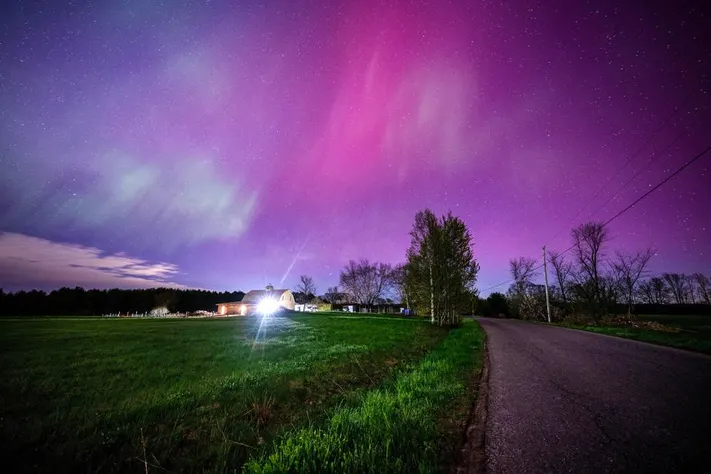
- Red or pink glows
- Faint green arcs near the horizon
- Subtle movement
Understanding this helps you recognize auroras when they appear.
Why Your Phone Often Sees Auroras First
Smartphones detect low-light color better than human eyes.
Tips:
- Use night mode
- Take several photos facing north
- Review images for faint color
Many famous aurora photos were discovered after the fact.
Common Mistakes That Cause People to Miss Auroras
Even during major storms, many people see nothing.
Common errors include:
- Staying near bright lights
- Looking straight overhead
- Going outside briefly and leaving
- Assuming faint glows aren’t auroras
Auroras reward patience and curiosity.
Are Auroras Dangerous?
Auroras themselves are not dangerous. They pose no health risk and are safe to watch.
Strong geomagnetic storms can affect satellites and power grids, but these risks are managed by utilities and space agencies.
How Long Will This Active Season Last?
According to NASA and NOAA:
- Solar Cycle 25 remains active through 2026
- Elevated aurora chances will continue for several seasons
- This period represents one of the best aurora windows in decades
Frequently Asked Questions (10 Relevant FAQs)
1. What is the best U.S. state to see the northern lights?
Alaska is the most reliable, followed by Minnesota and Michigan’s Upper Peninsula.
2. Can you see auroras in the continental U.S.?
Yes, especially during strong geomagnetic storms.
3. Do I need special equipment?
No. Auroras are often visible to the naked eye.
4. Why are some auroras red instead of green?
Red auroras occur at higher altitudes during strong storms.
5. What is the Kp index?
A scale from 0 to 9 measuring geomagnetic activity.
6. Can auroras appear in summer?
Yes, but shorter nights reduce visibility.
7. Are auroras predictable?
Partially. Accurate forecasts are usually 24–72 hours ahead.
8. Will city lights block auroras?
They reduce visibility, but strong auroras can still be seen.
9. How far south can auroras go?
During extreme storms, as far as Texas and Florida.
10. Is this a once-in-a-lifetime chance?
It’s rare—but one of the best aurora periods in decades.
Final Thoughts: Why This Season Is Worth the Effort
From Alaska’s Arctic skies to the quiet lakes of the Midwest, the United States has quietly become one of the world’s most exciting places to see the northern lights.
Auroras don’t wait for perfect plans. They appear when conditions align—sometimes over famous parks, sometimes over ordinary places that suddenly feel extraordinary.
With Solar Cycle 25 in full swing, this season offers one of the best chances in a generation to catch the northern lights without leaving the country.
All you have to do is prepare, stay patient, and look up.