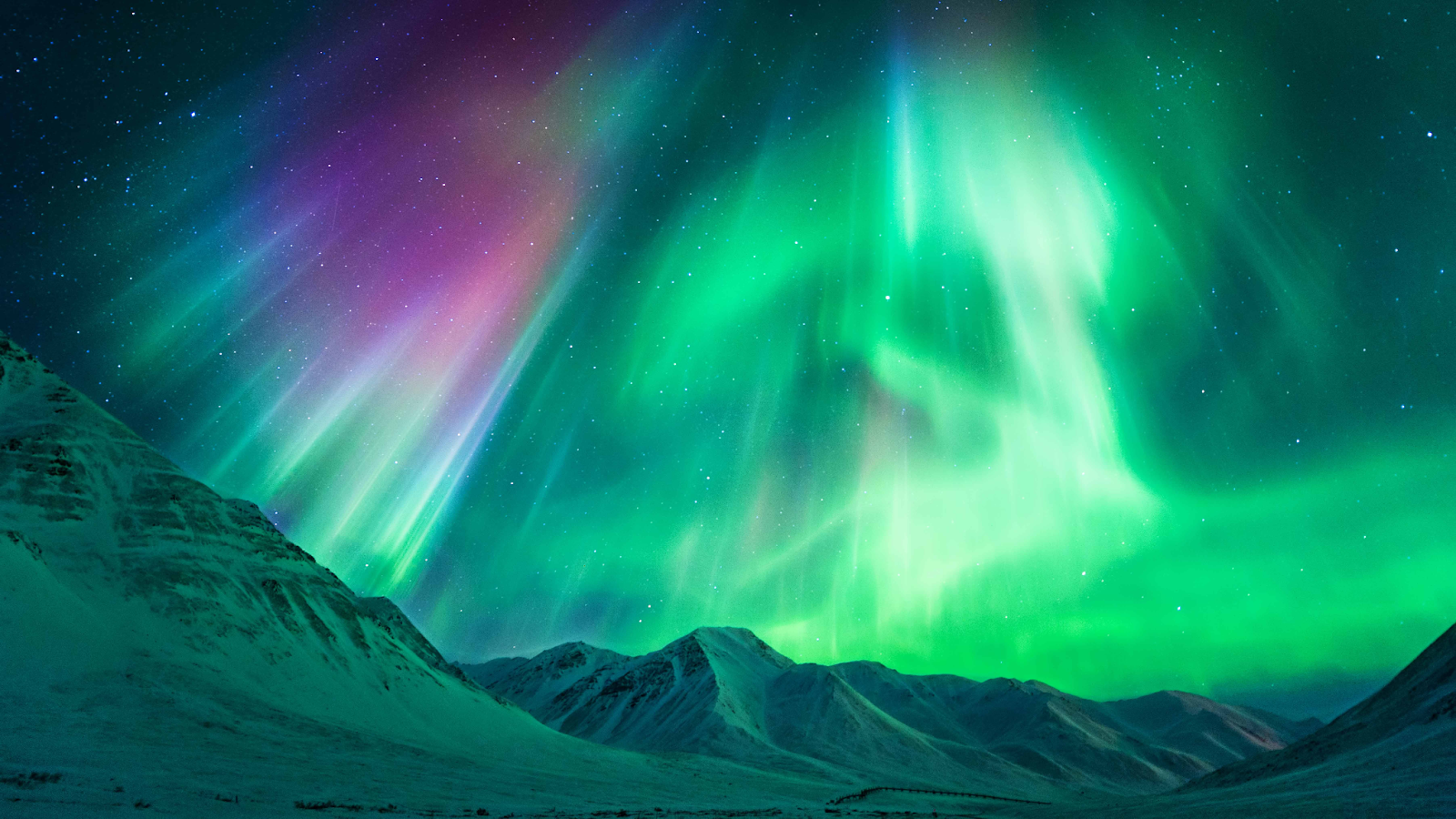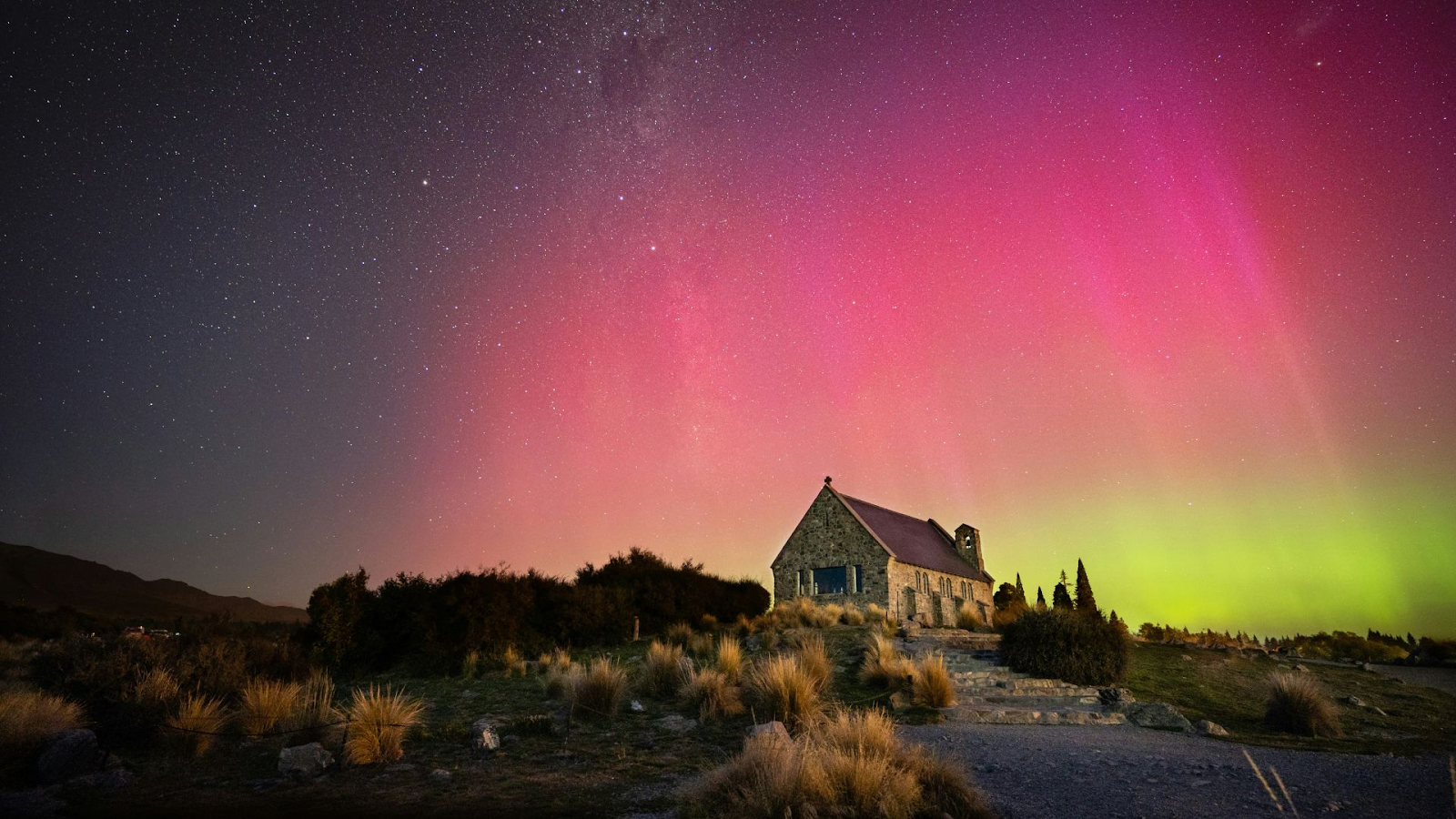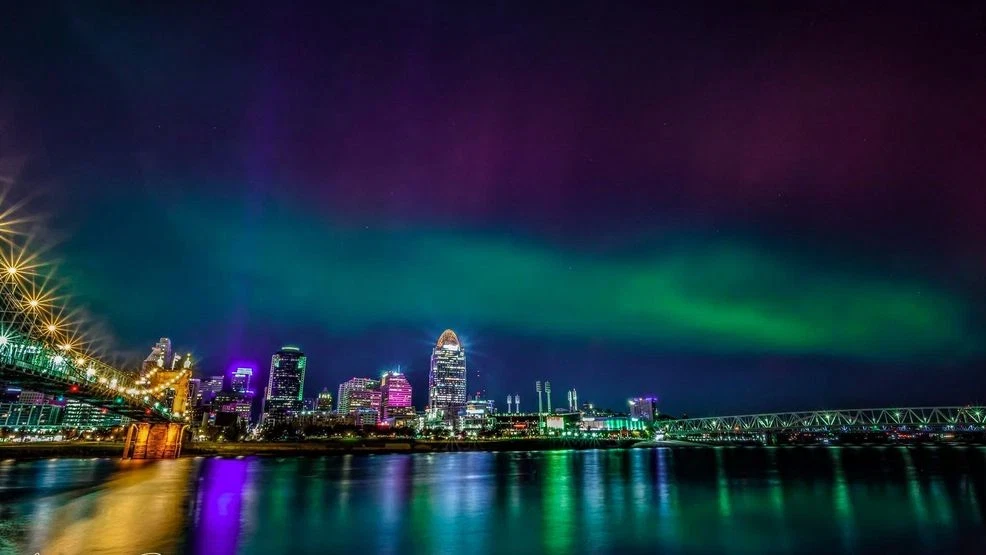
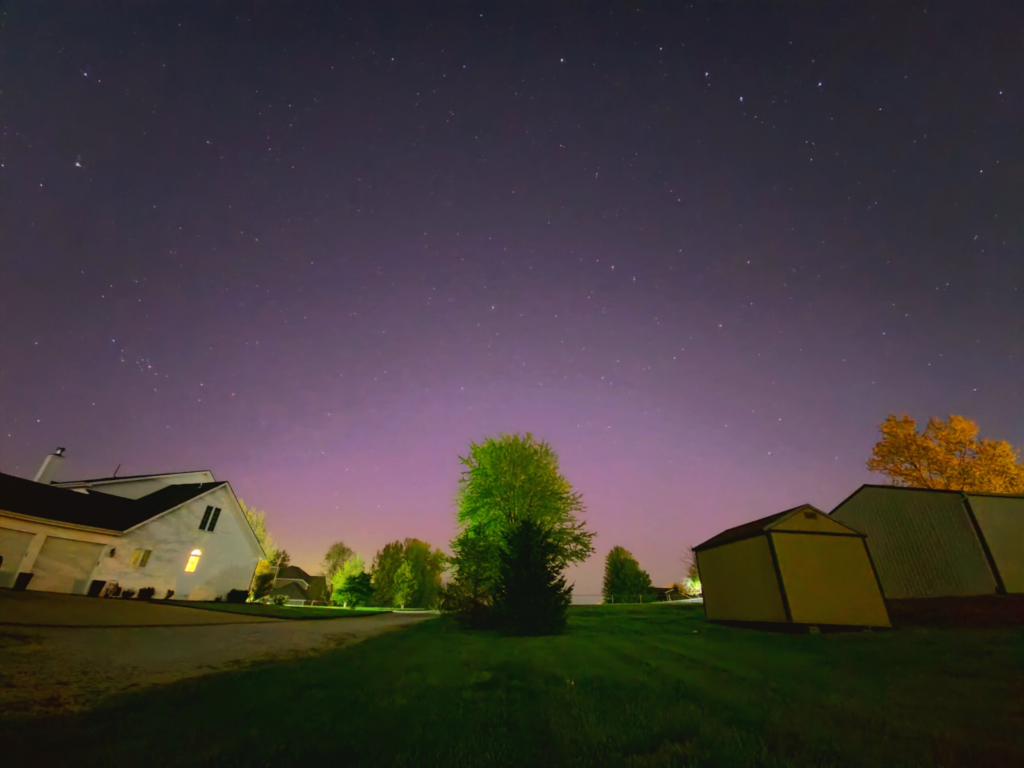
An unusually strong wave of solar activity could push the northern lights far south, making aurora visibility possible in Kansas and Nebraska. According to space-weather data from NOAA and NASA, geomagnetic storm conditions may soon align during the peak of Solar Cycle 25. This in-depth forecast explains when auroras could appear, where to look, how likely it is, and what Midwestern skywatchers should expect.
Introduction: Why the Midwest Is Suddenly Watching the Sky
Kansas and Nebraska are not states people normally associate with the northern lights. When most Americans imagine auroras, they picture Alaska, northern Canada, or remote Arctic landscapes—places far removed from cornfields, grain silos, and endless highways.
Yet over the past year, something unexpected has happened.
Searches for “northern lights Kansas,” “aurora Nebraska tonight,” and “can you see the aurora in the Midwest” have surged. Weather apps have begun showing aurora layers over the Plains. Local meteorologists—more accustomed to tornado warnings than solar storms—are now mentioning space weather during evening broadcasts.
This sudden attention is not driven by rumor or internet exaggeration. It’s driven by measurable changes in solar behavior.
According to NASA and the NOAA Space Weather Prediction Center, Earth is currently experiencing one of the most active periods of solar activity in decades. That activity has already pushed auroras deep into the southern United States, surprising millions of Americans who never expected to see glowing skies outside their own homes.
Kansas and Nebraska are now part of that conversation.
What Makes This Aurora Forecast Different From Past Years?
Aurora forecasts for the central U.S. were once considered long-shot curiosities. Today, they are grounded in real data.
Solar Cycle 25: The Big Factor
The Sun follows an approximately 11-year solar cycle, alternating between calm and turbulent phases. We are now near the peak of Solar Cycle 25, which NASA has confirmed is stronger than early predictions.
During this phase:
- Sunspots increase dramatically
- Solar flares become more frequent
- Coronal mass ejections (CMEs) grow more intense
When Earth-directed CMEs strike our planet’s magnetic field, they trigger geomagnetic storms—the conditions required for auroras.
In recent months, several storms have reached G4 and G5 levels, the strongest categories on NOAA’s scale.
Those storms are capable of pushing auroras far beyond their normal boundaries.
Why Kansas and Nebraska Are Suddenly Possible Aurora States
Under typical conditions, auroras remain far north. Kansas and Nebraska sit well outside the usual aurora zone. However, strong geomagnetic storms can temporarily rewrite that map.
When the auroral oval expands southward:
- States like Minnesota and Michigan see bright displays
- Central states see faint but real auroral glows
- Southern states may see red emissions near the horizon
Kansas and Nebraska sit in a border zone—rarely included, but not excluded when conditions are extreme.
Recent storms have already produced auroras as far south as:
- Texas
- Oklahoma
- Arkansas
- Alabama
That puts Kansas and Nebraska well within reach during the right solar alignment.
When Could the Aurora Be Visible Over Kansas and Nebraska?
Aurora timing is the most searched question—and for good reason.
The Forecast Window That Matters
Aurora predictions are most accurate 24–72 hours in advance, once scientists can track incoming CMEs and their magnetic orientation.
Based on current space-weather monitoring, forecasters are watching multiple upcoming windows where geomagnetic activity could spike high enough for Midwest visibility.
General Timing Expectations
If auroras reach Kansas and Nebraska, they are most likely to appear:
- Between 10:00 PM and 2:00 AM local time
- During nights following CME impact
- When geomagnetic activity reaches Kp 7 or higher
Auroras this far south often peak briefly, sometimes lasting only minutes to an hour.
What Would the Aurora Actually Look Like in Kansas and Nebraska?
This is where expectations matter most.
Auroras in the central U.S. look different from those seen in Alaska.
Typical Southern Aurora Appearance
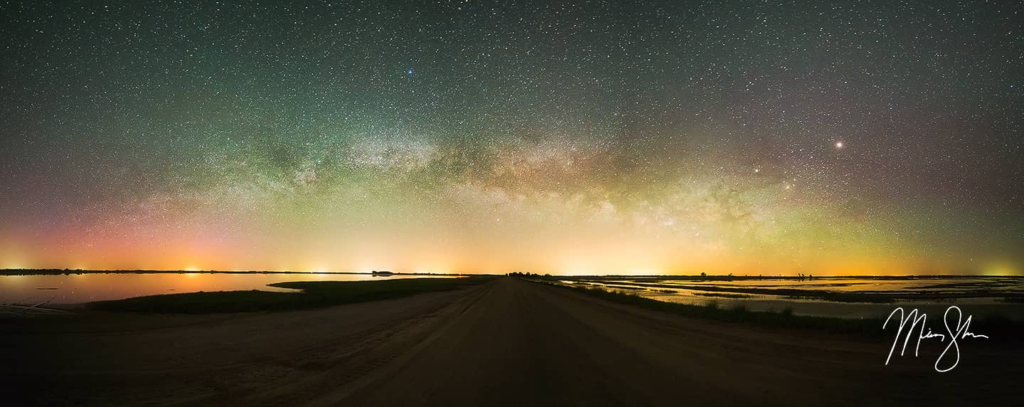
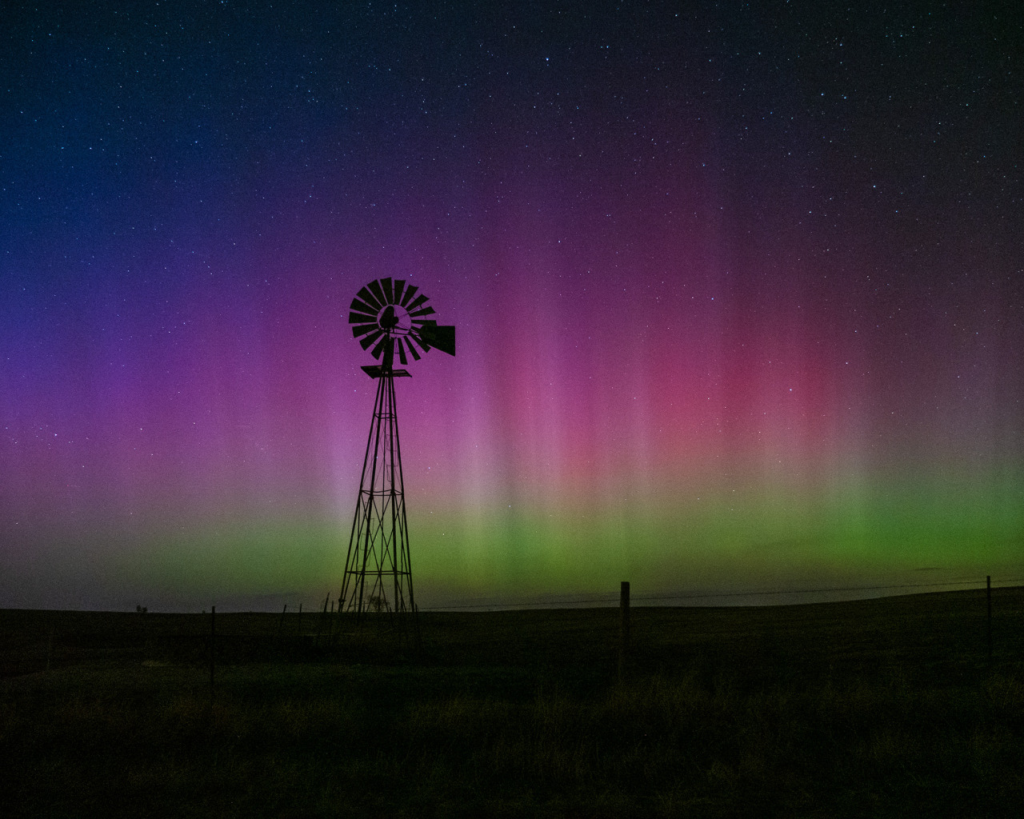
- A red or pink glow near the northern horizon
- Occasionally faint green arcs above the glow
- Subtle movement rather than dramatic curtains
- Often more visible through phone cameras
Many people mistake southern auroras for:
- Distant city lights
- Agricultural fires
- Storm reflections
Real-Life Example
During a recent geomagnetic storm, residents in rural Nebraska noticed a strange red glow lingering above the horizon after sunset. Several assumed it was distant light pollution. Later that night, photos shared online revealed faint auroral structures confirmed by NOAA data.
Why Aurora Forecasts Now Include the Central Plains
This shift has confused many Americans.
The reason lies in solar intensity combined with Earth’s magnetic alignment.
According to NOAA:
- Solar Cycle 25 has produced repeated strong CMEs
- Earth’s magnetic field orientation has favored deeper penetration
- Storms have arrived in clusters, amplifying effects
This combination allows auroras to travel farther south than during weaker cycles.
Scientists stress this is not permanent, but it is significant.
Are Kansas and Nebraska “Good” Aurora States?
Honesty is essential.
Kansas and Nebraska are:
- Low-probability aurora states
- Dependent on strong or severe geomagnetic storms
- More likely to see faint displays than vivid ones
However, rarity adds emotional impact. For many Midwesterners, even a subtle aurora is unforgettable.
Best Places in Kansas to Try Aurora Viewing
Location is critical.
Ideal Kansas Viewing Conditions
- Rural western and northern Kansas
- Open farmland with unobstructed horizons
- Areas far from Wichita, Kansas City, and Topeka
The flatter the landscape and the darker the sky, the better.
Best Places in Nebraska to Try Aurora Viewing
Nebraska offers slightly better odds due to latitude.
Ideal Nebraska Locations
- Northern Nebraska
- The Sandhills region
- Rural central areas away from Omaha and Lincoln
Open terrain allows faint auroras to stand out more clearly.
Why So Many People Miss the Aurora When It Happens
Auroras don’t announce themselves.
Common reasons Midwesterners miss them:
- Checking the sky too briefly
- Looking overhead instead of north
- Expecting bright green lights
- Assuming nothing happens locally
Southern auroras reward patience and attention.
How to Tell If Tonight Is Worth Staying Up
You don’t need advanced knowledge.
Key indicators:
- NOAA aurora alerts mentioning Kp 7+
- News reports of strong geomagnetic storms
- Social media posts from northern states seeing auroras
- Space-weather apps showing expanding auroral oval
If Minnesota or North Dakota report strong activity, Kansas and Nebraska may follow.
How to Improve Your Chances of Seeing the Aurora
Small steps make a big difference.
Before heading out
- Check cloud cover carefully
- Choose a dark location in advance
- Dress warmly for extended viewing
While watching
- Face north
- Stay outside at least 20–30 minutes
- Use your phone camera to scan the horizon
- Recheck the sky every 15 minutes
Southern auroras often intensify suddenly.
Are Auroras Dangerous or Harmful?
This question spikes during every aurora alert.
The answer: no.
Auroras:
- Pose no health risks
- Do not affect air quality
- Are safe to watch for long periods
The only real danger is losing sleep.
Is This a Once-in-a-Lifetime Opportunity?
Not exactly—but it is rare.
NASA and NOAA confirm:
- Solar Cycle 25 remains active through 2026
- Additional strong storms are possible
- Kansas and Nebraska may see auroras more than once
However, this period represents one of the best aurora windows in decades.
What This Means for the Midwest Going Forward
Aurora awareness in the Plains is changing.
Meteorologists now include aurora forecasts alongside:
- Severe storm outlooks
- Winter weather advisories
- Space-weather alerts
States once excluded from aurora discussions are now part of them.
Frequently Asked Questions (10 Relevant FAQs)
1. Can you really see the northern lights in Kansas?
Yes, during strong geomagnetic storms, faint auroras are possible.
2. Is Nebraska more likely than Kansas?
Slightly, especially northern Nebraska due to latitude.
3. What time should I look?
Between 10 PM and 2 AM local time.
4. What colors might appear?
Mostly red or pink, sometimes faint green.
5. Do I need a camera?
No, but cameras often reveal auroras more clearly.
6. What Kp index is needed?
Typically Kp 7 or higher.
7. Are auroras visible year-round?
Yes, but fall and winter are best due to longer nights.
8. Will city lights ruin visibility?
Yes. Dark skies are essential.
9. How far south have auroras gone before?
During extreme storms, auroras have reached Texas and Florida.
10. Will this happen again?
Yes, especially through 2026 during Solar Cycle 25.
Final Thoughts: Why This Forecast Matters
For Kansas and Nebraska, aurora forecasts represent more than a rare sky event. They represent a moment when science, timing, and curiosity align.
Most people never forget their first aurora—especially when it happens somewhere they never expected. A quiet field. A dark road. A sky that suddenly looks alive.
If conditions align, the Plains may experience that moment again very soon.
And for those willing to look north and wait, the reward could be unforgettable.