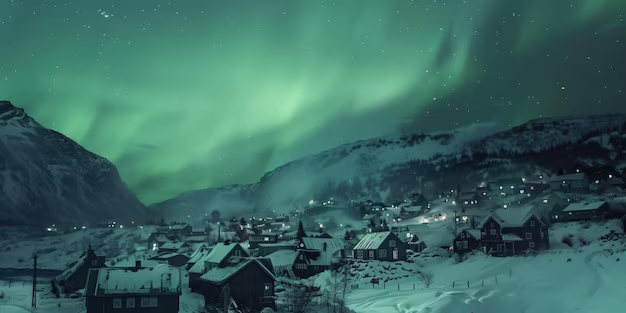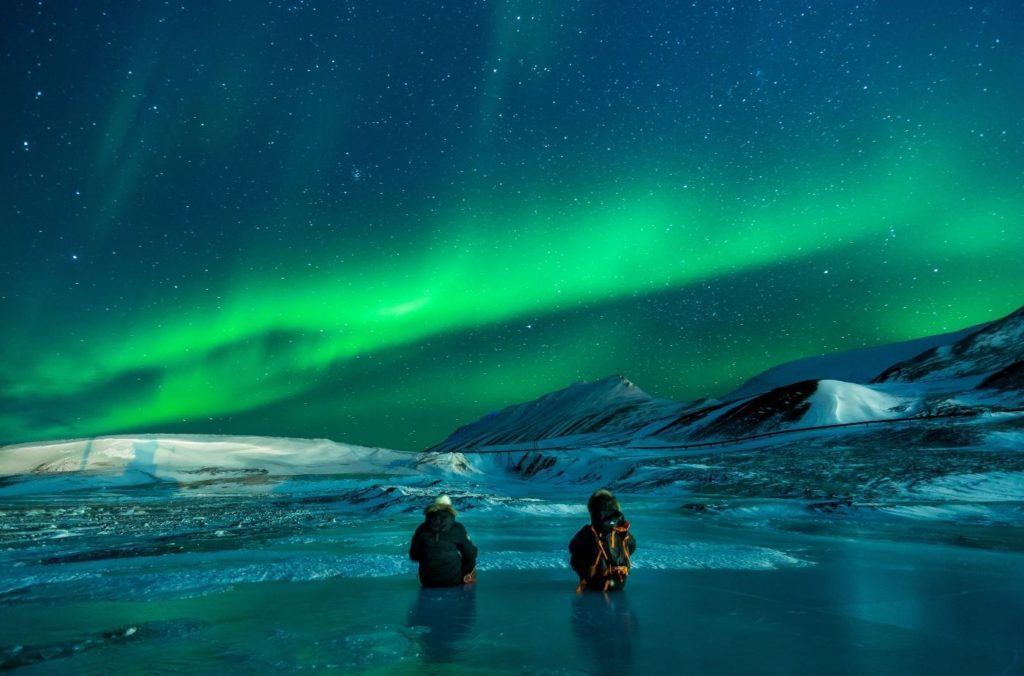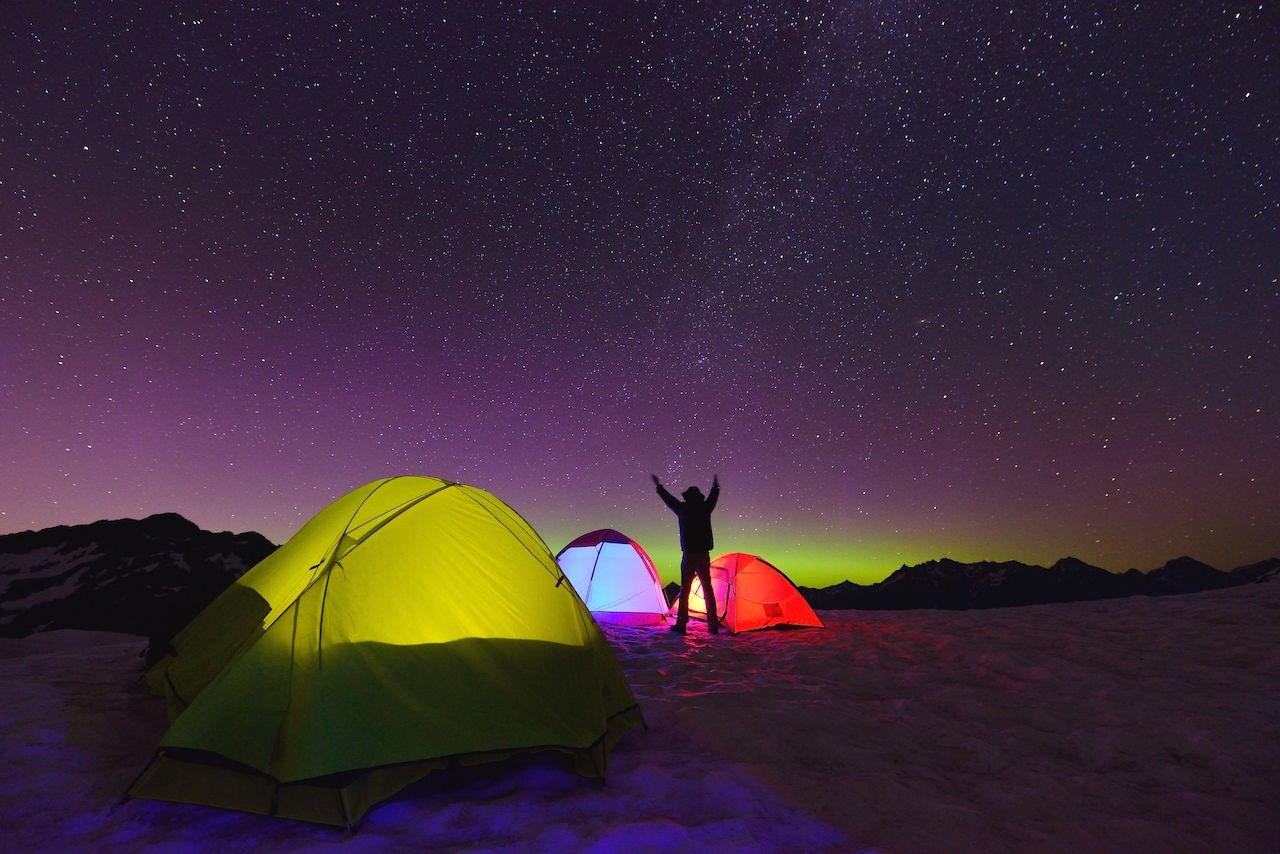
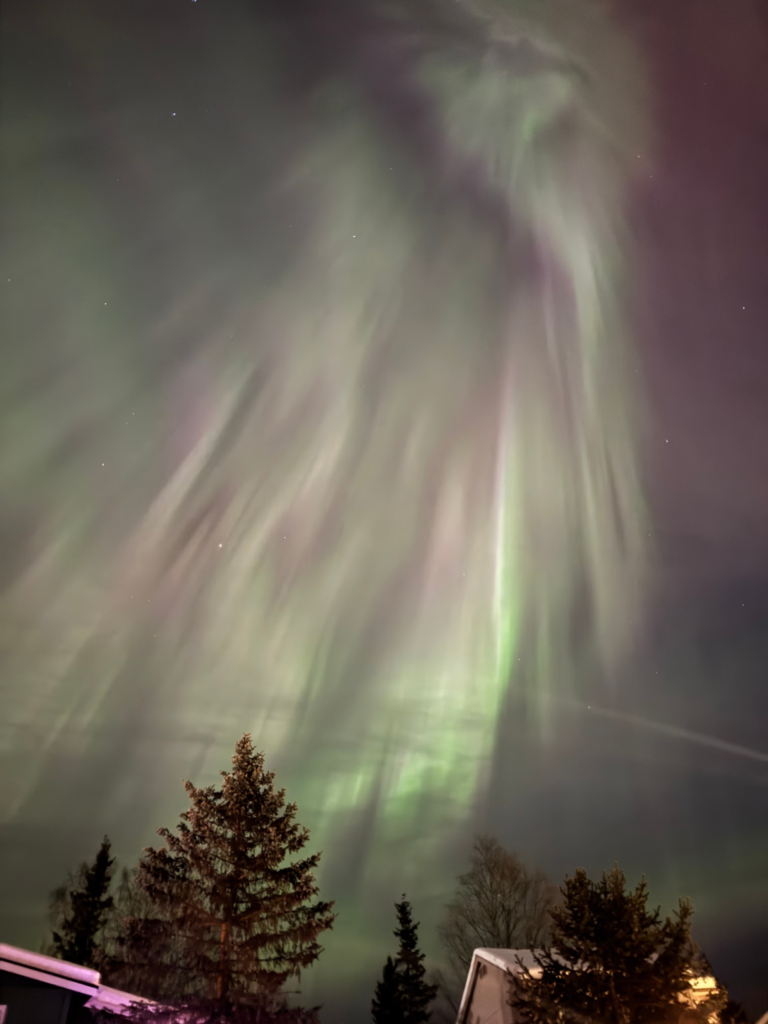
Scientists say this winter could bring one of the most widespread Northern Lights displays the United States has seen in decades. Driven by heightened solar activity during Solar Cycle 25, auroras may reach far beyond traditional northern states. This comprehensive guide explains why it’s happening, where Americans could see it, how to prepare, and why this winter could be unforgettable.
Why Americans Are Suddenly Asking If the Northern Lights Will Reach Their State
For generations, the Northern Lights felt like a distant miracle—something you admired in photos, documentaries, or travel ads for Alaska and Scandinavia. Most Americans grew up believing the aurora borealis simply wasn’t meant for them.
That belief has quietly collapsed.
In the last few years, people across the continental U.S. have witnessed auroras in places that once seemed impossible. Social media feeds filled with disbelief as photos emerged from Texas, Alabama, Arizona, Georgia, and California. Local news stations interrupted regular programming to explain why the sky looked unfamiliar. Families stepped outside late at night, unsure of what they were seeing.
Now, scientists are issuing a rare and exciting message:
This winter could bring auroras to more U.S. states than most people have ever seen in their lifetime.
What’s Making This Winter Different From Any Other?
This isn’t internet hype or wishful thinking. It’s rooted in solar physics.
According to NASA and NOAA’s Space Weather Prediction Center, the Sun is currently entering the most active phase of Solar Cycle 25, an approximately 11-year cycle that governs solar flares and coronal mass ejections (CMEs).
What’s unusual is that Solar Cycle 25 is behaving more aggressively than scientists initially predicted.
Key factors making this winter special include:
- A higher-than-expected number of solar flares
- Multiple Earth-directed CMEs in short succession
- Recent geomagnetic storms reaching rare G4 and G5 levels
- Winter’s longer, darker nights across the U.S.
NOAA scientists have publicly stated that current solar activity rivals some of the most energetic periods seen in the last 50 years.
In simple terms: the Sun is extremely active, and Earth is feeling it.
How the Aurora Can Suddenly Appear Farther South
Many people think auroras just get “brighter” during solar storms. The reality is more dramatic.
Auroras form when charged particles from the Sun collide with gases in Earth’s upper atmosphere. Under normal conditions, Earth’s magnetic field channels these particles toward the poles, keeping auroras confined to northern latitudes.
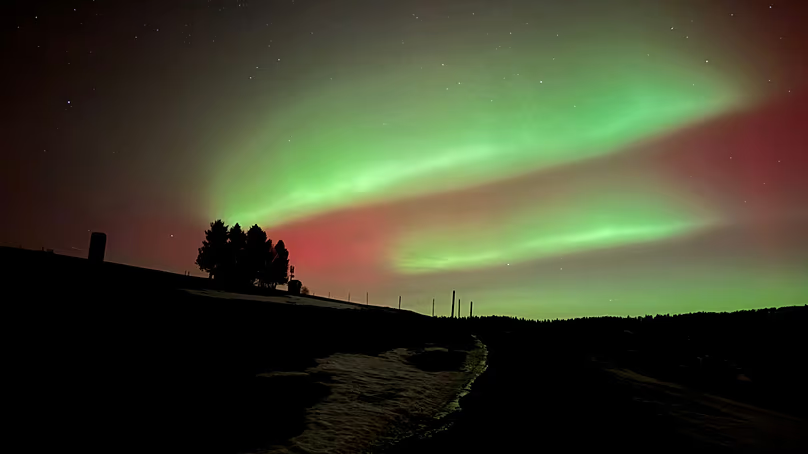
During strong geomagnetic storms, that magnetic shield temporarily weakens and stretches. When that happens:
- Charged particles penetrate farther south
- The auroral oval expands dramatically
- Auroras appear in regions that rarely see them
That’s how people in southern states suddenly find themselves under glowing skies.
Scientists stress that these events are rare—but when solar activity peaks, they become far more likely.
Have We Ever Seen Nationwide Aurora Events Before?
Yes—but they’re uncommon.
History records several extreme aurora events:
- The Carrington Event (1859), when auroras were visible near the equator
- Powerful storms in the early 1950s, seen across much of the U.S.
- A cluster of strong storms in the early 2000s
What makes this moment feel different is awareness.
Today:
- Space weather is monitored 24/7
- Alerts reach millions instantly
- Smartphones capture proof in seconds
The science hasn’t changed—but our ability to notice and document it has.
Which States Are Most Likely to See the Aurora This Winter?
One of the most searched questions right now is:
“Will the Northern Lights be visible where I live?”
While nothing is guaranteed, scientists and forecasters agree on general likelihood zones.
High-Probability States
These states frequently fall under the auroral oval during moderate storms:
- Alaska
- Minnesota
- North Dakota
- Michigan
- Montana
- Maine
- Wisconsin
Moderate-Probability States During Strong Storms
- Washington
- Oregon
- Idaho
- South Dakota
- Iowa
- New York
- Vermont
- New Hampshire
Rare but Possible During Extreme Storms
- Colorado
- Kansas
- Missouri
- Tennessee
- North Carolina
- Texas
- Arizona
- California
Recent G5 storms have already confirmed auroras in many of these regions—something once thought nearly impossible.
Why Winter Is the Best Season for a Widespread Aurora
Winter dramatically improves aurora-viewing conditions.
Longer nights mean:
- More viewing hours
- Deeper darkness
- Higher contrast
Colder air often brings:
- Clearer skies
- Less atmospheric haze
- Sharper visibility
Snow-covered landscapes can even amplify faint auroras by reflecting ambient light.
In short, winter doesn’t just increase opportunity—it improves quality.
A Real-Life Moment That Showed What’s Possible
During a recent geomagnetic storm, a couple in rural Tennessee noticed their phones buzzing with alerts. They assumed it was exaggerated. Aurora stories always seemed to involve far-off places.
Still, curiosity won.
They stepped outside just before midnight.
At first, the sky looked ordinary. Then a faint glow appeared low on the horizon. Slowly, it intensified. Green arcs stretched wider. Subtle purple hues flickered above them.
They stood silently, realizing they were witnessing something they never expected to see at home.
Stories like this have become increasingly common—and scientists say this winter could bring many more.
Why Some People Will Miss the Aurora Even If It Happens
One of the biggest frustrations is hearing:
“Everyone else saw it—but I didn’t.”
That usually happens for predictable reasons.
Common Reasons People Miss Auroras
- Light pollution washes out faint displays
- Cloud cover blocks the sky
- People go outside too early or leave too soon
- Expectations are too high at first glance
- Eyes don’t have time to adjust to darkness
Auroras often begin subtly. They build slowly. Patience matters.
How to Increase Your Chances This Winter
You don’t need to be an expert—but preparation helps.
Practical Steps That Make a Big Difference
- Get away from city lights if possible
- Monitor NOAA aurora forecasts
- Check cloud cover just as carefully
- Stay outside at least 20–30 minutes
- Look north—but also overhead during strong storms
During extreme events, auroras can appear across the entire sky.
Why Phones and Cameras Often See Auroras First
Many people notice auroras through their phone screens before seeing them clearly with their eyes.
That’s normal.
Cameras are more sensitive to low light and use:
- Long exposures
- Image stacking
- Digital enhancement
This can reveal faint auroras before your eyes fully adapt to the dark. It doesn’t mean the aurora isn’t real—it means your eyes need time.
Could This Winter Really Light Up Most of the U.S.?
“Entire U.S.” doesn’t mean every backyard glowing green at once.
It does mean:
- Aurora visibility could extend unusually far south
- Many states could see rare, once-in-a-generation displays
- Millions of Americans could witness auroras for the first time
Scientists avoid guarantees—but agree conditions are unusually favorable.
What NASA and NOAA Are Saying Right Now
NASA has confirmed Solar Cycle 25 is stronger than early predictions. NOAA’s Space Weather Prediction Center has issued multiple strong storm warnings in recent months—something rarely seen so frequently.
Their outlook suggests:
- Increased CME frequency
- Stronger geomagnetic storms
- Higher chances of southern auroras
That’s why space weather coverage is appearing in mainstream news more than ever before.
Why Aurora Events Feel So Emotional
Auroras aren’t just scientific phenomena—they’re deeply human experiences.
People often describe:
- Awe
- Calm
- Perspective
- A sense of connection
Watching the sky change reminds us that Earth is part of a larger system, constantly interacting with the Sun in powerful but invisible ways.
This winter, that connection may feel closer than ever.
Common Myths About Nationwide Aurora Displays
Myth vs. Reality
- Myth: Auroras will look like Instagram photos everywhere
Reality: They’re often subtle but deeply moving - Myth: Auroras are dangerous
Reality: They occur far above Earth and pose no direct risk - Myth: Only experts can predict auroras
Reality: Public forecasts are more accurate than ever
Frequently Asked Questions (Trending Searches)
1. Will the Northern Lights really be visible across the U.S. this winter?
Not everywhere at once, but visibility could extend unusually far south during strong storms.
2. What is causing increased aurora activity?
Heightened solar activity during Solar Cycle 25.
3. When is the best time to watch for auroras?
Typically between 10 PM and 3 AM, especially after midnight.
4. Do auroras happen every night?
No. They depend on solar activity and geomagnetic conditions.
5. Can I see auroras without special equipment?
Yes. The naked eye is enough.
6. Why do auroras sometimes look faint or gray?
Human eyes struggle with color in low light.
7. Are auroras harmful to humans?
No. They occur far above Earth’s surface.
8. How far south have auroras been seen recently?
As far south as Texas, Alabama, and Florida during extreme storms.
9. Will aurora activity continue after this winter?
Yes. Elevated activity is expected through 2026.
10. Is this a once-in-a-lifetime opportunity?
Possibly. Events of this scale don’t occur every solar cycle.
What to Do When an Aurora Alert Appears
If you receive an alert:
- Step outside
- Turn off unnecessary lights
- Give your eyes time to adapt
- Scan the entire sky, not just the horizon
Many people miss auroras because they assume it “won’t happen here.”
This winter, that assumption may be wrong.
Final Thoughts: Why This Winter Could Be Remembered for Decades
The Northern Lights have always existed—silent, powerful, and distant.
This winter, they may feel closer than ever before.
Whether you see a faint glow or a sky-filling display, the experience carries the same message: Earth is alive, connected, and constantly in motion.
And for millions of Americans, this could be the winter they finally look up and see it.