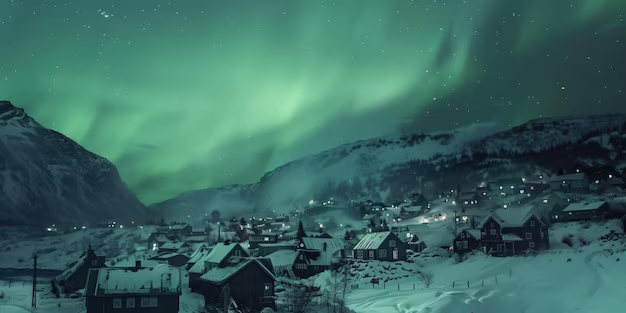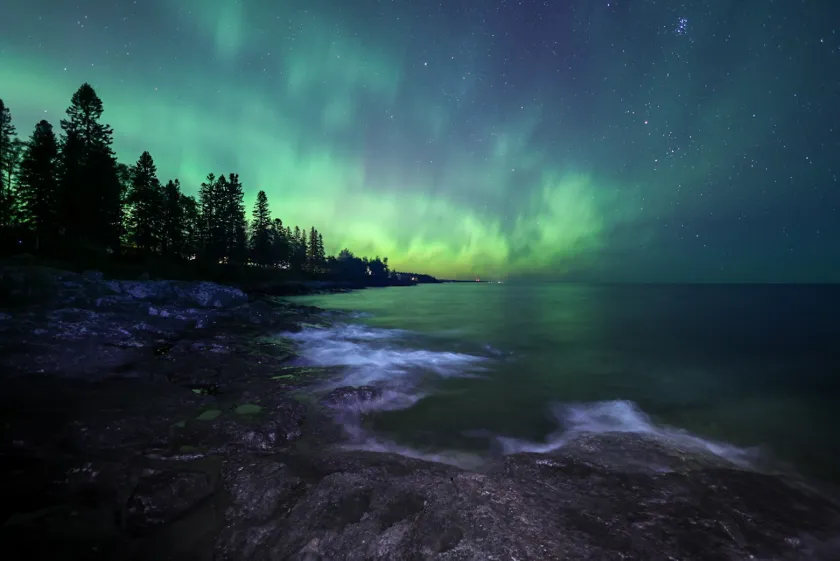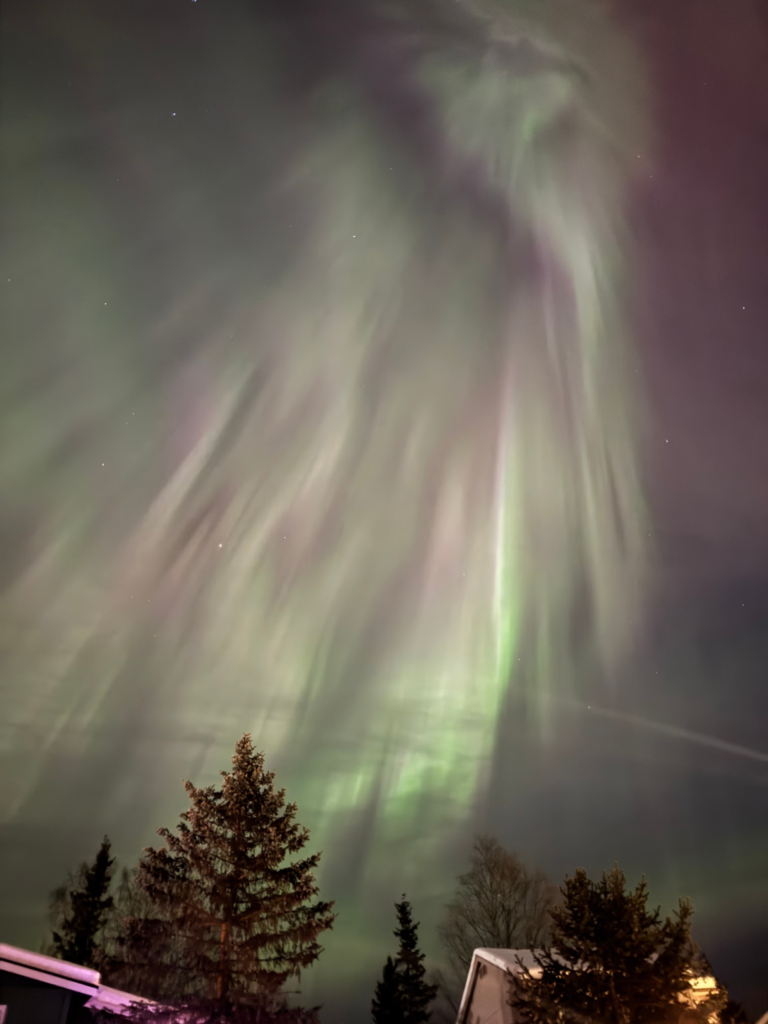
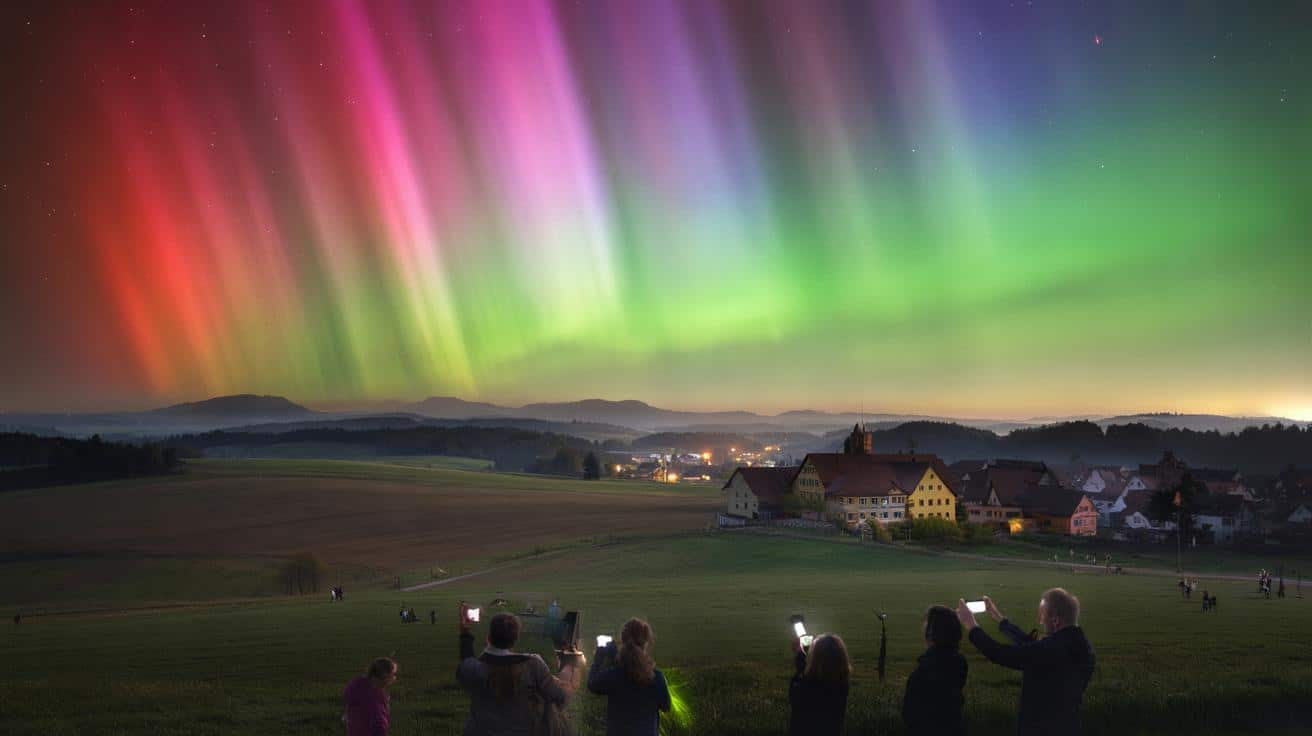
Unbelievable aurora colors—deep purples, blood reds, silvery whites, and multi-colored waves—have recently been caught on camera across the United States and beyond. Some of these displays challenge existing scientific models, leaving experts searching for answers. This in-depth guide explores real-life sightings, what science knows so far, what remains unexplained, and how you might witness these extraordinary skies yourself.
Introduction: When the Night Sky Did Something No One Expected
For centuries, the aurora borealis—commonly known as the Northern Lights—has inspired awe, mythology, and scientific curiosity. Traditionally, these glowing curtains of light were predictable in both color and location: green waves dancing over Alaska, northern Canada, or Scandinavia.
But something has changed.
In recent years, Americans from Texas, Alabama, Arizona, California, and even Florida have stepped outside at night and witnessed skies glowing purple, crimson, pink, white, and sometimes all at once. Smartphones captured the moments. Security cameras recorded them. Dashcams caught them mid-drive.
And when scientists examined the footage, many admitted something surprising:
Some of these aurora colors and formations don’t yet have complete explanations.
This article dives deep into what’s happening, why it matters, and why these unbelievable aurora colors are becoming one of the most searched space phenomena in the United States.
What Are Auroras, Really? (And Why They’re Not Supposed to Look Like This)
Auroras occur when charged particles from the Sun—released during solar flares or coronal mass ejections—collide with Earth’s magnetic field and atmosphere. These particles excite atmospheric gases, which then release light.
Under normal conditions:
- Green auroras come from oxygen about 60 miles above Earth
- Red auroras occur at higher altitudes, over 150 miles
- Blue and purple hues come from nitrogen
For decades, this model worked exceptionally well.
So why are scientists now scratching their heads?
Because recent auroras are showing unexpected color dominance, strange shapes, rapid shifts, and unusually low-latitude visibility—sometimes all in the same event.
Unbelievable Aurora Colors Caught on Camera: Real-Life Examples
The Texas Purple Sky That Shocked Astronomers
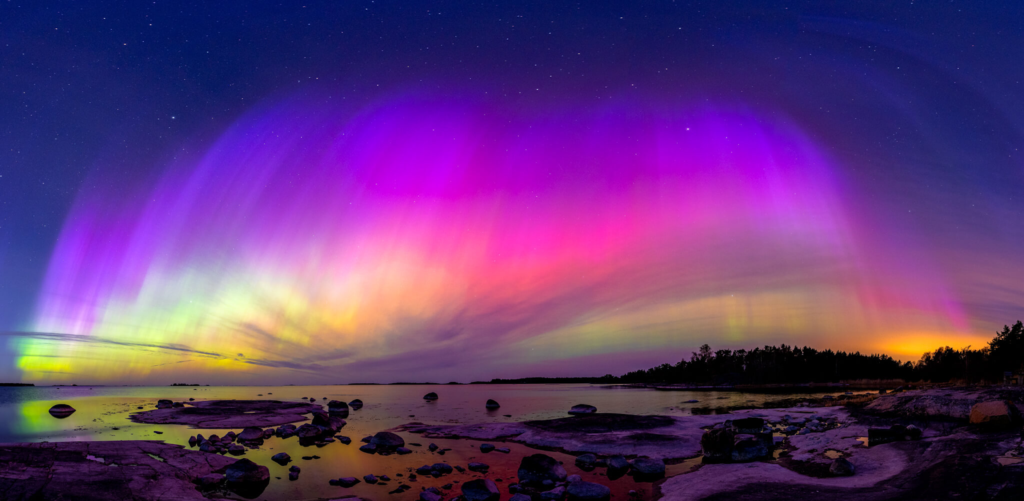
In a small Texas town, a resident filming the stars noticed the sky slowly turning purple. Not faint lavender—but deep violet and magenta stretching across the horizon.
At first, online commenters accused the video of being fake or color-enhanced.
Then NOAA confirmed a severe geomagnetic storm was impacting Earth at that exact moment.
Satellite data aligned perfectly with the footage. The aurora was real—and extremely rare for that latitude.
Alabama’s Blood-Red Columns
In rural Alabama, residents described the sky as “on fire.” Photos showed vertical red beams that looked like pillars rising from the horizon.
Scientists identified the event as a high-altitude oxygen emission, but admitted the intensity and structure were unusual for the region.
The White Aurora Over Europe
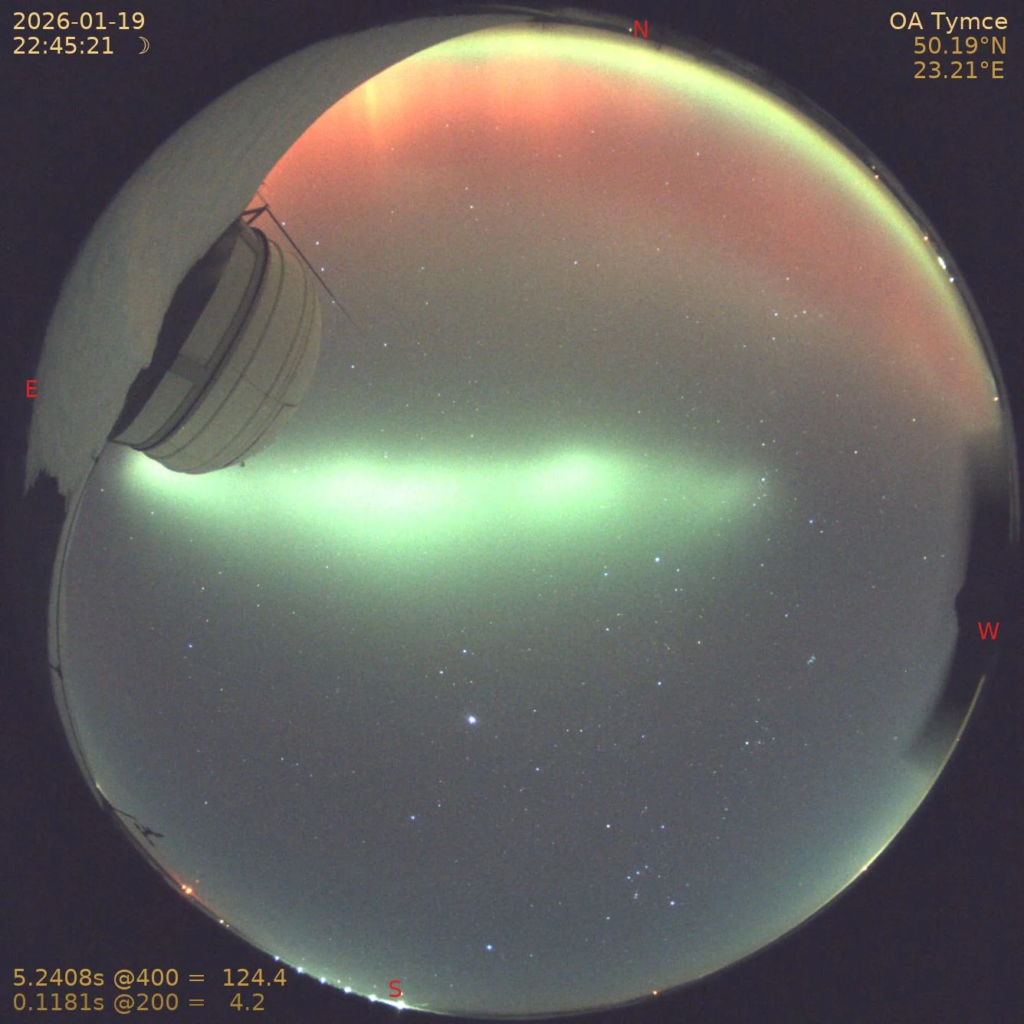
In parts of the United Kingdom and Germany, observers captured auroras that appeared pure white, glowing like illuminated clouds.
Researchers believe overlapping emissions at different altitudes may be responsible, but the phenomenon is still under active study.
These examples aren’t isolated. They’re part of a growing global pattern.
Are These Aurora Colors Real—or Just Camera Tricks?
One of the most common questions Americans ask is whether these viral aurora videos are exaggerated by smartphones.
The truth is nuanced.
Modern cameras—especially phones—are incredibly sensitive to low light. They can:
- Amplify faint purples and reds
- Capture color gradients invisible to the naked eye
- Increase saturation through night mode
However, cameras do not invent auroras.
NASA and NOAA routinely confirm auroral events using:
- Ground magnetometers
- Satellite particle detectors
- Space weather models
In many cases, public videos have matched scientific data exactly—proving the colors are real, even if enhanced.
Why Scientists Say Some Aurora Colors Are “Not Fully Understood”
This phrase has fueled headlines, but it’s important to understand what scientists actually mean.
They are not saying:
- Physics is broken
- Auroras are supernatural
- Data is unreliable
They are saying:
- Extreme solar storms behave unpredictably
- Multiple atmospheric layers may interact in complex ways
- Particle acceleration mechanisms may be more dynamic than assumed
NASA researchers have acknowledged that recent solar activity has pushed Earth’s magnetic environment into conditions rarely observed before.
In science, that’s where discovery begins.
The Role of Solar Maximum: Why This Is Happening Now
The Sun follows an approximately 11-year cycle of activity. During solar maximum, sunspots, flares, and solar storms increase dramatically.
We are currently in or near one of the strongest solar maximum phases in decades.
This means:
- More solar particles hitting Earth
- Stronger geomagnetic storms
- Auroras reaching farther south
- More intense and varied colors
In short, Earth is being bombarded with energy—and the aurora is how we see it.
Why Auroras Are Appearing Farther South in the U.S.
Historically, most Americans never expected to see an aurora without traveling north.
That assumption is no longer safe.
During powerful geomagnetic storms:
- Earth’s magnetic field compresses
- Auroral ovals expand
- Light becomes visible thousands of miles from the poles
That’s why:
- Texans saw purple skies
- Californians saw red arcs
- Floridians captured faint pink glows
This shift has driven a massive surge in U.S.-based aurora searches.
Emotional Reactions: Why These Auroras Feel Different
People don’t just say these auroras are beautiful.
They say:
- “I cried.”
- “It felt unreal.”
- “I’ll never forget it.”
Psychologists describe this reaction as awe, an emotion triggered by vast, unexpected experiences.
Studies show awe can:
- Reduce stress
- Increase curiosity
- Strengthen emotional memory
This explains why aurora videos go viral—and why people keep searching for meaning behind them.
How Citizen Videos Are Changing Aurora Science
One of the most important developments is citizen science.
Today, millions of people carry high-quality cameras everywhere. When auroras appear:
- Thousands of videos emerge instantly
- Scientists gain wide geographic coverage
- Rare patterns are documented from multiple angles
NASA and NOAA now actively encourage public submissions during major space weather events.
In many cases, scientists first notice unusual auroras through social media footage.
Do These Aurora Colors Mean Something Dangerous Is Happening?
This is another top search concern.
The auroras themselves are not dangerous to people on the ground.
However, the solar storms that cause them can:
- Disrupt GPS signals
- Affect satellite communications
- Stress electrical grids
That’s why space weather monitoring is taken seriously.
Think of auroras as Earth’s visible warning sign—beautiful, but informative.
Can You See These Unbelievable Aurora Colors Yourself?
Yes—and you don’t need to live in Alaska.
To improve your chances:
- Monitor NOAA’s Space Weather Prediction Center
- Watch for KP Index values of 7 or higher
- Find dark locations away from city lights
- Use your phone’s night mode or a long-exposure camera
Many Americans who never planned to see an aurora have done so by pure chance—simply by looking up.
Key Takeaways for Readers
- Aurora colors are becoming more diverse and visible across the U.S.
- Cameras enhance details but don’t fabricate auroras
- Scientists understand the basics—but not every detail
- Solar maximum is driving stronger events
- Anyone can witness an aurora under the right conditions
Frequently Asked Questions (SEO-Optimized)
1. Why are auroras showing purple and red colors now?
Stronger solar storms excite nitrogen and high-altitude oxygen, producing rarer colors.
2. Are scientists really confused about auroras?
They understand the fundamentals but admit some recent patterns challenge existing models.
3. Can auroras appear in southern states like Texas?
Yes. During intense geomagnetic storms, auroras can reach deep into the southern U.S.
4. Are viral aurora videos real?
Many are verified by satellite and ground-based data, though some are color-enhanced.
5. Why do some auroras look white?
Overlapping emissions and human eye limitations can make bright auroras appear white.
6. Is it safe to watch auroras?
Yes. Auroras pose no direct health risks.
7. Do auroras mean a solar storm is happening?
Yes. Auroras are visual evidence of solar particles interacting with Earth’s atmosphere.
8. Will auroras become more common in the future?
They may increase during periods of high solar activity, like solar maximum.
9. Can auroras damage electronics?
Indirectly. The solar storms behind them can affect satellites and power systems.
10. What’s the best way to track auroras in the U.S.?
NOAA alerts, space weather apps, and astronomy forecasts are the most reliable tools.
Final Thoughts: A Sky Still Full of Mysteries
The aurora has always been a symbol of wonder—but today’s unbelievable colors remind us that even in a world mapped by satellites and science, mystery remains.
Each unexplained hue is not a failure of science—but an invitation to learn more.
And sometimes, the most extraordinary discoveries begin not in laboratories, but in quiet backyards—when someone looks up and presses “record.”