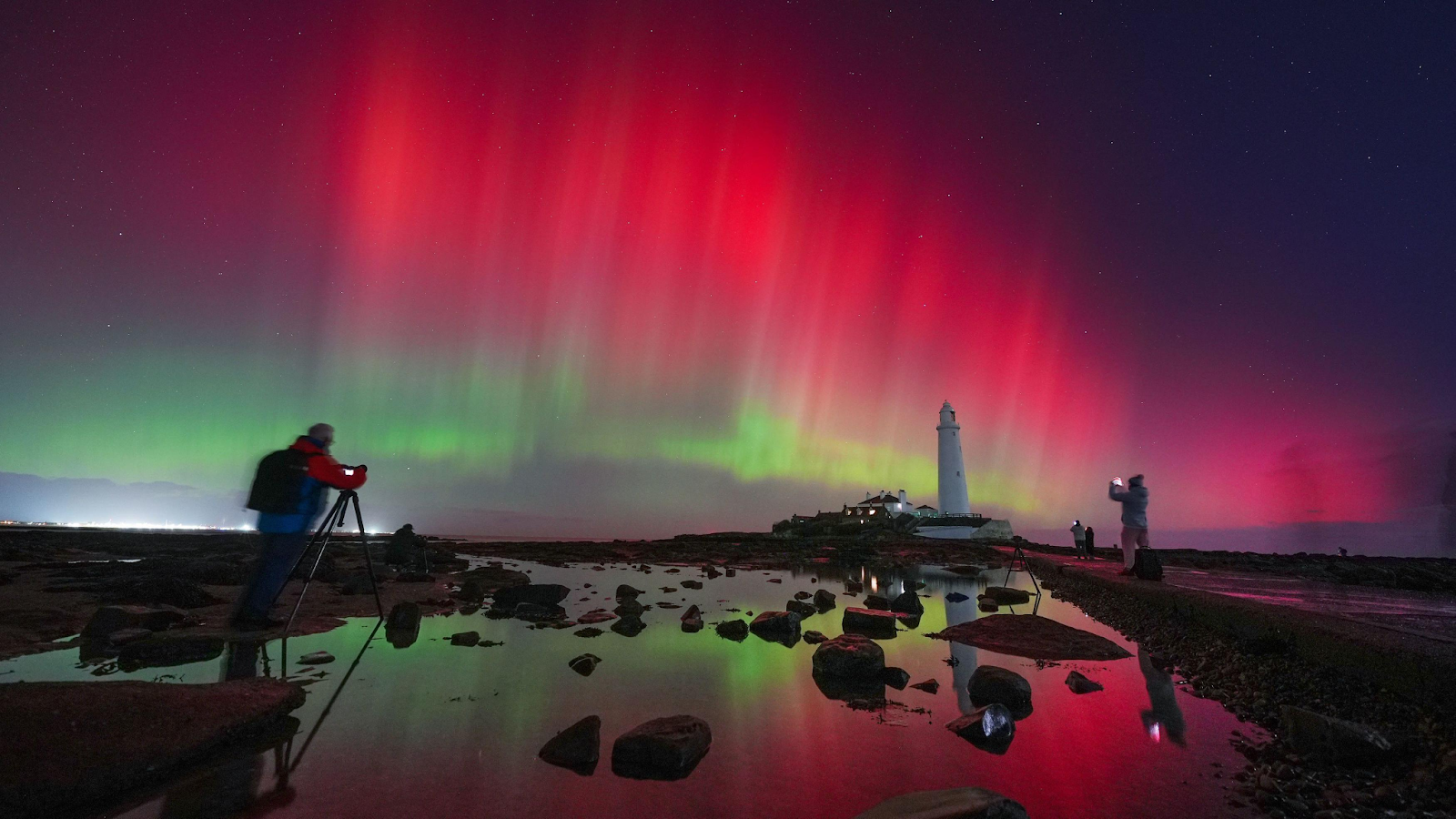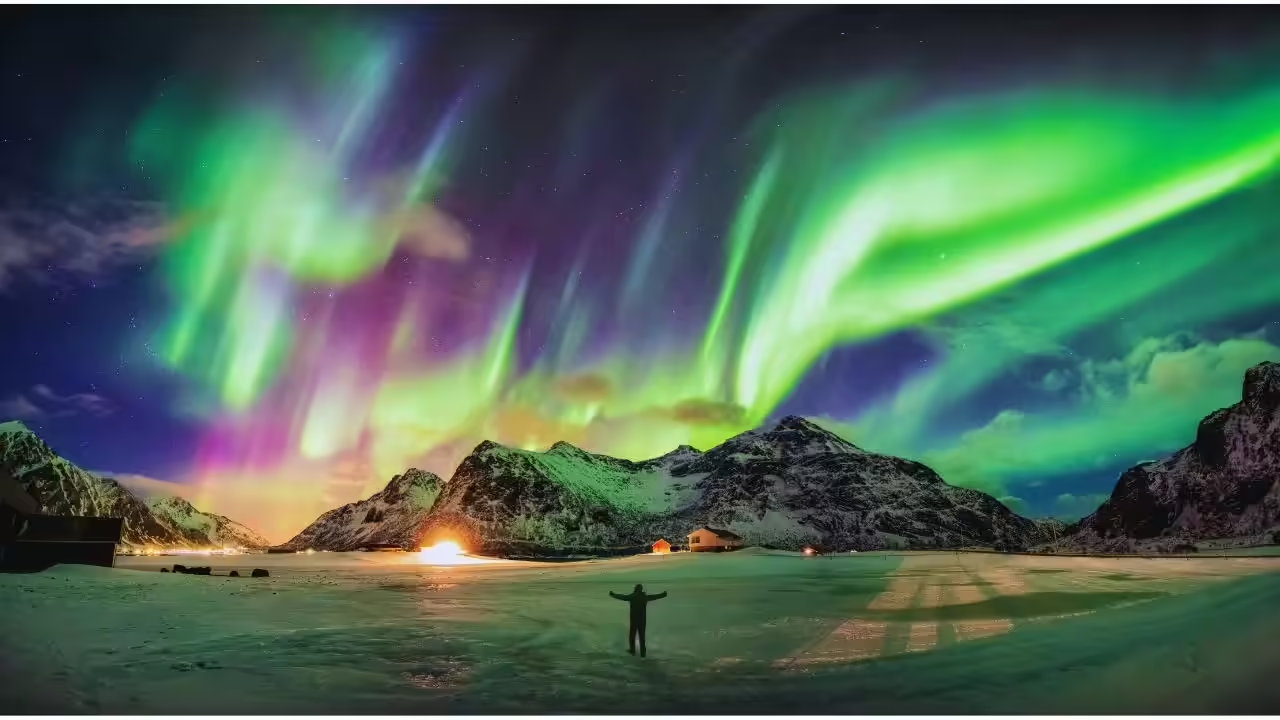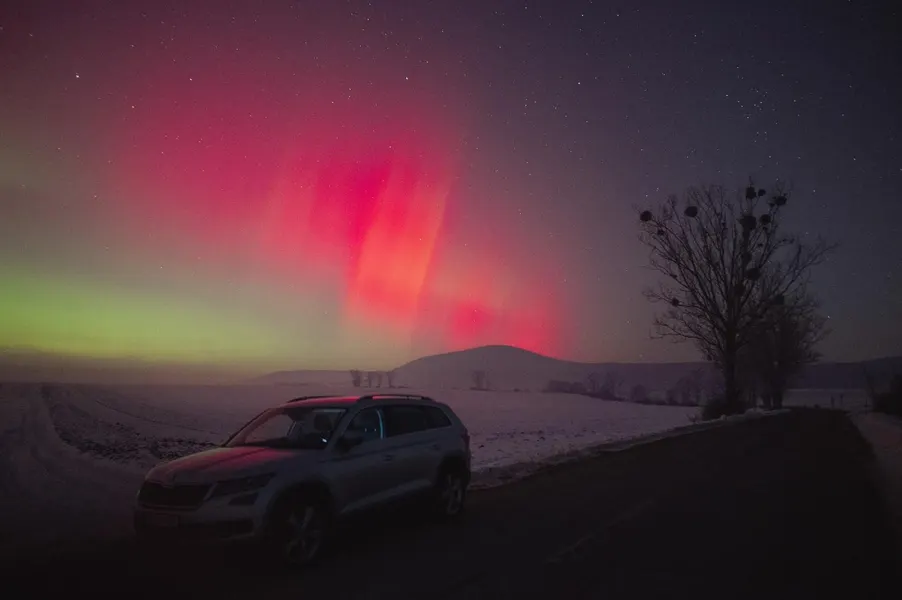
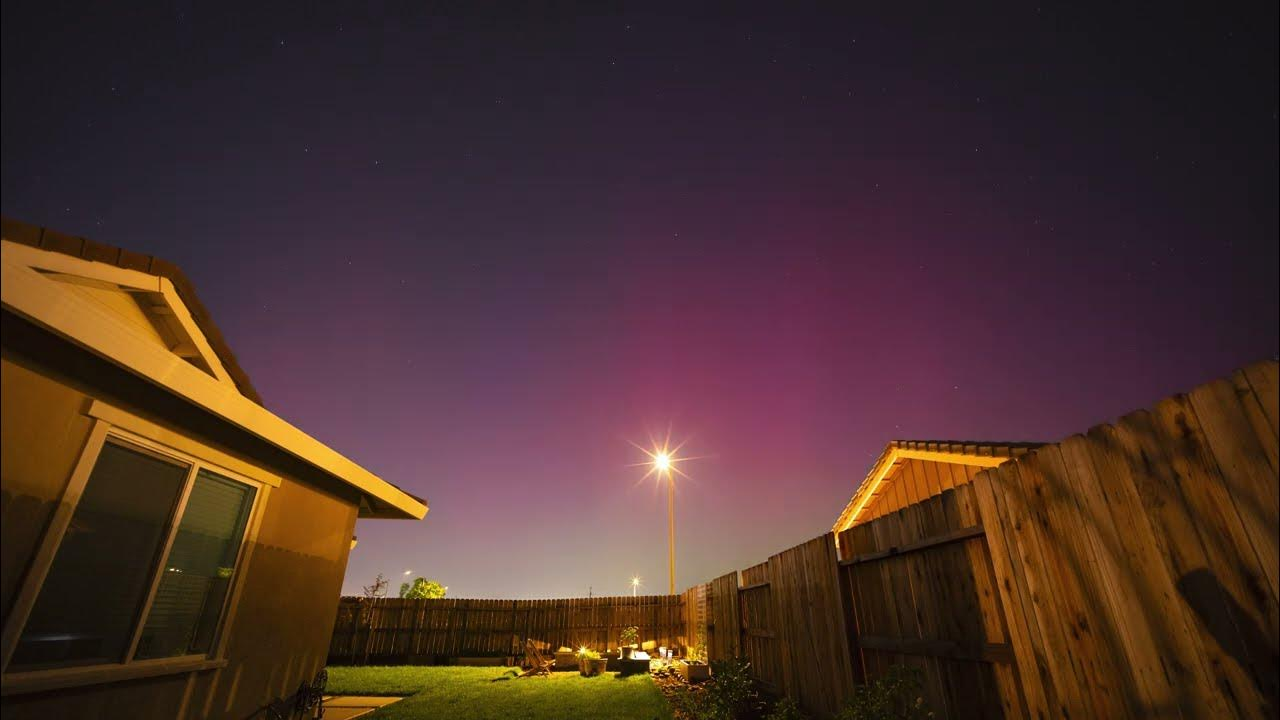
I never expected to see the Northern Lights without leaving home—but one quiet night, a rare aurora appeared right over my backyard. Fueled by rising solar activity and better aurora alerts, backyard sightings are becoming more common across the U.S. This in-depth guide explains how it happened, what to look for, and how you can spot an aurora from home—no travel required.
I Used to Believe Auroras Were Only for Big Trips
For most of my life, the Northern Lights felt distant—something you had to earn with plane tickets, Arctic hotels, and freezing nights in far-off places like Iceland, Norway, or Alaska.
I live in a normal neighborhood.
Streetlights. Trees. Neighbors. Traffic noise.
Nothing about my backyard suggested “bucket-list sky phenomenon.”
So when people talked about auroras showing up farther south, I assumed they meant rare, exaggerated, or camera-only sightings. I never imagined I’d witness one myself—let alone from home.
That assumption turned out to be wrong.
The Night Everything Changed in My Own Backyard
It wasn’t planned. There was no aurora chase, no tripod setup, no dramatic anticipation.
I stepped outside late in the evening—one of those quiet moments when the neighborhood finally settles down—and noticed something strange near the northern horizon. It wasn’t bright. It wasn’t colorful. It was just… different.
A faint glow hovered above the trees, almost like thin cloud cover reflecting distant city light.
Then it shifted.
Not fast. Not dramatically. Just enough movement to make my brain pause and say, “Clouds don’t do that.”
I stood there longer. My eyes adjusted. The glow deepened ever so slightly—just enough green to be unmistakable once I recognized it. I pulled out my phone, snapped a photo, and the screen confirmed it.
I was looking at a real aurora.
From my backyard.
No travel required.
Can You Actually See the Aurora from Home?
This is one of the fastest-growing questions Americans are asking right now—and for good reason.
Yes, it is absolutely possible to see an aurora from your backyard, depending on where you live and what the Sun is doing.
You don’t need:
- Remote wilderness
- A professional camera
- A once-in-a-lifetime vacation
You do need:
- Favorable solar activity
- Decent darkness
- Awareness of what auroras look like at lower latitudes
Thanks to increasing solar activity, backyard auroras are becoming more frequent across large parts of the United States.
Why Backyard Auroras Are Becoming More Common
According to NASA and NOAA’s Space Weather Prediction Center, the Sun follows an approximately 11-year solar cycle. During the most active phase—called solar maximum—the Sun releases more energy in the form of solar flares and coronal mass ejections (CMEs).
We are currently approaching solar maximum, expected around 2025–2026.
During this phase:
- Geomagnetic storms become more frequent
- The auroral oval expands farther south
- Auroras appear in places that rarely see them
That’s the scientific reason backyard auroras are no longer just rumors.
What a Backyard Aurora Really Looks Like (Honest Expectations)
This part is important, because social media can be misleading.
From my backyard, the aurora was:
- Subtle at first
- Easier to notice in motion than color
- Soft green rather than neon
- Much clearer in photos than with my eyes
It didn’t look like a postcard.
It looked like a secret.
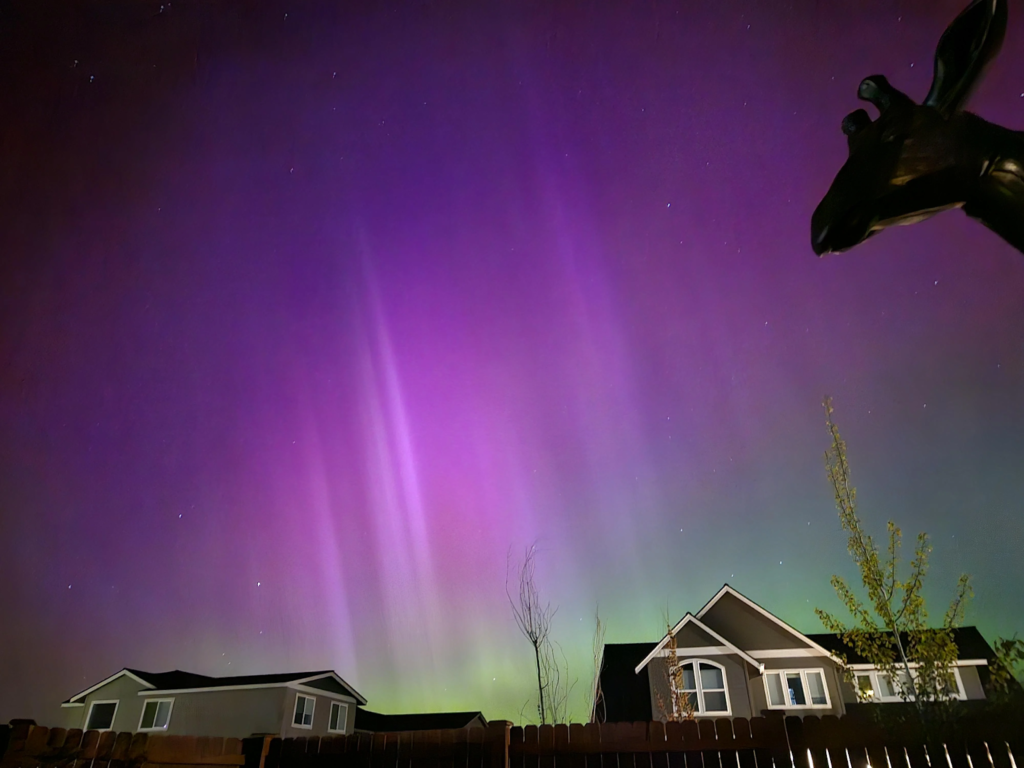
And that’s exactly why many people miss backyard auroras—they expect something dramatic right away.
Why Most People Walk Right Past Backyard Auroras
After sharing my experience, I heard the same response repeatedly:
“I was outside that night too—I didn’t see anything.”
In many cases, they probably did see it without realizing it.
Common reasons backyard auroras are missed:
- Assuming auroras must be bright to be real
- Looking for color instead of motion
- Checking the sky for only a few minutes
- Standing near bright lights
- Mistaking auroras for clouds or haze
Auroras often whisper before they shout.
How I Accidentally Did Everything Right
I didn’t plan the sighting—but I unknowingly followed several best practices that made the difference.
What worked in my favor:
- I stepped outside during peak aurora hours
- I faced north naturally
- I wasn’t staring at my phone
- I stayed outside long enough for my eyes to adjust
- I noticed movement instead of brightness
Most missed auroras come down to one thing: people don’t stay outside long enough.
Do You Need Aurora Alerts to See One?
Aurora alerts help—but they aren’t required.
After my sighting, I checked space-weather data and learned:
- The Kp index had reached 5 that night
- NOAA had issued a geomagnetic storm watch
- Aurora alerts were active for northern states
I didn’t know any of that beforehand.
Now, I use alerts as a tool—not a guarantee.
How Aurora Alerts Actually Work (In Plain English)
Aurora alerts are probability indicators, not promises.
They’re based on:
- Solar wind speed and density
- Magnetic field orientation
- Earth’s geomagnetic response
When alerts say “aurora possible,” they mean:
Conditions are favorable if everything else lines up.
Alerts can’t control clouds, light pollution, or whether you step outside at the right time.
How Far South Can Backyard Auroras Appear?
This is one of the most common U.S. search queries right now.
During strong geomagnetic storms, auroras have been documented in:
- Michigan
- Minnesota
- Wisconsin
- North Dakota
- Montana
- Maine
- Washington
- Illinois (rare events)
- Pennsylvania (usually red glows)
Backyard auroras are most common in northern states—but they’re not limited to them during intense solar activity.
Why Phone Cameras Reveal Auroras You Can’t See
Many people only believe they saw an aurora after checking their photos.
That’s because:
- Phone cameras collect light over time
- Night modes amplify faint color
- Sensors detect green wavelengths better than eyes
This doesn’t make the aurora fake.
It makes your camera more sensitive.
Ironically, many backyard auroras are first noticed through the screen.
What Colors Backyard Auroras Usually Show
In lower latitudes, auroras often appear:
- Pale green
- Whitish green
- Red or pink near the horizon
Bright green curtains are more common farther north. Subtle colors dominate backyard sightings—and that’s completely normal.
How to Increase Your Chances of Seeing an Aurora from Home
You don’t need advanced knowledge. You just need to stack the odds.
Simple, proven steps:
- Check NOAA aurora forecasts
- Watch for Kp index 5 or higher
- Step outside between 10 PM and 2 AM
- Face north with an open view
- Turn off nearby lights
- Stay outside at least 20–30 minutes
Auroras often come in waves, not all at once.
What I’ll Do Differently Next Time
Once you see one aurora, you start thinking about the next.
Next time, I’ll:
- Enable aurora alerts
- Keep a tripod handy
- Identify darker angles in my yard
- Track solar activity more closely
The first aurora changes how you look at the sky forever.
Why Backyard Auroras Feel More Emotional Than Travel Auroras
Travel auroras are spectacular.
But backyard auroras feel personal.
They:
- Break expectations
- Appear unannounced
- Transform ordinary places into extraordinary moments
Seeing something cosmic from your own home leaves a deeper imprint than any postcard-perfect view.
Are Backyard Auroras Safe?
Yes—completely.
Auroras are:
- Natural
- Harmless
- Caused by solar particles interacting with Earth’s atmosphere
NASA confirms there is no danger to people on the ground.
Why More Americans Are Seeing Auroras at Home
Three major reasons explain the surge:
- Rising solar activity
- Better forecasting tools
- Smartphone cameras revealing faint auroras
Together, they’ve turned backyard auroras from myth into possibility.
Frequently Asked Questions (Trending U.S. Searches)
1. Can you really see the Northern Lights from your backyard?
Yes, under the right solar and sky conditions.
2. Do you need to live in Alaska?
No. Many northern U.S. states now see auroras during strong storms.
3. What time should I look?
Between 10 PM and 2 AM local time.
4. What does a backyard aurora look like?
Often faint, greenish, and easier to notice in motion.
5. Why didn’t I see one even with an alert?
Clouds, light pollution, timing, or patience may have been factors.
6. Are phone photos reliable?
Yes. Cameras often capture auroras better than human eyes.
7. Is this related to climate change?
No. Auroras are driven by solar activity.
8. How often do backyard auroras happen?
Several times per year during active solar periods.
9. Are auroras dangerous?
No. They are completely safe to observe.
10. Will backyard auroras keep happening?
Yes. Solar activity will increase toward solar maximum.
Final Thoughts: You Don’t Have to Go Anywhere to Be Amazed
I used to think the Northern Lights belonged to far-off places.
Now I know better.
Sometimes, the universe puts on a show exactly where you are—if you’re willing to step outside, slow down, and look up.
So the next time you hear about aurora alerts, don’t scroll past them.
Walk into your backyard.
Face north.
Give the sky a chance.
You might be surprised.