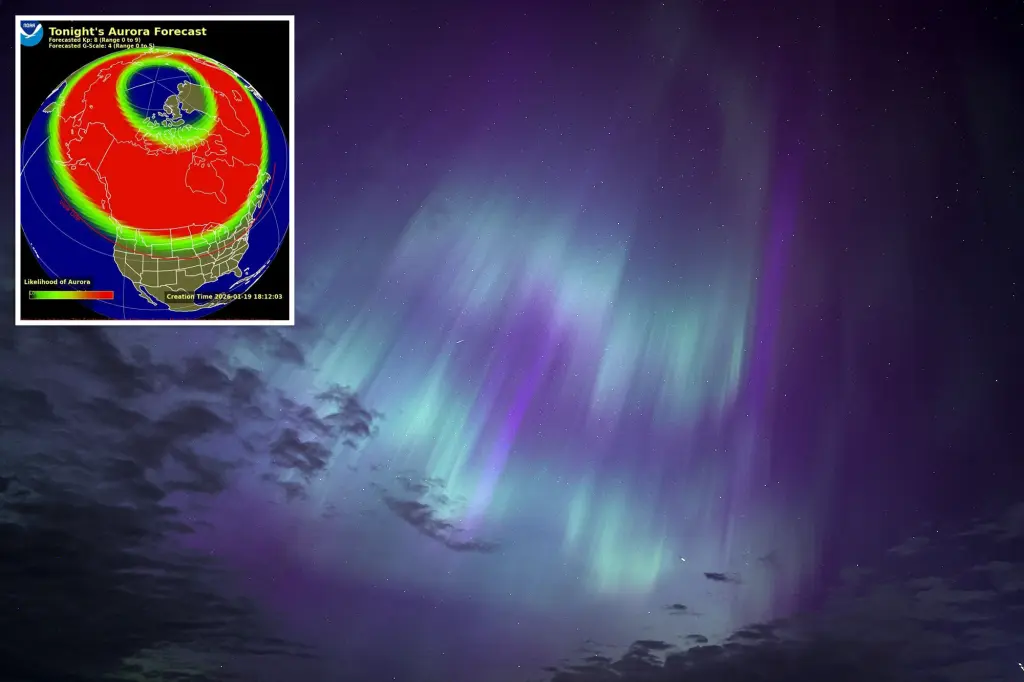
A powerful aurora event driven by intense solar activity is expected to light up skies across large parts of the United States, but experts warn it could also cause temporary GPS and satellite navigation disruptions. As charged solar particles interact with Earth’s magnetic field, Americans may experience breathtaking Northern Lights alongside minor technology interference—making this one of the most impactful space-weather events in recent years.
A Rare Night Where Beauty and Technology Collide
For many Americans, the Northern Lights represent wonder, mystery, and once-in-a-lifetime beauty. They are something you travel thousands of miles to see, hoping the weather cooperates and the Sun behaves just right. But this time, the aurora isn’t just a visual spectacle—it’s also a reminder of how deeply modern life depends on space-based technology.
Experts are warning that an incoming strong geomagnetic storm could deliver brilliant auroral displays while simultaneously causing temporary GPS disruptions. That combination—stunning skies paired with technological side effects—is rare, and it has captured the attention of scientists, airlines, farmers, emergency planners, and everyday Americans alike.
This isn’t a reason for panic. It’s a moment of awareness. The same forces painting the sky with cosmic color are also interacting with the invisible systems that guide planes, tractors, ships, and smartphones.
Why Experts Are Issuing Warnings Alongside Aurora Alerts
Aurora alerts are common during periods of heightened solar activity. Warnings about GPS disruption are not.
When scientists include technology impacts in their advisories, it signals that the solar storm involved is strong enough to disturb Earth’s upper atmosphere, not just create pretty lights. Agencies such as NOAA’s Space Weather Prediction Center closely monitor these conditions and issue guidance so industries and the public can prepare.
This event stands out because:
- Auroral visibility could extend far into the continental U.S.
- The ionosphere may become unstable
- Satellite-based navigation signals could be temporarily distorted
In short, the storm is energetic enough to be both visually stunning and technologically relevant.
What’s Causing This Powerful Aurora Event?
The source of this event is the Sun—specifically, a surge of solar energy directed toward Earth.
Auroras occur when charged particles from the Sun collide with Earth’s magnetic field and atmosphere. These collisions energize gases like oxygen and nitrogen, causing them to emit light. Normally, Earth’s magnetic field channels these particles toward the poles.
This event is different.
It was triggered by:
- A coronal mass ejection (CME) erupting from the Sun
- Solar wind traveling at unusually high speeds
- Increased particle density compressing Earth’s magnetosphere
- Favorable magnetic alignment allowing particles to penetrate deeper
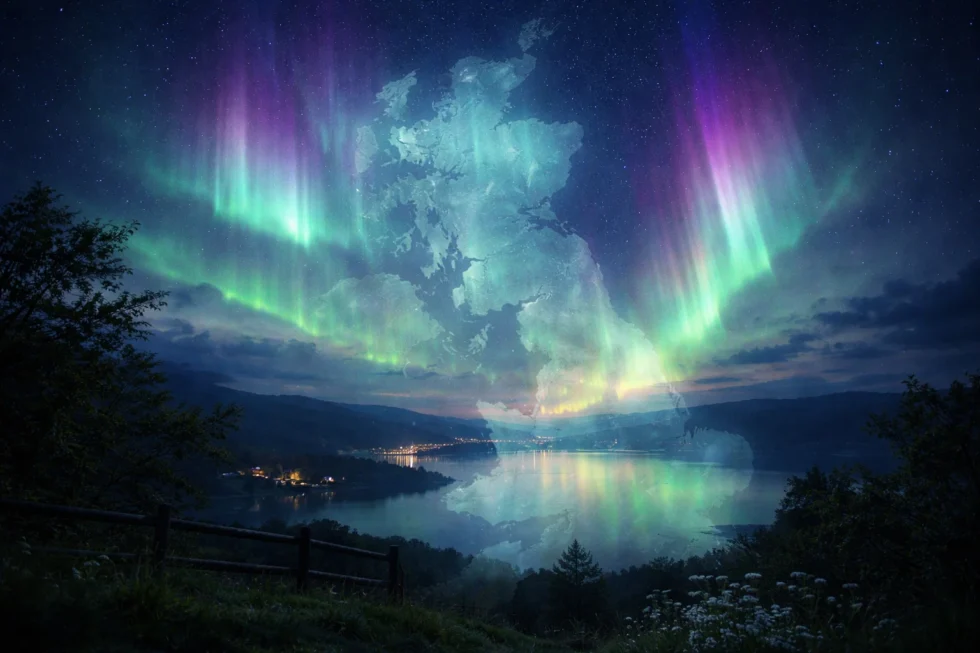
When these conditions align, auroras expand southward—and the ionosphere becomes turbulent.
How Can an Aurora Event Disrupt GPS?
This is the question Americans are asking most—and the answer lies in how GPS works.
GPS satellites transmit highly precise timing signals to receivers on Earth. Those signals must pass through the ionosphere, a charged layer of Earth’s upper atmosphere.
During strong geomagnetic storms:
- The ionosphere becomes unstable
- Signal paths bend or scatter
- Timing accuracy can degrade
The result isn’t a total GPS outage, but temporary reductions in accuracy.
For everyday smartphone users, this may go unnoticed. For industries that depend on centimeter-level precision, it matters.
Real-World Examples of GPS Disruption During Past Aurora Events
This phenomenon isn’t hypothetical.
During the March 2015 geomagnetic storm, GPS systems worldwide recorded measurable errors. Surveyors reported positioning issues, and pilots noted minor navigation anomalies.
The October 2003 “Halloween storms” caused even more significant effects, disrupting satellite systems and forcing airlines to reroute flights away from polar regions.
More recently, farmers using GPS-guided tractors during aurora storms have reported:
- Temporary loss of precision
- Slight steering deviations
- Brief pauses in automated operations
These examples show how space weather can influence daily life without creating widespread danger.
Who Is Most Likely to Notice GPS Issues?
Most Americans will not notice any disruption at all. But certain sectors rely heavily on precise satellite navigation.
Groups most sensitive to GPS interference:
- Commercial aviation
- Maritime navigation
- Emergency response services
- Precision agriculture
- Surveying and construction
- Scientific research
It’s important to note that redundant systems and training are built into these fields to handle temporary disruptions safely.
What Will the Aurora Look Like During This Event?
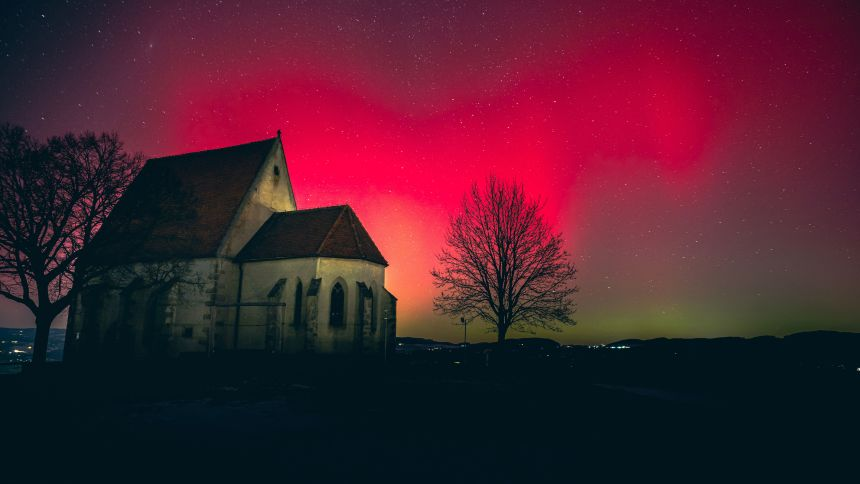
Despite the warnings, this event is expected to be visually spectacular.
Auroras seen from the continental U.S. often appear more subtle than Arctic displays—but strong storms can produce dramatic effects.
Common visual features include:
- Green or whitish glows near the horizon
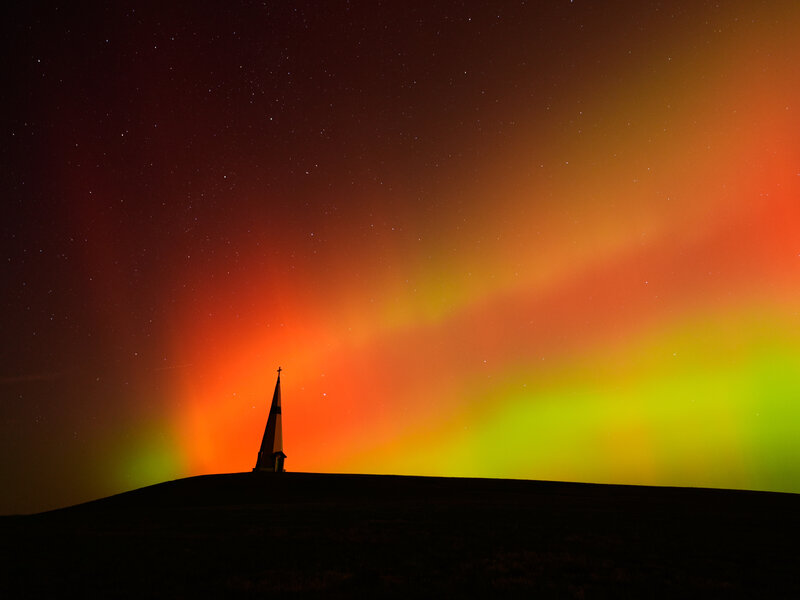
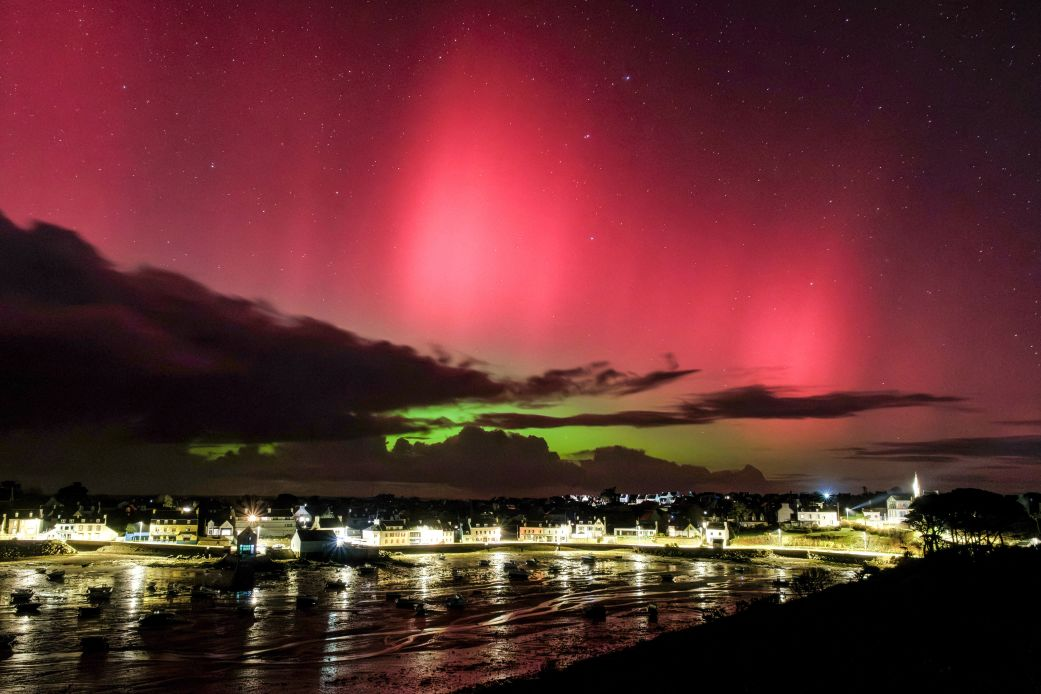
- Red and pink hues during intense bursts
- Slow rippling or pulsing motion
- Colors that appear brighter in photos
Many first-time viewers mistake auroras for thin clouds or distant light pollution until the glow begins to move.
Why Cameras Capture Auroras Better Than Human Eyes
Modern cameras—especially smartphone night modes—are incredibly effective at detecting auroras.
Cameras:
- Collect light over longer exposures
- Amplify faint colors
- Capture subtle motion
This is why many Americans only realize they’ve seen the aurora after reviewing their photos.
When Is the Best Time to Watch the Sky?
Auroras follow general patterns, though they remain unpredictable.
Best viewing window:
- Usually 10:00 PM to 2:00 AM local time
- Strong storms may produce earlier or later activity
Best conditions:
- Clear skies
- Low light pollution
- A northern-facing view
During past events, auroras have appeared suddenly and vanished just as quickly—making patience essential.
Is This Event Linked to the Sun’s Solar Cycle?
Yes—and this is critical to understanding why events like this are becoming more frequent.
The Sun operates on an 11-year solar cycle, alternating between quiet and active phases. We are approaching the peak of Solar Cycle 25, expected around 2025–2026.
As solar maximum nears:
- Solar flares increase
- CMEs become more frequent
- Geomagnetic storms intensify
Scientists have long predicted that this phase would bring more aurora alerts and more technology-related side effects.
Will Phones, Internet, or Power Be Affected?
This is a common concern—but experts emphasize reassurance.
For this event:
- Smartphones will continue to function normally
- Internet connections are not expected to be affected
- Power grids are closely monitored and not at risk
Modern infrastructure is far more resilient than during past extreme solar storms.
Why Experts Emphasize “Temporary” Disruption
The word “disruption” can sound alarming, but context matters.
Most GPS effects during aurora events are:
- Short-lived
- Localized
- Easily managed
Warnings are issued not because danger is imminent, but because awareness enables preparation.
Practical Advice for the Public
For most people, preparation is simple.
Clear takeaways:
- Expect possible minor GPS inaccuracies
- Allow extra margin when navigating
- Don’t rely solely on GPS in critical situations
- Enjoy the aurora if skies are clear
The goal is informed curiosity—not fear.
Why This Event Captures the Public Imagination
Auroras already inspire awe. Adding the idea that they can ripple through invisible technological systems makes the event even more compelling.
It reminds us that:
- Earth exists in a dynamic solar environment
- Technology depends on space conditions
- Beauty and disruption can coexist
For many Americans, that realization is as striking as the lights themselves.
How This Event Compares to Historic Solar Storms
2003 Halloween Storms
- Severe geomagnetic effects
- Widespread satellite disruption
2015 St. Patrick’s Day Storm
- Strong auroras across the U.S.
- Minor GPS and navigation effects
This event appears stronger than average, but far below catastrophic thresholds.
What If You Miss This Aurora Event?
Solar activity remains elevated.
If you miss this one:
- More aurora alerts are likely
- Solar maximum continues through 2026
- Future events may be even stronger
This is likely not the last time cosmic beauty and space weather make headlines.
Final Takeaway: A Reminder of Our Connection to the Sun
This aurora event offers a rare combination of breathtaking beauty and scientific significance.
Experts warn of possible GPS disruptions not to alarm—but to inform. For most Americans, this night will be remembered not for navigation issues, but for looking up and seeing something unforgettable.
If skies are clear, take a moment.
Look north.
You may witness both wonder and science in action.
Frequently Asked Questions (Trending Searches)
1. Can auroras really disrupt GPS?
Yes, strong geomagnetic storms can temporarily reduce GPS accuracy.
2. Will GPS stop working completely?
No, disruptions are usually minor and short-lived.
3. Who is most affected by GPS interference?
Aviation, maritime navigation, and precision industries.
4. Are smartphones affected?
Smartphones generally continue to work normally.
5. What causes GPS disruption during auroras?
Ionospheric turbulence caused by charged solar particles.
6. Is this aurora event dangerous?
No, it is visually stunning but not dangerous.
7. What time should I look for the aurora?
Usually between 10 PM and 2 AM local time.
8. Will there be power outages?
No widespread outages are expected.
9. Is this related to solar flares?
Yes, solar flares and CMEs trigger geomagnetic storms.
10. Will events like this become more common?
Yes, as the Sun approaches solar maximum.