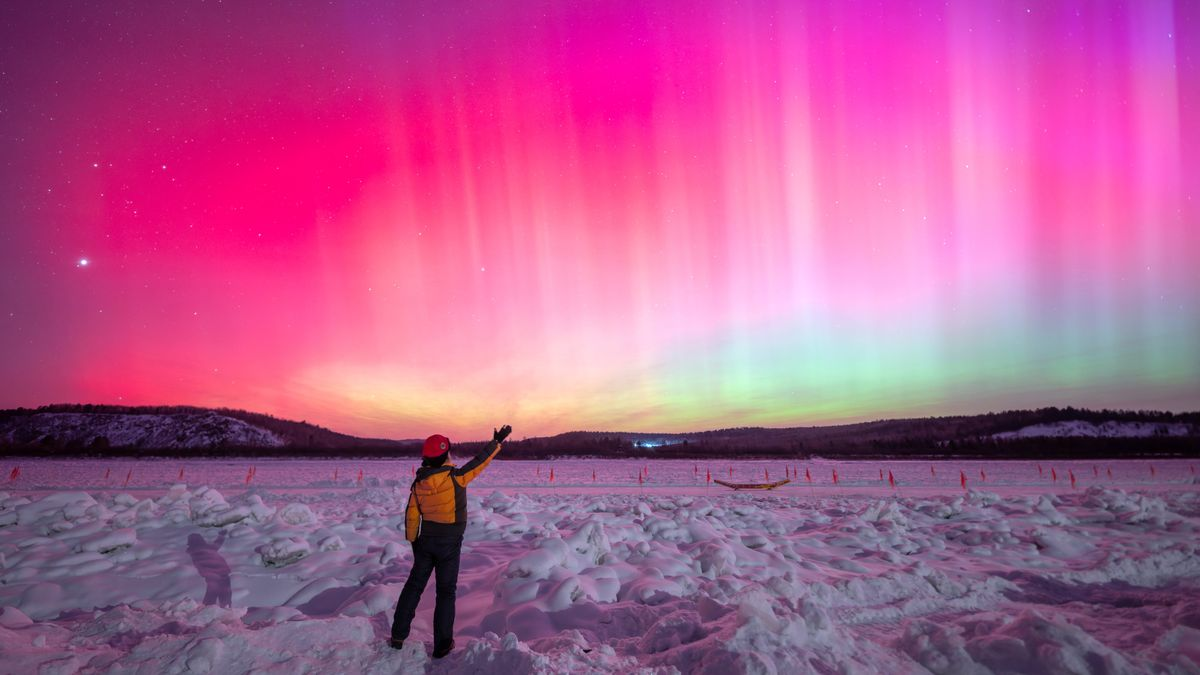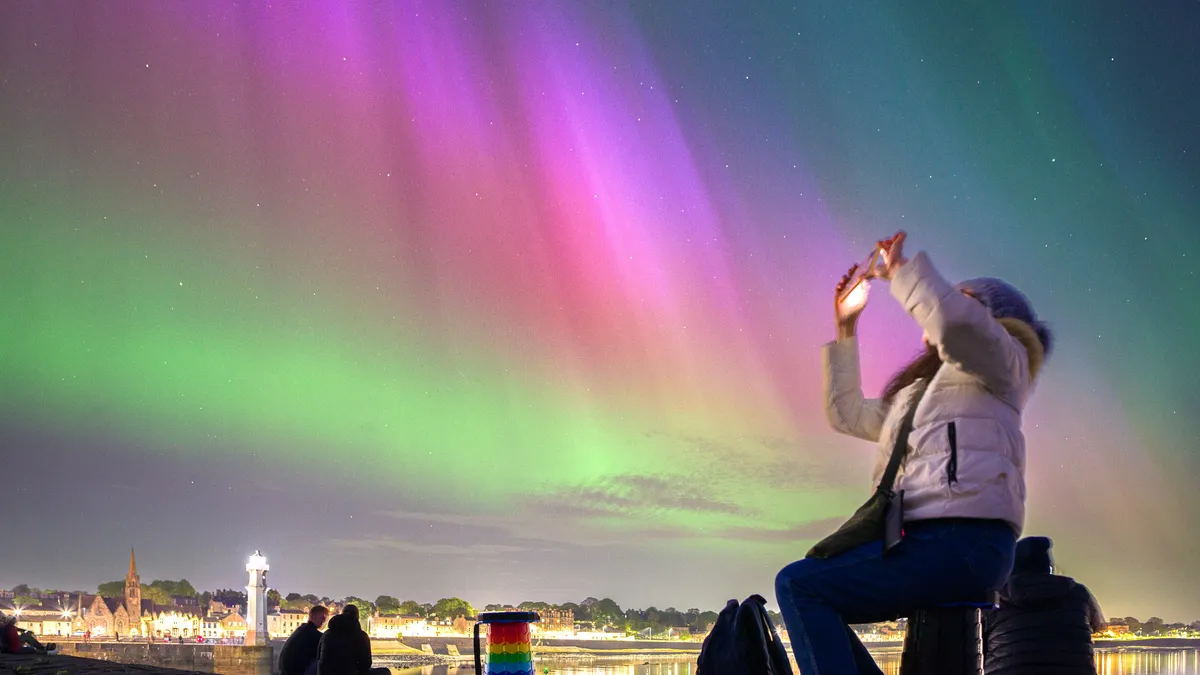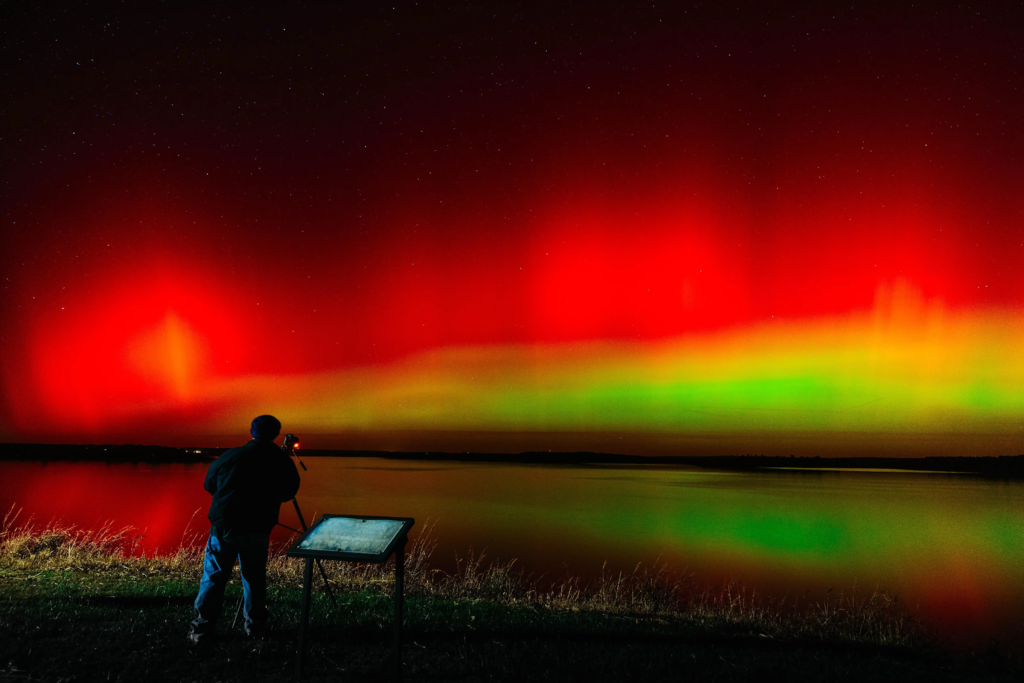
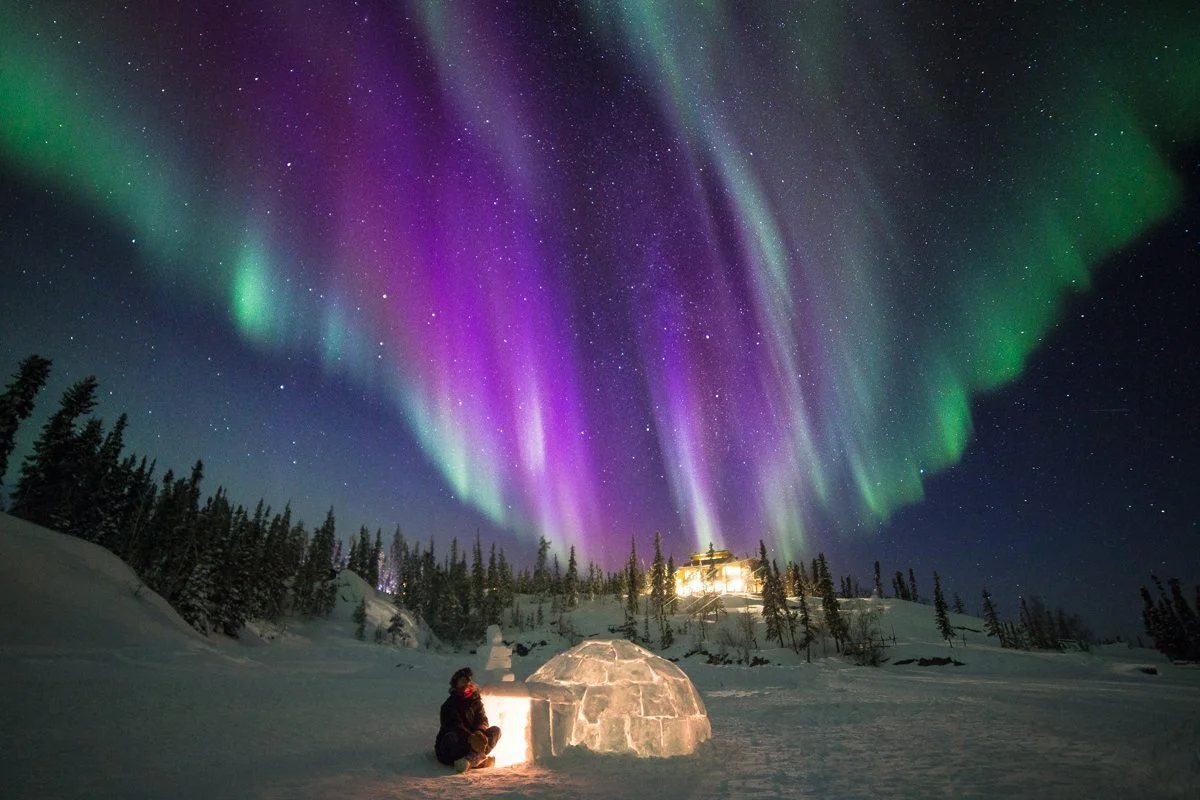
During rare solar storms, the aurora borealis has appeared far beyond the Arctic—lighting up skies over Texas, Ohio, Kansas, and New York. This in-depth article shares real stories from Americans who witnessed the Northern Lights in unexpected places, explains why it happens, and answers the most searched questions about rare low-latitude auroras using expert-backed data and practical guidance.
When the Northern Lights Ignored Geography
For generations, Americans believed the aurora borealis belonged to faraway places—Alaska, northern Canada, Iceland, or Scandinavia. The idea of seeing shimmering green or red lights in the sky from a backyard in Texas or a highway in Kansas felt impossible, almost mythical.
Yet in recent years, that belief has been challenged.
During rare but powerful geomagnetic storms, the aurora has appeared hundreds—and sometimes thousands—of miles from the Arctic Circle. These moments didn’t just surprise scientists; they stunned everyday people who never imagined witnessing one of Earth’s most magical natural phenomena from their own neighborhoods.
This article documents real stories from real people, explains the science in simple terms, and answers the most common questions Americans are asking right now about seeing the aurora far south of where it’s “supposed” to be.
What Exactly Is the Aurora Borealis?
The aurora borealis, also known as the Northern Lights, occurs when charged particles from the Sun collide with oxygen and nitrogen gases in Earth’s upper atmosphere. These collisions release energy in the form of light, creating glowing waves, arcs, and curtains across the sky.
Normally, Earth’s magnetic field directs these solar particles toward the poles. That’s why auroras are usually seen near the Arctic and Antarctic Circles.
But sometimes, the Sun doesn’t behave normally.
Why Does the Aurora Appear Far From the Arctic?
According to NASA and NOAA’s Space Weather Prediction Center, rare solar events can dramatically expand the auroral zone.
These include:
- Coronal Mass Ejections (CMEs) blasting billions of tons of plasma toward Earth
- X-class solar flares, the most powerful category
- Severe geomagnetic storms, ranked Kp 7–9
When these events strike Earth, they temporarily weaken the planet’s magnetic shield, allowing auroras to be seen much farther south than usual.
These storms are rare—but when they happen, the sky breaks its own rules.
“I Thought the Sky Was on Fire” — A Texas Family’s Shock
In May 2024, Emily Rodriguez, a mother living outside San Antonio, Texas, stepped onto her porch after a neighbor called in a panic.
“She said the horizon looked like it was burning,” Emily recalls. “I honestly thought there was a wildfire nearby.”
Instead, Emily saw something she had never seen in her life: a deep red glow stretching across the northern sky, pulsing gently like a living thing.
Her children stood silently beside her.
“My youngest asked if the Earth was breaking,” she says.
Meteorologists later confirmed that a historic geomagnetic storm had pushed the aurora as far south as Texas—something that occurs only once every decade or two.
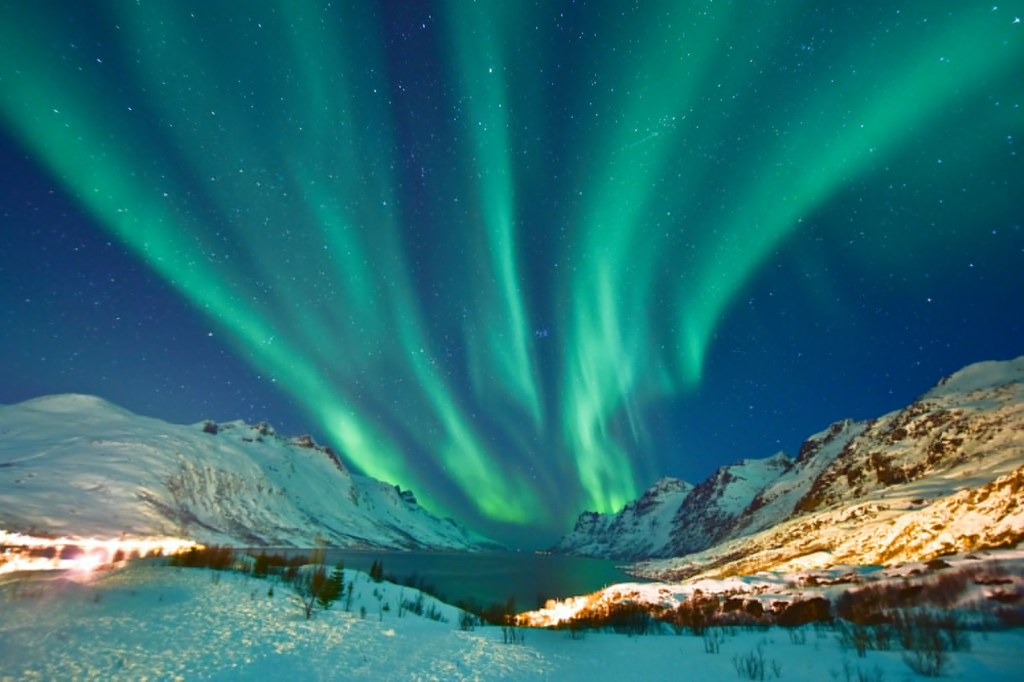
How Rare Are Southern U.S. Aurora Sightings?
Data from NOAA shows:
- Auroras typically stay above 50° latitude
- Sightings below 40° latitude are rare
- Events visible in the southern U.S. occur once every 10–20 years
This rarity explains why these moments feel so powerful—and emotional.
A Kansas Truck Stop Turned Stargazing Circle
Mark Henderson, a long-haul truck driver, was driving through western Kansas on Interstate 70 when he noticed something unusual in his mirrors.
“At first, I thought it was headlights reflecting off clouds,” he says.
Then he realized the lights weren’t coming from the road.
Mark pulled over. Three other truckers had done the same.
For several minutes, no one spoke.
“It was quiet in a way truck stops never are,” Mark recalls. “Like the sky demanded respect.”
That night, faint green arcs rippled across the plains—subtle to the naked eye, breathtaking on camera.
Why Cameras See Auroras Better Than Human Eyes
Many first-time viewers feel confused when photos look more vivid than what they saw in person.
This happens because:
- Human eyes struggle with low-light color perception
- Smartphone cameras use long exposure
- Cameras amplify faint greens and reds
In other words, your camera isn’t lying—it’s just more sensitive than your eyes.
“I’ve Farmed Here for 72 Years” — An Ohio Farmer’s Once-in-a-Lifetime View
Harold Whitman, a lifelong farmer in rural Ohio, has witnessed tornadoes, eclipses, and historic blizzards.
But nothing prepared him for the night his granddaughter urged him outside.
“The sky was moving,” Harold says. “Not clouds—light.”
Faint green columns stretched upward, slowly shifting.
“I never thought I’d see something like that here,” he says. “It made me feel small, but in a good way.”
What Do Low-Latitude Auroras Look Like?
Auroras seen far from the poles often appear different from the dramatic curtains seen in Alaska.
Common descriptions include:
- Soft green or red glows near the horizon
- Vertical light pillars
- Gentle pulsing or shimmering
- Pink and purple hues during intense storms
Many people initially mistake them for:
- Light pollution
- Distant fires
- Sunrise or sunset reflections
- Atmospheric effects
A Commuter’s Pause in New Jersey
Rachel Kim, a financial analyst commuting home late in New Jersey, noticed strangers pointing at the sky from a train platform.
“I thought someone was joking,” she says.
Above them, faint green streaks flickered between clouds.
“For once, nobody was looking at their phone,” Rachel recalls. “Everyone was just… there.”
Later that night, reports confirmed auroras across New York, Pennsylvania, and New England.
Are Auroras Becoming More Frequent?
Scientists say yes—but for a specific reason.
The Sun operates on an 11-year solar cycle, and we are currently approaching the peak of Solar Cycle 25.
NASA reports:
- Increased sunspot activity
- More frequent solar flares
- Higher chances of geomagnetic storms
This doesn’t mean auroras will become common everywhere—but it does increase the odds of rare southern sightings.
Why These Moments Feel So Emotional
Across countless interviews and social media posts, the same emotions appear again and again:
- Awe
- Disbelief
- Gratitude
- Temporary fear
- Deep connection
Psychologists say rare natural phenomena trigger a sense of collective wonder, reminding people that they are part of something much larger than daily routines.
How to Increase Your Chances of Seeing a Rare Aurora
If you hope to catch one yourself, keep these tips in mind:
- Monitor NOAA Space Weather Alerts
- Watch for a Kp index of 7 or higher
- Get away from city lights
- Look toward the northern horizon
- Use night mode on your phone
- Be patient—auroras come in waves
Common Myths About Southern Auroras
Let’s clear up a few misconceptions:
- Auroras mean the world is ending
They mean the Sun is active - You can see them every year
Strong southern auroras are rare - They are dangerous to watch
The light itself is harmless
Why These Stories Matter More Than Viral Photos
Photos capture moments. Stories preserve meaning.
What makes these sightings unforgettable isn’t just the rarity—it’s the context:
- A farmer stepping away from his fields
- A truck driver pausing mid-route
- A child asking questions no adult expects
The aurora reminds us that wonder doesn’t belong only to distant places. Sometimes, it arrives unannounced.
Final Thoughts: A Shared Human Experience
Seeing the aurora hundreds of miles from the Arctic isn’t just a scientific event—it’s a deeply human one.
It interrupts routines.
It creates instant community.
It leaves memories that last forever.
For those who witnessed it, the glow never truly fades.
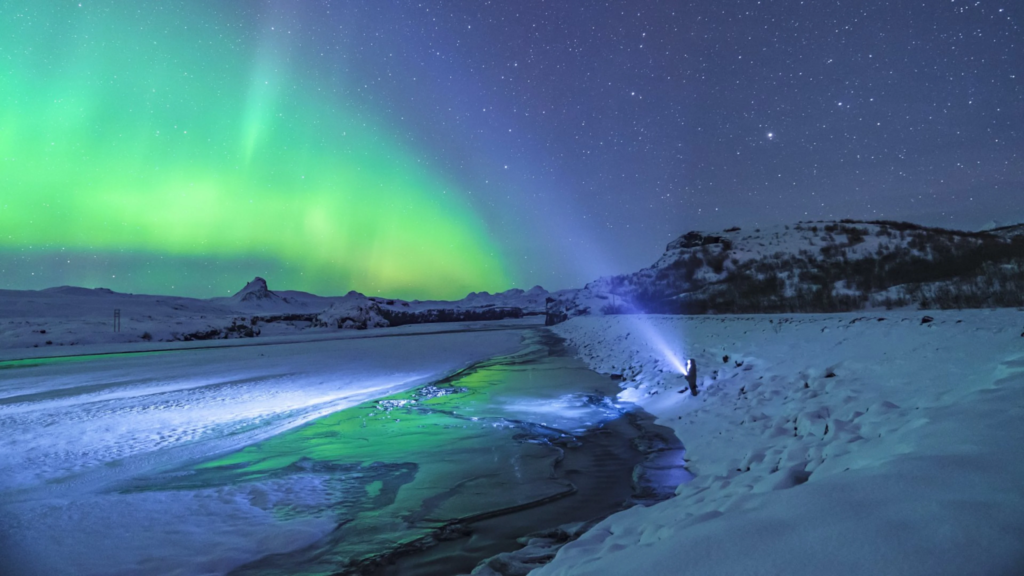
Frequently Asked Questions (FAQs)
1. Can you really see the Northern Lights in the United States?
Yes. During strong geomagnetic storms, auroras have been seen across many U.S. states, including Texas, Ohio, and New York.
2. How far south can the aurora be visible?
In extreme cases, auroras can reach latitudes as low as 25–30 degrees, though this is very rare.
3. Do auroras look different in southern states?
Yes. They are usually fainter and closer to the horizon than polar auroras.
4. Is it safe to be outside during an aurora?
Yes. Auroras pose no direct danger to human health.
5. Why are some auroras red instead of green?
Red auroras occur at higher altitudes when oxygen emits red light.
6. Can solar storms damage electronics?
Severe storms can disrupt GPS, radio signals, and power grids, but protections are in place.
7. Can auroras be predicted?
Partially. Scientists can forecast them about 24–72 hours in advance.
8. Is climate change causing more auroras?
No. Auroras are driven by solar activity, not Earth’s climate.
9. Can you see auroras with the naked eye?
Yes, though they may appear faint compared to photos.
10. When is the best time to look for auroras?
Typically between 10 PM and 2 AM during clear, dark skies.