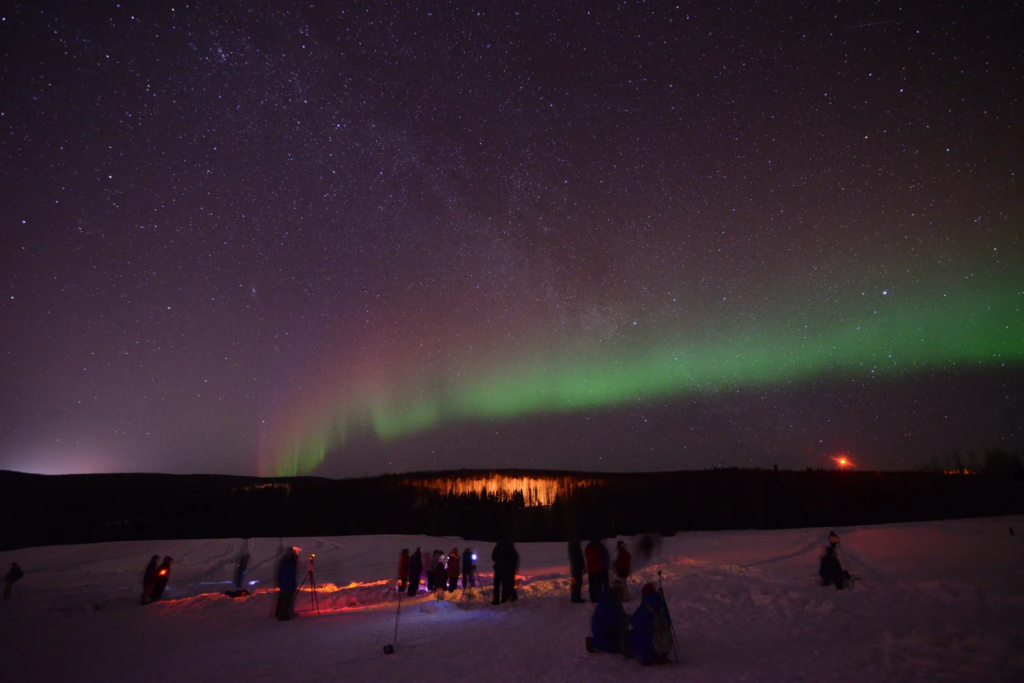
An unusually powerful geomagnetic storm could push the Northern Lights far beyond their traditional northern boundaries tonight, potentially making them visible across large parts of the central and southern United States. Scientists say heightened solar activity combined with temporary shifts in Earth’s magnetic field are responsible. This rare event highlights how space weather is evolving and why auroras may no longer be confined to polar regions.
A Night That Could Redefine Where Americans See the Northern Lights
For most Americans, the Northern Lights have always felt distant and unreachable. They were something you saw in documentaries, travel videos, or breathtaking photos from Alaska, Iceland, or Norway. The idea that auroras could be visible from the lower 48 states—especially from southern regions—sounded more like folklore than science.
Tonight, that long-held belief may be challenged.
Space weather scientists are warning that the Northern Lights could stretch farther south than many Americans have ever seen, potentially lighting up skies in places that rarely, if ever, experience auroral activity. For some people, this could be a once-in-a-lifetime moment. For others, it may signal a shift in how often these celestial displays reach unexpected locations.
What makes this moment remarkable is that it is not based on speculation or hype. It is grounded in real-time satellite data, solar observations, and decades of space weather research.
Why Scientists Are Saying the Northern Lights Could Reach So Far South Tonight
A Powerful Solar Storm Is Interacting With Earth
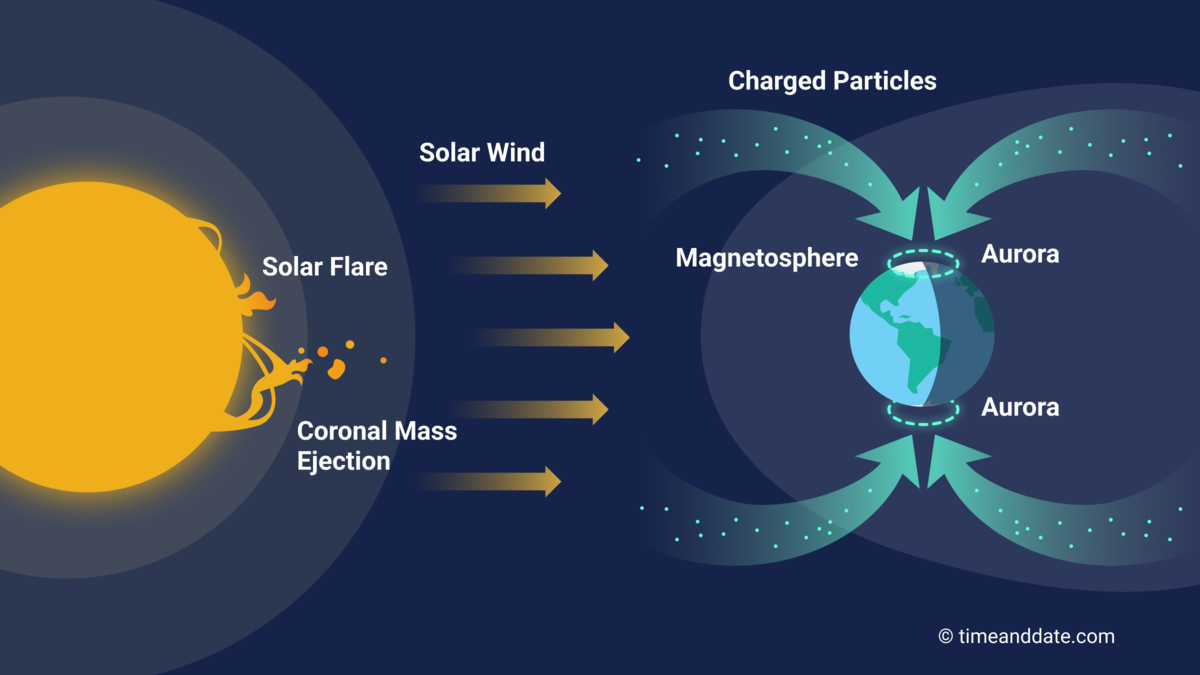
The driving force behind tonight’s potential aurora display is the Sun. Roughly every 11 years, the Sun goes through a period of heightened activity known as a solar maximum. During this phase, solar flares and coronal mass ejections—often called CMEs—become more frequent and more intense.
A coronal mass ejection is a massive cloud of charged particles ejected from the Sun at extraordinary speeds. When one of these clouds is aimed directly at Earth and arrives with the right magnetic orientation, it can trigger a geomagnetic storm.
According to scientists at the NOAA Space Weather Prediction Center, storms rated G4 (severe) or higher have the ability to push auroras far beyond their normal boundaries. Current forecasts suggest that tonight’s conditions may approach or briefly reach that level.
Real-life example:
During a similar geomagnetic storm in recent years, people living in Texas and Alabama reported faint red and pink glows along the northern horizon. At first, many assumed the light came from distant cities or industrial facilities. Later analysis confirmed those glows were auroras.
How Far South Could the Northern Lights Actually Reach
Regions With the Highest Chances Tonight
Under normal conditions, auroras remain close to the Arctic Circle. During strong geomagnetic storms, however, the auroral oval—the ring around Earth where auroras form—can expand dramatically.
If conditions align tonight, scientists say auroras could be visible in:
- Minnesota
- North Dakota
- South Dakota
- Montana
- Wisconsin
- Michigan
These states are already accustomed to occasional aurora sightings, but tonight’s storm could make the display brighter and more widespread.
Areas With Possible Visibility During Peak Storm Activity
As storm intensity increases, the auroral oval can dip farther south, potentially reaching:
- Iowa
- Nebraska
- Illinois
- Indiana
- Ohio
- Pennsylvania
- New York
In these areas, auroras may appear lower on the horizon and may be fainter, but still visible under dark, clear skies.
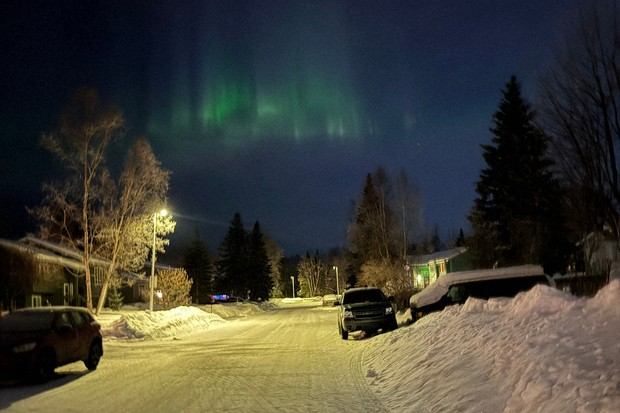
Rare but Not Impossible Sightings
During the most intense phases of a geomagnetic storm, auroras can extend even farther south, sometimes surprising residents in states such as:
- Missouri
- Arkansas
- Kentucky
- Tennessee
- North Carolina
- Northern Texas
Real-life example:
During a strong storm, residents in rural Missouri reported a strange red glow stretching across the horizon. Satellite data later showed the auroral oval passing directly overhead at that time.
The Science Behind Auroras Reaching the Southern United States
Auroras form when charged particles from the Sun collide with gases in Earth’s upper atmosphere. These collisions energize oxygen and nitrogen atoms, causing them to emit light as they return to their normal state.
Under normal conditions, Earth’s magnetic field guides most of these particles toward the polar regions. During a severe geomagnetic storm, however, that protective magnetic bubble is temporarily reshaped.
Key scientific factors that allow auroras to move south include:
- Strong solar wind pressure compressing Earth’s magnetosphere
- A southward-oriented magnetic field within the solar storm
- Extended storm duration allowing particles to accumulate
- Temporary weakening or stretching of magnetic field lines
NASA researchers explain that during these moments, the magnetosphere behaves less like a rigid shield and more like an elastic membrane.
The Surprising Scientific Twist Experts Are Emphasizing
Earth’s Magnetic Field Is Not As Fixed As Once Believed
One of the most important discoveries in modern space weather research is how dynamic Earth’s magnetic field truly is. For decades, scientists assumed the boundaries of auroral activity were relatively stable.
Recent observations show otherwise.
During intense solar storms, Earth’s magnetic field can:
- Compress on the side facing the Sun
- Stretch dramatically on the night side
- Develop localized regions of reduced magnetic strength
These changes allow auroral activity to appear in places where it historically did not.
Scientists stress that this does not mean Earth is losing its magnetic protection. Instead, it means our understanding of how that protection behaves under stress is evolving.
What Colors Might People See Tonight
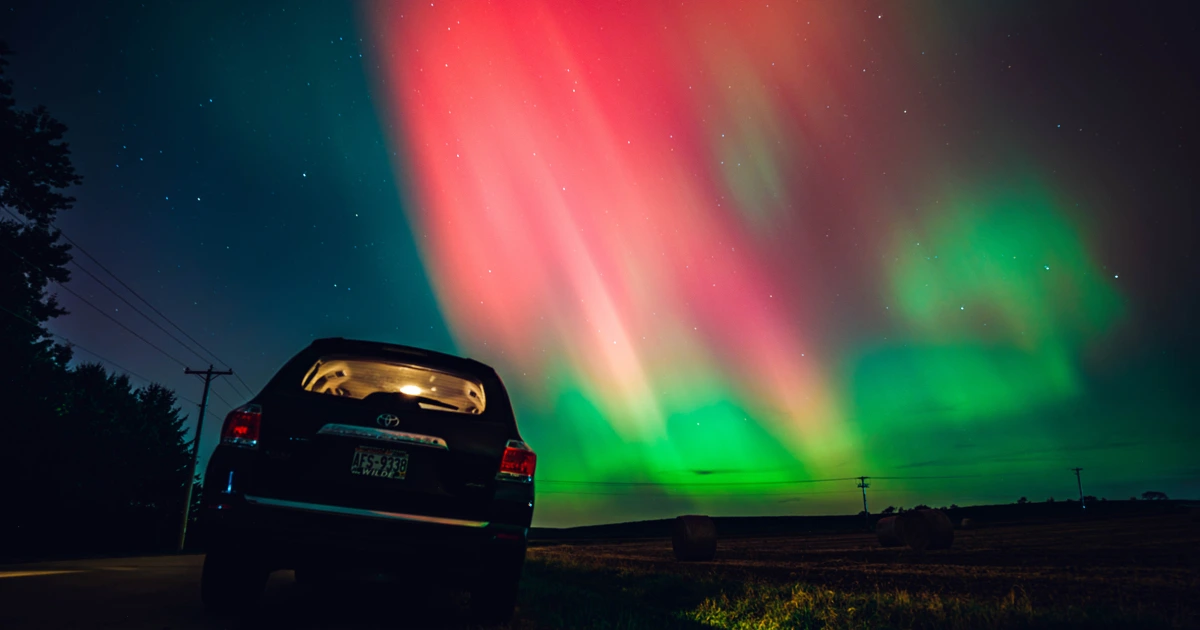
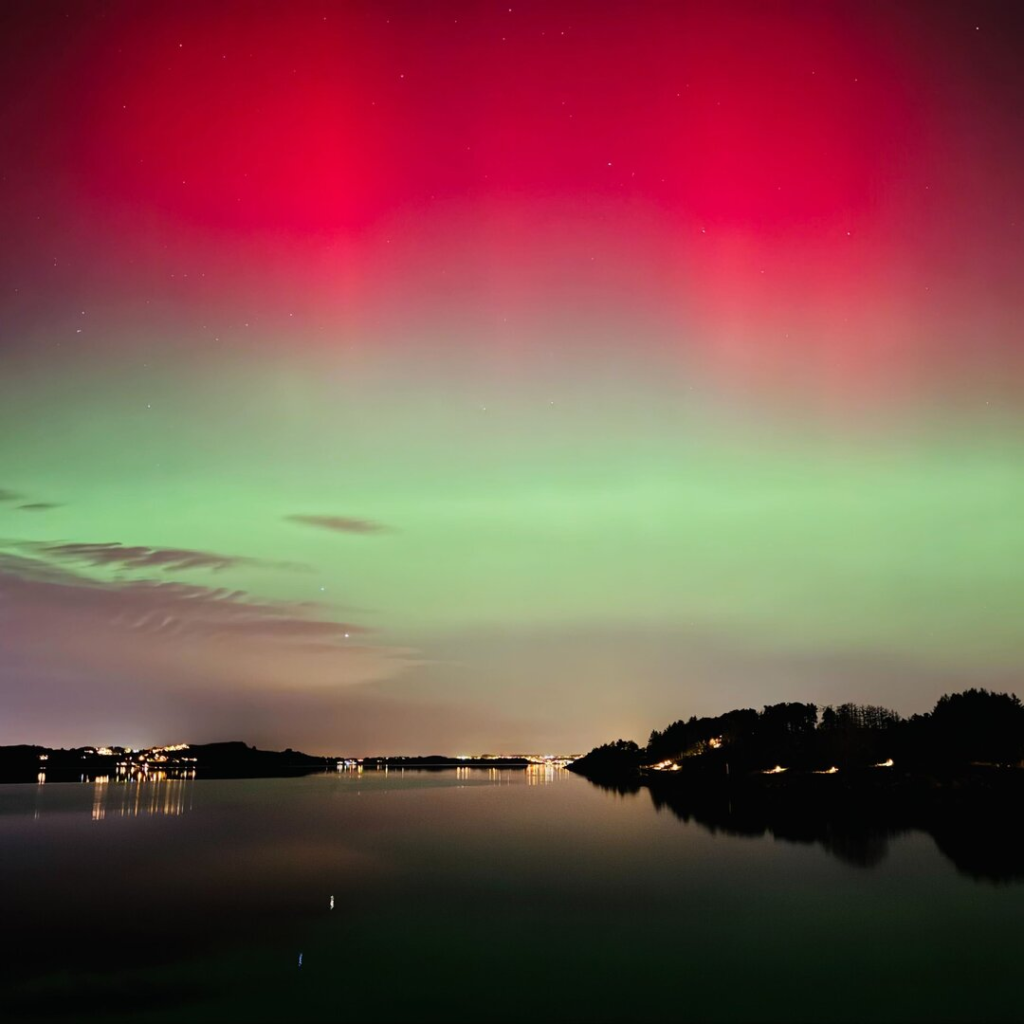
Auroras visible far south often look different from the vivid green curtains commonly seen in Alaska.
People watching tonight may notice:
- Red or deep crimson glows near the horizon
- Pink or magenta hues that appear faint but distinct
- Pale white or silvery arcs across the sky
- Occasional green streaks during peak activity
These colors occur because the auroras are forming at higher altitudes, where red oxygen emissions dominate.
Real-life example:
In the Southwest, several aurora sightings were initially mistaken for wildfires because of their deep red glow. Only after scientists reviewed the timing and satellite data did it become clear the light was auroral in origin.
Why Cameras Often Detect Auroras Before the Human Eye
Many people are surprised to learn that their phone or camera can “see” auroras before they can.
Modern cameras are capable of:
- Capturing extremely low levels of light
- Detecting color wavelengths invisible to the human eye
- Enhancing faint glows through long exposure
As a result, someone may think the sky looks dark—until they check a photo and see streaks of color.
This technological advantage explains why auroras are being documented more frequently today than in previous decades.
Is It Safe to Watch the Northern Lights
Yes. Auroras are completely safe to observe.
They occur high above Earth’s atmosphere, typically more than 60 miles above the surface. They pose no risk to human health and require no special protective equipment.
You can safely watch, photograph, and enjoy them.
Could Tonight’s Storm Affect Technology
While auroras themselves are harmless, the geomagnetic storms that cause them can sometimes affect technology.
Possible impacts include:
- Minor GPS inaccuracies
- Temporary radio communication disruptions
- Increased drag on satellites in low Earth orbit
- Power grid operators taking precautionary measures
Real-life example:
In 1989, a powerful geomagnetic storm caused a massive blackout in Quebec, leaving millions without electricity for hours. While today’s systems are more resilient, space weather is still taken seriously by utilities and satellite operators.
Why Scientists Expect More Events Like This in the Future
Experts believe auroras reaching far south may become less rare due to several factors:
- Stronger-than-expected solar cycles
- Improved space weather monitoring
- Better public reporting and photography
- A more dynamic understanding of Earth’s magnetosphere
This does not mean auroras will appear nightly in southern states, but it does mean Americans may witness them more often than past generations.
How to Maximize Your Chances of Seeing the Northern Lights Tonight
If you want the best possible view, experts recommend:
- Getting away from city lights
- Looking toward the northern horizon
- Watching between late evening and early morning
- Allowing your eyes time to adjust to the dark
- Using night-mode or long-exposure photography
Real-life example:
Many first-time viewers report seeing nothing for hours—until faint colors slowly emerge and intensify, transforming the sky in minutes.
Why This Moment Matters Beyond the Visual Spectacle
Auroras are more than beautiful lights. They are visible evidence of the constant interaction between Earth and the Sun.
For scientists, events like tonight provide:
- Real-time data on solar-Earth interactions
- Opportunities to refine space weather forecasts
- Insight into how Earth’s magnetic field responds to stress
For the public, they create moments of shared wonder and curiosity that connect science with everyday life.
What This Could Mean for the Future of American Night Skies
The idea that auroras belong only to the far north is fading.
While the strongest displays will always occur near the poles, the boundaries of where auroras appear are shifting. Tonight’s event may be another step toward redefining what Americans consider possible in their own skies.
10 Frequently Asked Questions About How Far South the Northern Lights Could Reach
How far south could the Northern Lights reach tonight
During peak storm activity they could reach parts of the central and even southern United States
What time is best to look for auroras
Late evening through early morning usually offers the best chance
Can auroras be seen with the naked eye
Yes though they may appear faint depending on location and light pollution
Why do photos show auroras better than human vision
Cameras detect low-light colors more effectively than our eyes
Is this related to climate change
No auroras are caused by solar activity not climate change
Are auroras dangerous to people
No they are completely safe to observe
Will clouds block aurora visibility
Yes clear skies are essential
Can auroras happen during warm weather
Yes temperature has no effect on aurora formation
Where can I check real-time aurora forecasts
The NOAA Space Weather Prediction Center provides up-to-date forecasts
Will auroras keep reaching this far south in the future
Scientists expect occasional future events during strong solar storms
Final Takeaway
If the Northern Lights reach far south tonight, it will not be a miracle—it will be science unfolding in real time.
A powerful Sun, a responsive magnetic field, and improved observation tools are reshaping where and how Americans experience auroras. For millions of people, tonight could be the moment the night sky feels closer, more alive, and more surprising than ever before.
Look up. The sky may have a story to tell.