The Northern Lights are reaching astonishingly far south across the United States this week, driven by powerful solar storms and peak solar-cycle activity. Auroras normally confined to Arctic regions are now visible across much of the Midwest, Northeast, and even parts of the South. Experts say this could be one of the most widespread aurora events Americans have witnessed in over a decade.
The Northern Lights Are Defying Expectations Across the U.S.
For most Americans, the Northern Lights—officially known as the aurora borealis—have always felt distant and unreachable. They’re something you plan an expensive trip around, hoping the weather cooperates and the Sun behaves just right. Alaska, northern Canada, or Scandinavia have long been considered the only reliable places to see them.
That assumption is being challenged this week.
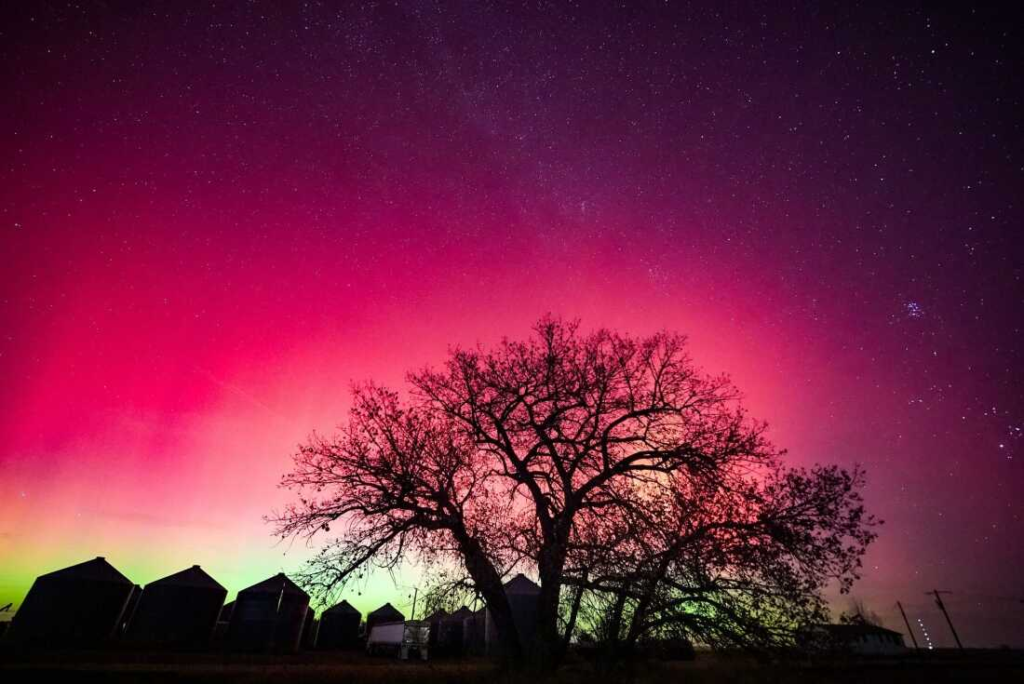
Reports from across the United States suggest the aurora is pushing hundreds of miles farther south than normal, lighting up skies in places that almost never experience this phenomenon. From the Upper Midwest to the Mid-Atlantic—and in rare moments even farther south—Americans are stepping outside to witness glowing bands of green, pink, and red stretching across the night sky.
What makes this moment extraordinary isn’t just the beauty of the aurora. It’s the scale, the reach, and the timing. This is not a routine event. Scientists and space weather experts are calling it one of the most significant auroral expansions in recent memory.
How Far South Are the Northern Lights Reaching This Week?
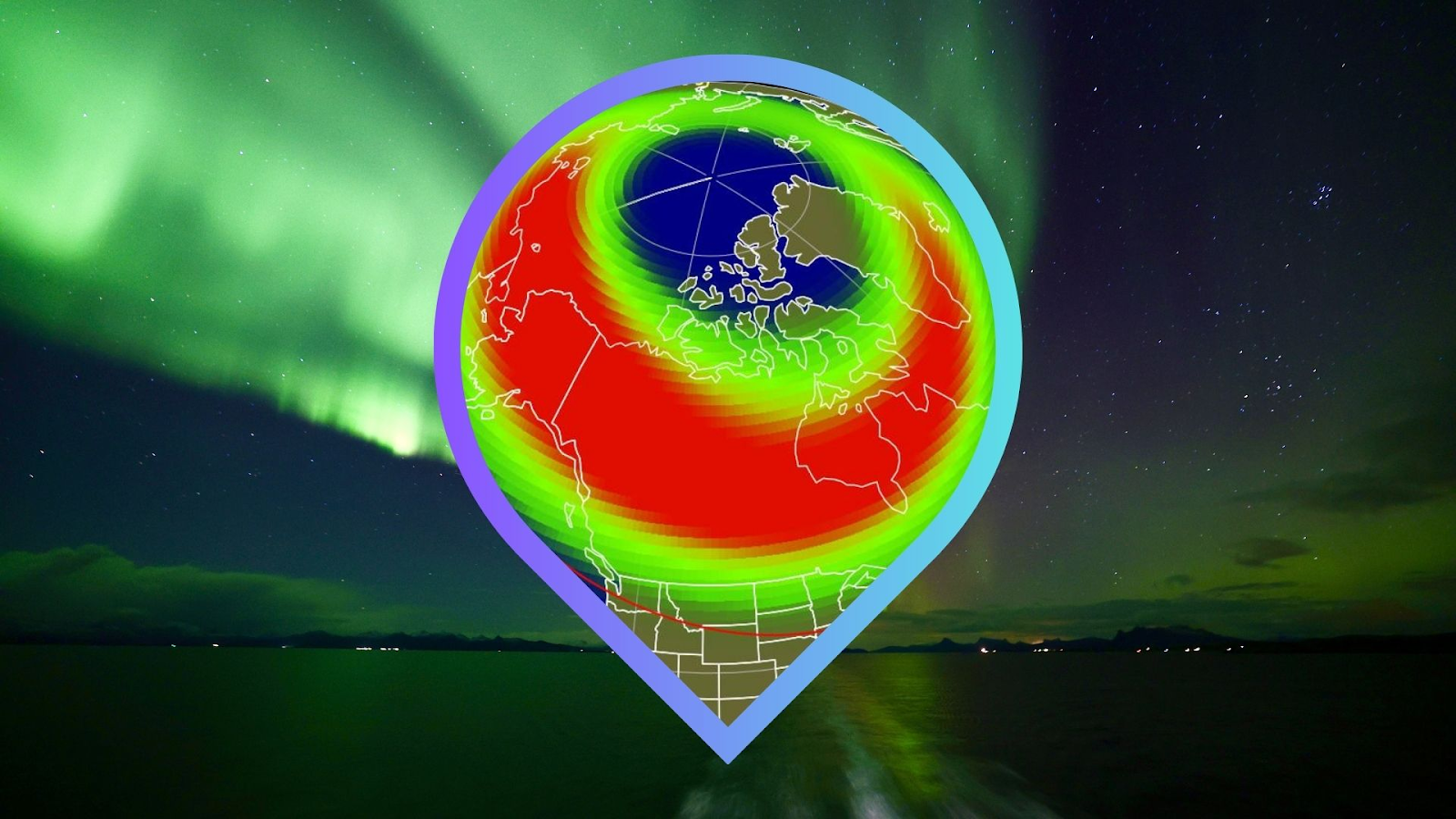
Auroras typically hover near the Arctic Circle, but strong solar activity can push the auroral oval far south. This week’s geomagnetic storm is doing exactly that.
U.S. regions seeing or forecasted to see aurora activity include:
- Minnesota, Wisconsin, Michigan
- North Dakota and South Dakota
- Iowa, Illinois, Indiana, Ohio
- Pennsylvania, New York, New Jersey
- Missouri and Kentucky
- Virginia and parts of North Carolina
- Isolated reports even farther south during peak activity
During previous storms of similar strength, faint auroras were detected in states like Arkansas and northern Texas—sometimes visible only through cameras, other times faintly visible to the naked eye.
For many Americans, this may be the first and only time they see the Northern Lights without traveling thousands of miles.
What’s Causing the Northern Lights to Travel So Far South?
The Sun is responsible for everything happening in the sky this week.
Auroras occur when charged particles released by the Sun collide with Earth’s magnetic field and atmosphere. These particles excite gases like oxygen and nitrogen, causing them to glow.
Normally, Earth’s magnetic field channels this energy toward the poles. But during powerful solar storms, that protective field becomes overwhelmed.
This week’s unusual auroral reach is being driven by several factors coming together at once:
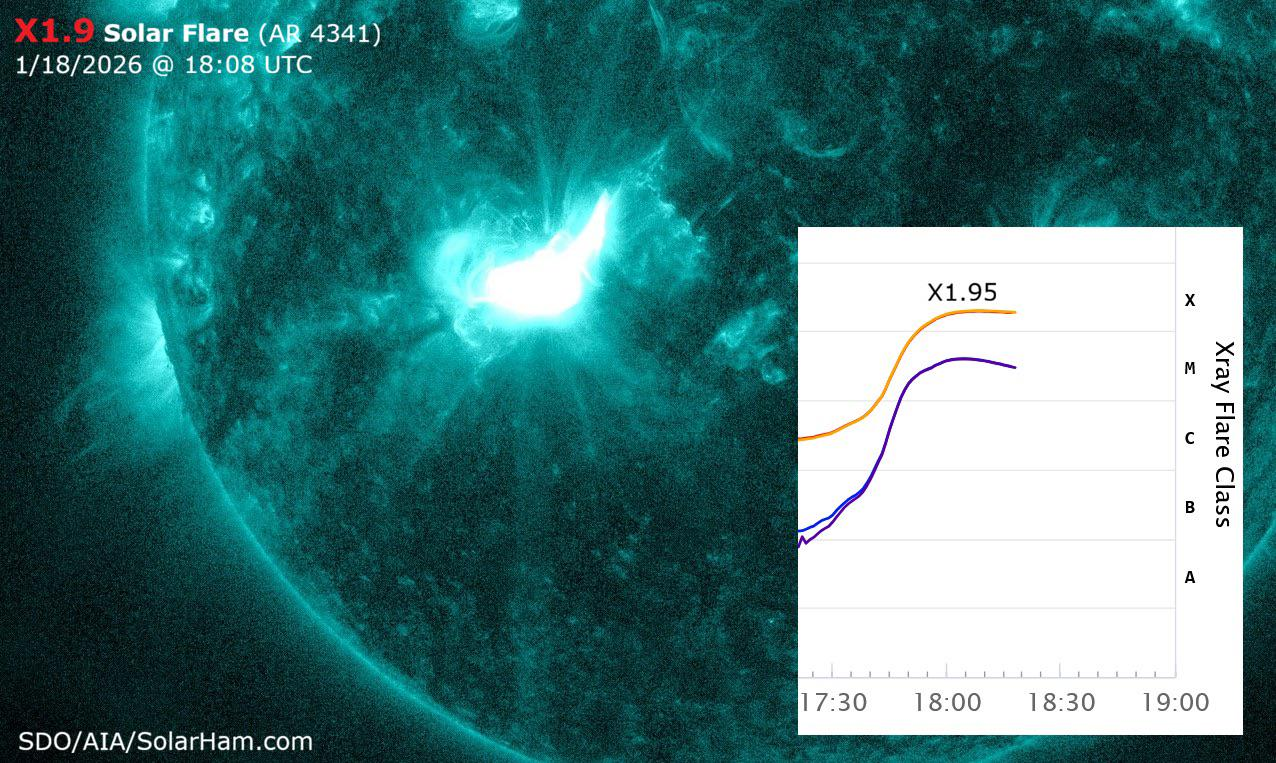
- A coronal mass ejection (CME) erupted from the Sun, releasing a massive cloud of charged particles
- The CME is traveling directly toward Earth rather than passing nearby
- Solar wind speeds and density are unusually high
- Earth’s magnetic field is favorably aligned for deep particle penetration
When these conditions align, auroras are no longer confined to polar regions. They spill southward—sometimes dramatically.
Why Scientists Say This Aurora Event Is Unusual
Auroras themselves are common near the poles, but events of this magnitude are not.
Space weather experts measure geomagnetic storms using the Kp index, which ranges from 0 (quiet) to 9 (extreme). Most auroras visible in the northern United States occur at Kp levels of 5 or 6.
This week’s storm has reached Kp 7 and above, placing it firmly in the “strong” category.
Historically, storms of this level are associated with:
- Widespread auroral visibility
- Faster movement and brighter colors
- Southern expansion well beyond normal limits
Comparable events include the 2013 St. Patrick’s Day Storm and the famous Halloween storms of 2003, both of which produced auroras visible far into the continental United States.
Real-Life Sightings: Americans Are Seeing Auroras Where They’ve Never Appeared Before
What makes this week truly remarkable isn’t just forecasts—it’s what people are actually seeing.
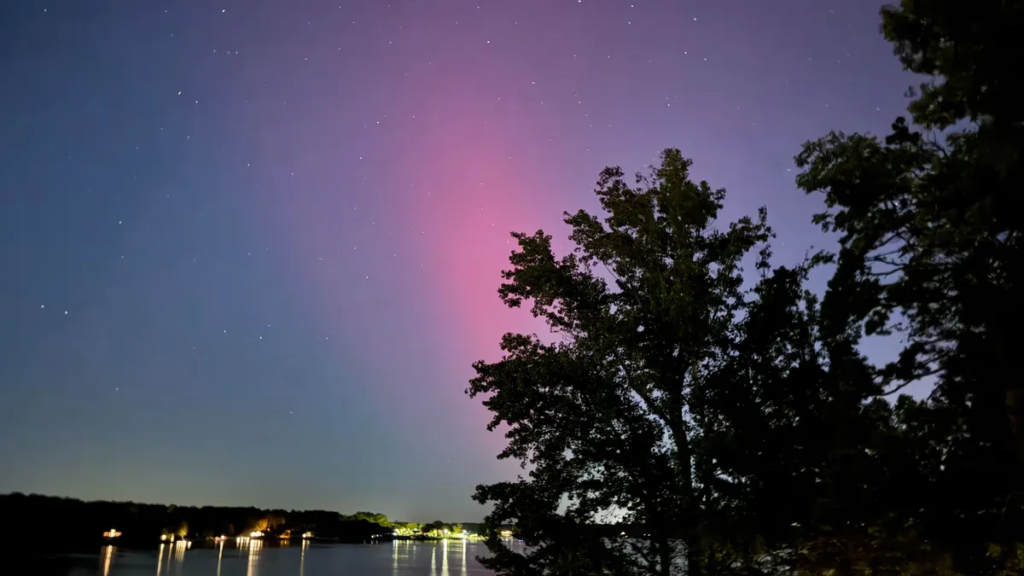
In Ohio, residents reported a strange green glow pulsing near the northern horizon. In Missouri, smartphone photos revealed pink and red hues invisible to the naked eye. In parts of the Northeast, long-exposure photos captured sweeping auroral arcs over suburban neighborhoods.
One Wisconsin resident shared that they initially thought the sky was reflecting city lights—until the glow began to ripple and shift. Another observer in Illinois described the experience as “quietly overwhelming,” saying they never imagined seeing the aurora from their own backyard.
These aren’t isolated cases. Similar stories are emerging from dozens of states.
Why Southern Auroras Look Different Than Arctic Displays
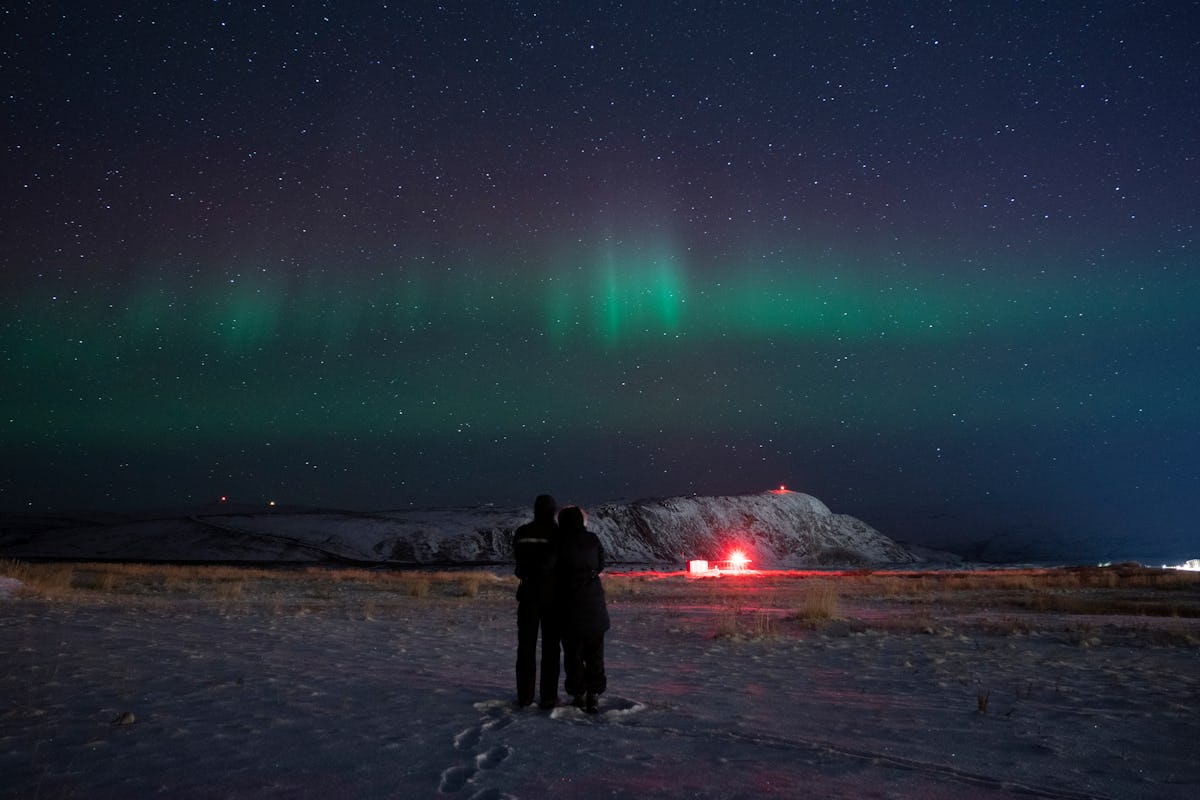
Many first-time aurora viewers expect dramatic curtains of light stretching across the entire sky. But auroras seen far south often appear more subtle.
That doesn’t make them less impressive—just different.
Common characteristics of southern auroras include:
- Faint green, white, or pink glows near the horizon
- Slow-moving arcs rather than fast-moving curtains
- Colors that appear stronger in photos than to the naked eye
- A misty or cloud-like appearance
This is why many people don’t realize they’re seeing the aurora until they take a photo and review it on their phone.
The Solar Cycle: Why This Is Happening Now
The Sun operates on an 11-year solar cycle, alternating between periods of low and high activity. We are currently approaching the peak of Solar Cycle 25, expected around 2025–2026.
As the Sun becomes more active, it produces:
- More sunspots
- More solar flares
- More coronal mass ejections
- More geomagnetic storms on Earth
Scientists have long predicted that this phase of the cycle would bring more frequent and more intense aurora events, including increased visibility at lower latitudes.
This week’s display appears to be an early preview of what the next few years may hold.
Best Times and Conditions to See the Northern Lights This Week
Auroras are unpredictable, but patterns help maximize your chances.
Best times to watch:
- Typically between 10:00 PM and 2:00 AM local time
- Strong storms may produce auroras earlier in the evening
- Activity often comes in waves rather than continuously
Best conditions:
- Clear skies with minimal cloud cover
- Low light pollution
- A clear view toward the northern horizon
- Patience and time
During recent nights, some of the strongest auroras appeared suddenly and faded just as quickly.
How to See the Aurora Even If You Live in a City
City lights don’t make auroras impossible—they just make them harder to notice.
Practical tips that work:
- Turn off nearby lights if possible
- Face north and scan slowly
- Allow your eyes at least 10 minutes to adjust
- Use your smartphone camera or night mode
- Take multiple photos over time
Many people mistake auroras for clouds or distant haze. If something looks unusual, take a photo—you may be surprised by what appears.
What Colors Are Appearing During This Event?
Aurora colors depend on altitude and atmospheric composition.
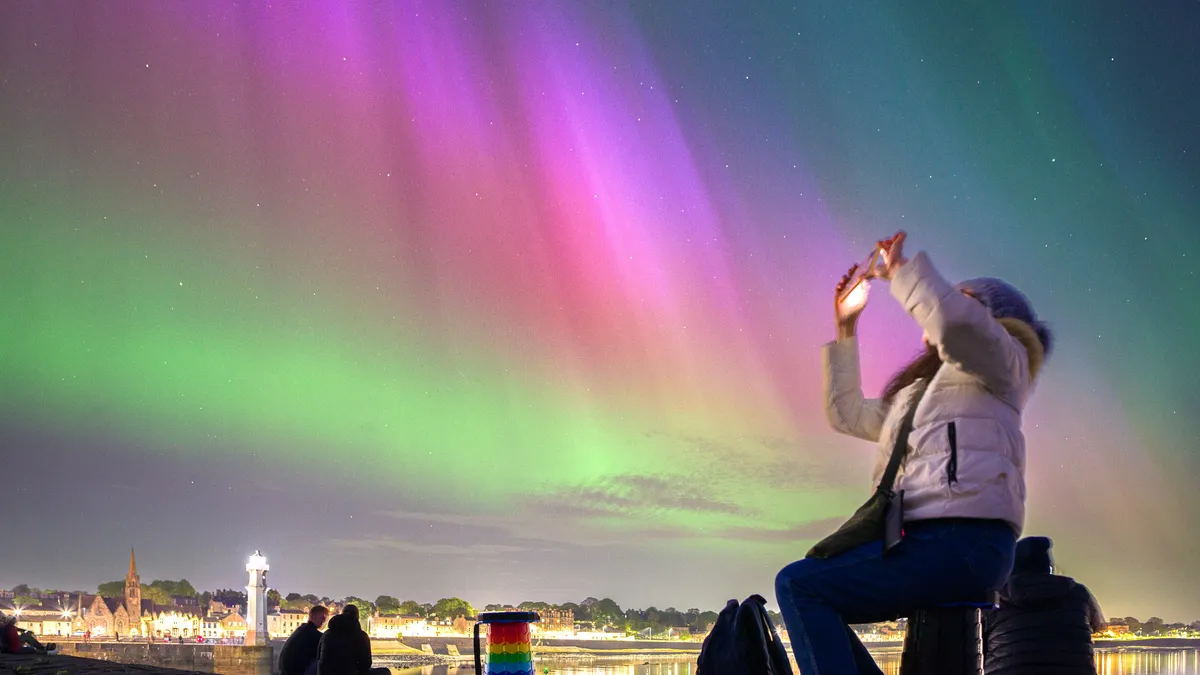
- Green is the most common color and the easiest to spot
- Pink and red appear during stronger storms and at higher altitudes
- Purple and blue are rare but possible during intense activity
This week’s storm has already produced noticeable red and pink hues, signaling its strength.
Could the Northern Lights Reach Even Farther South?
Yes—under the right conditions.
Auroral reach can change quickly if solar wind speed or density increases. In extreme historical cases, auroras have been observed in:
- Texas
- Florida
- Northern Mexico
While those events are rare, the fact that they’ve occurred before shows just how powerful the Sun can be.
Can This Solar Activity Affect Technology?
Strong geomagnetic storms can interact with modern systems, though major disruptions are unlikely.
Possible effects include:
- Minor GPS inaccuracies
- Temporary satellite communication issues
- Radio signal interference
- Airline route adjustments near polar regions
Experts emphasize that this event poses no danger to public safety, and power grids are closely monitored.
Why Seeing the Northern Lights Feels So Emotional
Auroras often trigger strong emotional reactions, especially among first-time viewers.
Researchers suggest this is because auroras combine:
- Rarity
- Beauty
- A sense of cosmic scale
- Shared human experience
During past aurora storms, people reported feelings of awe, calm, and deep connection. Families gathered outside late at night. Neighbors spoke to each other for the first time in years.
This week is creating those moments again—on a nationwide scale.
How This Compares to Past Historic Aurora Events
2013 St. Patrick’s Day Storm
Auroras were visible across much of the Midwest and Northeast, sparking massive public interest.
2003 Halloween Storms
Auroras reached unusually far south and caused notable geomagnetic effects worldwide.
This week’s event may not surpass 2003 in raw intensity, but it may rival or exceed it in public participation, thanks to smartphones and instant sharing.
What If You Miss This Aurora?
Solar activity remains high, and this likely won’t be the last major event.
If you miss this week’s display:
- More geomagnetic storms are possible in coming weeks
- Solar activity is expected to remain elevated through 2026
- Aurora alerts may become increasingly common
In other words, the sky may surprise us again soon.
Final Takeaway: Why This Week Is Special
The Northern Lights reaching so far south remind us that our planet exists in a dynamic, ever-changing solar environment.
This week offers:
- A rare visual experience
- A shared moment of wonder
- A reminder that extraordinary things can happen anywhere
If skies are clear where you live, take a moment to look up. You may witness something you’ll remember for the rest of your life.
Frequently Asked Questions (Trending Searches)
1. Why are the Northern Lights visible so far south this week?
Because of a strong geomagnetic storm caused by solar eruptions interacting with Earth’s magnetic field.
2. Can you see the Northern Lights in the southern United States?
Yes, during strong storms, faint auroras can be visible much farther south than usual.
3. What time are the Northern Lights usually visible?
Most often between 10 PM and 2 AM local time.
4. Do clouds block aurora visibility?
Yes, clear skies are essential.
5. Why do auroras look better on phone cameras?
Cameras capture light over longer exposures, revealing faint colors.
6. What colors can southern auroras show?
Green is most common, with red and pink during strong events.
7. Is it safe to watch the Northern Lights?
Yes, auroras are completely harmless.
8. Will auroras continue to happen more often?
Yes, solar activity is increasing through 2026.
9. Can children safely watch auroras?
Absolutely—it’s a safe and educational experience.
10. How often do auroras reach this far south?
Only during strong solar storms, typically a few times per solar cycle.