Last year, the northern lights traveled farther south than almost anyone expected—reaching Texas, Florida, California, and other states far outside traditional aurora zones. Fueled by powerful solar storms during Solar Cycle 25, auroras illuminated skies across much of the U.S. This in-depth guide reveals how far south they truly went, why it happened, and what it means for future aurora sightings.
Introduction: The Year the Northern Lights Broke All the Rules
For most Americans, the northern lights belonged to a distant world—Alaska, northern Canada, Iceland, or Scandinavia. They were something you traveled thousands of miles to see, something that existed in postcards and documentaries, not above your own backyard.
Then last year happened.
Across the United States, people began looking up in disbelief. Farmers, truck drivers, suburban families, campers, and city residents all reported the same strange sight: glowing red, pink, and green lights rippling across skies where auroras were never supposed to appear.
At first, many didn’t believe what they were seeing. Some thought it was wildfire smoke reflecting city lights. Others assumed it was a distant storm or industrial glow. But as reports poured in from multiple states—and as NASA and NOAA confirmed what was happening—the truth became impossible to ignore.
The northern lights had danced far south of their usual stage.
So just how far south did they really go? And why did it happen now?
The answers reveal one of the most extraordinary space-weather events Americans have witnessed in decades.
What Normally Limits How Far South the Northern Lights Can Appear?
To understand why last year was so unusual, it helps to understand how auroras normally behave—without getting overly technical.
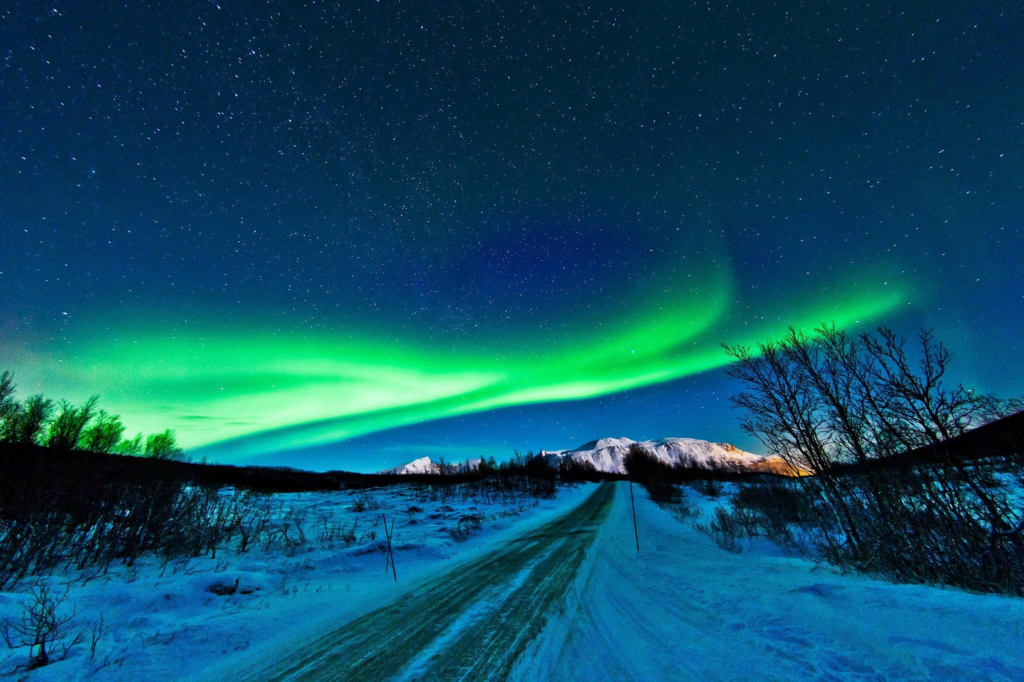
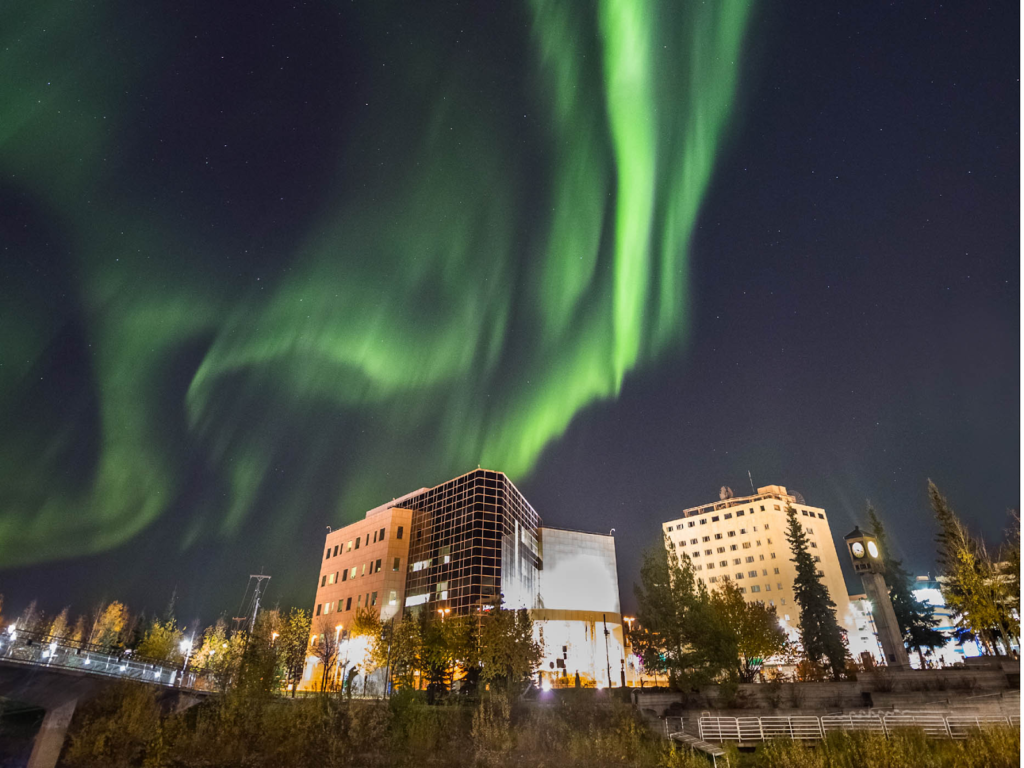
Auroras form when charged particles from the Sun collide with gases in Earth’s upper atmosphere. These collisions release energy in the form of light, creating the glowing curtains we call the aurora borealis.
Under normal conditions, Earth’s magnetic field funnels those particles toward the poles. That’s why auroras usually stay close to places like Alaska and northern Canada.
Most of the time, Americans south of the Canadian border never see them.
But Earth’s magnetic field isn’t a rigid shield. During powerful solar events, it can be stretched, compressed, and temporarily overwhelmed.
When that happens, the auroras escape their usual boundaries.
The Solar Storms That Changed Everything Last Year
According to the NOAA Space Weather Prediction Center and NASA, Earth experienced multiple severe geomagnetic storms last year, including storms rated G4 and G5—the strongest categories on the space-weather scale.
These storms were triggered by a series of coronal mass ejections (CMEs)—huge clouds of charged particles blasted from the Sun at incredible speeds.
One CME in particular struck Earth almost head-on, compressing the planet’s magnetic field and dramatically expanding the auroral oval.
Scientists later described the event as one of the most intense geomagnetic disturbances in recent history.
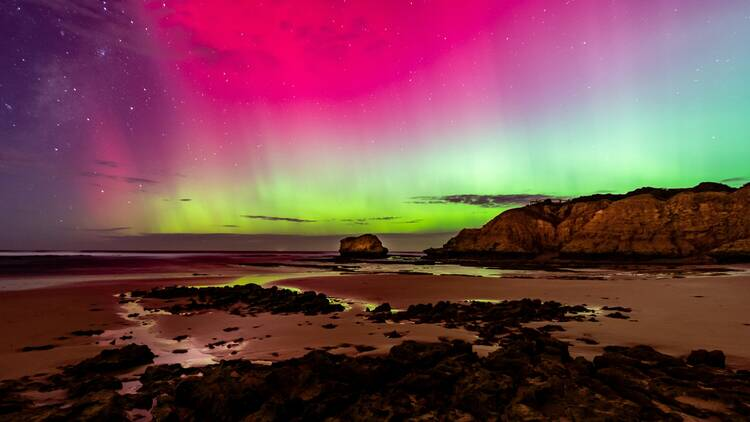
The result? Auroras pushed hundreds—and in some cases thousands—of miles farther south than normal.
So How Far South Did the Northern Lights Really Dance?
This is the question Americans are still asking—and the answer is genuinely shocking.
Verified aurora sightings last year included:
- Texas
- Florida
- Arizona
- New Mexico
- Southern California
- Alabama
- Georgia
- Mississippi
- Arkansas
- Oklahoma
In scientific terms, auroras were observed at exceptionally low geomagnetic latitudes, something typically seen only during rare, once-in-a-generation solar storms.
According to NOAA data, the auroral oval expanded well beyond 30 degrees latitude during peak moments.
That’s an extraordinary southward reach.
Texas: The Moment That Made Headlines Nationwide
Texas became the symbol of last year’s aurora shock.
When videos began emerging from North and Central Texas, many viewers assumed they were fake. Aurora sightings in Texas simply weren’t part of modern memory.
But they were real.
Real-Life Example
Near Amarillo, a ranch owner recorded slow-moving red curtains shimmering above open farmland. The sky appeared alive, pulsing gently as if breathing. Similar sightings were reported near Lubbock, Wichita Falls, and even the Dallas–Fort Worth area.
Residents described:
- Red and pink glows stretching across the northern horizon
- Subtle movement visible to the naked eye
- Stronger colors appearing through phone cameras
For many Texans, it was the first time they had ever heard the word “aurora” used seriously in their state.
Florida: The State That Truly Shocked Scientists
If Texas was surprising, Florida was stunning.
While auroras were not blazing overhead like they do in Alaska, verified auroral emissions were detected and photographed in Florida, something that rarely happens.
Real-Life Example
Astrophotographers in central Florida captured faint red bands near the horizon using long-exposure photography. When compared with satellite data and space-weather records, scientists confirmed that these emissions were indeed auroras.
Even though most Floridians never noticed anything unusual, the fact that auroral light reached that far south was historic.
California and the Southwest: Auroras Over Deserts and Coastlines
The Southwest also played an unexpected role in last year’s aurora story.
Southern California
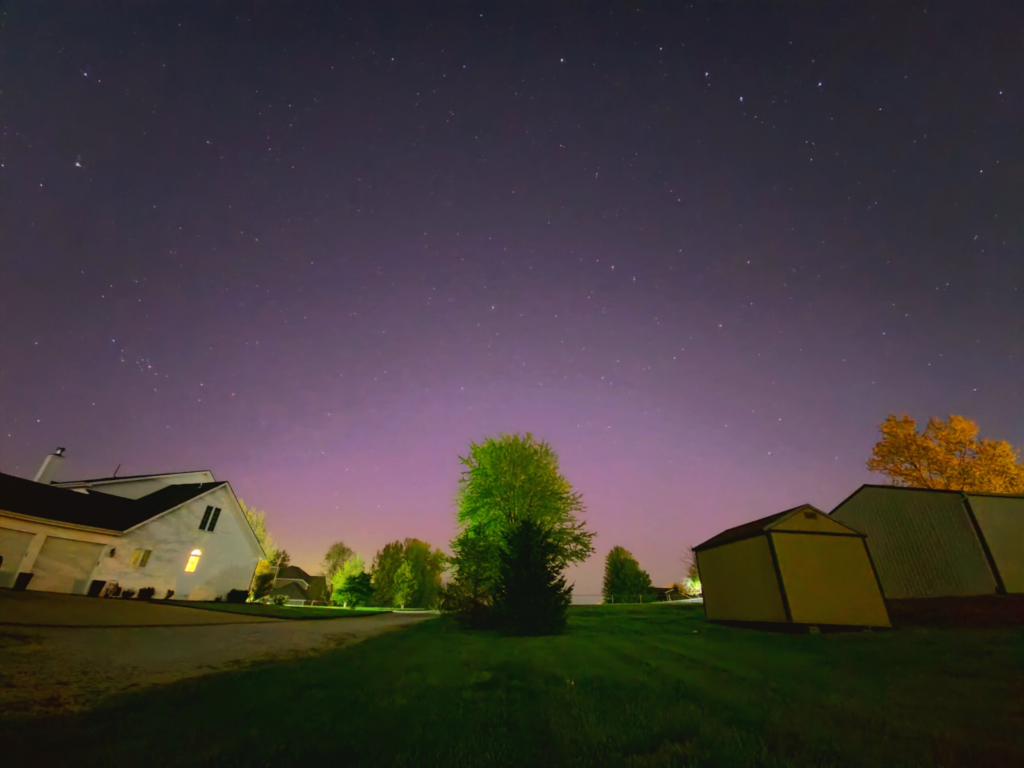
In remote desert areas away from city lights, residents noticed unusual pink and magenta hues after sunset. Photos later revealed faint auroral arcs low in the sky.
Arizona and New Mexico
In these states, auroras appeared subtle but unmistakable in camera images. Long-exposure shots revealed curved bands and diffuse red glows aligned perfectly with known auroral patterns.
Real-Life Example
At Joshua Tree National Park, campers initially thought the glow was light pollution from distant cities. Only later did they realize they had witnessed one of the southernmost auroras of the year.
Why Were Last Year’s Auroras So Extreme?
Scientists point to one major factor: Solar Cycle 25.
The Sun operates on an 11-year activity cycle, swinging between quiet and active phases. Solar Cycle 25, which is currently near its peak, has proven stronger than early forecasts predicted.
Key reasons last year stood out:
- Exceptionally strong sunspot activity
- Multiple CMEs striking Earth in rapid succession
- Favorable magnetic alignment between the Sun and Earth
NASA has confirmed that Solar Cycle 25 rivals some of the most active cycles recorded since modern space monitoring began.
Was This a Once-in-a-Lifetime Event—or Could It Happen Again?
This question dominates online searches—and the answer is nuanced.
What’s rare:
- Auroras reaching Florida or deep Texas are uncommon
- G5 storms don’t happen every year
What’s likely:
- Increased aurora activity through 2026
- More frequent southern visibility than in the previous decade
- Higher chances for states in the northern and central U.S.
In short, last year was extraordinary—but the broader trend favors more auroras, not fewer.
Why Many Americans Missed the Northern Lights Even When They Were There
Despite widespread auroral activity, millions of Americans never saw anything unusual.
Common reasons included:
- Light pollution overpowering faint auroras
- Cloud cover blocking the sky
- Not knowing where or when to look
- Expecting bright green “movie-style” auroras
At southern latitudes, auroras are often subtle and easily overlooked.
How People Accidentally Saw the Northern Lights
One of the most fascinating aspects of last year’s events is how often auroras were discovered by accident.
Real-Life Situations Reported:
- Late-night highway driving
- Stepping outside during a power outage
- Camping trips unrelated to astronomy
- Looking up after noticing an unusual red glow
In many cases, people didn’t realize what they had seen until news reports confirmed it the next day.
What Colors Did Southern Auroras Appear?
Southern auroras often look different from classic northern displays.
Commonly reported colors included:
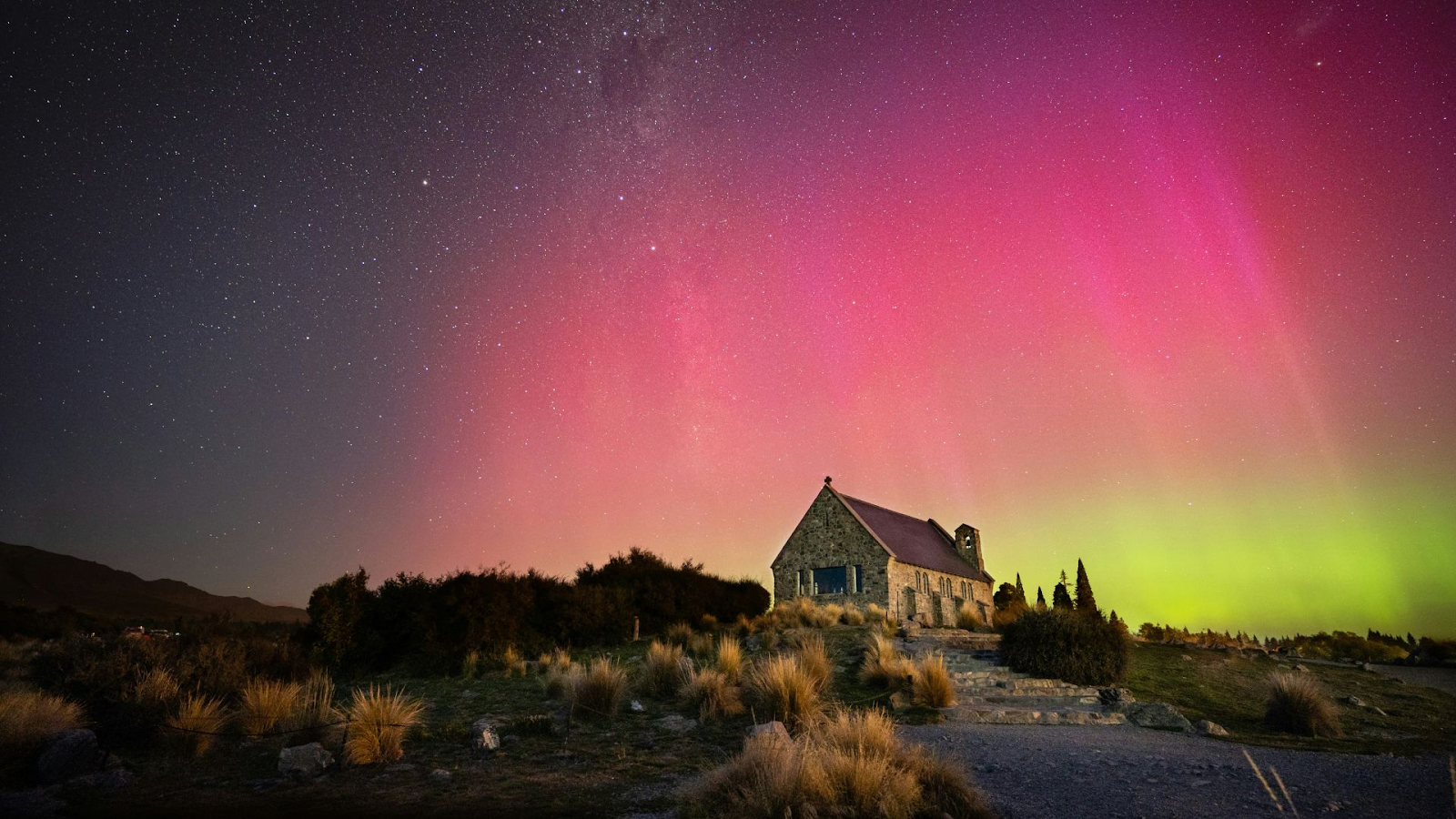
- Red (most frequent)
- Pink and magenta
- Faint purple
- Occasional green streaks
Red auroras occur at higher altitudes, which explains why they dominate during extreme solar storms.
How to Know If Auroras Could Reach Your Area Again
You don’t need to be a scientist to stay informed.
Practical tools Americans are using:
- NOAA Space Weather Prediction Center alerts
- Aurora forecast apps
- Space-weather social media accounts
- Local astronomy clubs
When forecasts mention Kp 7, 8, or 9, southern auroras become possible.
What Last Year Means for the Future of Aurora Watching in the U.S.
Last year fundamentally changed how Americans think about auroras.
They are no longer seen as distant or unreachable. They are now part of America’s shared sky experience.
Several states are already:
- Promoting aurora tourism
- Hosting night-sky events
- Educating residents on space weather
What was once rare is becoming part of the national conversation.
Frequently Asked Questions (10 Trending FAQs)
1. How far south did the northern lights reach last year?
Auroras were confirmed as far south as Texas and Florida during extreme storms.
2. Did Florida really see the northern lights?
Yes. Faint auroral emissions were captured through long-exposure photography.
3. What caused the auroras to go so far south?
Powerful solar storms during Solar Cycle 25 expanded the auroral oval.
4. Are auroras dangerous to humans?
No. Auroras pose no direct health risks.
5. Will southern states see auroras again?
Possibly during extreme geomagnetic storms.
6. Why were many auroras red instead of green?
Red auroras form at higher altitudes during intense solar activity.
7. Can auroras be seen without cameras in southern states?
Sometimes, but cameras often reveal them more clearly.
8. What is the Kp index?
A scale measuring geomagnetic activity from 0 to 9.
9. What time of night are auroras most visible?
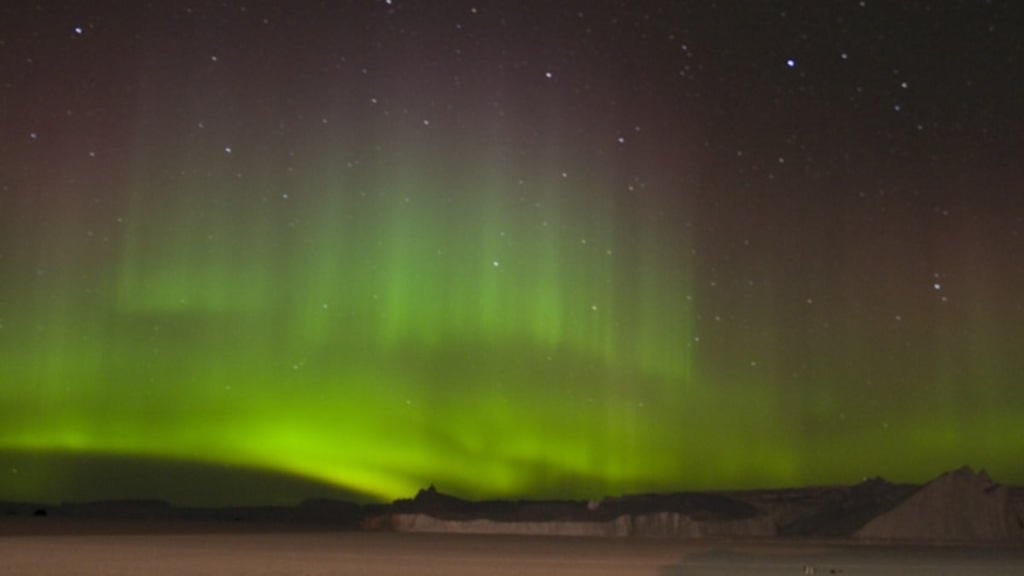
Usually between 10 PM and 2 AM local time.
10. Is solar activity increasing right now?
Yes. Solar Cycle 25 remains active through at least 2026.
Final Thoughts: The Night Sky Rewrote the Map
Last year wasn’t just another aurora season—it was a reminder that Earth’s skies are dynamic, unpredictable, and capable of breathtaking surprises.
The northern lights didn’t simply drift south. They rewrote the map, reaching millions of Americans who never expected to see them.
For those who witnessed it, the experience was unforgettable. And for those who missed it, the sky may offer another chance sooner than expected.