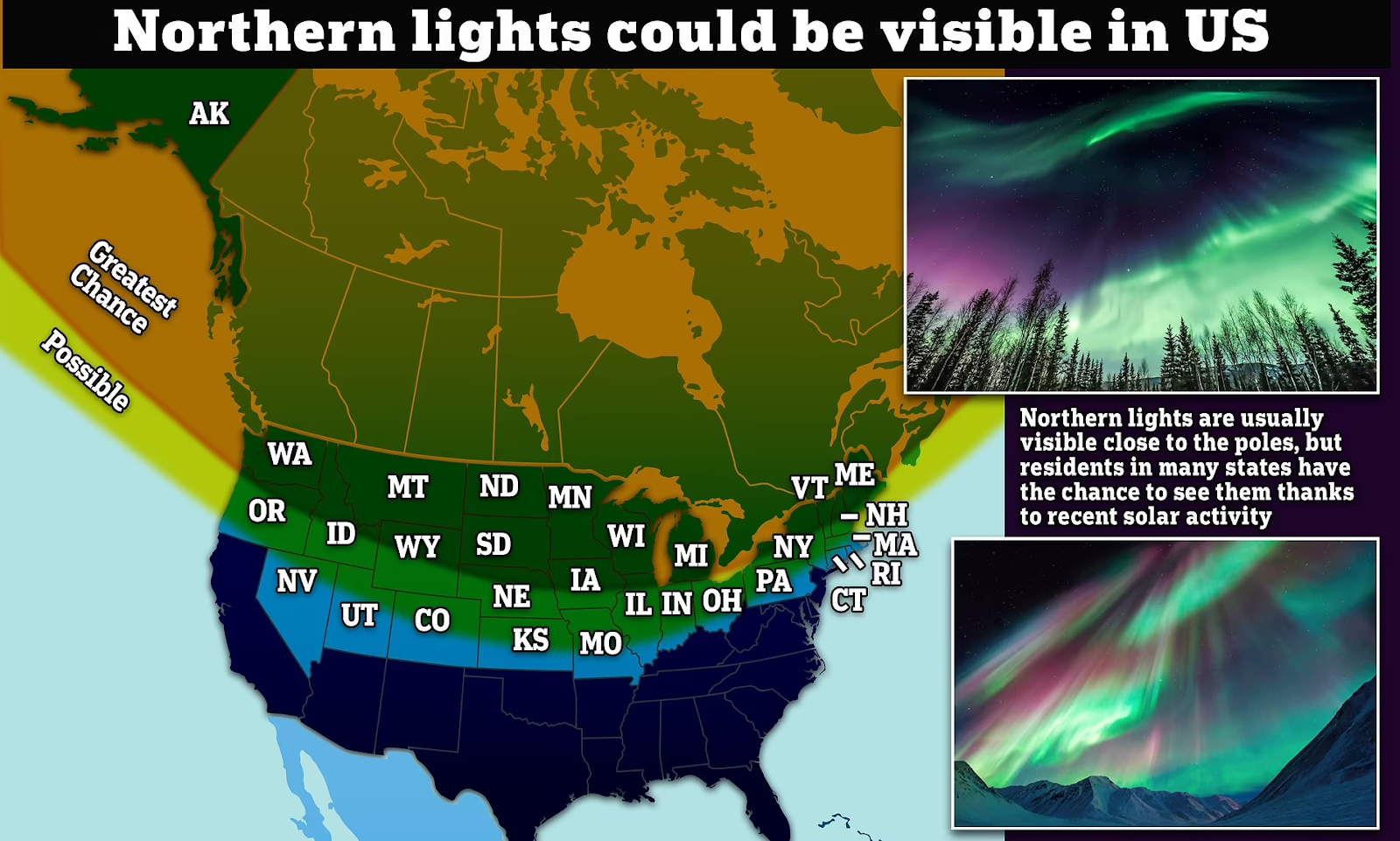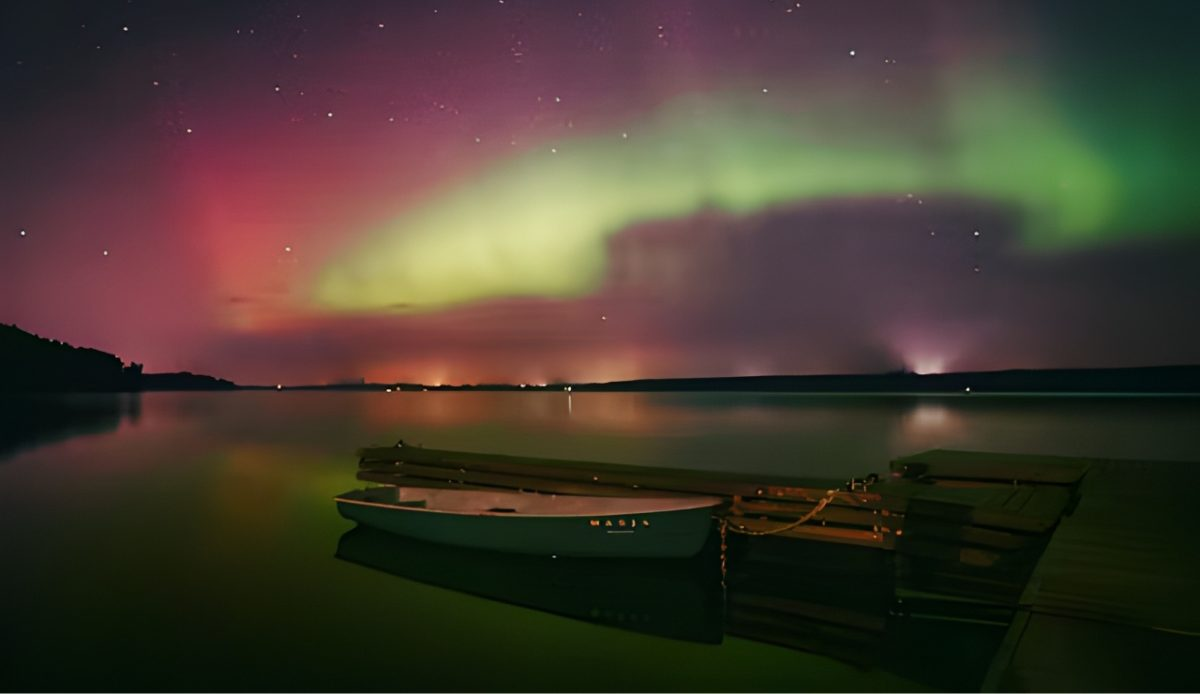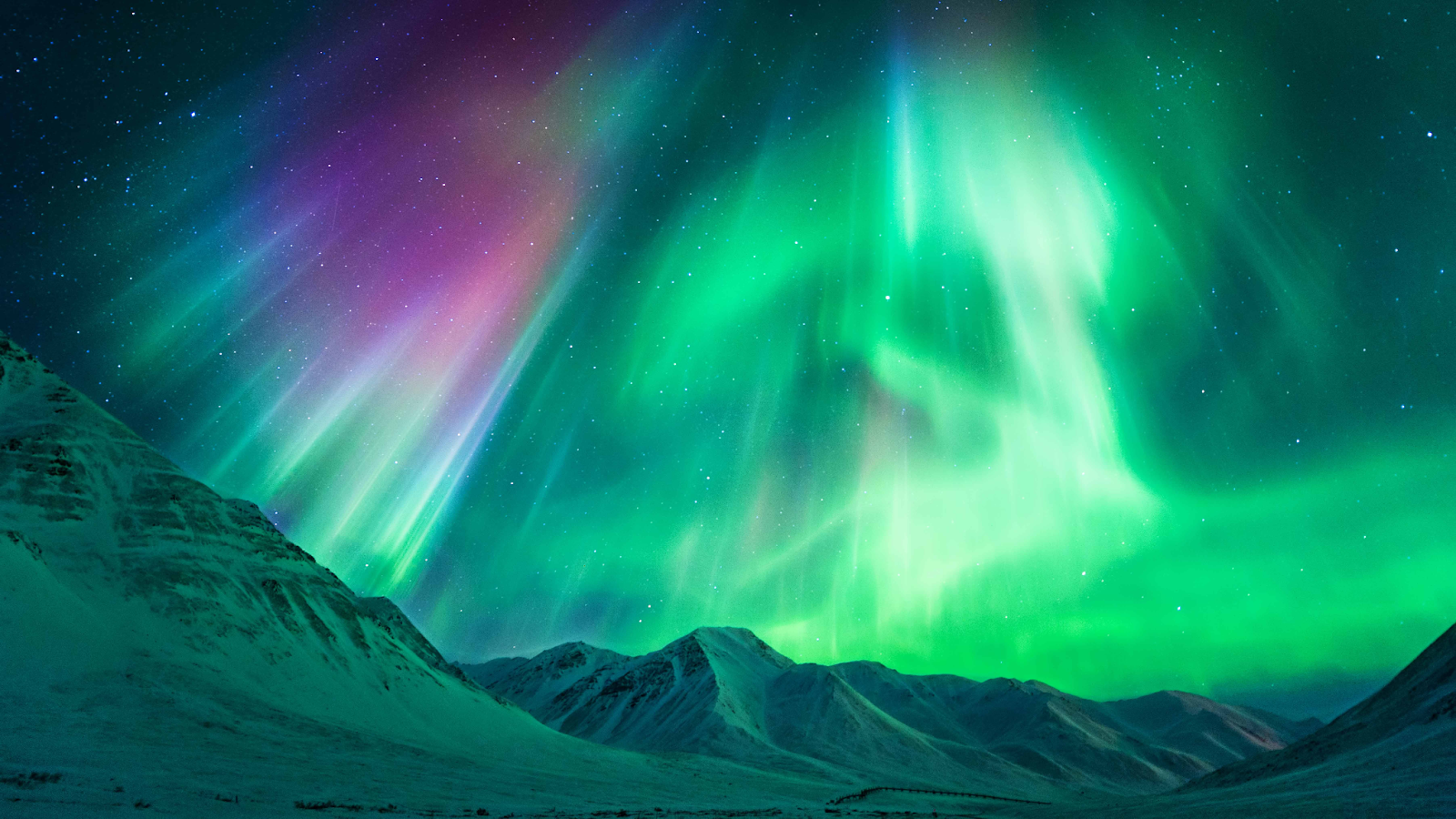
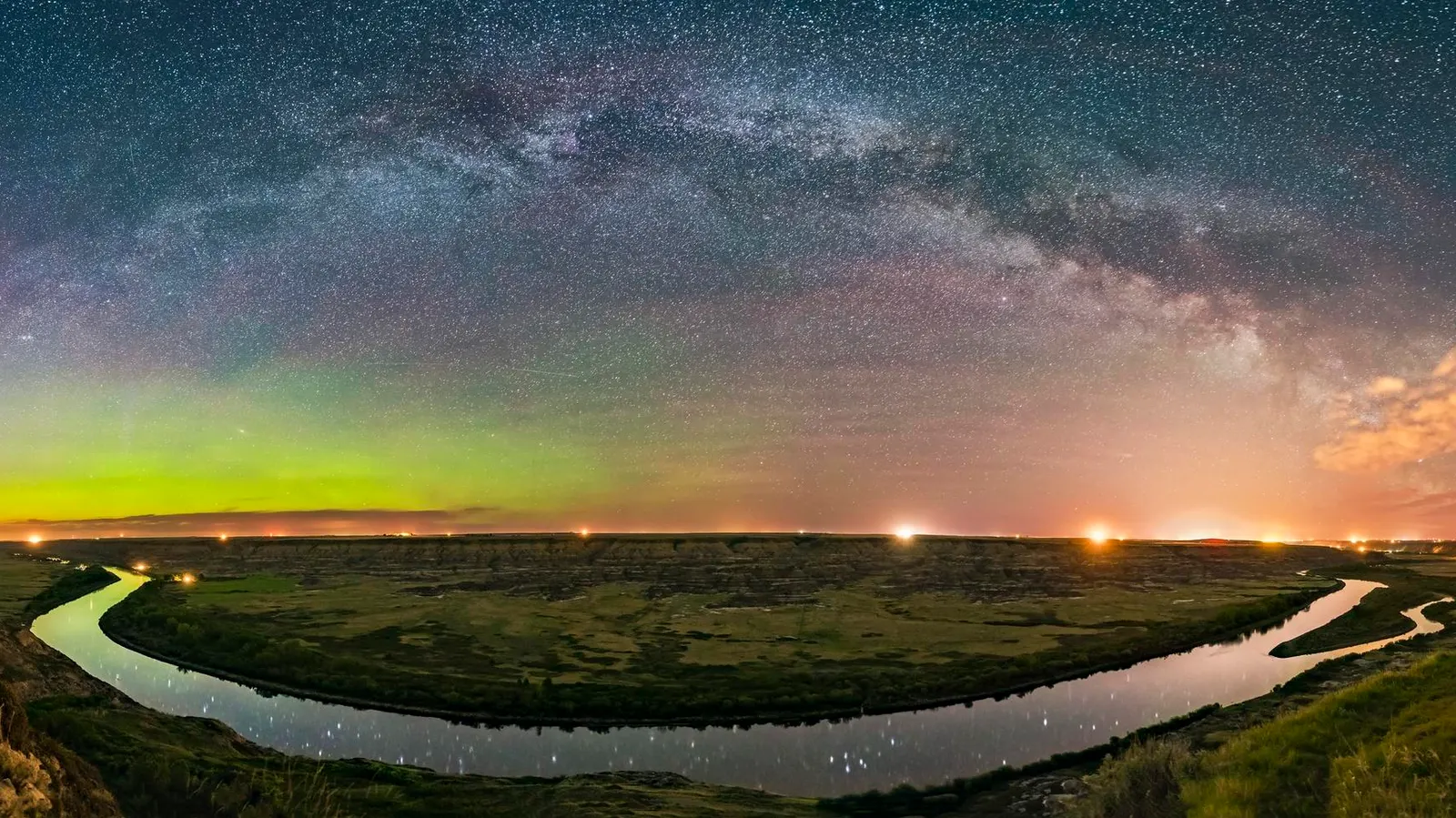
Auroras are no longer limited to Alaska or Scandinavia. Due to heightened solar activity, the Northern Lights are now appearing across multiple U.S. states—turning everyday Americans into viral photo sensations overnight. This in-depth guide reveals seven U.S. locations where aurora sightings are most likely, explains when and how to capture them, and shows why these moments are exploding across social media.
The Northern Lights Are No Longer a Once-in-a-Lifetime Trip Abroad
For decades, seeing the aurora borealis felt like a fantasy reserved for travelers willing to brave subzero temperatures in Iceland, Norway, or remote Alaska. That belief is now outdated.
In recent years, Americans across the continental United States have been witnessing—and photographing—spectacular auroral displays from places no one expected: rural farms, frozen lakes, coastal roads, mountain overlooks, and even suburban backyards. These sightings are not flukes. Scientists confirm they are the result of increased solar activity as the Sun approaches the peak of its 11-year solar cycle, known as the solar maximum, expected between 2024 and 2026.
According to data from NOAA’s Space Weather Prediction Center, the frequency of strong geomagnetic storms (G4 and G5) has risen sharply. These storms expand the auroral oval, pushing visible auroras much farther south than usual. During major solar events in 2023, 2024, and early 2025, auroras were reported in more than 30 U.S. states.
What’s even more remarkable is that many of the most widely shared aurora photos weren’t taken by professionals. They were captured by teachers, nurses, truck drivers, college students, and retirees—people who happened to be in the right place at the right time and knew when to look up.
This article breaks down seven U.S. locations that consistently offer the best chances of capturing aurora photos capable of going viral, along with real-life examples, practical advice, and answers to the most searched questions Americans are asking right now.
Why Are Aurora Photos Going Viral in the United States?
Aurora photography sits at the perfect intersection of science, emotion, and visual storytelling.
From a psychological perspective, images that trigger awe—a feeling associated with vastness and wonder—are significantly more likely to be shared online. Studies cited by major marketing and psychology journals show that awe-driven content can increase sharing rates by 20–30% compared to neutral imagery.
Auroras also benefit from:
- Rarity and unpredictability
- Strong color contrast (greens, purples, reds)
- Emotional surprise (“I didn’t know this was possible here”)
- Minimal need for filters or editing
Social media algorithms favor content that stops scrolling. A sudden burst of glowing color in a night sky does exactly that.
What Makes a Location Ideal for Viral Aurora Photography?
Not all aurora sightings translate into compelling photos. The locations that consistently produce viral images tend to share several characteristics.
Key factors include:
- Higher latitude or strong geomagnetic exposure
- Low light pollution
- Clear northern horizons
- Natural reflective surfaces (water, snow, ice)
- Recognizable or dramatic foregrounds
- Accessibility during late-night hours
With those criteria in mind, here are the seven U.S. locations that stand out above the rest.
1. Michigan’s Upper Peninsula: America’s Most Underrated Aurora Destination
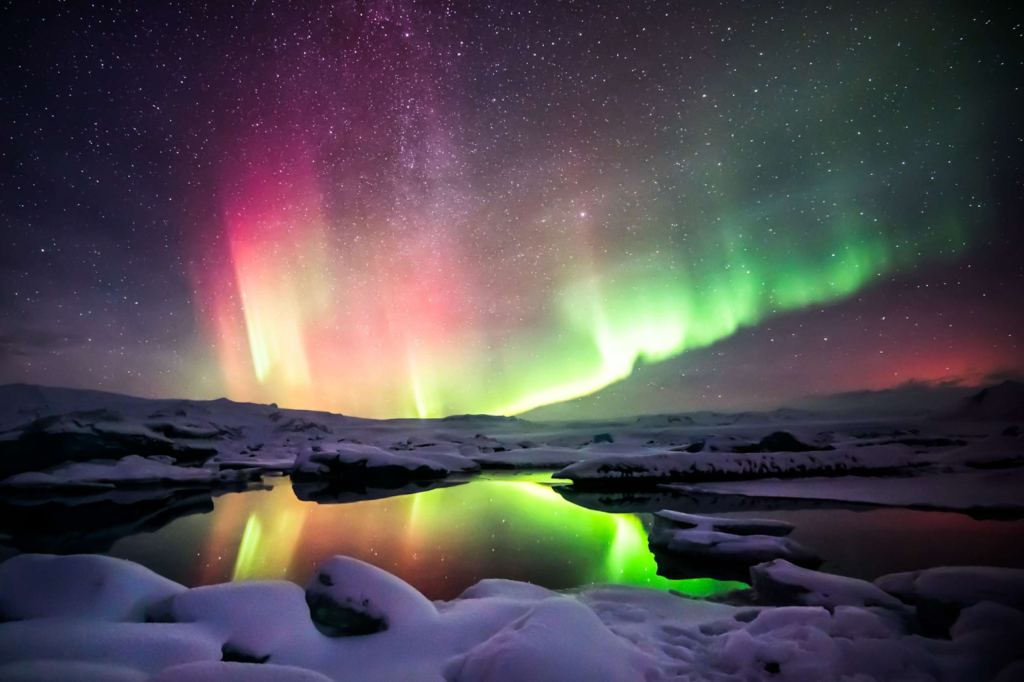
Michigan’s Upper Peninsula (commonly called the UP) has quietly become one of the most reliable aurora hotspots in the continental United States. Surrounded by Lake Superior, Lake Michigan, and Lake Huron, the region offers expansive dark skies and natural reflections that amplify aurora brightness.
During strong geomagnetic storms, the UP often sits directly beneath the expanded auroral oval. This positioning allows even moderate solar activity to produce visible displays.
Real-Life Example
In 2024, a high school science teacher from Marquette posted an iPhone photo showing green and purple auroras reflecting off Lake Superior. The image spread across Instagram, Reddit, and X, eventually being shared by NASA-affiliated pages and national news outlets. The photographer had no professional equipment—just a phone, a tripod, and patience.
Why Photos From the UP Go Viral
- Lake reflections double the visual impact
- Snow-covered landscapes enhance contrast
- Minimal urban light pollution
- Iconic natural landmarks
Top viewing areas include:
- Pictured Rocks National Lakeshore
- Brockway Mountain Drive
- Whitefish Point
- The Keweenaw Peninsula
2. Northern Minnesota: Wilderness, Silence, and Exploding Skies
Northern Minnesota has long been a favorite among stargazers, but it’s now emerging as one of the most photographed aurora regions in the U.S.
Areas near Lake Superior, the Boundary Waters Canoe Area Wilderness, and remote towns like Ely and Grand Marais offer exceptionally dark skies. During strong solar storms, auroras here often stretch across the entire horizon.
Real-Life Example
In early 2025, a retired couple staying near Ely captured auroras dancing above a frozen lake behind their cabin. They posted the image to Facebook for family members—only to see it shared thousands of times after local tourism boards picked it up. Within days, the photo had reached millions.
Why Minnesota Works So Well
- Vast, uninterrupted wilderness
- Frozen lakes that act like mirrors
- Boreal forests framing the sky
- Reliable aurora frequency during solar max
3. Alaska: The Undisputed Aurora Capital of the United States
While auroras are now appearing farther south, Alaska remains the gold standard for consistency and intensity.
Fairbanks, located directly under the auroral oval, experiences auroral activity on up to 200 nights per year. During peak season (September through April), seeing auroras here is often a matter of waiting, not hoping.
Beyond Fairbanks: Hidden Viral Hotspots
- Murphy Dome
- Chena Hot Springs
- Denali National Park
- Wiseman (near the Arctic Circle)
Real-Life Viral Moment
A nurse finishing a night shift in Fairbanks captured an image of vivid green auroras above her hospital parking lot. The photo went global, appearing on CNN, BBC, and National Geographic platforms. The ordinary setting made the image even more powerful.
Why Alaska Dominates Social Media
- Intense colors and vertical aurora curtains
- Snowy mountains and vast landscapes
- High reliability allows creative experimentation
4. North Dakota: America’s Quiet Aurora Secret
North Dakota rarely makes travel headlines, but when it comes to auroras, it’s one of the most underrated states in the country.
The state has some of the lowest light pollution levels in the continental U.S. During geomagnetic storms, auroras frequently appear across its northern half.
Real-Life Example
In late 2024, a farmer near Bottineau photographed auroras glowing above grain silos. The image spread rapidly on Reddit and was later featured in a New York Times photo essay highlighting rural night skies.
What Makes North Dakota Unique
- Endless, unobstructed horizons
- Agricultural and rural foregrounds
- Authentic Americana aesthetics
- Minimal crowds and competition
5. Maine: When the Aurora Meets the Atlantic Ocean
Auroras on the East Coast surprise people—and that surprise fuels virality.
Northern and coastal Maine, particularly Aroostook County, Acadia National Park, and Lubec, have produced stunning aurora images during strong solar storms.
Real-Life Example
A lobster fisherman near Lubec captured auroras reflecting off the Atlantic Ocean just before dawn. The video went viral on TikTok, introducing millions to the idea that auroras aren’t limited to the Midwest or Alaska.
Why Maine Aurora Photos Stand Out
- Ocean reflections are rare and striking
- Rocky coastlines add texture
- Lighthouses and fishing boats create narrative scenes
6. Washington State: Mountains, Lakes, and Magnetic Skies
While Seattle’s city lights limit visibility, northern and eastern Washington offer excellent aurora potential during strong geomagnetic storms.
The North Cascades, Methow Valley, and areas near Mount Baker provide dramatic backdrops that elevate aurora photography.
Real-Life Example
A college student hiking in the North Cascades captured auroras arching above jagged, snow-covered peaks. The image was reposted by major outdoor brands and national park accounts, launching the photographer’s online presence.
Why Washington Is Gaining Attention
- Alpine lakes reflect aurora colors
- Mountain silhouettes add depth
- Elevated terrain reduces atmospheric distortion
7. Colorado: The Unexpected Viral Contender
Colorado might seem too far south for auroras, but high elevation changes the equation.
During strong geomagnetic storms, auroras have been photographed across Rocky Mountain National Park, Pawnee National Grassland, and the San Luis Valley.
Real-Life Example
During a 2024 solar storm, a Denver-based hobbyist captured red auroras glowing above the Rockies. The rarity of the sight drove massive engagement across Instagram and YouTube Shorts.
Why Colorado Photos Go Viral
- Aurora sightings are unexpected
- High-altitude clarity improves visibility
- Mountain backdrops feel cinematic
When Is the Best Time to See Auroras in the U.S.?
Auroras are unpredictable, but patterns exist.
General guidelines:
- Time: 10 PM to 2 AM (local time)
- Season: September through April
- Solar activity: Kp Index 6 or higher
- Moon phase: New moon or low illumination
Trusted forecasting sources:
- NOAA Space Weather Prediction Center
- NASA Solar Dynamics Observatory
- Aurora forecast apps
How Are Ordinary Americans Taking Viral Aurora Photos?
You don’t need professional gear.
Many viral aurora photos are captured using:
- Modern smartphones with night mode
- Entry-level DSLR or mirrorless cameras
- A tripod (often the most important tool)
Practical Shooting Tips
- Use long exposure or night mode
- Stabilize your device
- Include foreground elements
- Avoid artificial light sources behind you
Frequently Asked Questions (Trending US Searches)
1. Can you really see the Northern Lights in the United States?
Yes. During strong solar storms, auroras are visible across many northern U.S. states.
2. Which U.S. state sees auroras most often?
Alaska leads by far, followed by Minnesota, Michigan, and North Dakota.
3. Do auroras appear better on cameras than to the naked eye?
Often yes. Cameras detect colors the human eye may miss.
4. What is the southernmost place auroras have been seen in the U.S.?
During extreme storms, auroras have been reported as far south as Texas and Florida.
5. Are auroras dangerous to watch?
No. Auroras are completely safe to observe.
6. How long do auroras usually last?
They can last anywhere from a few minutes to several hours.
7. Do I need expensive equipment?
No. Many viral photos are taken with smartphones.
8. What colors should I expect to see?
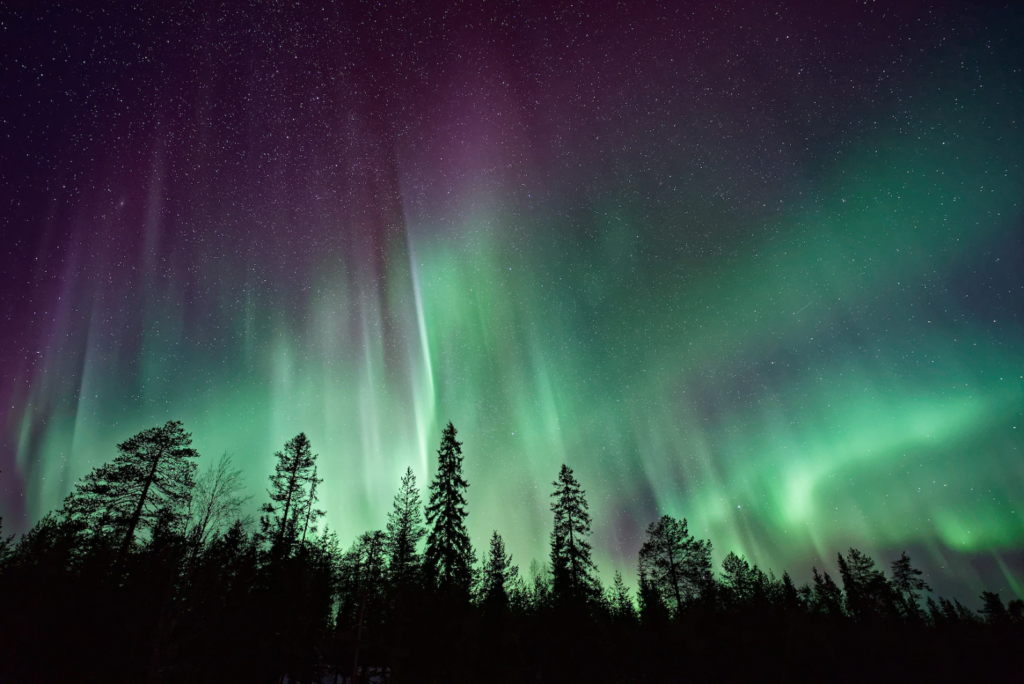
Green is most common; red, purple, and pink appear during strong storms.
9. Are auroras becoming more frequent?
Yes, due to the Sun approaching solar maximum.
10. Can aurora photos go viral without editing?
Absolutely. Natural, unedited photos often perform best.
Final Thoughts: You Don’t Need Iceland to Become Viral
The Northern Lights are no longer a distant dream for Americans. They are appearing over lakes, farms, mountains, coastlines, and highways—often without warning.
As solar activity continues to rise, the opportunity to witness and capture these moments has never been greater. With the right location, timing, and awareness, the next viral aurora photo could come from your camera.
Sometimes, all it takes is stepping outside and looking up.