You don’t need a passport or an international flight to witness the Northern Lights. Under the right conditions, auroras appear in several locations across the continental United States. From the Upper Midwest to remote mountain and coastal regions, these five Lower 48 destinations offer real, documented chances to see the aurora borealis—if you know when and where to look.
Do You Really Need to Leave the U.S. to See the Northern Lights?
For decades, Americans believed the Northern Lights were a distant dream—something you could only see in Alaska, Canada, or Scandinavia. That belief stuck because, for a long time, it was mostly true.
But today, that idea is outdated.
Thanks to increased solar activity, better space-weather forecasting, and greater public awareness, auroras are being seen more often in the continental United States. Photos and firsthand accounts from everyday Americans now regularly surface from states that were once dismissed as “too far south.”
The truth is simple: the aurora doesn’t care about borders. It follows physics, not passports.
Why Auroras Are Appearing More Often in the Lower 48
The Sun operates on an approximately 11-year solar cycle, alternating between periods of low and high activity. During peaks—known as solar maximum—the Sun releases more solar flares and coronal mass ejections (CMEs).
According to NASA and NOAA’s Space Weather Prediction Center:
- We are approaching a solar maximum expected around 2025–2026
- Stronger geomagnetic storms are becoming more frequent
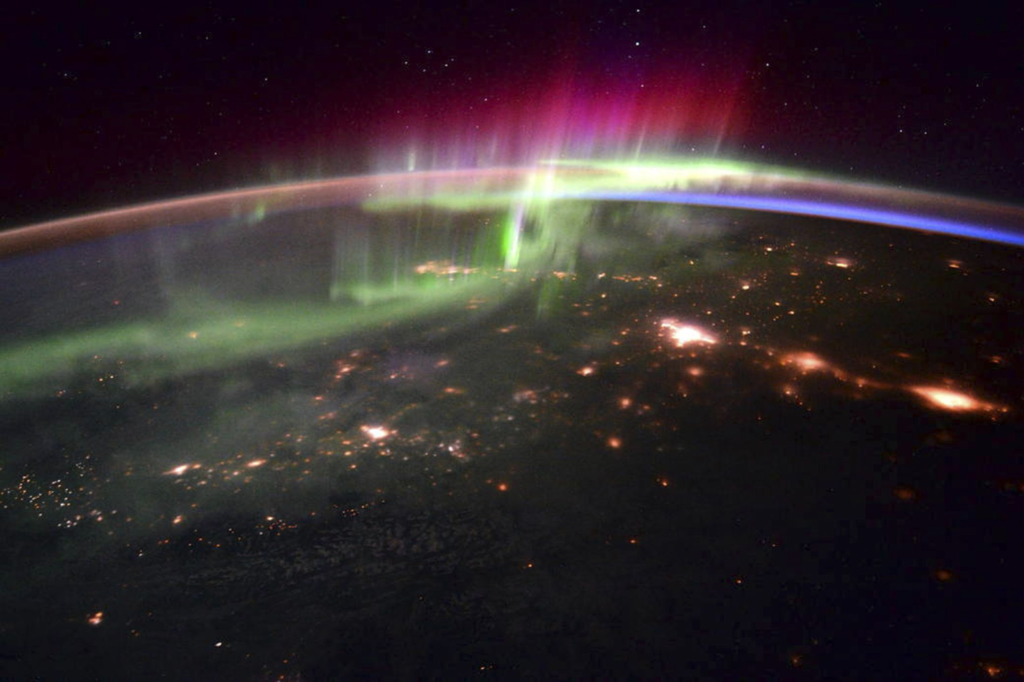
- Auroral ovals are expanding farther south during peak events
When these storms hit Earth’s magnetic field, auroras can become visible well beyond their usual Arctic zones—including parts of the Lower 48.
This isn’t speculation. It’s measurable science.
What Conditions Do You Need to See the Aurora in the Lower 48?
Before talking locations, it’s important to set realistic expectations.
Seeing the aurora in the continental U.S. requires three non-negotiable elements:
- Strong solar activity (usually a Kp index of 6 or higher)
- Dark skies far from city lights
- Clear weather with a visible northern horizon
When these align, the aurora can appear hundreds—or even thousands—of miles farther south than usual.
What Does the Aurora Look Like This Far South?
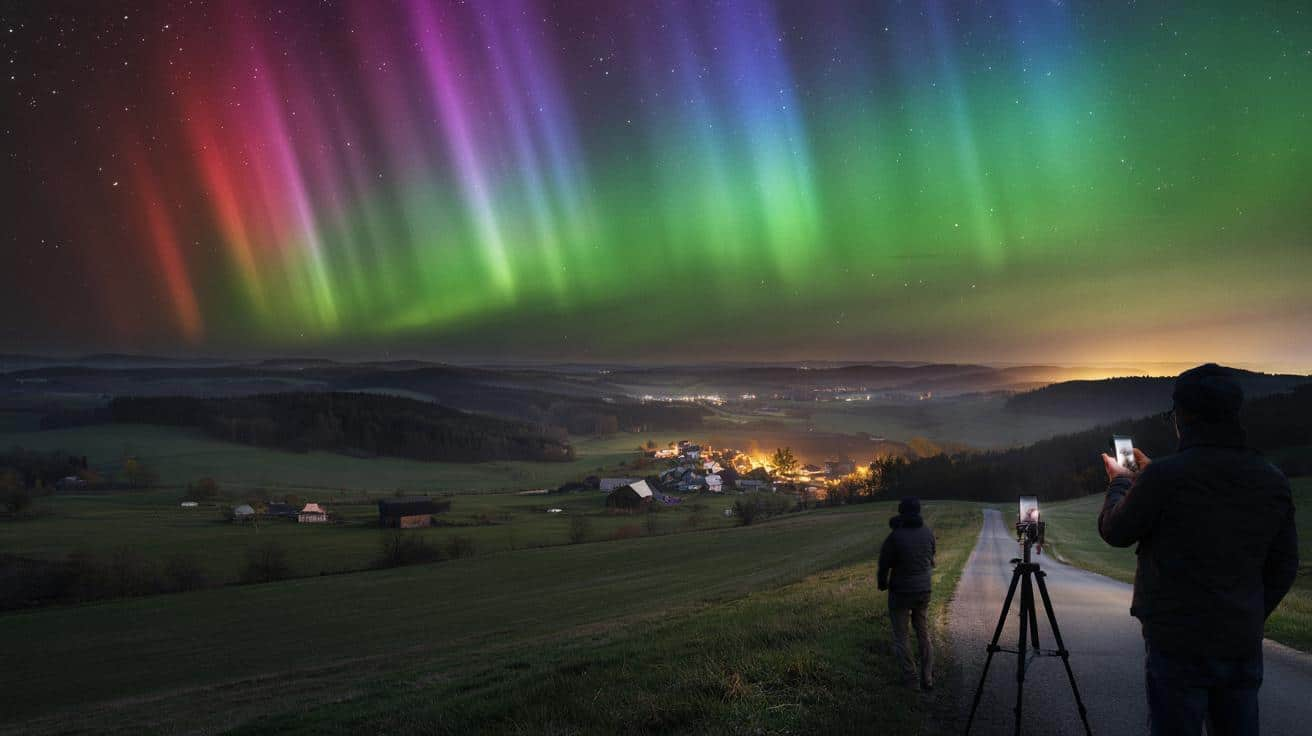
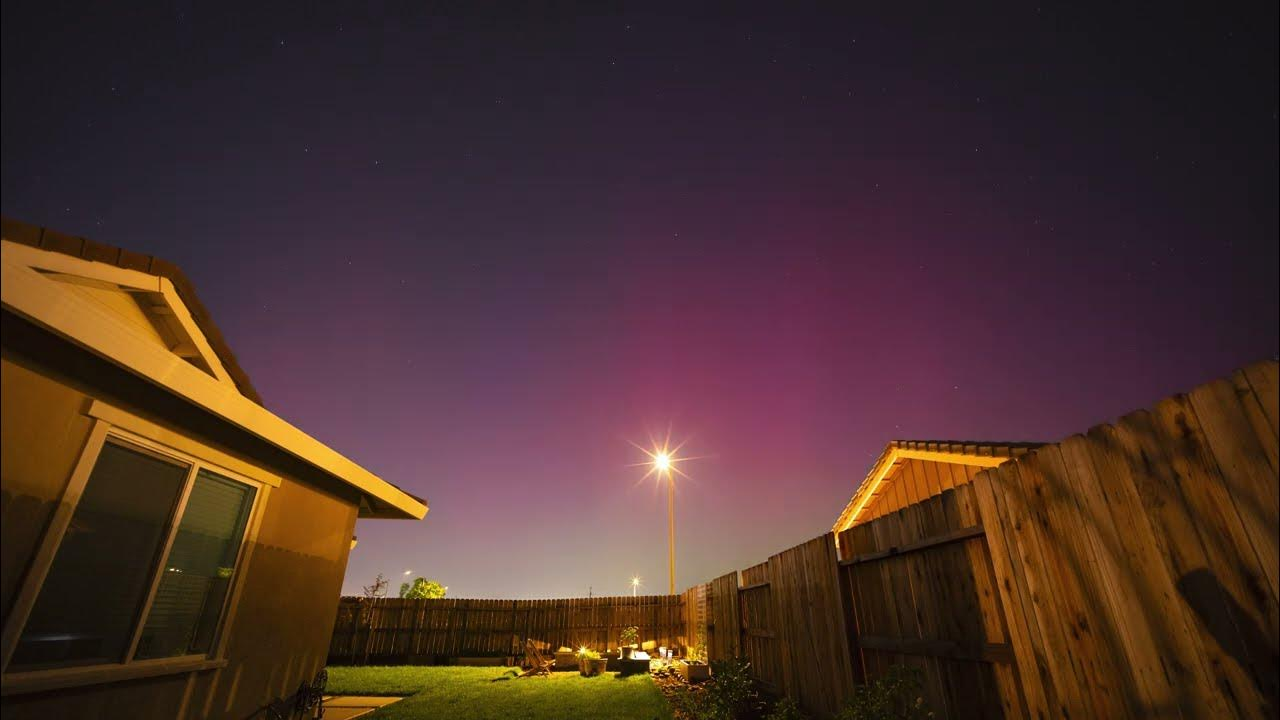
Auroras in the Lower 48 often look different than the dramatic images from Alaska or Iceland.
Typical Lower-48 auroras:
- Begin as faint glows or arcs near the horizon
- Emphasize movement more than brightness
- Often appear red or pink due to higher-altitude oxygen
- Grow stronger through camera lenses than with naked eyes
That doesn’t make them less magical—just more subtle and intimate.
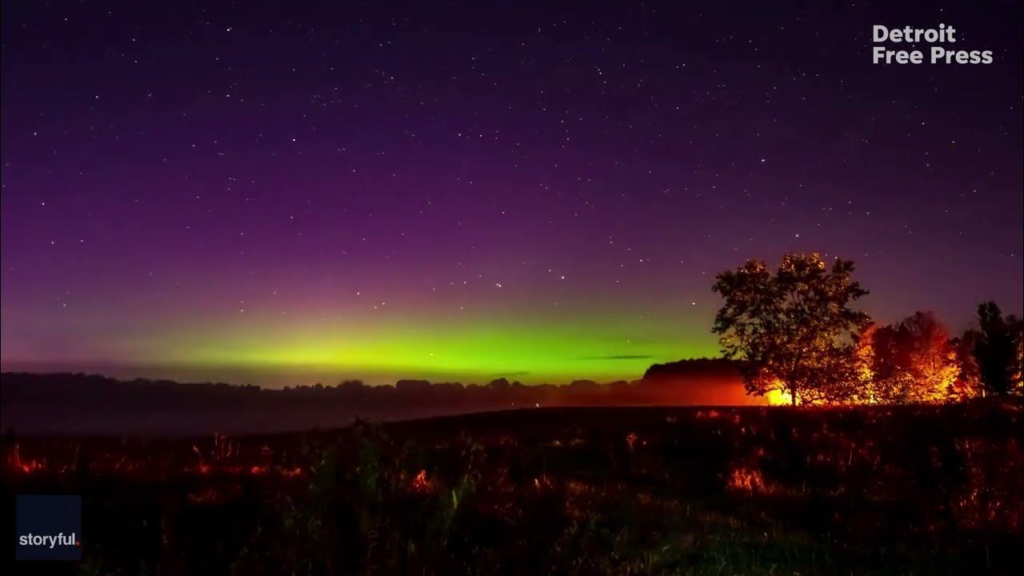
1. Michigan’s Upper Peninsula: The Best Aurora Spot in the Lower 48
If one place in the continental U.S. consistently earns its aurora reputation, it’s Michigan’s Upper Peninsula (UP).
Surrounded by Lake Superior and far removed from major urban centers, the UP combines latitude, darkness, and geography in a way few U.S. regions can match.
Why the Upper Peninsula Works So Well
Several natural advantages make this area exceptional:
- One of the northernmost regions in the Lower 48
- Extremely low light pollution
- Cold, clear winter nights
- Wide, unobstructed lake horizons
During strong geomagnetic storms, auroras here can appear directly overhead, not just near the horizon.
Real-Life Experience
Residents in towns like Marquette, Houghton, and Copper Harbor routinely step outside during aurora alerts and witness green curtains rippling above frozen shorelines. Many visitors are shocked to learn these photos weren’t taken in Canada.
They were taken in Michigan.
2. Northern Minnesota: Boundary Waters & North Shore Brilliance
Northern Minnesota has quietly become one of America’s most reliable aurora regions.
The Boundary Waters Canoe Area Wilderness (BWCA) and the North Shore of Lake Superior offer massive stretches of protected land with almost no artificial light.
Why Northern Minnesota Is an Aurora Powerhouse
- Higher latitude than most U.S. states
- Vast dark-sky wilderness
- Frequent clear winter nights
- Strong aurora history during solar storms
Auroras here often reflect off frozen lakes, creating mirror-like effects that feel almost surreal.
What Locals Say
Many Minnesotans describe auroras as “slow, silent, and unforgettable.” It’s not uncommon for people to watch the lights for hours, bundled up beside a frozen shoreline, without another soul in sight.
3. North Dakota: America’s Most Underrated Aurora State
North Dakota almost never appears on aurora bucket lists—and that’s exactly why it’s so special.
With one of the lowest population densities in the country, North Dakota offers extraordinarily dark skies and unobstructed horizons, especially near the Canadian border.
Why North Dakota Is Ideal
- Minimal light pollution statewide
- Flat terrain with clear northern views
- Northern latitude advantage
- Frequent clear nights
In regions like the Turtle Mountains and Pembina Gorge, auroras often stretch across the entire sky during strong storms.
A Rare Advantage
Unlike more famous aurora destinations, North Dakota offers solitude. Many viewers report having world-class aurora displays entirely to themselves.
4. Montana: Big Sky Country Meets Big Aurora Potential
Montana’s nickname isn’t just poetic—it’s accurate.
Northern Montana, particularly near Glacier National Park, offers some of the most dramatic aurora backdrops in the Lower 48.
Why Montana’s Skies Shine
- High elevation reduces atmospheric interference
- Extremely dark rural skies
- Northern latitude
- Wide, open landscapes that enhance visibility
Auroras here often appear as long horizontal bands that ripple across an enormous sky, amplified by the surrounding mountains.
A Moment to Remember
Visitors frequently describe seeing auroras stretch from horizon to horizon, glowing above snow-covered peaks. The experience feels cinematic—but profoundly quiet.
5. Northern Maine: The East Coast’s Aurora Surprise
Most Americans don’t associate Maine with auroras—but northern Maine quietly earns its place on this list.
Regions near Aroostook County sit far enough north and remain dark enough to catch auroras during strong geomagnetic storms.
Why Northern Maine Makes the Cut
- Northeastern latitude advantage
- Very low light pollution in rural areas
- Clear winter skies
- Easier access for East Coast residents
Auroras here are often red or pink—colors more visible at lower latitudes.
Why It Feels Special
Seeing the aurora on the East Coast feels unexpected. That surprise factor makes the experience especially memorable.
Best Time of Year to See the Aurora in the Lower 48
Timing is everything.
Prime Aurora Season
- September through March
- Best viewing hours: 10 PM to 2 AM
- New moon phases are ideal
Winter offers longer darkness, but fall auroras can be just as powerful—and far more comfortable.
How to Dramatically Increase Your Chances of Seeing the Aurora
Aurora watching rewards preparation and patience.
Do this:
- Monitor NOAA’s aurora forecast daily
- Watch the Kp index (6+ is ideal)
- Travel away from city lights
- Face north with an open horizon
- Let your eyes adjust for 20 minutes
Avoid this:
- Expecting instant results
- Staying near streetlights
- Checking your phone constantly
- Giving up too early
Auroras often arrive in waves.
Why More Americans Are Seeing Auroras Than Ever Before
Three major trends explain the surge:
- Rising Solar Activity — more frequent storms
- Better Forecasting Tools — alerts are more accurate
- Smartphone Cameras — easier confirmation and sharing
Together, these have turned auroras from rare rumors into realistic goals.
Frequently Asked Questions (Trending U.S. Searches)
1. Can you really see the Northern Lights in the Lower 48?
Yes, during strong geomagnetic storms, especially in northern states.
2. What is the best U.S. state for auroras?
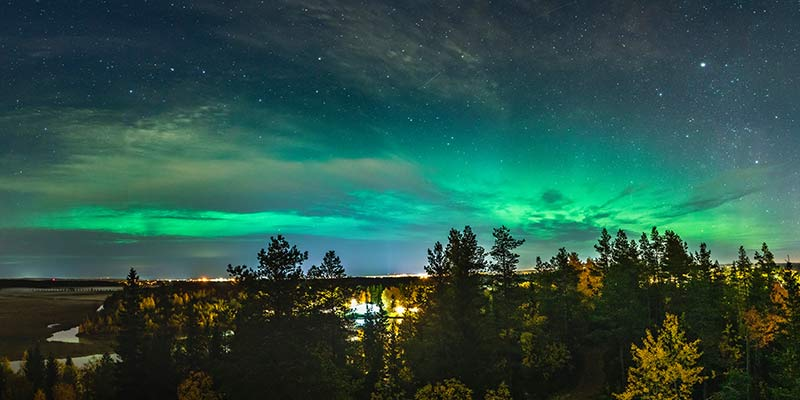
Michigan, Minnesota, and North Dakota are among the most reliable.
3. Do I need special equipment?
No. Auroras are visible to the naked eye, though cameras enhance colors.
4. Why do aurora photos look brighter than real life?
Cameras capture more light and color than human eyes.
5. How often do auroras appear in the Lower 48?
Several times per year during active solar periods.
6. Can auroras be seen in summer?
Rarely, due to shorter nights and lingering twilight.
7. Are auroras dangerous?
No. They are completely safe to watch.
8. What colors are most common in the Lower 48?
Green and red, with red being more common farther south.
9. Is now a good time to try aurora watching?
Yes. Solar activity is increasing toward its peak.
10. Do auroras always move?
Yes. Movement is a defining characteristic of auroras.
Final Thoughts: You Don’t Need a Passport for Wonder
For years, Americans believed the Northern Lights were out of reach.
They aren’t.
With the right timing, patience, and location, some of the most breathtaking night-sky experiences on Earth can happen right here in the Lower 48—no passport, no international flights, no border crossings required.
All you need is darkness, awareness, and the willingness to look up.